

Owens Corning Vapor Barrier Installation: The Boulder City Owner’s Guide
We install Owens Corning-compatible vapor barrier systems in Boulder City, and most single-family installs run between $1,150 and $3,400 depending on square footage, crawl space or attic application, and whether the floor needs prep first. We can typically assess and schedule within the same week, and small crawl space jobs are often same-day. You usually find out the barrier failed the same way everyone does: a musty smell that shows up in July, insulation that looks damp when you poke your head into the crawl space, or a pest company telling you the plastic under the house is torn.
Which Owens Corning Models This Applies To
Owens Corning doesn’t sell a vapor barrier under that exact name the way it sells R-13 or R-30 batts. What it sells that lands on the same job are the WeatherGuard and R-wrapped facing products, the PinkWRAP-style house wraps used on walls, and the poly-faced and foil-faced vapor retarders that pair with FOAMULAR rigid board in crawl and slab assemblies. If you’re holding a box that says Owens Corning and you can’t match it to a part number, measure the width and read the facing spec – the “Class” and “perm” numbers on the label tell you whether you’re buying a true vapor barrier (0.1 perm or below) or a vapor retarder, and mixing those up is the most common mistake on a Boulder City install.
The identification step matters here. Look for the black-and-pink label, check whether the roll is 6-mil or heavier reinforced film, and confirm the facing has the “FC” (foil-facing) or poly designation. For Owens Corning specifically, the OEM route is worth it when you’re matching a sealed system that has to keep its rated perm value across the whole assembly; aftermarket equivalents at the same thickness are fine for a repair patch, but a full reinstallation of a sealed crawl space should use the same product family as the original so the system stays consistent. We source from Owens Corning, Johns Manville, Knauf, Rockwool, CertainTeed, Icynene, Demilec, and GreenFiber, and we’ll tell you which one fits your assembly before we write the price. Envelope Insulation Boulder City is an independent service provider and is not affiliated with Owens Corning.
Signs Your Owens Corning Vapor Barrier Installation Is Failing
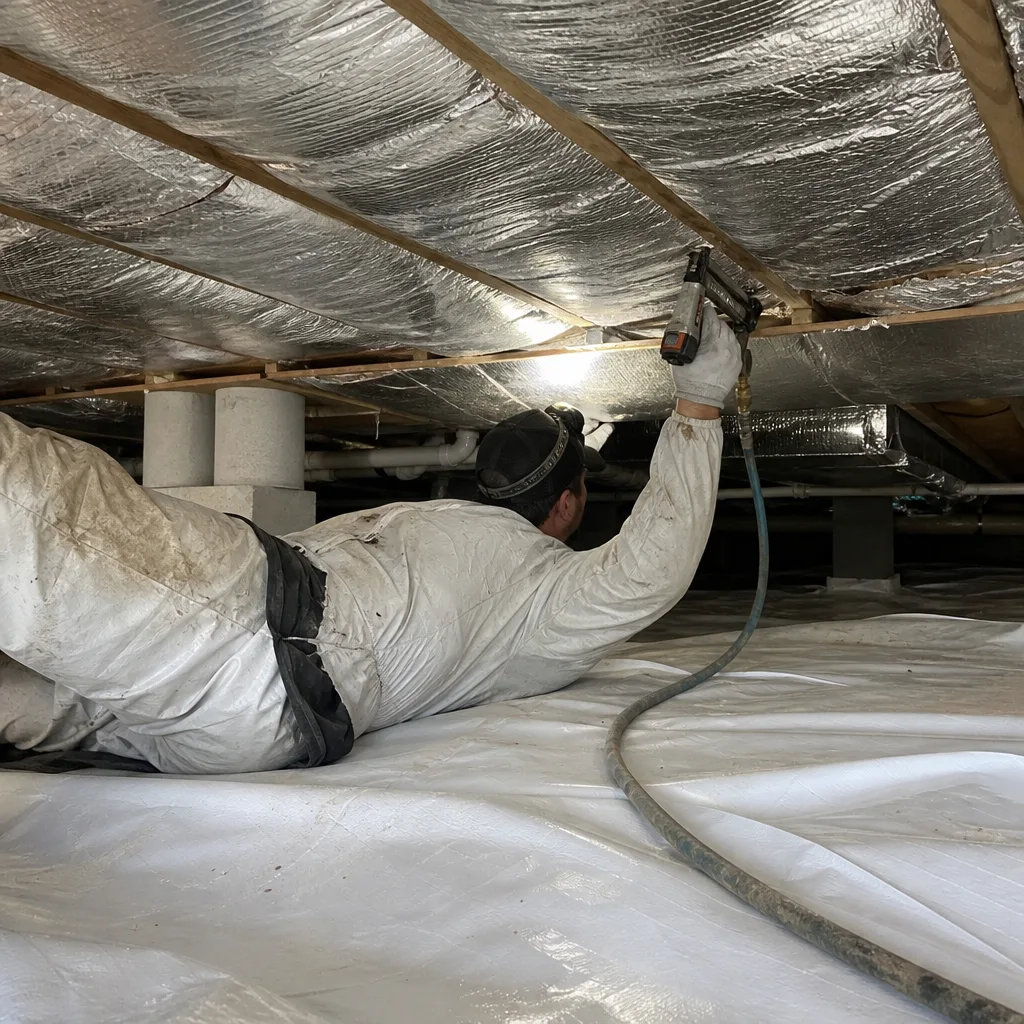
Boulder City sits at roughly 2,500 feet in the Mojave, which means vapor barriers here take a different beating than in humid climates. The sun doesn’t get to a crawl space barrier, but the seasonal swing between 105-degree summers and near-freezing winter nights does, and the ground moisture under a slab or in a crawl space still has to be controlled. Here’s what a failing installation looks like:
- Visible tears or gaps at the seams. A vapor barrier only works if it’s continuous. Most failures start at a lap joint where the tape let go after a season of expansion and contraction, and every gap lets vapor move straight through.
- Damp or musty smell in the crawl space or first floor. That smell is moisture reaching the wood and insulation above the barrier. Once it’s in the joists, you’re no longer looking at a barrier problem – you’re looking at a moisture problem, and the two cost different amounts to fix.
- Condensation on the barrier’s underside. Water beading under the plastic means vapor is being trapped on the wrong side of the assembly. That’s an installation error – wrong facing, wrong perm rating, or a barrier installed over a wet surface it can’t dry past.
- Insulation that won’t stay dry. If the batts above the barrier feel heavy or sink when you touch them, the barrier isn’t doing its job and the insulation is either failing or already failed.
- Rodent runs and chewed plastic. Mice and rats tunnel along the barrier’s edges, and chewed film is a real failure – one winter of rodent traffic will open more gaps than ten years of settling.
Replacement Cost & What’s Included
In Boulder City, a full vapor barrier installation typically runs between $1,150 and $3,400 for a crawl space or attic floor assembly, with the range driven mostly by square footage, whether we’re replacing failed insulation at the same time, and how much prep the floor needs before new film goes down. A straightforward 1,200-square-foot crawl space with clean ground and existing access lands near the low end; a home where we find rodent damage, wet insulation, or a barrier buried under debris lands near the high end because removal and disposal are real line items.
Parts-plus-labor is itemized on the written price – you’ll see the labor, the barrier material, the seam tape, the mechanical fasteners, and the disposal if there’s anything to haul. Under Haven Standard Clause 1, you get the flat price, the written scope, and the written warranty before anyone lifts a tool, and the work is covered by our 365-Day Done Right Promise. If it’s not done right, we make it right. We’ll also document what we found and what we installed with photos on every visit, so you have a record of the assembly you paid for.
DIY or Call Us?
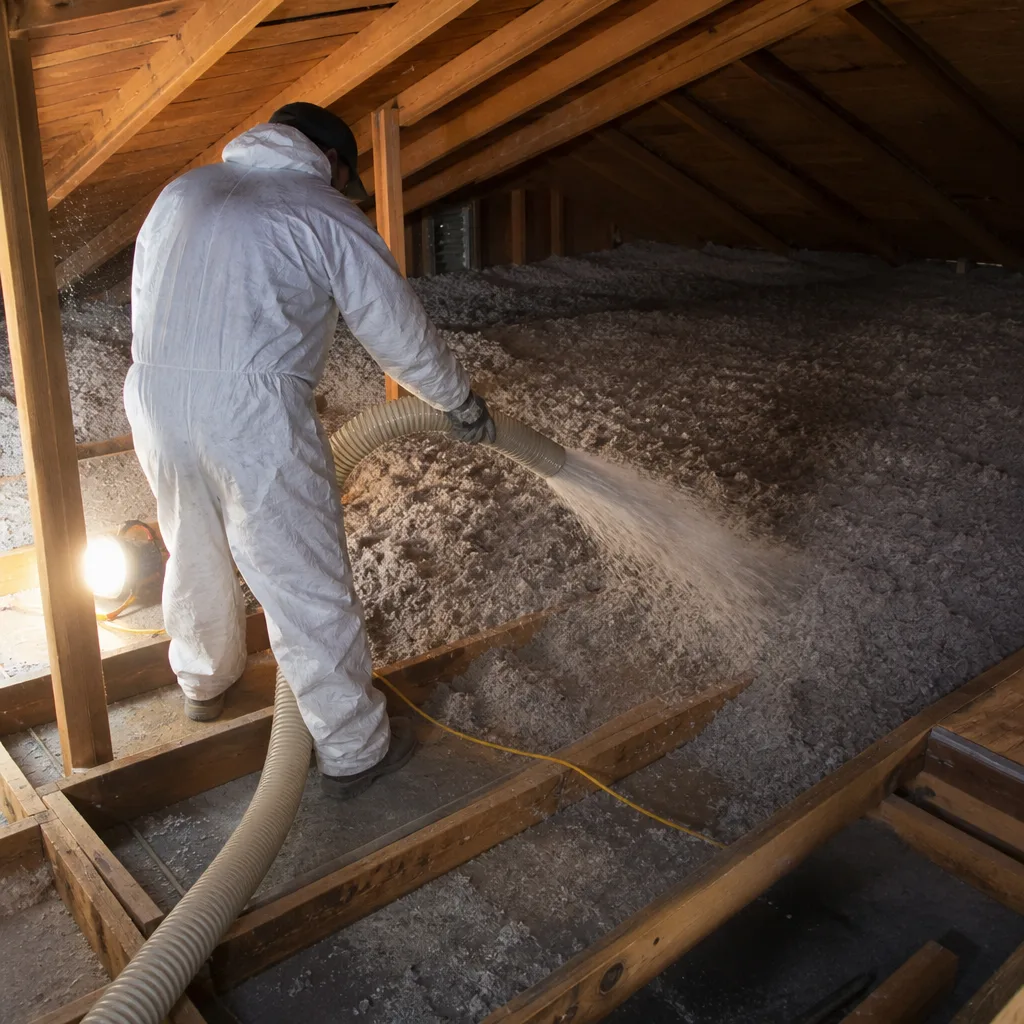
You can safely check a few things yourself. Crawl under the house with a flashlight and look for standing water, torn film, or daylight along the perimeter. Read the label on any existing barrier to confirm what perm class it is. Take photos of what you find before you move anything.
Where DIY goes wrong on this part is the installation itself, not the diagnosis. A vapor barrier is only as good as its continuity, and getting it right means lapping seams 6 to 12 inches (trade term: the overlap where two courses of film are joined), taping them with a compatible mastic-rated tape, sealing the perimeter to the foundation, and – critically – never installing film over a wet surface or on the wrong side of the assembly, which is where the trapped-moisture failures come from. In a Boulder City home, the wrong-side failure is common because the original installer didn’t account for which direction the vapor drive runs. It’s also confined-space work, and a crawl space with restricted headroom and no second exit is not a great place to find out you’re claustrophobic mid-job.
We won’t do the work yourself pitch here, but if you’ve found a failed barrier, the right move is a free second opinion on any written estimate you’ve already been handed. Call (844) 320-7926 and we’ll read the quote with you and tell you what we’d price the same scope at.
FAQs About Owens Corning Vapor Barrier Installation in Boulder City
A properly installed 6-mil or heavier reinforced vapor barrier in a sealed, dry crawl space should hold 15 to 25 years. In Boulder City, where the ground under many homes runs dry most of the year and then sees monsoon moisture, the failure points tend to be the seams and the perimeter seal rather than the film itself. We inspect those first on any assessment.
Sometimes, yes. A single torn seam or a small puncture is a patch job, and we’ll quote it that way if that’s what the inspection supports. Once the film is failing across more than about 20 percent of the floor, replacement is almost always the better spend because patching a barrier that’s already given up just moves the seams around. Call (844) 320-7926 for an exact scope; estimates are free.
Most single-family crawl space vapor barrier installs take a half day to a full day, including prep, removal of any failed insulation, and the photo documentation. Access size, floor condition, and square footage set the schedule, and we’ll give you the timeline in writing with the price before we start.
We source from Owens Corning and the other major manufacturers directly, so the material arrives specified to your assembly rather than whatever is on hand. You’ll see the exact product named on the written scope, including mil thickness and perm class, and any leftover material stays with you if you want it for a future patch. Call (844) 320-7926 and we’ll quote your scope.
We also service vapor barrier and moisture control work involving Reflectix products on radiant-barrier assemblies. Reach out to Envelope Insulation Boulder City at (844) 320-7926 for a free estimate – the written price comes before any work starts, the photos and blower-door numbers come after, and both are yours to keep.
Written by the team at Envelope Insulation Boulder City, serving Boulder City and nearby areas.