

Rockwool Attic Insulation: The Boulder City Owner’s Guide
We install Rockwool-compatible attic insulation throughout Boulder City, and most full attic jobs here run $2,400 to $5,800 installed, depending on square footage, existing insulation removal, and how much air sealing the attic floor needs first. Same-day availability is common on straightforward installations. Envelope Insulation Boulder City is an independent service provider, not affiliated with Rockwool.
Owners usually discover a Rockwool problem the same way: a winter gas bill that jumps $60 to $90 over the prior year, a bedroom over the garage that won’t hold heat, or loose batts found sagging off the joists during a routine HVAC visit. In Boulder City’s desert swing – 100°F summer attic temps down to freezing January nights – Rockwool holds up better than most, but it still fails at the edges, at the hatches, and wherever a previous installer skipped air sealing.
Which Rockwool Models This Applies To
Rockwool attic products come in three main lines you’ll encounter: Comfortbatt (the semi-rigid stone wool batt sold in R-13 through R-30 thicknesses at big-box stores), Safe’n’Sound (an interior sound batt sometimes repurposed in attics, though it isn’t rated for that), and the higher-density Rockwool board products used in commercial assemblies. For a typical Boulder City single-family attic, Comfortbatt is what you’ll find, most often in R-19 or R-30 for our climate zone.
Identify your product by the label printed on the batt face – it lists the R-value, dimensions, and a product code. Measure the actual thickness with a tape: R-30 Comfortbatt is roughly 7.25 inches thick, R-19 is about 5.5 inches. If a batt measures noticeably thinner than its label, it’s been compressed and lost R-value.
The OEM-versus-aftermarket decision here is unusual. Rockwool itself is the manufacturer, so there’s no “OEM vs. generic” split the way there is with, say, a garage door spring. What matters instead is matching R-value and density. A quality aftermarket mineral wool batt at the same R-value performs equivalently. We source from Rockwool, Owens Corning, Johns Manville, Knauf, and GreenFiber – no proprietary lock-in.
Signs Your Rockwool Attic Insulation Is Failing
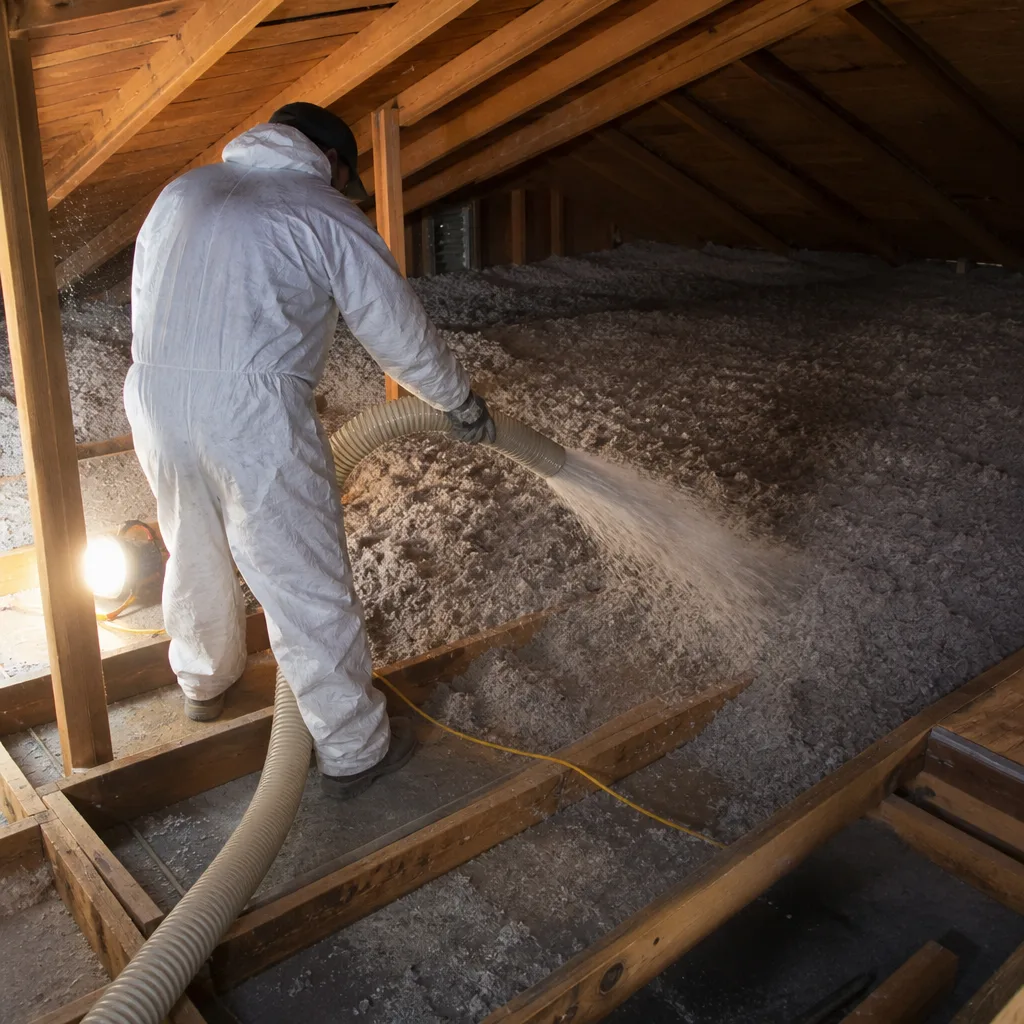
- Batts sagging off the joists or pulled away at the eaves. Usually caused by moisture wicking or by an installer who didn’t friction-fit them properly. Once a batt drops, it leaves an uninsulated strip that shows up as a cold ceiling edge in winter.
- Visible compression under stored boxes or ductwork. A compressed batt loses R-value fast – a 7-inch R-30 squashed to 4 inches performs closer to R-15. Rockwool resists compression better than fiberglass but isn’t immune.
- Damp or darkened batts near the attic hatch and can lights. Boulder City’s winter condensation pattern (warm moist air hitting a cold attic surface) shows up here first. Damp stone wool stays damp and stops insulating.
- Rodent tunneling and nesting material. Rockwool is denser than fiberglass, but mice still burrow through it. Tunnels break the continuous thermal blanket and pull in outside air.
- A blower-door reading that hasn’t improved after a prior insulation job. If the number didn’t move, the attic floor was insulated before the air leaks were sealed – the insulation is fine, the sequencing wasn’t.
Replacement Cost & What’s Included
For a typical 1,200 to 1,800 sq ft Boulder City home, replacing attic insulation with Rockwool-compatible batts runs $2,400 to $5,800 installed, including removal of the old material, air sealing of top plates and penetrations, and proper R-value restoration. The range is driven by square footage, whether old insulation needs removal (adds $600 to $1,400), and the target R-value – R-38 is the practical minimum for Clark County’s climate zone, though some attics can go R-49 for a modest bump.
Parts and labor are quoted as one flat number. No work starts without a written price and written warranty, under Haven Standard Clause 1. Every job includes a Documented Photo Record, and where applicable, before-and-after blower-door readings so you can see the CFM50 change in a single figure.
DIY or Call Us?
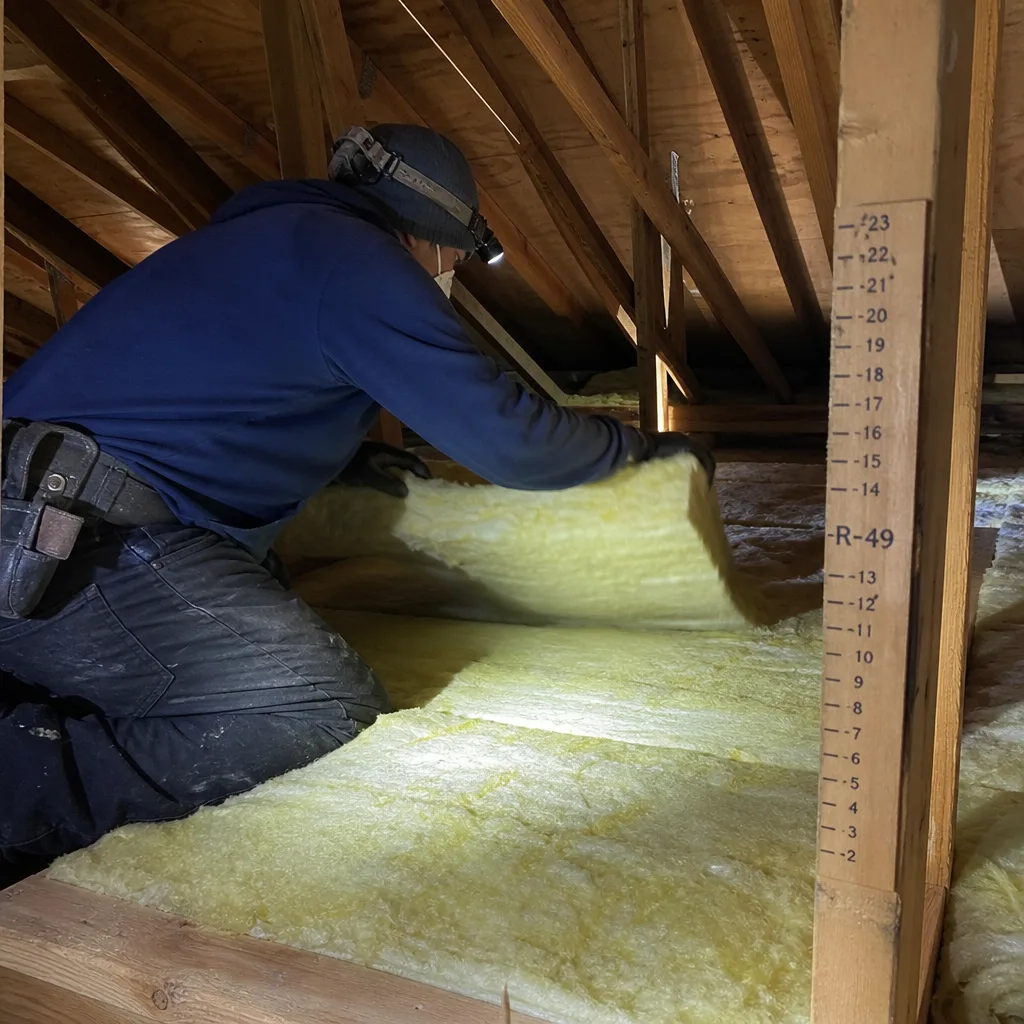
You can safely check a few things yourself: look for sagging batts, measure thickness with a tape, and check the attic hatch for gaps. What you shouldn’t do is crawl through a Boulder City attic in July, and you definitely shouldn’t blow new insulation over an unsealed floor – it traps moisture, hides air leaks, and wastes the money you just spent. Air sealing has to come first, in that order.
Rockwool batt installation itself is low-risk from a safety standpoint, but the sequencing and blower-door verification are where DIY jobs go wrong. If you want the number to actually move, call (844) 320-7926 – estimates are free, and our technicians have up to 10 years of experience.
FAQs
Rockwool batts typically hold their R-value for 25 to 40 years in a dry attic, but Boulder City’s UV exposure, summer heat cycling, and occasional rodent activity shorten that in practice. We see meaningful degradation starting around year 15 in attics without air sealing – the material isn’t the problem, the moisture and air movement are. Call (844) 320-7926 for a free assessment.
Sometimes. Sagging batts in a small section can be re-fitted, and minor compression can be fluffed and re-laid. But if more than 20 to 25% of the attic floor is compromised, or if moisture damage is present, replacement is usually the better call – patching a failing blanket leaves performance gaps. We’ll tell you honestly which you need; estimates are free.
A full 1,200 to 1,800 sq ft attic replacement is typically a one-day job, including removal, air sealing, and installation. If old insulation must be removed and the attic needs rodent proofing first, plan on a day and a half. We confirm the schedule in writing before anyone starts.
We source directly from Rockwool and comparable manufacturers based on the R-value your attic needs and current availability. There’s no proprietary product lock-in – if Rockwool isn’t the right fit for your assembly, we’ll say so and quote Owens Corning, Johns Manville, or Knauf equivalents.
Ready for a written price before any work starts? Call (844) 320-7926 for a free estimate and a free second opinion on any written quote you already have. A live person answers 24/7, and you’ll get a Documented Photo Record with every visit.
Written by the team at Envelope Insulation Boulder City, serving Boulder City and nearby areas.