

Rockwool Vapor Barrier Installation: The Boulder City Owner’s Guide
Quick answer: We install Rockwool-compatible vapor barrier systems in Boulder City, and most whole-attic or crawl-space installations run between $1,400 and $3,800 installed, depending on square footage and whether a smart membrane or reinforced facing is used. We can usually schedule an assessment within a day or two and complete most jobs the same day we arrive. Typical Boulder City homes have dry, high-desert conditions, so a failed barrier often shows up as condensation on the underside of Rockwool batts, dusty drafts at the eaves, or a musty smell in the crawl space after the first monsoon season.
This page is written for owners who already have a Rockwool product in place and need the vapor barrier side of the assembly done correctly – or redone after a failed install. We’re an independent service provider and are not affiliated with Rockwool. We install and repair the barrier systems that work with Rockwool mineral wool, and we document what we find before we touch anything.
Key Takeaways
- Rockwool mineral wool is vapor-permeable; the barrier goes on the warm side, and getting that side wrong causes most failures in Boulder City’s climate.
- Most installs run $1,400-$3,800 installed, with a written price before any work starts.
- We check compatibility with your specific Rockwool product before quoting a barrier system.
- New construction-grade vapor barriers in Boulder City often fail at the seams and around penetrations first.
Which Rockwool Models This Applies To
Rockwool’s residential line splits into a few families, and the vapor barrier detail changes with each. Comfortbatt comes in standard batt sizes – most commonly 15-inch and 23-inch widths for 2×4 and 2×6 framing, in R-values from R-13 up to R-30 – and uses a separate sheet vapor barrier or kraft facing. Safe’n’Sound is an interior acoustic batt and isn’t meant for exterior wall or attic vapor control; if you’ve got it in an exterior assembly, that’s a spec mismatch worth correcting. Rockwool’s board products and their cavity-fill versions use different barrier strategies entirely.
The fastest way to identify what you have is the label on the packaging or the printed text on the batt facing itself: it will list the product name, R-value, and dimensions. Measure the cavity depth and width with a tape to confirm. For the OEM-versus-aftermarket question: Rockwool doesn’t sell vapor barriers as a branded product line, so most “Rockwool-compatible” barriers you’ll find are third-party membranes – reinforced polyethylene, smart vapor retarders like CertainTeed MemBrain, or foil-faced products. Because Rockwool isn’t a proprietary system, you have real freedom in barrier choice, and the barrier that suits Boulder City’s dry climate and occasional monsoon humidity matters far more than brand matching.
Signs Your Rockwool Vapor Barrier Installation Is Failing
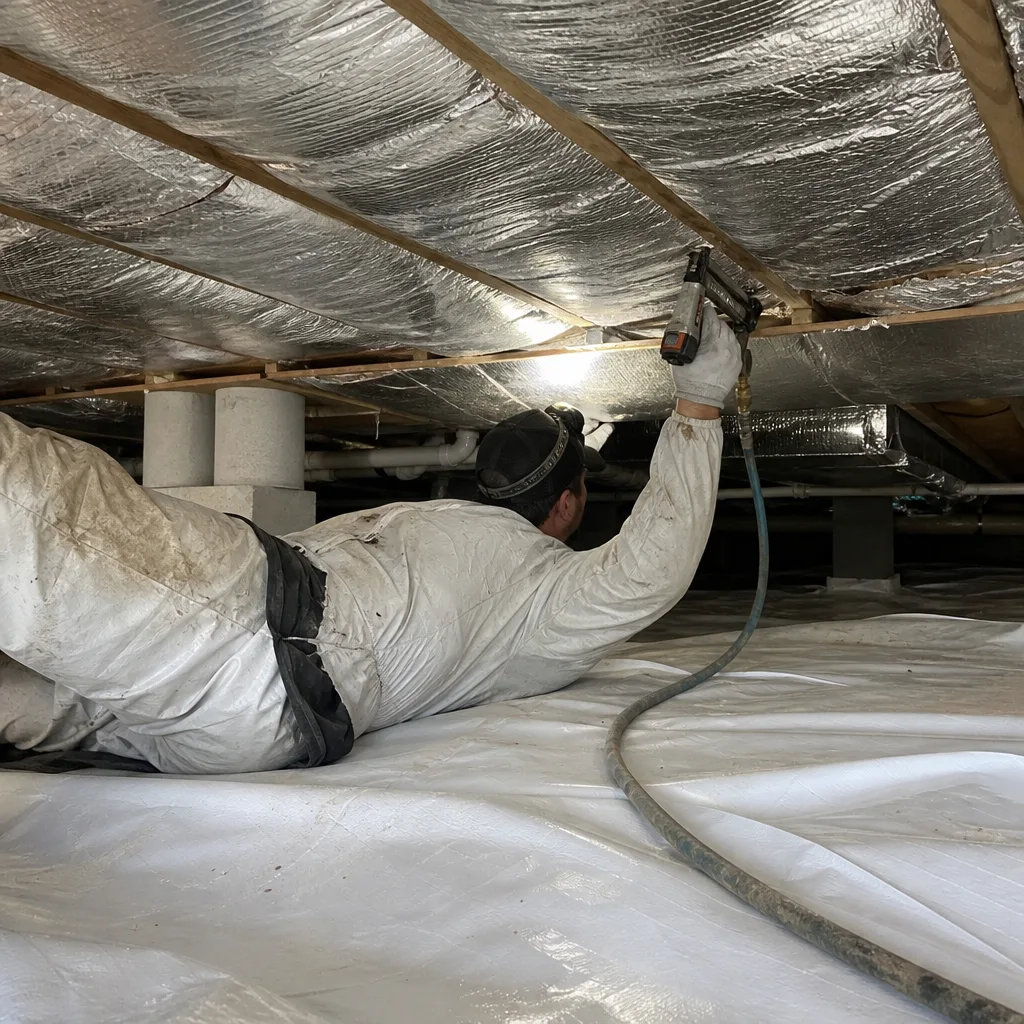
- Condensation on the batt face or underside: moisture is reaching the barrier from the wrong side, usually because the barrier was installed on the cold side or the interior seal is incomplete.
- Dusty drafts at the eaves or top plates: the barrier has pulled away from framing or the staples have backed out, letting conditioned air escape around the Rockwool.
- Musty smell in the crawl space or attic after a storm: a tear or unsealed seam has let in moisture that the mineral wool can’t dry out fast enough.
- Rippling or sagging barrier sheeting: the product was stretched too tight, or the wrong thickness was used for the cavity, and it’s now pulling off the studs.
- Visible gaps at penetrations: electrical boxes, can lights, and plumbing runs weren’t sealed with the right tape or gasket before the barrier went up.
Any one of those signs tells you the assembly is losing performance. Two or more usually means the barrier needs to come off and be redone properly.
Replacement Cost & What’s Included
Boulder City pricing for a Rockwool-compatible vapor barrier system runs $1,400 to $3,800 installed for most residential jobs. The range is driven by square footage, whether the barrier is a standard reinforced poly or a smart vapor retarder, and how much prep work the surface needs – removing old failed sheeting, sealing penetrations, and correcting any framing gaps. A smaller single-wall repair typically lands at the low end; a full attic floor or crawl space assembly sits at the top.
Every quote is a flat written price before any work starts. That includes the barrier material, seam tape or compatible adhesive, fasteners, and the labor to seal penetrations before the barrier goes on. Under our 365-Day Done Right Promise, if the barrier fails within a year because of how it was installed, we come back and make it right. You’ll also get a Documented Photo Record of the assembly at each stage, so you can see exactly what was done behind the finished surface.
DIY or Call Us?
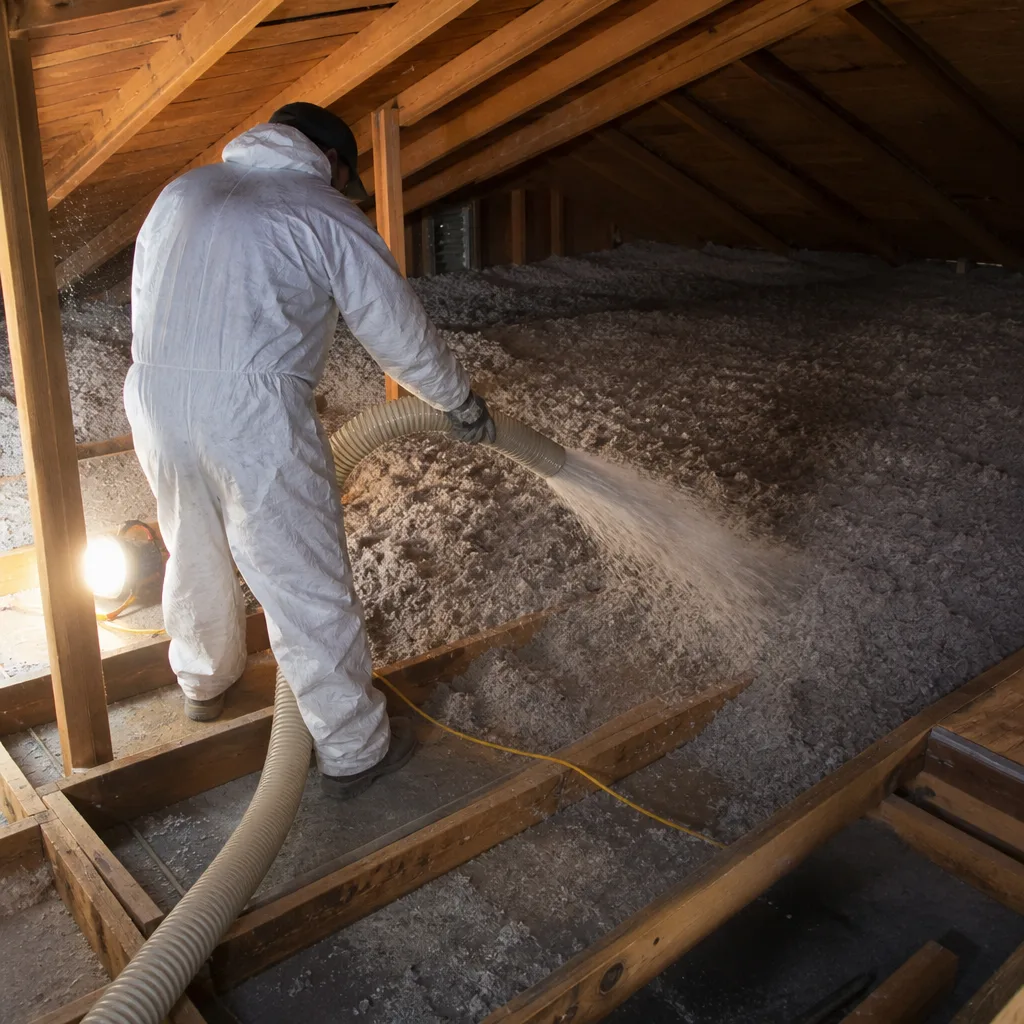
There’s a lot a homeowner can safely check without pulling anything apart: look for condensation, sagging, visible gaps at penetrations, and whether the barrier is on the interior or exterior side of the Rockwool. That inspection won’t hurt you or the assembly. Where DIY goes wrong with vapor barriers is in the sequencing and sealing – you have to seal penetrations and top plates before the barrier goes up, and you have to get the warm-side placement right for this climate, or you’ll trap moisture against the mineral wool and create a bigger problem than the one you started with. Working in an attic also means heat, height, and exposed wiring, which is where most injuries happen.
If you’ve already traced a failure to a specific wall or the crawl space, call us at (844) 320-7926 and we’ll talk through it. We’ll give you a written price before any work starts, and a free second opinion on any competing estimate you already have.
FAQs
Most properly installed vapor barriers last 20 to 30 years, but in Boulder City’s dry heat and intense sun, the failure points come earlier – usually at the seams and the staple line. Reinforced poly barriers tend to last the full range; older or thin sheeting often fails at 10 to 15 years, especially on south- and west-facing walls. Call (844) 320-7926 if your barrier is older than a decade and you’re seeing any of the signs above.
Sometimes. A localized tear under 12 inches, a loose staple run, or a single unsealed penetration can be repaired with compatible tape and a proper seal without replacing the whole assembly. But if the barrier has failed on the wrong side of the Rockwool, repairs won’t fix the moisture problem – it has to be re-oriented. Call (844) 320-7926 and we’ll tell you which situation you’re in.
Most single-wall or partial-crawl-space barrier replacements take half a day. A full attic floor or full crawl space assembly typically takes a full day, sometimes two if old material has to come out and penetrations need sealing first. Call (844) 320-7926 to schedule an assessment and get a realistic timeline for your home.
We source barrier materials from manufacturers like Owens Corning, CertainTeed, and Icynene, along with other trusted suppliers, and we confirm compatibility with your specific Rockwool product before ordering. We don’t carry proprietary parts on a truck and we don’t claim stock of any specific barrier – the right product for your assembly gets selected after we’ve inspected it. Call (844) 320-7926 for a free estimate.
Written by the team at Envelope Insulation Boulder City, serving Boulder City and nearby areas.
Ready to get this done right? Call (844) 320-7926 for a free estimate. We’ll inspect your Rockwool assembly, confirm what the barrier needs to be, and hand you a written price before any work starts – no phone-tag, no urgency, no surprises.