

Icynene Vapor Barrier Installation: The Boulder City Owner’s Guide
Icynene-compatible vapor barrier installation in Boulder City typically runs $1.40 to $3.10 per square foot installed, or roughly $1,700 to $4,600 for a typical 1,200 to 1,500 sq ft crawl space, and most jobs can be scheduled same-day or next-day. We install and repair the vapor barrier systems that pair with Icynene spray foam and Icynene-spec’d crawl space assemblies, and we price the work in writing before anyone starts.
Owners usually find this failure the same way. A musty smell climbs out of the crawl space and settles into the first floor. The HVAC bill jumps in July. Someone pulls up a corner of the liner and finds pooled water underneath it, or the plastic has turned chalky and brittle from our summer heat. In Boulder City, we see it most on pier-and-beam homes and on slabs where the barrier was laid before the foam was sprayed, so the two materials never got sealed to each other.
Key Takeaways
- Installed price for Boulder City: $1.40 to $3.10 per sq ft, all-in.
- Vapor barrier must be sealed to the foam, not laid under it. That step is where most jobs fail.
- UV and 110°F attic-side heat will break down thin 6-mil film in 3 to 5 years here. 10-mil reinforced is the floor we install.
- Written price before work starts. Documented Photo Record when we leave.
Which Icynene Models This Applies To
Icynene is a spray foam brand, not a vapor barrier brand, so “Icynene vapor barrier installation” is really about the barrier and sealant that pair with the foam in a crawl space, rim joist, or under-slab assembly. The foam lines we see most in Boulder City homes are Icynene Classic Max, Icynene ProSeal, and Icynene MD-R-200, plus older installations of the original water-blown Icynene Classic from before the formulations were updated. Each one has a different closed-cell vs open-cell character, and that changes which barrier and adhesive will bond to it and which will just sit on top and peel.
To identify what you have, look at three things. First, the label on the foam can or the installer’s sticker, usually on the rim joist or near the crawl space hatch. Second, the foam itself: open-cell Icynene is soft and spongy and you can press a thumb into it. Closed-cell is rigid and dense. Third, the thickness, measured with a probe at a few spots. That tells you which vapor barrier spec will actually seal to the foam edge, because a barrier that’s mechanically fastened to open-cell foam without the right transition tape will separate within a season.
On the OEM-vs-aftermarket question: Icynene foam is proprietary, but the vapor barrier is not. We source reinforced 10-mil or 12-mil liners and compatible sealants from Owens Corning, Johns Manville, CertainTeed, and Icynene’s own accessory line, and we’ll spec a quality aftermarket barrier wherever it performs the same. There’s no proprietary lock-in on the barrier side, and we’ll tell you plainly which one fits your foam. We are an independent service provider; we are not affiliated with Icynene.
Signs Your Icynene Vapor Barrier Installation Is Failing
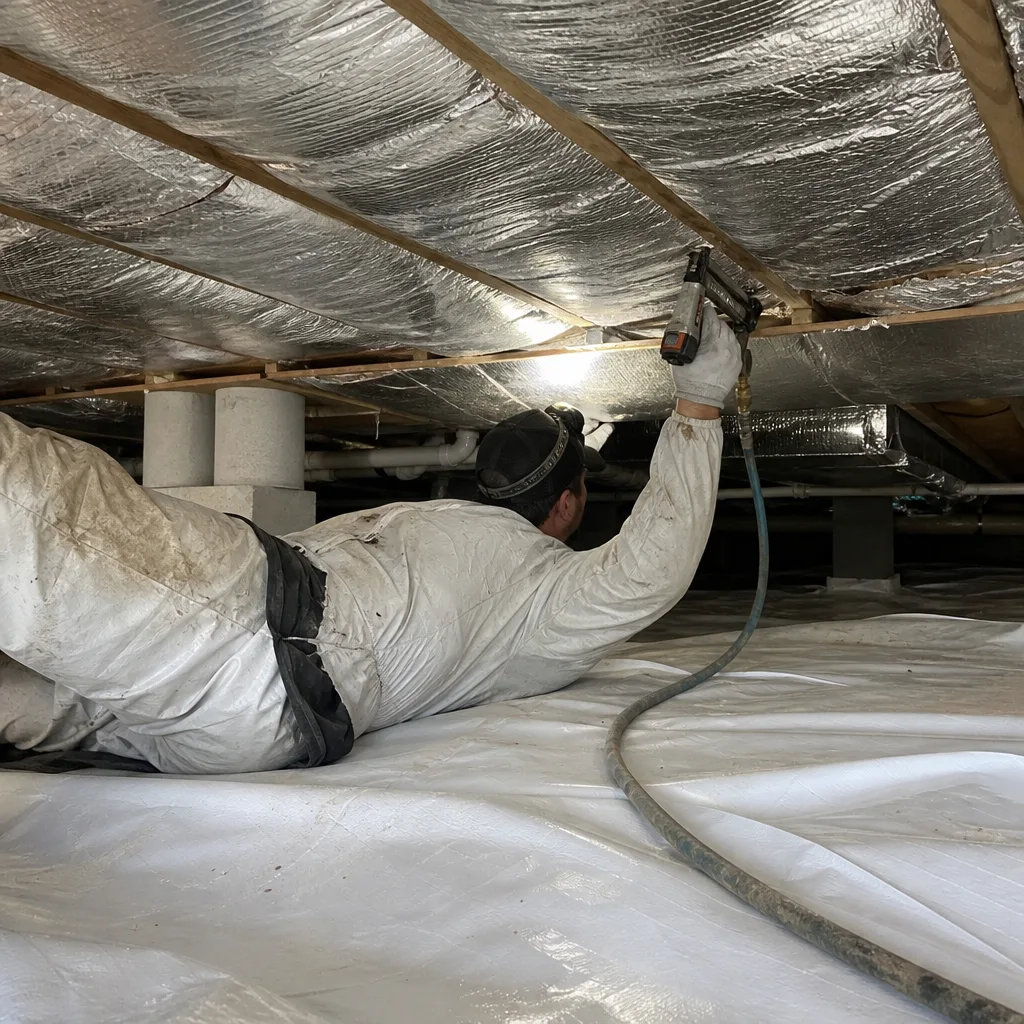
- Musty odor on the first floor. Moisture is migrating up through the crawl space and the barrier isn’t stopping it. In Boulder City, that usually means the barrier is torn at a pier or the ground was never graded before it was laid.
- Liner pulling away from the foam edge. The transition tape failed, either from the wrong adhesive or from the foam curing after the tape was applied. Once it gaps, humid air bypasses the whole barrier.
- Water pooled on top of the plastic. That’s condensation from a barrier that isn’t sealed to the walls and piers, so warm air reaches the cool film. It’s a sealing failure, not a moisture-source failure.
- Chalky, brittle, or torn film. UV exposure and our heat break down thin 6-mil quickly here. Film that snaps instead of stretching is past its service life.
- Blower-door number that won’t improve. If a test reads the same before and after foam was sprayed, the barrier and the foam aren’t working as one assembly. That’s a documented failure, and it’s fixable.
Replacement Cost & What’s Included
For a typical crawl space in Boulder City, most jobs land in this range. Your written price will match it, line by line.
| Line item | Installed range |
|---|---|
| Vapor barrier, 10-mil reinforced (materials + labor) | $1.40 – $2.20 / sq ft |
| Vapor barrier, 12-mil with foam-edge transition seal | $2.10 – $3.10 / sq ft |
| Rim joist + pier sealing and tape-out | $250 – $600 |
| Pre-install grading and debris removal | $150 – $450 |
| Blower-door verification (before/after) | Included on applicable jobs |
What drives the range: square footage, whether the crawl space needs grading or rodent cleanup first, and how much foam-edge transition work is required. If your existing barrier is sound but the tape failed, we tell you that and re-seal instead of replacing. Parts and labor are both itemized in the written price. Work is covered by the 365-Day Done Right Promise: if it’s not done right, we make it right.
DIY or Call Us?
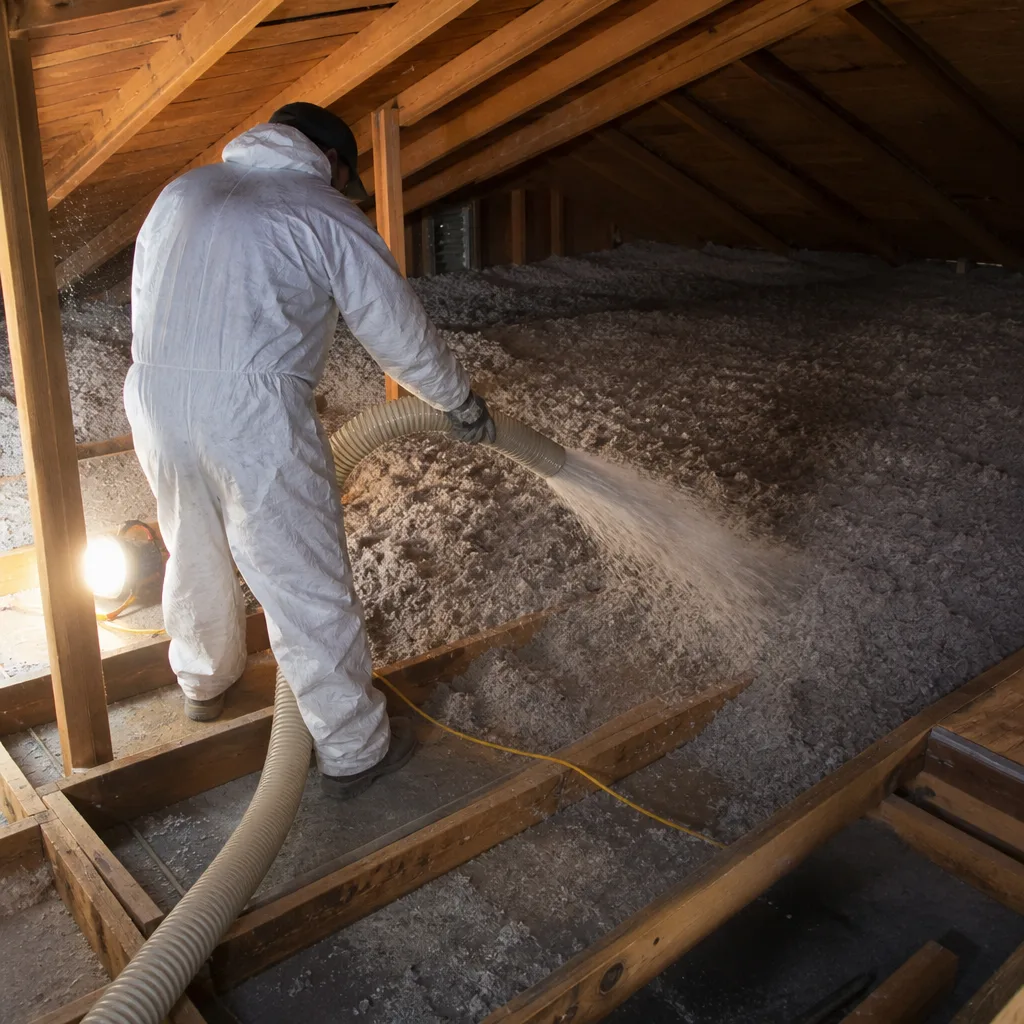
Some checks are safe. You can look for visible standing water, probe the film with a screwdriver handle to test for brittleness, and check whether the tape at the foam edge is still stuck. Those are observations, not repairs, and they help us quote faster.
Where DIY goes wrong is the sealing and the foam transition. A barrier laid by hand and stapled at the piers will gap within a season. Cutting into sprayed Icynene to tuck a barrier edge can also breach the air-seal the foam was there to provide, and once that seal breaks, you’ve traded a vapor problem for an air-infiltration problem, which the blower door will show. There’s a right sequence here, and skipping the transition seal is how most of the failed jobs we see in Boulder City got that way.
If you’ve found water, a separated tape line, or torn film, call us at (844) 320-7926 and we’ll get a technician out to look. Free second opinion on any written estimate you already have.
FAQs
Ten to fifteen years for a properly sealed 10-mil or 12-mil barrier, versus three to five years for thin 6-mil film in our heat. What shortens the life is UV exposure and an unsealed foam edge. We check both on every visit.
Yes, if the film is still pliable and only the transition tape or pier seals failed. If more than roughly 20 percent of the liner is brittle, torn, or holding water, we recommend replacement and show you the photos behind that call. Call (844) 320-7926 for a straight answer either way.
Four to eight hours for a typical 1,200 to 1,500 sq ft crawl space, and most Boulder City jobs are done in a single day. Grading and rodent cleanup will add time, and it’s in the written scope before we start.
We spec reinforced 10-mil or 12-mil liner and compatible sealants from Owens Corning, Johns Manville, CertainTeed, and Icynene’s accessory line, matched to your foam type. We don’t stock parts on a truck; we source per job and quote the exact material in the written price.
If you have an Icynene assembly that isn’t performing, we want to see it. Call (844) 320-7926 for a free estimate in Boulder City. Written price before any work starts, documented photo record when we leave, and before-and-after blower-door numbers so you can verify the result. We also handle other vapor barrier materials, including Reflectix, when that’s the right fit for the assembly.
Written by the team at Envelope Insulation Boulder City, serving Boulder City and nearby areas.