
5 Mistakes to Avoid With Attic Insulation
The most consequential attic insulation mistakes aren’t the ones homeowners make with a utility knife and a rental machine. Four of the five biggest problems we find in Boulder City attics were made by licensed contractors – because many of them treat insulation as a materials job instead of a building-science job. Here’s how to catch each one before you write a check. If you’d rather skip the risk entirely, call (844) 320-7926 and we’ll walk your attic with you.
Mistake 1: Blowing New Insulation Over Old Without Measuring What’s Already There
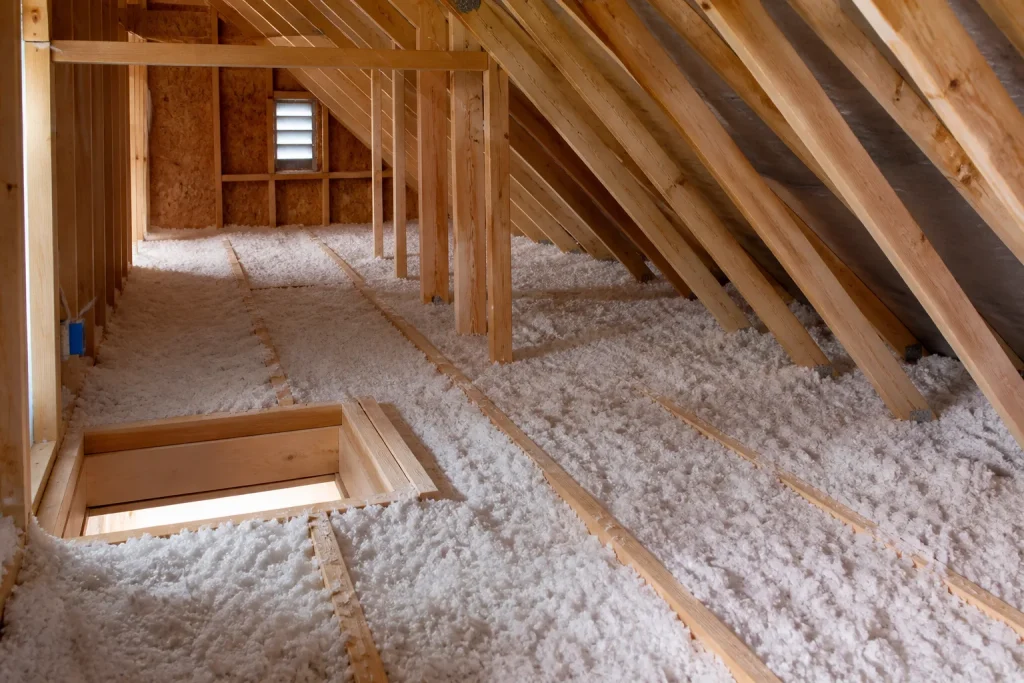
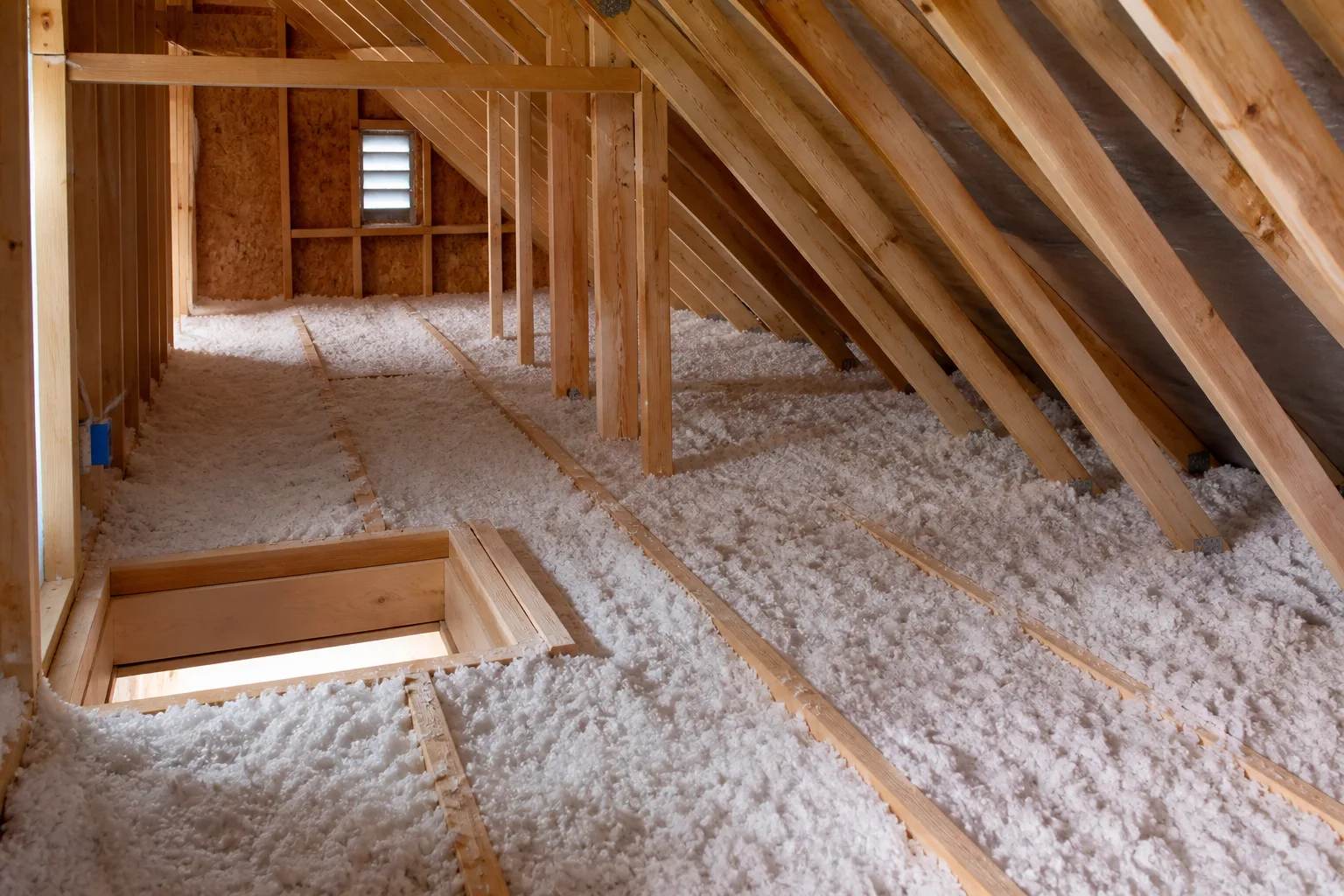
Topping off an existing layer of fiberglass or cellulose without measuring its effective R-value is the single most common shortcut we see. Insulation settles. Blown cellulose can lose 15 to 20 percent of its depth within a few years, and loose-fill fiberglass loses more in a vented attic where wind-washing moves it around. A contractor who eyeballs depth with a tape measure is measuring the wrong thing. The correct method is a probe-and-calculate: push a marked probe into the material at multiple points across the attic floor, record the actual settled depth, then apply the manufacturer’s settled-density R-value per inch for that specific product. Knauf cellulose and GreenFiber, for example, rate differently per inch than loose-fill fiberglass, and using the wrong chart throws the calculation off by a full R-value point or more. In a 1,500 square foot Boulder City ranch home, a 3-inch miscalculation on settled depth can mean the difference between hitting the Nevada code minimum and landing well under it – while the invoice still says you paid for a full job. If a contractor quotes you a price without probing the attic first, the number isn’t real.
Mistake 2: Skipping Top-Plate Air Sealing Before the Blown-In Goes Down
This is the mistake that costs Boulder City homeowners the most money, and it’s the one most likely to be made by the contractor, not the homeowner. The top plate is the wood framing that sits on top of the wall studs at the attic floor. Every gap where a wire, a plumbing pipe, a can light, or a partition wall penetrates that plate is an air bypass pathway – a direct chimney from your conditioned living space to the attic. Blow insulation over those pathways and the material can’t stop air that’s bypassing it entirely. A blower-door test – a pressurization reading that shows in a single number how much air your building envelope is losing – tells the story plainly. In a 1,500 square foot Boulder City ranch, we routinely see readings of 4,000 to 4,500 CFM50 before sealing and 2,000 to 2,300 after. In practical terms, the unsealed version of that home is running at roughly 8 to 10 air changes per hour (ACH50), and the sealed version lands closer to 4 to 5. The first $2,000 of a $4,000 job, in other words, can be performing at about 40 percent of its rated value on the day it’s installed. Sealed first, then insulated – in that order. That’s the standard we hold every Boulder City job to, and it’s why attic insulation in Boulder City starts with air sealing and never the other way around.
Mistake 3: Blocking Soffit Ventilation With the Blown-In Material
In a vented attic, the soffit vents along the eaves pull cool air in and push warm, moist air out through the ridge or gable vents. Blow insulation over the edge of that vent channel and the attic loses its intake. Roof deck moisture climbs, condensation forms on the underside of the sheathing, and by the following summer you’re looking at mold, curled shingles, and framing rot. The fix is a baffle – a rigid channel that holds the insulation back from the vent opening and preserves the air path – and it costs about $3 to $6 per bay to install properly. Verify before any material is blown by asking the contractor to photograph each bay from the attic side, showing the baffle in place and the insulation dammed back at the correct point. That photo belongs in the Documented Photo Record, not in a text on request. In our experience, missing baffles show up most often on rushed jobs where the crew blew material from the access hatch and never crawled the perimeter.
Mistake 4: Choosing R-Value From a National Chart Instead of Nevada’s Code Minimum
National insulation charts say one thing. Nevada’s adopted energy code says another, and the code is what your permit inspector and your future buyer will care about. Boulder City falls in IECC Climate Zone 3B, and the current Nevada code minimum for an attic in a vented residential assembly is R-38 – usually reached with about 13 to 14 inches of blown fiberglass or 10 to 11 inches of loose cellulose, depending on the product’s rated density. R-49 applies when the assembly is unvented, when you’re spraying closed-cell foam directly to the roof deck, or when a homeowner is voluntarily building in extra margin against the summer heat load, which in Boulder City is not a bad idea. What you should not accept is a contractor saying “we always do R-49” without explaining why – that’s a sign they haven’t read the code and are repeating what their supply house told them. A written scope should state the code citation, the target R-value, the product and manufacturer (Rockwool, CertainTeed, Johns Manville, and Owens Corning all appear on our Boulder City jobs for different reasons), and the settled depth required to hit that target. If it isn’t written, it isn’t specified.
Mistake 5: Accepting a Verbal “You’ll Feel the Difference” Instead of a Written Blower-Door Reading
Performance claims without a number are stories. The only defensible evidence that the air-sealing portion of an attic job was completed is a post-installation blower-door reading – a second pressurization test, run at the same pressure, recorded in CFM50, and printed on a document you keep. Here’s what that document should look like:
- The pre-work reading, taken before any material is touched, showing your home’s baseline CFM50 and estimated ACH50.
- The post-work reading, taken after sealing and insulation are complete, showing the new figure.
- The percentage reduction, calculated and stated in plain language.
- The technician’s name and date on the reading, plus a photo of the gauge itself.
We publish before-and-after blower-door numbers on every applicable Boulder City job, and we do it because it’s the only figure that proves the middle of the job – the part you can’t see once the insulation is down – actually happened. If a contractor can’t or won’t provide that document, ask what they’ll give you instead. Under our Haven Standard, the answer is: a written scope, a written warranty, and a photo record, delivered before anyone lifts a tool.
When to Call a Pro
Some parts of an attic job are safe for a careful homeowner – checking the baffles visually, confirming the settled depth with a probe. Many are not. Crawling a low-slope Boulder City attic in July with a loose-fill surface is a heat and fall hazard, and any work that touches can lights, exhaust fans, or combustion flues needs a competent person who understands what happens if a flue is blocked or a recessed light is buried. Gas lines and wiring in the attic are not DIY territory. If your scope touches any of that, bring in a pro. When you do, ask for the blower-door number, the probe-and-calculate worksheet, and the photo record. If a contractor seems surprised by any of those requests, that tells you something.
Related services in Boulder City: if your attic has active air leakage you’re ready to stop, see our Envelope Insulation Boulder City home page. If you’re also chasing moisture or a cold floor above the crawl space, crawl space encapsulation and vapor barrier in Boulder City is often part of the same conversation. And if your attic is an unvented assembly with the roof deck as the thermal boundary, spray foam insulation in Boulder City is the correct tool, and one we specify with Icynene or Demilec depending on the cavity profile.
The Bottom Line
The five attic insulation mistakes are all preventable, and four of them happen before a pound of material reaches your attic floor. Probe and calculate the existing material rather than eyeballing depth. Seal the top plate and every penetration before anything is blown. Install baffles so the soffit vents keep working. Choose R-38 to R-49 based on Nevada’s adopted code and your actual assembly, not a chart. Demand the post-work blower-door reading in writing, because it’s the only document that proves the middle of the job happened. If you’re in Boulder City and need help, Envelope Insulation Boulder City offers free estimates – call (844) 320-7926, and we’ll show you what the written scope, photo record, and blower-door readings will look like before you commit to anything.
Frequently Asked Questions
Most attic insulation jobs in a 1,500 square foot Boulder City ranch home run between $2,800 and $5,500, depending on whether air sealing and baffle work are included, the target R-value, and whether old material needs removal. Air sealing alone typically adds $900 to $1,800 and is the single most valuable portion of the job in a Climate Zone 3B home. Call (844) 320-7926 for an exact written price – the number is written before any work starts, not after.
Sometimes, yes – but only after a probe-and-calculate measurement of the existing material’s settled depth and effective R-value, and only after the top plate and penetrations are air sealed. Blowing new material over unsealed bypass pathways wastes most of the new insulation’s rated performance. Call (844) 320-7926 and we’ll probe the attic and calculate the real starting point before quoting.
R-38 is the Nevada code minimum for a vented residential attic in Climate Zone 3B, and it’s sufficient to pass inspection. R-49 makes sense when the attic is unvented, when you’re spraying foam to the roof deck, or when you want a comfort margin against Boulder City’s summer heat load. The written scope should state which one applies and why. Call (844) 320-7926 for a free second opinion on any written estimate you’ve already received.
A blower-door test measures, in CFM50, how much air your home loses at a standardized pressure – usually 50 pascals. Comparing the pre-work and post-work readings shows you the exact percentage of air leakage the job eliminated, which is the only defensible proof that sealing happened. Call (844) 320-7926 and we’ll show you a real before-and-after record from a nearby Boulder City job.
Written by the team at Envelope Insulation Boulder City.
Need Insulation Help?
Call Envelope Insulation Boulder City - licensed & insured, here with fast after-hours help in Boulder City.
(844) 320-7926