
Spray Foam Insulation: Repair or Replace? How Boulder City Homeowners Decide
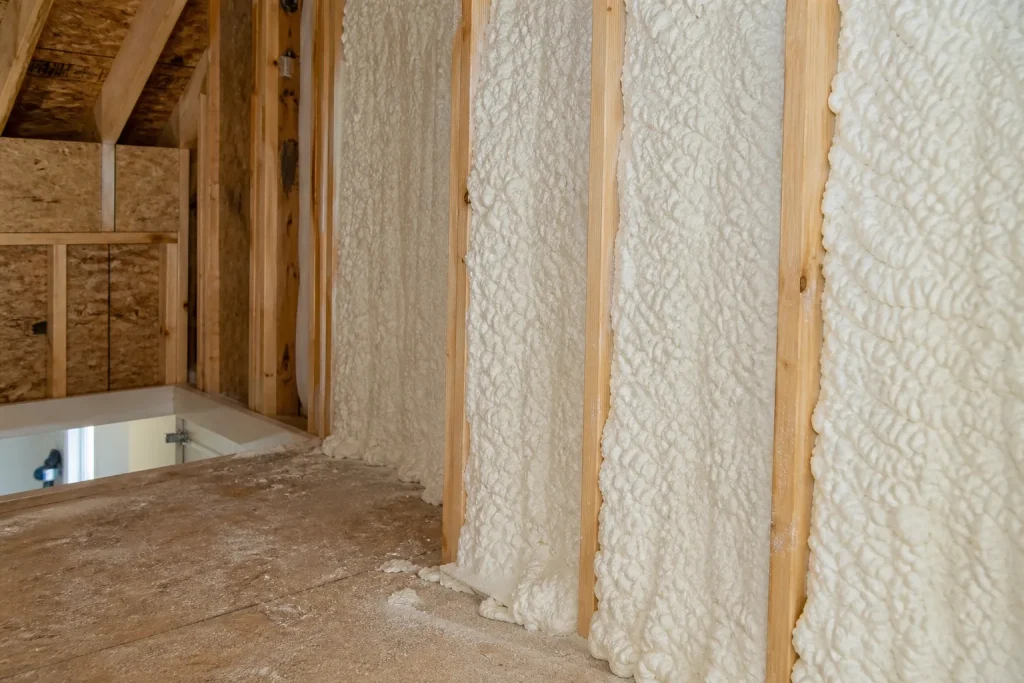
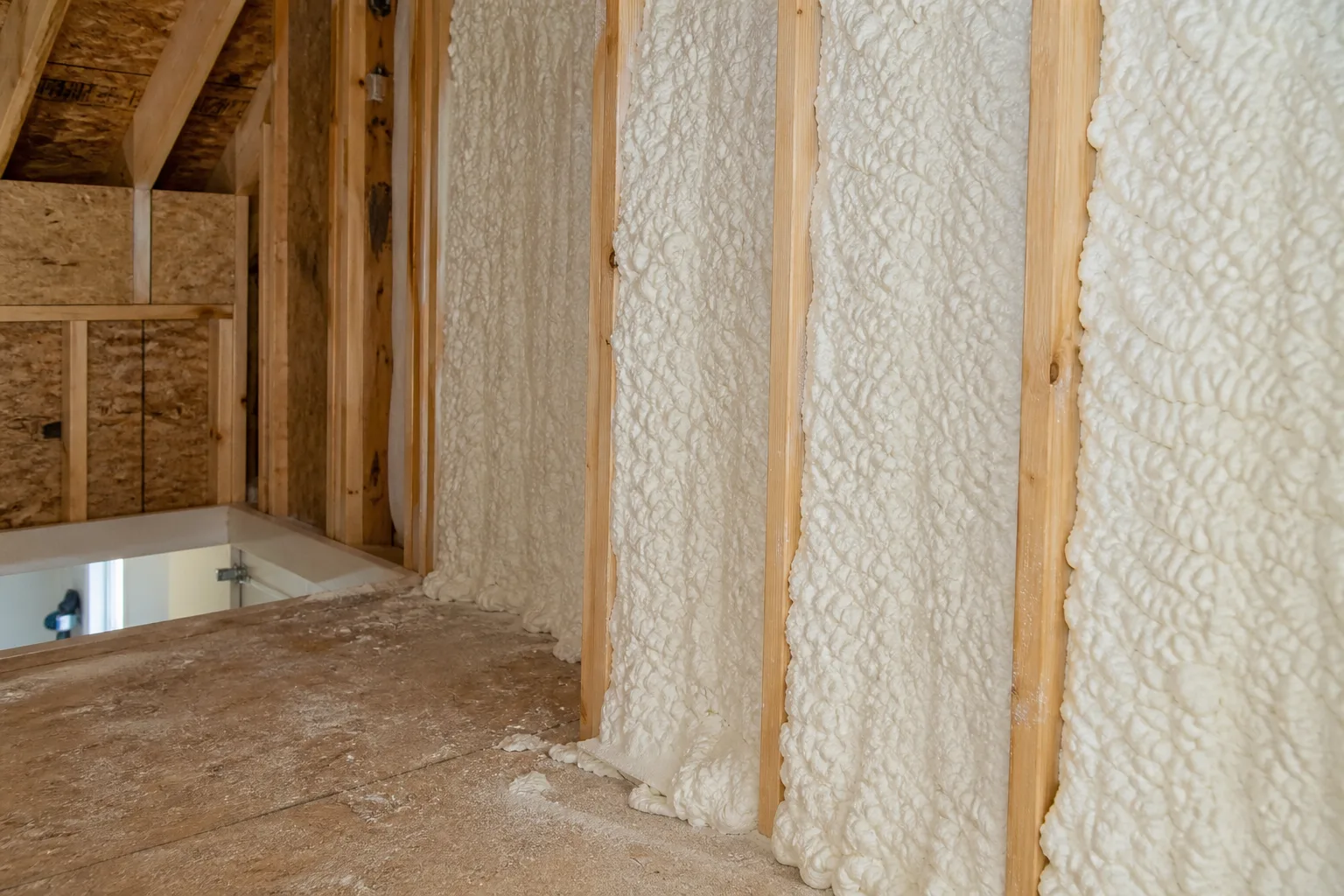
Spray foam that’s pulled away from a rim joist by 1/16 inch is functionally uninsulated at that joint. The air seal is broken and the R-value at the gap is basically R-1. You can’t see that gap from the attic floor, and you can’t feel it with your hand. It shows up on a thermal camera and nowhere else. That’s the whole problem with spray foam in Boulder City: when it fails, it usually fails invisibly, and the decision to repair or replace turns on a diagnosis most homeowners never get before a quote.
If you’d rather have someone read the envelope for you, call (844) 320-7926. Estimates are free, and a written price comes before any work starts.
Why spray foam fails differently than fiberglass
Fiberglass fails in ways you can see. It sags, it gets wet, it compresses under a foot of stored boxes, and you can tell just by looking. Spray foam is the opposite. It goes on as a liquid, cures into a rigid or semi-rigid mass, and bonds to whatever it touches. When that bond holds, it’s excellent. When it doesn’t, the foam still looks fine from six inches away while the building envelope underneath it has quietly opened up.
Boulder City makes this worse than most places. Summer attic temperatures here swing hard between a 105-degree afternoon and a 70-degree night, and that daily thermal cycle puts constant stress on the bond line between foam and wood. Foam and framing expand at different rates. Do that a few thousand times and a bond that was perfect at installation can start to peel at the edges. Homes with spray foam installed before 2015 warrant a camera inspection before anyone, including us, declares the envelope intact.
In our experience, three failure modes account for nearly every spray foam problem we find in Boulder City.
The three failure modes we actually find in Boulder City attics
1. Thermal-cycle delamination
This is the foam separating from the substrate: the rim joist, the roof deck, the top plate, the stud face. It starts at an edge, usually where the foam thins out or where two passes met, and it grows with every hot day. A 1/16-inch gap at a rim joist is a direct air path. The R-value at the joint is effectively gone, and the gap is invisible from the floor.
2. Off-ratio expansion failure
Spray foam is a two-part chemistry. When the A and B components come out of the gun in the wrong ratio, the foam cures wrong. Sometimes it stays soft and gummy. Sometimes it cures brittle and crumbles at a touch. Both are chemistry failures, not installation sloppiness, and they can happen across a whole wall or in one isolated pass. You can’t fix this by spraying more foam on top. More on that below.
3. UV degradation on exposed foam
In a vented attic, foam on the roof deck or an open rafter bay needs a covering. Sunlight and even ambient UV through vents break down the foam surface over time, and the surface turns chalky and friable. Boulder City’s 300-plus days of sun a year are rough on any exposed foam. If your attic vents to the outside and you can see bare foam up there, that’s a UV exposure question worth checking.
How do you tell cosmetic imperfection from structural failure?
You don’t, by eye. That’s the honest answer. A slightly uneven foam surface, a few pinholes, a rough texture where two passes met: none of that tells you whether the bond underneath is intact. The tool that does is thermal imaging, run while the house is under blower-door depressurization.
Here’s what that means in plain terms. A blower-door test is a pressurization reading that shows, in one number, how much air your building envelope is losing. When we pull the house negative and scan the attic with a thermal camera, air moving through a delaminated seam shows up as a temperature anomaly you can see on screen. Air that’s leaking through a gap is cooler or warmer than the surrounding surface, and the camera catches the difference. Pinholes and surface texture don’t show up that way. Real failures do. That’s how you separate “this looks a little rough” from “this joint is leaking air.”
If you want to see what that diagnostic looks like on a real home, our team publishes before-and-after blower-door numbers on every applicable job so you can see the actual performance change, not just our word for it.
When is repair actually the right call?
Repair makes technical sense in a narrower set of cases than most homeowners expect, and it’s worth being precise about it.
- Delamination zones under 2 square feet with intact substrate. If the foam peeled off but the wood underneath is clean, dry, and solid, that small zone can be re-foamed. The new foam bonds to the same substrate the old foam failed to hold.
- Localized UV degradation with sound foam underneath. Surface breakdown over a small area can often be addressed by removing the friable layer and re-covering, provided the foam below is still bonded.
- Isolated pinholes with no air movement behind them. If a thermal scan under depressurization shows no leak, you’re looking at a cosmetic issue, not a failure.
What does not qualify for repair: any off-ratio section, any delamination zone with compromised substrate underneath, and any failure that runs a continuous seam. Those need a different approach.
When does spray foam have to be replaced?
Off-ratio foam has to come out. This is the rule that surprises people, and it’s the one we won’t bend on. New foam won’t bond correctly to uncured or chemically compromised substrate. Spray good foam over bad foam and you inherit the bad bond. It’s a waste of money that looks like a fix for about a season.
The same goes for delamination where the substrate itself is degraded, wet, or contaminated. And it goes for any failure that runs a continuous seam across a rim joist or roof deck, because re-foaming a seam in pieces costs nearly as much as doing the whole run correctly.
Replacement cost carries a labor reality that a lot of quote comparisons skip. Closed-cell spray foam doesn’t peel off. It has to be ground or cut away, and that process generates a fine particulate. It requires containment, PPE, and proper disposal. That removal labor is the single biggest line item in any replace decision, and it’s the number you should ask about before you compare two quotes. If a competitor’s “replace” quote doesn’t itemize removal, ask them to. A comparison without removal labor isn’t a comparison.
What documentation should come with a spray foam repair?
You should walk away with a record, not a verbal “looks good.” Under The Haven Standard, every job begins with a written price and closes with a documented record, and for spray foam work specifically, that record should contain:
- Thermal images before and after, taken under the same depressurization conditions so the comparison is honest.
- Blower-door ACH50 readings before and after – air changes per hour at 50 pascals of pressure. One number that shows how much tighter the envelope is.
- A written description of each repair zone, with square footage and the product used, so you know exactly what was done and with what.
- The written scope and written warranty, delivered before anyone lifts a tool.
That’s the documentation you can hand to a buyer, an inspector, or the next contractor. If a spray foam quote in Boulder City doesn’t include a before-and-after blower-door number, it isn’t a performance record. It’s a receipt for labor.
A quick note worth remembering
We once walked an attic in Boulder City where the homeowner was sure the foam had “gone bad” because the surface looked chalky. The thermal scan found one small delamination at a rim joist and nothing else. The rest of the envelope was sealed tight. One repair zone, one re-foam, done. The alternative, a full replacement, would have cost several times more for a problem that wasn’t there. The camera pays for itself more often than you’d think.
When to call a pro
Spray foam repair isn’t a weekend project. The thermal diagnosis requires a blower door and a camera, and the removal of failed closed-cell foam involves grinding equipment, containment, and airborne particulate you don’t want in an occupied home without proper controls. This is a place where the right call is to leave it to a trained technician and get the documentation to prove what was found and what was fixed.
Related services in Boulder City: if the camera work turns up a bigger envelope problem, Attic Insulation in Boulder City covers the full scope, and if the failure is in a crawl space instead of the attic, Crawl Space Encapsulation & Vapor Barrier in Boulder City is where to start. For a full view of what we do on Envelope Insulation Boulder City home projects, or the details of Spray Foam Insulation in Boulder City, those pages carry the specifics.
The Bottom Line
Repair is the right call when the failure is small, localized, and sits on sound substrate. Replace is the right call when the foam cured off-ratio, when the substrate underneath is compromised, or when a continuous seam has let go. The thing that separates the two is a thermal scan under blower-door depressurization, and the thing that proves the job was done is a before-and-after ACH50 reading and a written record of every repair zone.
- Can’t see the failure? Get a thermal scan before you accept any quote.
- Off-ratio foam has to come out. No amount of new foam fixes a bad bond underneath.
- Ask for removal labor as a line item on any replace quote.
- Every spray foam job should end with thermal images, ACH50 readings, and a written zone-by-zone record.
If you’re in Boulder City and need help deciding, Envelope Insulation Boulder City offers free estimates and a free second opinion on any written estimate you’ve already got. Call (844) 320-7926. A live person answers.
Frequently Asked Questions
The only reliable way is a thermal camera scan under blower-door depressurization. Visible surface flaws like pinholes or rough texture don’t prove failure. Air movement through a delaminated seam shows up as a temperature anomaly on camera, and that’s the signal to trust. Call (844) 320-7926 to schedule one.
Only over sound, fully cured substrate. New foam won’t bond correctly to off-ratio, uncured, or chemically compromised foam, and spraying over it just inherits the bad bond. Off-ratio sections have to be mechanically removed first. Call (844) 320-7926 and we’ll tell you which category your attic falls into.
Closed-cell foam has to be ground or cut away rather than peeled, and that generates fine particulate that requires containment, PPE, and proper disposal. That removal labor is the biggest line item in any replace decision, and it’s the number to ask about before you compare quotes. Call (844) 320-7926 for a written estimate that itemizes it.
Spray foam doesn’t have a fixed lifespan and shouldn’t be replaced on a calendar. It should be diagnosed. In Boulder City’s thermal swings, pre-2015 foam is worth a camera inspection, but age alone doesn’t mean replace. The thermal scan and ACH50 reading tell you what’s actually happening. Call (844) 320-7926 and we’ll run those before recommending anything.
Written by the team at Envelope Insulation Boulder City.
Need Insulation Help?
Call Envelope Insulation Boulder City - licensed & insured, here with fast after-hours help in Boulder City.
(844) 320-7926