
Blown-In Insulation: Repair or Replace? How Boulder City Homeowners Decide
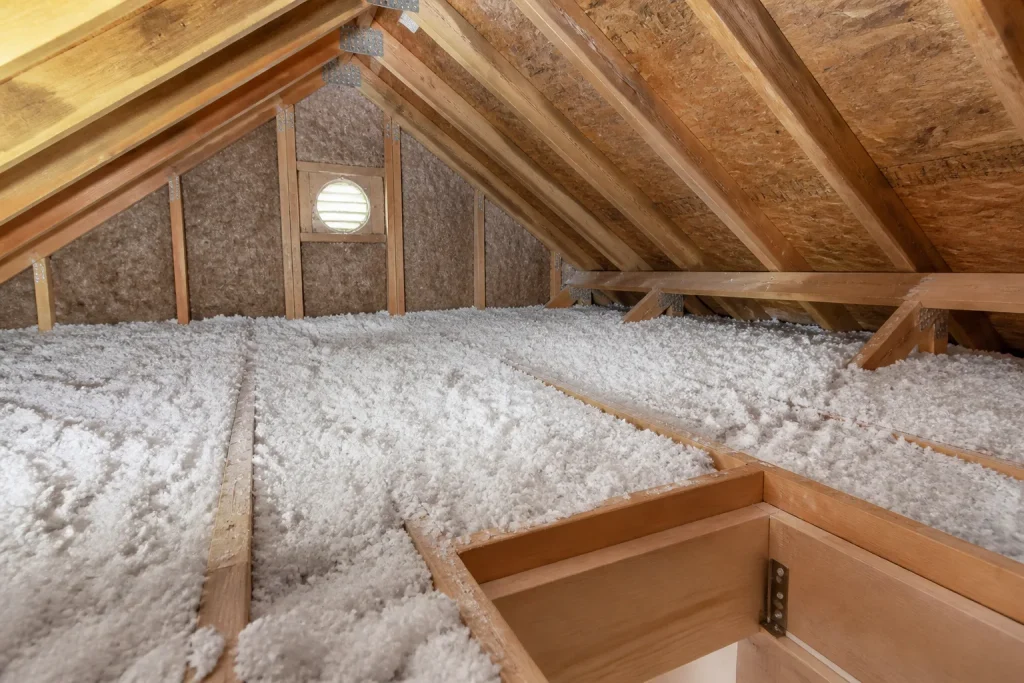
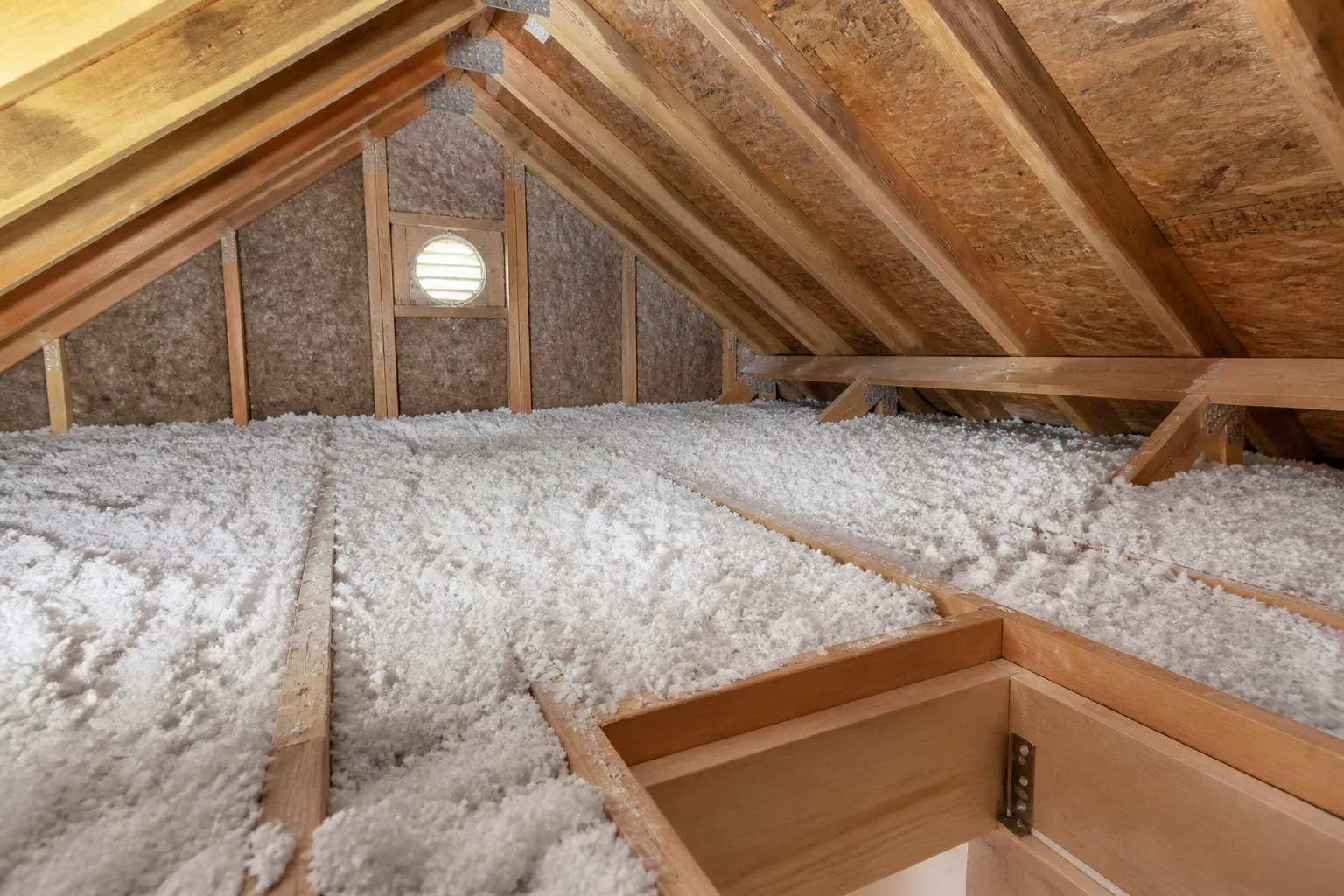
Blown-in fiberglass in a 1990s Boulder City home has likely settled 15 – 25% from its original installed depth. That means an attic built to R-30 at construction is now performing closer to R-23 to R-25 – below Nevada’s current code minimum of R-38, and below the threshold where summer cooling costs begin compounding noticeably. The quick answer: most Boulder City attics don’t need replacement. They need measurement, a moisture check, and a decision about whether topping off gets you to R-38.
If you’d rather not climb into a 130-degree attic to find out, call us at (844) 320-7926. We’ll measure it and tell you the truth.
Why Is Blown-In Insulation Depth More Important Than Material Condition?
Because fiberglass loosefill doesn’t wear out – it settles. The glass fibers themselves don’t degrade with age the way roofing shingles or wood siding do. What changes is the volume of air trapped between them. Once the material compacts and the air pockets collapse, the R-value drops in a straight line.
Three materials dominate Boulder City attics, and each tells a different story after 20 to 30 years:
- Fiberglass loosefill settles and shifts but holds its insulating capacity per inch. A settled attic is usually a depth problem, not a material failure.
- Cellulose starts with a slightly higher R-value per inch and settles more slowly, but it absorbs moisture. If the vapor drive through the ceiling assembly has been wrong for years, cellulose can lose R-value in ways a visual inspection won’t show.
- Mineral wool is less common in this housing stock but holds up best to moisture and compaction. If you find it, you’re working with the most forgiving material in the attic.
We pulled one out of a garage over in the Historic District last month where the original fiberglass had settled to less than four inches. The homeowner had been quoted a full replacement. It needed a top-off and air sealing – a fraction of the cost.
How Do You Measure What’s Actually In Your Boulder City Attic?
Measure it properly instead of eyeballing it. A $35 depth gauge or a plain wooden dowel marked in inches will tell you more than any contractor’s walk-through. Here’s the protocol we use:
- Pick 12 measurement points spread evenly across the attic floor – corners, center, both sides of the ridge, and along the eaves.
- Push the ruler down through the insulation until it hits the drywall (not the joist top, which sits above the ceiling).
- Record the depth at each point in inches.
- Average the 12 readings.
- Multiply by the settled R-value per inch for your material: roughly 2.5 for settled fiberglass, 3.2 for cellulose, 3.5 for mineral wool.
Twelve readings on a typical Boulder City ranch-style attic takes about 20 minutes if you’re careful and wear a mask. That single average is the number that drives the rest of the decision.
Repair or Replace: Where’s the Threshold?
The threshold comes down to two numbers: current R-value and moisture evidence. If your existing material tests at R-19 or above and passes a moisture probe test at three separate points, topping off to R-38 is typically cost-effective. If it reads below R-13, or if two of three moisture probes come back elevated, removal and restart is the defensible choice.
Here’s the decision matrix we use on every Boulder City attic we inspect:
- Above R-19, dry: Top off. Cheaper, faster, no haul-away. Roughly half a day for a typical home.
- R-13 to R-19, dry: Top off, but plan for removal next time. The existing material is doing useful work even if it’s shy of where it needs to be.
- Below R-13, dry: Borderline. Usually remove, air-seal, and restart fresh so you know exactly what’s up there.
- Any R-value, moisture present: Remove. Don’t bury wet insulation under new material – you’ll trap the moisture against the ceiling deck.
If you’re comparing options on the whole attic rather than just the loosefill, our attic insulation page lays out the full scope.
Why Does the Blower-Door Test Come Before the Repair-or-Replace Decision?
Because a blower-door test – a pressurization reading that shows, in one number, how much air your building envelope is losing – tells you something your depth gauge can’t. If the existing attic shows high ACH50 (that’s air changes per hour at 50 Pascals of pressure), the blown-in insulation has likely shifted away from the air-bypass paths it was supposed to cover: top plates, can lights, plumbing penetrations, the chimney chase.
Topping off that attic without air sealing first repeats the original installation error. You’re paying to bury the same leaks under more material. Before any Boulder City repair-or-replace decision, we insist on sealing first and insulating second – in that order – because we’ve seen what happens when it goes the other way.
Every job we complete includes before-and-after blower-door numbers, so you can see the performance change you paid for. If a contractor hands you a quote for insulation without a plan to seal, ask them why. On the crawl side, the same airflow logic applies – our crawl space encapsulation and vapor barrier page covers how that works below the living space.
What Should a Completed Top-Off or Replacement Job Document?
You should walk away with numbers, not a verbal summary. Here’s the documentation a finished top-off or replacement should include:
- Pre-job depth measurements at all 12 points
- Pre-job blower-door reading (CFM50, plus ACH50)
- Post-job depth measurements at the same 12 locations
- Post-job blower-door reading
- Product identification – manufacturer, product name, and R-value per inch – for warranty and rebate purposes
- Photo record of the air sealing work before any material was added
That last one matters because rebate programs and utility incentive paperwork ask for it. Under Haven Standard: Have it in writing, we bring those numbers to every Boulder City job as standard practice – the photos and readings are included, not something you have to chase down afterward.
When Should You Call a Pro?
If your average depth at 12 points comes back under 6 inches, if the material looks matted or clumped in the middle of the attic (not just at the edges where the wind blows it), if you find rust on the framing or staining on the ceiling drywall, or if your summer cooling bills have climbed 20% or more over the past three seasons without a change in equipment – that’s the point where a pro’s measurements are worth more than another YouTube video.
The attic environment itself is the other honest reason to call. Boulder City July attic temperatures regularly pass 140°F, and full coveralls, knee pads, a respirator, and a headlamp aren’t a casual Saturday outfit. If you’re weighing other options for a tough assembly, our spray foam insulation page covers where closed-cell makes sense and where it doesn’t.
Related services in Boulder City: Envelope Insulation Boulder City home for the full building-envelope lineup, plus the attic, crawl space, and spray foam pages linked above.
The Bottom Line
Most Boulder City blown-in insulation decisions come down to depth, moisture, and air sealing – in that order. Measure 12 points, average the depth, multiply by settled R-value per inch, and check moisture at three points. If you’re above R-19 and dry, top off. If you’re below R-13 or wet, remove and restart. And either way, air-seal before anything gets buried.
Blown-in insulation is one of the few home upgrades where less than a day of work can measurably change your cooling bill. If you’re in Boulder City and want the measurements done for you, Envelope Insulation Boulder City offers free estimates – call (844) 320-7926. Every one of the 9,000+ homes we’ve sealed and insulated since 2016 started with a written price before anyone lifted a tool, and a documented record before the crew left.
Frequently Asked Questions
Yes, in most cases – as long as the existing material is dry and air sealing happens first. Topping off is one of the most cost-effective upgrades you can make to a home reading R-19 or above. Boulder City attics often just need the extra inches to get to R-38.
Measure it. Lay a ruler or dowel at 12 evenly spread points across the attic floor, push through to the drywall, and average the readings. If the average sits 15 – 25% below the original designed depth, it’s settled. Call (844) 320-7926 if you’d like us to do this measurement and give you a written summary.
Usually not – fiberglass compacts but doesn’t degrade chemically, so settled fiberglass is still doing useful work. Removal is warranted when moisture is present or when the material is below R-13 and you want a clean restart. For a free second opinion on any written estimate, bring us the quote and we’ll read it with you.
On its own, a diagnostic blower-door test typically runs $250 – $450 depending on home size and access. It’s worth doing when you’re making a repair-or-replace decision because the reading tells you whether the existing insulation has shifted away from the air-bypass paths – information a visual estimate can’t produce. Call (844) 320-7926 for pricing on your specific home.
R-38 is the current Nevada code minimum for this climate zone, and most Boulder City homeowners are best served landing at R-38 to R-49. Higher than that gains little in this climate. If the cost-per-R-value math is close, aim for R-49 so you don’t have to think about it again for a couple of decades.
Written by the team at Envelope Insulation Boulder City.
Need Insulation Help?
Call Envelope Insulation Boulder City - licensed & insured, here with fast after-hours help in Boulder City.
(844) 320-7926