
Last updated November 17, 2026
The Complete Guide to Insulation in Boulder City
A measured attic in Boulder City at 2 p.m. in July can read 158°F – 48 degrees hotter than the peak outdoor air temperature. That gap is the whole story. Your insulation isn’t fighting outside heat; it’s fighting heat that has already radiated through the roof deck and is now pouring down onto the attic floor. Conduction and radiation are two different problems, and they need two different solutions. This guide maps every zone of a Boulder City building envelope to the actual heat-flow numbers we record, explains what IECC 2021 requires and where Boulder City goes further, and shows you why R-value alone is an incomplete specification.
Quick Answer
Insulation in Boulder City works only when air sealing comes first, radiant heat gain is addressed alongside conductive R-value, and each envelope zone – attic floor, knee walls, exterior walls, rim joists, crawlspace – gets the right material and the right depth for our climate. Most homes here need attic air sealing, R-49 to R-60 of blown insulation, and a radiant barrier to handle summer attic temperatures that reach 158°F. A proper job produces written before-and-after blower-door numbers so you can verify what you paid for.
Table of Contents
- Why 158°F Attics Change the Insulation Math
- Mapping Every Envelope Zone: Attic, Walls, Rim Joists, Crawlspace
- What IECC 2021 Requires in Boulder City – and Where Enforcement Is Stricter
- How 40-Degree Nighttime Swings Change Crawlspace Decisions
- Air Leakage: The Multiplier That Erases R-Value
- What a Finished Job Produces: Numbers, Specs, Photos
- Choosing Materials for Desert Conditions
- What Insulation Costs in Boulder City
Why 158°F Attics Change the Insulation Math
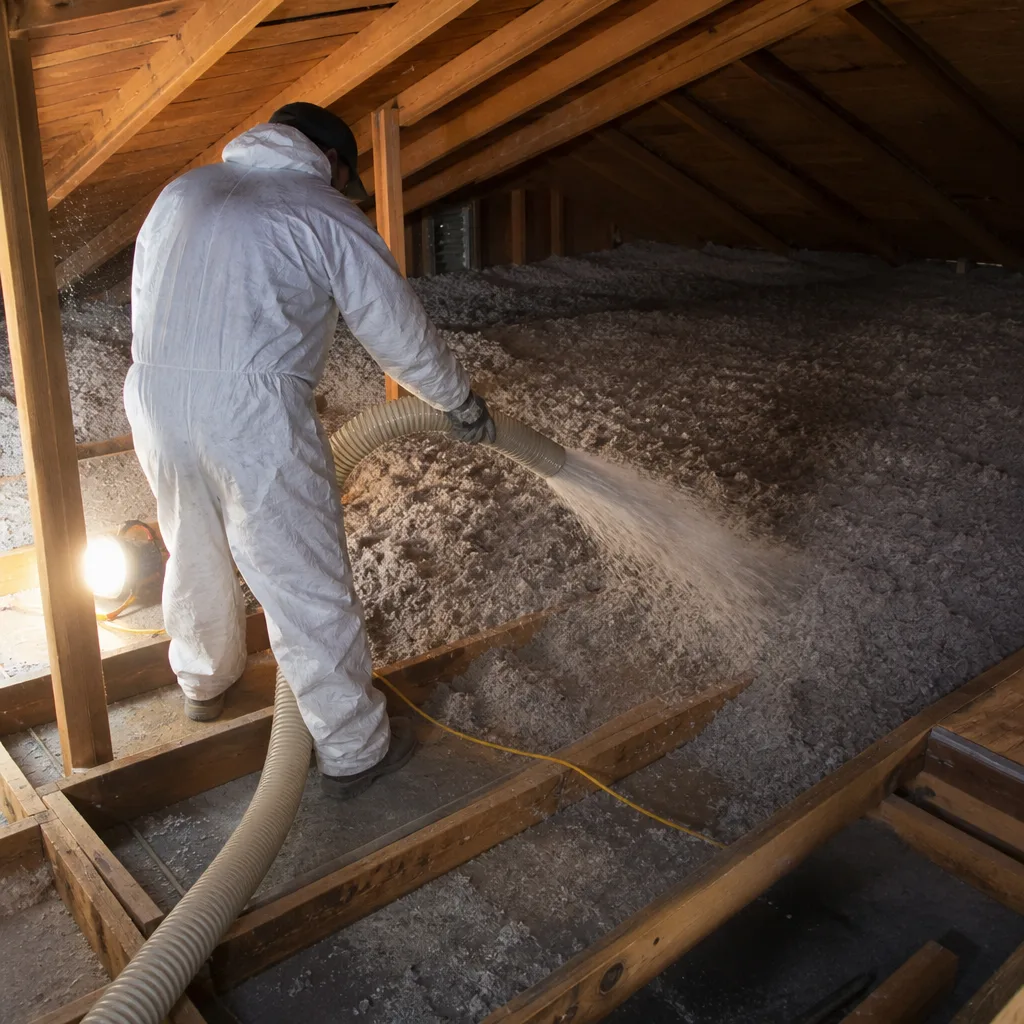
R-value measures resistance to conductive heat flow – heat moving molecule to molecule through a material. It does not measure how a surface responds to radiant heat, which is energy arriving as infrared and being absorbed or reflected. On a Boulder City roof in July, the sun heats the shingles to well over 160°F, that heat conducts through the decking in minutes, and the attic air itself climbs to 150-158°F because there’s almost no shade and very little attic ventilation to bleed it off. The insulation on your attic floor is now being hit from above by a radiating hot surface, not just by warm air.
Here’s the practical consequence. A blown fiberglass or cellulose job rated R-49 can still leave the house hot if the radiant load isn’t controlled, because the material absorbs rather than reflects. Pairing a radiant barrier – a foil-faced product stapled to the underside of the roof rafters – with the insulation blocks that radiant transfer before it reaches the insulation surface. In our experience across Boulder City, the homes that stay comfortable in July are the ones where both problems were treated. Fiberglass blown to depth without a barrier, or a barrier alone without adequate depth, never performs the same.
The heat-flow pattern also explains why attic vents matter more here than in cooler climates. Without at least 1 square foot of net free vent area per 150 square feet of attic floor (or per 300 with adequate vapor retarder and sealed penetrations), the 158°F air just sits up there. When you’re ready to address the attic itself, our attic insulation in Boulder City work always starts with air sealing and ventilation assessment before any material goes down.
Mapping Every Envelope Zone: Attic, Walls, Rim Joists, Crawlspace
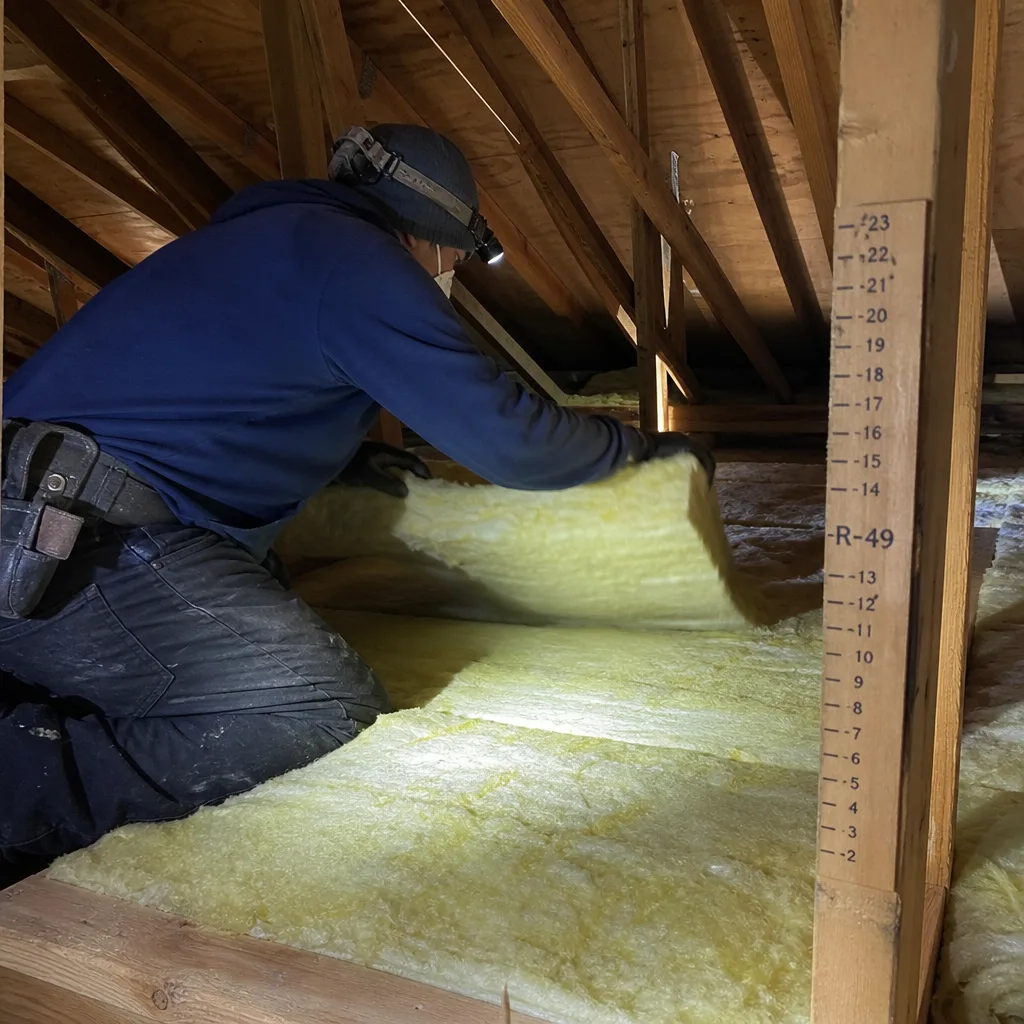
The building envelope is the boundary between conditioned space and outside. In Boulder City homes built from the 1950s through the 2000s, we find the same zones failing in predictable ways. Here’s what each zone needs.
- Attic flat (the floor): R-49 to R-60 blown insulation after air sealing the top plates, can lights, and every penetration. This is the largest zone and where most heat moves.
- Knee walls (in 1.5-story homes): Closed-cell spray foam on the back side or rigid board; batt alone sags and leaves a gap at the top. Common in older Boulder City homes near the historic district.
- Exterior walls: Closed-cell spray foam in the stud cavities or dense-packed cellulose; fiberglass batts in 2×4 walls typically deliver R-11 at best and often less where installed poorly.
- Rim joists (the band at the top of the foundation): Spray foam or rigid board cut to fit. This is the single most overlooked leak in desert homes and one of the largest sources of infiltration.
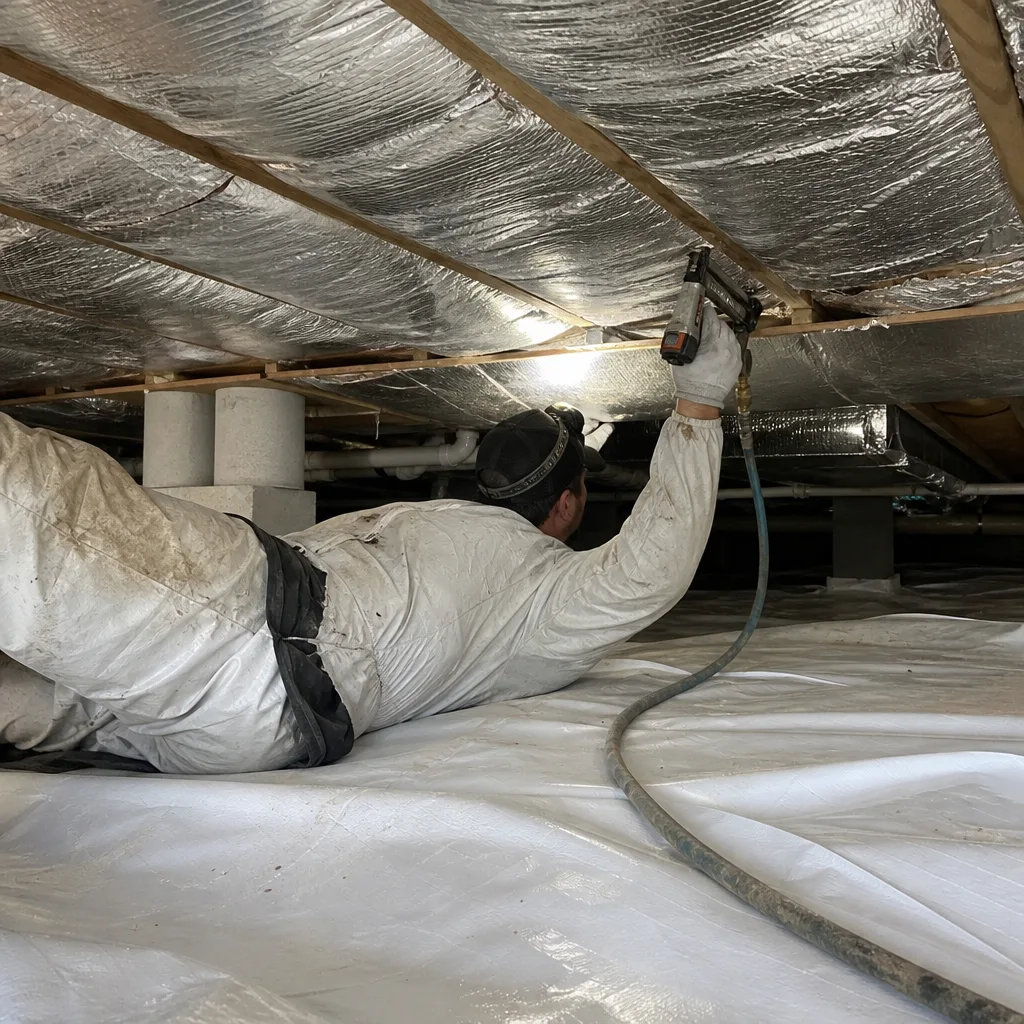
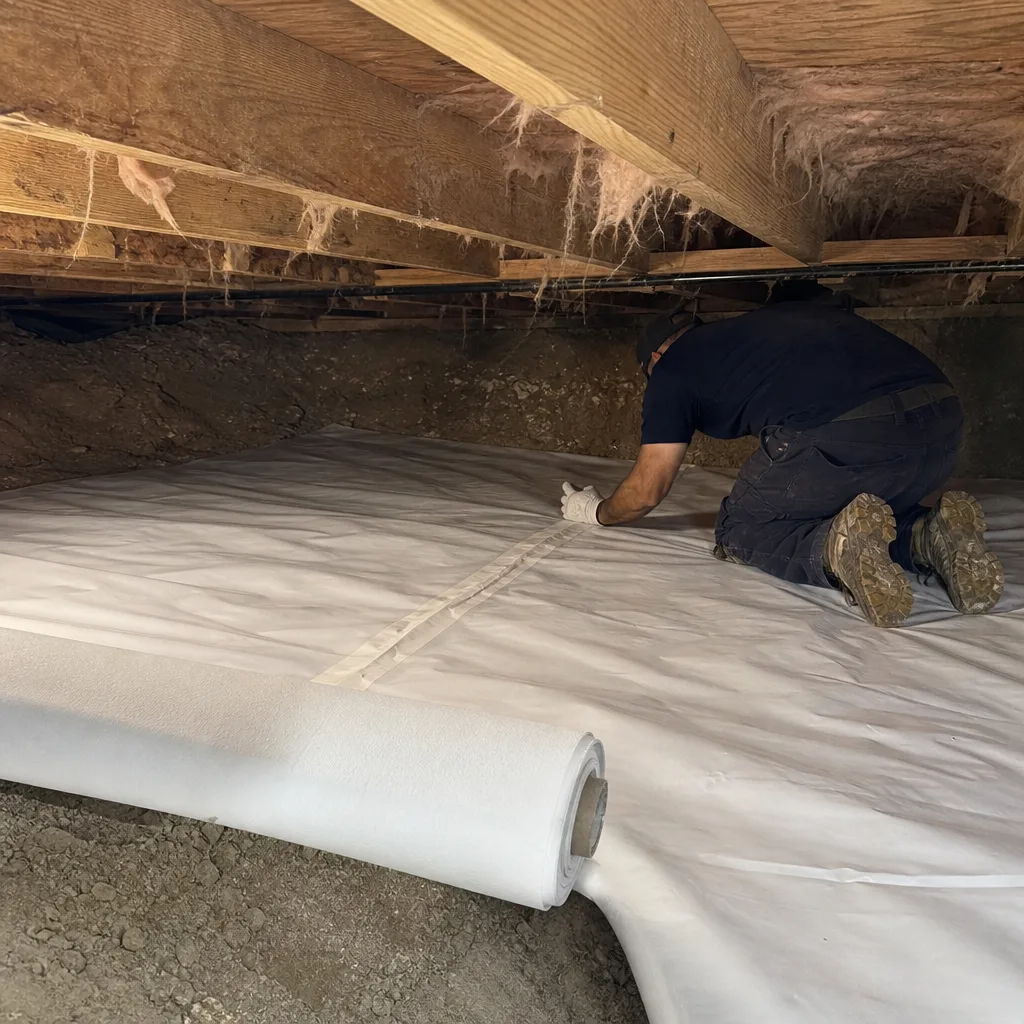
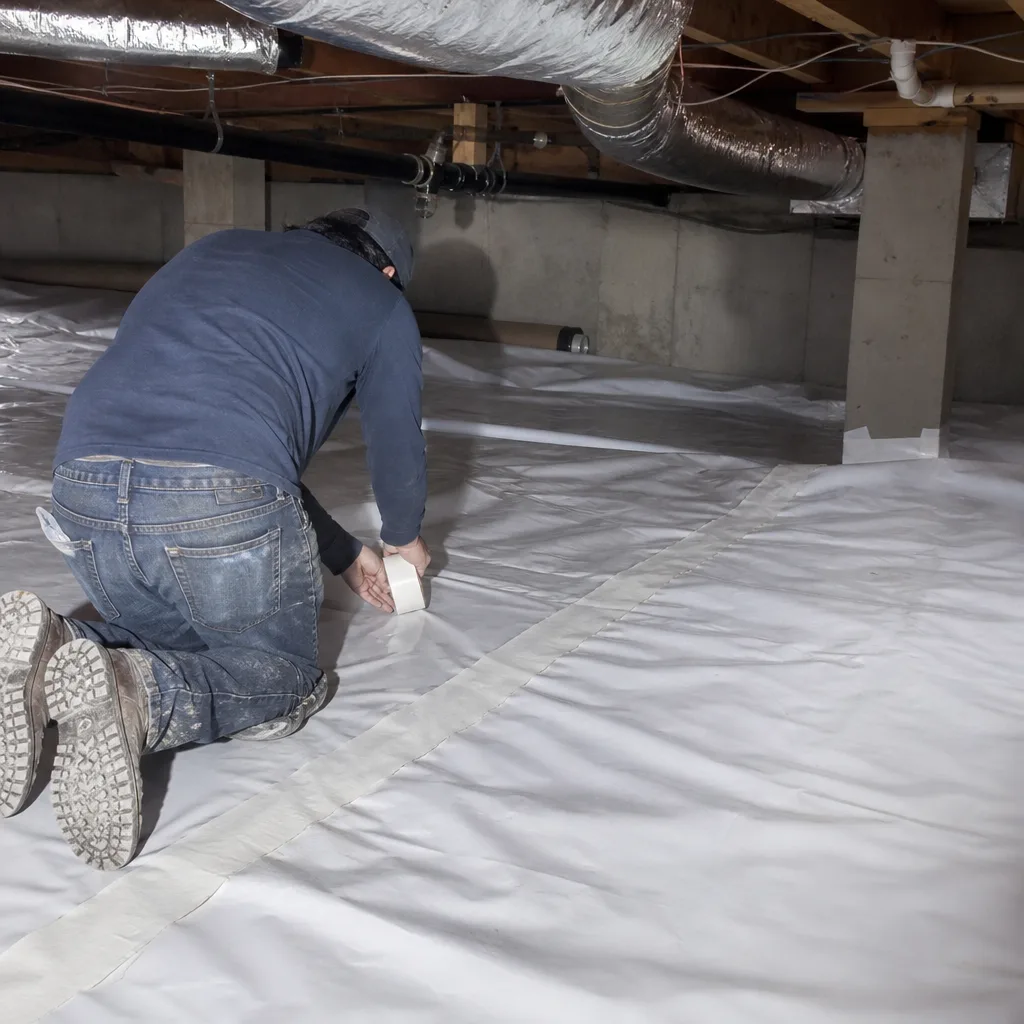
- Crawlspace: Encapsulation with a sealed vapor barrier; unsealed desert crawlspaces pull hot, dry air and dust into the living space year round. See our crawl space encapsulation and vapor barrier in Boulder City breakdown for the specifics.
Each zone takes a different material and a different depth. Lumping them together is where generic “attic insulation” quotes go wrong.
What IECC 2021 Requires in Boulder City – and Where Enforcement Is Stricter
Clark County adopted the 2021 International Energy Conservation Code, which sets minimums for new construction and major renovation. The attic ceiling minimum is R-49 in our climate zone, walls are R-13 plus R-5 continuous sheathing for new builds, and crawlspace wall insulation runs R-15 to R-19 depending on the assembly. Those are the floors, not the targets. Existing homes are typically not held to code on a re-insulation job unless the scope triggers a permit, but that doesn’t mean the minimum is good enough – and Boulder City does layer on extra requirements.
Boulder City’s historic district rules and its separate building department mean remodels in older parts of town often go through stricter plan review than a comparable Las Vegas project. Additions and changes to the building envelope in the historic core can pull in design review in addition to the energy code. In practice, we’ve found it’s faster to confirm the local permit path before quoting a job than to discover it mid-project. If your home predates the code cycles entirely, the practical recommendation is to exceed the minimum – R-49 attic, R-15 crawlspace walls, sealed rim joists – because the extra cost is a fraction of what the energy savings returns.
One point that trips up Boulder City homeowners comparing bids: a contractor quoting R-38 attic insulation is quoting a different climate zone’s minimum. Ours is R-49. Ask what number is on the proposal, and in what zone.
How 40-Degree Nighttime Swings Change Crawlspace Decisions
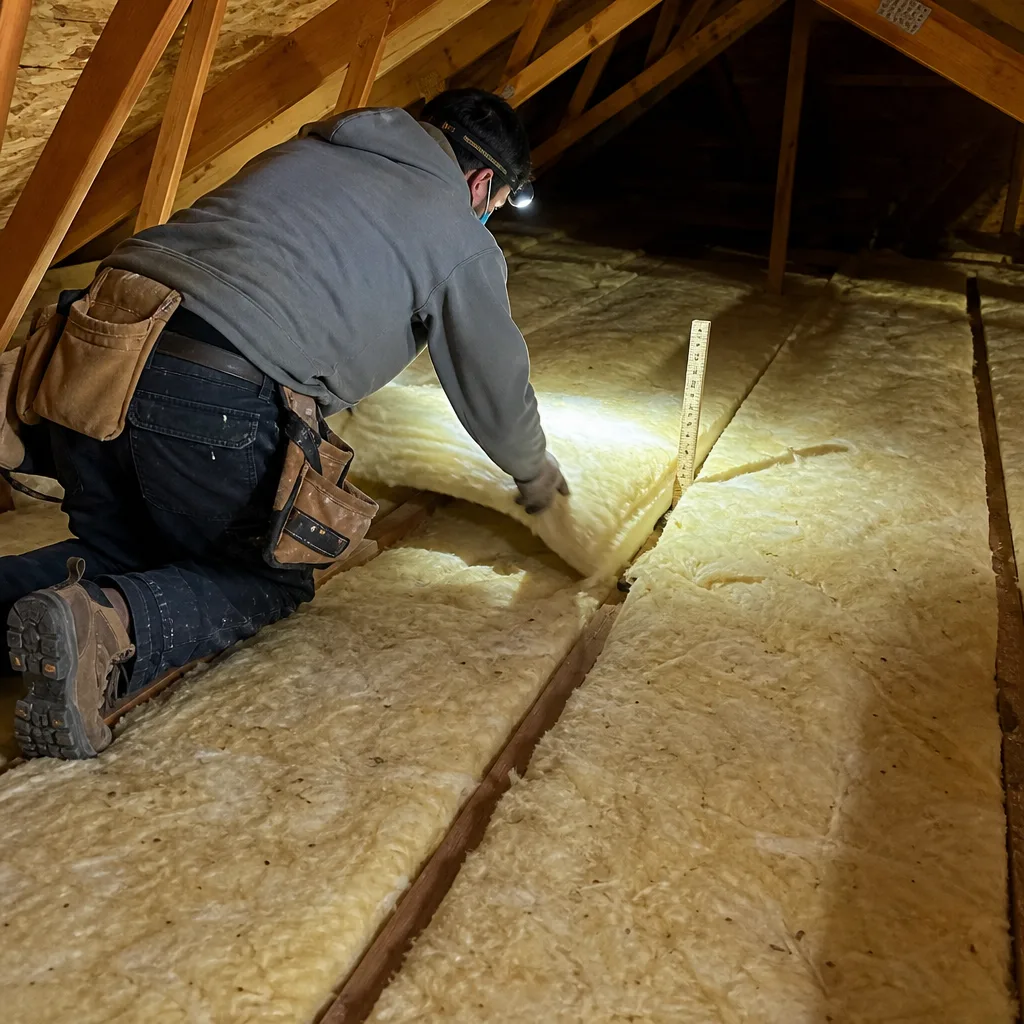
Boulder City runs cool at night relative to Las Vegas proper. Diurnal swings of 35-40°F are normal – July highs near 105°F and lows in the upper 60s. That swing matters because a crawlspace sees both extremes every single day. The same venting that drains hot daytime air also dumps cold night air onto uninsulated plumbing, ductwork, and the moisture-sensitive wood framing. Condensation cycles on the cold side of the assembly, and over a decade that shows up as moisture damage.
An encapsulated crawlspace eliminates the swing problem entirely. Sealing the vents, installing a sealed vapor barrier, and conditioning the space (or insulating the walls with R-15+ rigid board) means the crawlspace stays close to the house temperature. The plumbing doesn’t see 40-degree swings. The floor above stays warm in winter. Our experience in Boulder City is that the homes we encapsulate see the most measurable comfort difference in the shoulder seasons – April/May and October/November – when the swing is widest and the furnace and AC are both cycling.
Slab-edge insulation deserves the same consideration. In slab-on-grade homes built in the 1970s and 1980s, the exterior edge of the slab is often bare concrete against soil. Insulating that edge with 1-2 inches of rigid board knocks down a cold path that no amount of interior floor covering solves. It’s a small job that owners rarely think to ask about.
Air Leakage: The Multiplier That Erases R-Value
R-value assumes the insulation isn’t being blown through by air. In a leaky house, it is. A home at 8 ACH50 – that’s 8 air changes per hour at 50 pascals of pressure, the standard blower-door metric – loses a substantial share of its thermal performance to air movement, regardless of how well the insulation was installed. We measure this. It’s called a blower-door test, a pressurization reading that shows, in one number, how much air your building envelope is losing. A tight house reads around 3-4 ACH50; older Boulder City homes often read 10 to 15 before any work.
Air leakage matters because gaps at the top plates, can lights, plumbing penetrations, and rim joists let indoor air escape into the attic or crawlspace continuously. The insulation stays cold in winter and hot in summer, and the conditioned air you paid to heat or cool is gone. Blowing insulation over an unsealed attic floor makes this worse, not better – it hides the leaks and leaves them open.
This is why we seal first, then insulate. Every job at Envelope Insulation starts by air sealing the top plates, the can lights, and the penetrations before any material is placed. On applicable jobs we record a pre-seal blower-door reading and a post-seal reading, and the two numbers are given to the homeowner in writing. A home that reads 9.5 ACH50 before sealing and 4.2 after shows, in a single figure, what actually changed. That’s the number worth checking, not the R-value on a bid sheet.
What a Finished Job Produces: Numbers, Specs, Photos
You should be able to describe what you’ll hold in your hand at the end before the crew shows up. Here’s what a complete insulation job on a Boulder City home produces:
- Written price and written scope before work starts – flat, spelled out, with the specific zones and R-values and materials named. This is Haven Standard Clause 1: a written price, written scope, and written warranty before anyone lifts a tool.
- Pre-work blower-door reading – the CFM50 number that establishes where the envelope is leaking.
- Post-work blower-door reading – the number after air sealing and insulation, so you can verify the change. Reading 4,200 CFM50 before and 2,100 after tells you the work halved the air leakage; that’s the performance change you paid for.
- Material spec sheets – the manufacturer’s data for every product used, so you know exactly what went into the walls and attic.
- Documented photo record – photographs of each zone, sealed and insulated, taken during the work. Included on every visit.
- Written warranty – the 365-Day Done Right Promise in writing, so you know what happens if something isn’t right.
If a bid comes back without these items, the price comparison isn’t apples to apples. You’re comparing a documented job to an undocumented one.
Choosing Materials for Desert Conditions
Material selection in Boulder City is driven by three things: summer heat, daily temperature swing, and the dryness. Loose-fill fiberglass and cellulose both work well for attic floors – GreenFiber cellulose is a common choice for dense, dust-resistant coverage, and Owens Corning fiberglass is widely available. For closed cavities like rim joists and knee walls, closed-cell spray foam does what batts can’t: it air-seals and insulates in one pass. Icynene and Demilec produce closed-cell spray products used across our region.
What we avoid in this climate is any batt product installed where it can sag or where air can move around it. In a desert attic that runs 158°F, a poorly installed batt loses effectiveness within a couple of seasons. Closed-cell foam on the walls and blown material on the flat are the assemblies that hold up here.
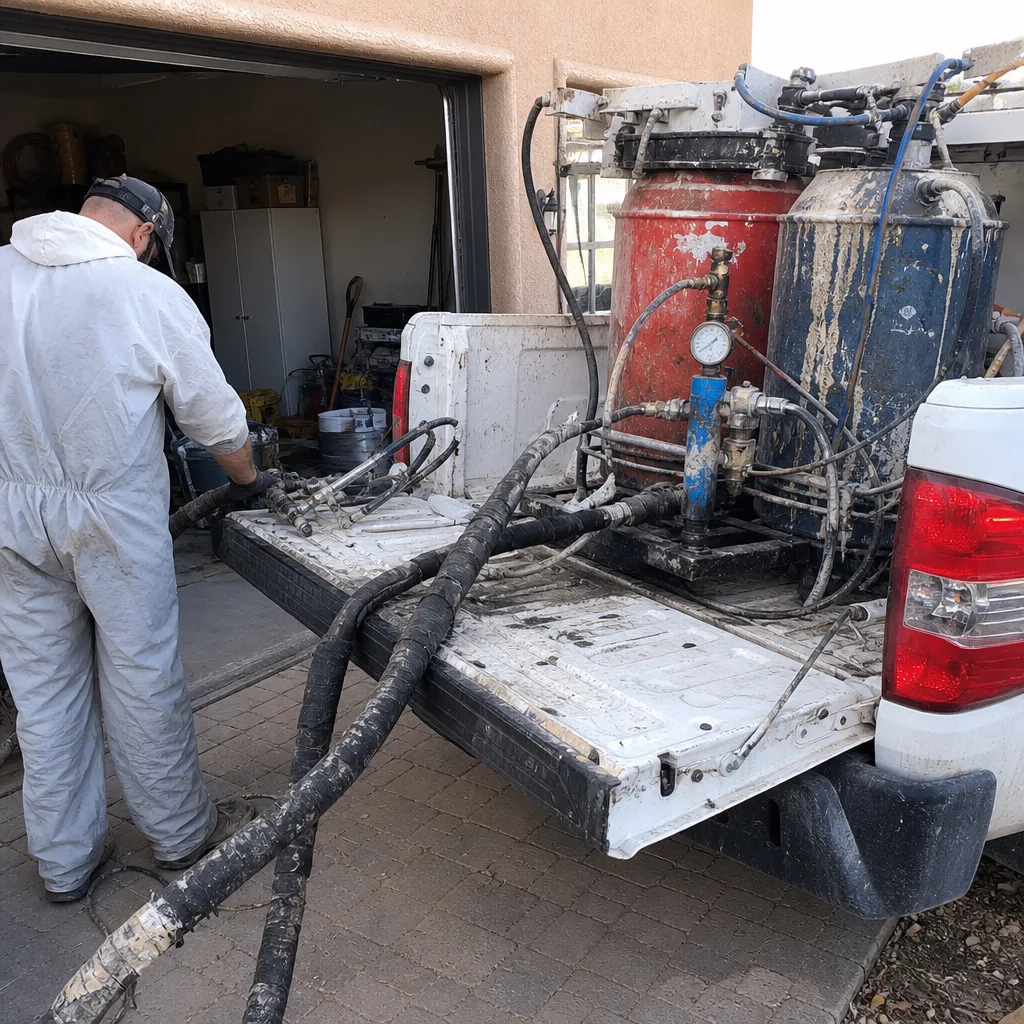
For the most demanding assemblies – knee walls, cantilevered floors, rim joists – spray foam is often the only practical solution, and we’ve broken down the trade-offs in our spray foam insulation in Boulder City guide. Material choice matters less than installation method, though. A correctly installed R-49 blown attic beats a sloppy spray job every time.
What Insulation Costs in Boulder City
Boulder City pricing runs a bit above Las Vegas metro for the same scope, because crews travel farther and the local permit path adds a step on renovation work. Here are the ranges we see on typical homes in town:
| Scope | Typical Range (Boulder City) |
|---|---|
| Attic air sealing (top plates, can lights, penetrations) | $450 – $1,200 |
| Blown attic insulation to R-49 (1,500 sq ft) | $1,800 – $3,200 |
| Radiant barrier installation (1,500 sq ft attic) | $1,400 – $2,600 |
| Rim joist spray foam (per linear foot) | $18 – $35 |
| Crawlspace encapsulation (1,200 sq ft) | $4,500 – $9,500 |
| Wall insulation with dense-pack cellulose or spray foam | $2,500 – $6,500 |
| Full envelope package (attic + walls + rim + crawlspace) | $9,500 – $22,000 |
Homes on the historic side of town or with unusual framing (knee-wall second stories, cantilevers, additions) land at the higher end because access and detailing take longer. The IRS 25C energy tax credit can offset 30% of insulation material cost up to $1,200 annually, and Boulder City sits in a climate zone that qualifies. Ask about documentation for the credit when you get a quote.
For a full picture of the Boulder City service menu and how each scope fits together, see Envelope Insulation Boulder City.
Common Mistakes to Avoid
- Insulating before sealing. Blowing over an unsealed attic floor traps the leaks and hides them; the R-value reads fine on paper but the house still leaks. Seal first, insulate second – always, in that order.
- Quoting R-38 attic insulation. That’s a cooler climate zone’s minimum. Boulder City’s IECC 2021 minimum is R-49, and code-compliant should be the floor, not the target.
- Treating conduction without radiation. At 158°F attic temperatures, no depth of fiberglass alone stops the radiant load. Pair the insulation with a radiant barrier or the summer performance won’t show up.
- Skipping the blower-door test. Without before-and-after numbers, you can’t tell whether the work moved the needle. A quote that doesn’t include a blower-door reading is a quote you can’t verify.
- Venting a crawlspace in a desert climate. The 35-40°F nighttime swing dumps cold air on plumbing and framing every night. Encapsulate, seal the vents, and insulate the walls instead.
- Installing batts where they’ll sag. Knee walls and rim joists in Boulder City homes fail predictably with sagging batts. Spray foam or rigid board is the right assembly.
- Accepting a verbal scope. If the zones, R-values, and materials aren’t in writing before the crew arrives, you have no way to compare bids or hold anyone to the work.
When to Call a Professional
Get an expert involved if your attic has ever shown water stains or mold, if you’re seeing condensation on crawlspace framing or cold pipes, if your cooling bills have climbed more than 20% in a single season, or if your home predates 2000 and has never had the envelope assessed. Attic deck walking, spray foam application, and crawlspace encapsulation involve chemical exposure, confined-space work, and fall risk – these are not weekend projects. If you’re getting competing bids, ask for a written price, written scope, written warranty, and pre- and post-blower-door numbers; a bid without those is a bid you can’t verify. Envelope Insulation Boulder City offers free estimates in Boulder City – call (844) 320-7926. Our technicians have up to 10 years of experience, every visit includes a Documented Photo Record, and a live person answers 24/7.
Frequently Asked Questions
Attic air sealing followed by R-49 or R-60 blown insulation and a radiant barrier. The attic is where most heat moves in a Boulder City home and where the 158°F summer temperature produces the largest radiant load – so sealing, then insulating, then reflecting the radiant heat is the order that delivers the biggest improvement. Call (844) 320-7926 for a free estimate and a blower-door baseline.
Because summer attic temperatures in Boulder City reach 150-158°F, and standard insulation resists conductive heat, not radiant heat. The barrier’s foil surface reflects infrared energy back before it reaches the insulation, which is why the combination of barrier plus insulation performs noticeably better than insulation alone in a desert attic.
The IECC 2021 minimum for attic insulation in Boulder City’s climate zone is R-49. Crawlspace walls run R-15 to R-19 and frame walls R-13 with continuous sheathing on new construction. That’s the code floor, not the target – most existing Boulder City homes benefit from going above it. Call for a written quote with specific R-values.
An unsealed desert crawlspace benefits most from encapsulation with a sealed vapor barrier and R-15+ wall insulation; venting alone leaves the assembly exposed to Boulder City’s 35-40°F nightly swings. If the crawlspace is already dry and sealed, insulation alone may work. The right call depends on what we find – our free estimate includes a crawlspace inspection. Call (844) 320-7926.
Before-and-after blower-door readings. A pre-work test establishes the CFM50 baseline, and a post-work test shows what changed – a home reading 4,200 CFM50 before and 2,100 after has measurably halved its air leakage. Insist on those numbers in writing, along with material spec sheets and a photo record. Every applicable Envelope Insulation job includes them.
Most attic jobs on a typical 1,500 sq ft Boulder City home are completed in a single day: air sealing in the morning, then blown insulation in the afternoon, with the blower-door test and photo documentation at the end. Crawlspace encapsulation and wall insulation can run two to four days depending on access. You’ll get the schedule in writing before work starts.
The Bottom Line
Insulation in Boulder City isn’t a single R-value – it’s a specification built around a specific climate. The 158°F summer attic means radiant heat and conductive heat both need to be addressed. The 35-40°F nightly swing means crawlspaces must be encapsulated, not vented. IECC 2021 sets R-49 as the attic minimum, and Boulder City’s local review can go further. Air leakage is the multiplier that erases even good insulation, which is why sealing comes first, every time. And a job you can verify – written price, written scope, written warranty, before-and-after blower-door numbers, and a photo record – is a job worth paying for. Anything short of that leaves you guessing what you got.
Call Envelope Insulation
For a free estimate on insulation in Boulder City, call (844) 320-7926. We’ll run a baseline blower-door reading, walk you through every envelope zone in your specific home, and hand you a written price before any work starts. A live person answers, 24/7. If you already have a competing estimate, bring it – our Free Second Opinion includes reading it with you, line by line.
Written by the team at Envelope Insulation Boulder City.