
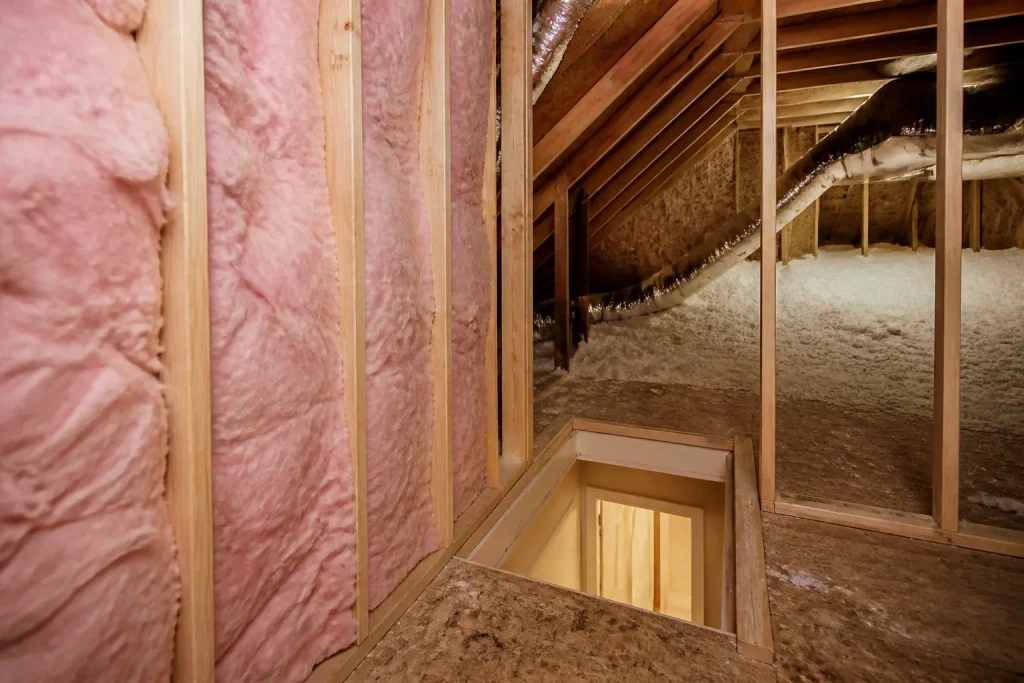
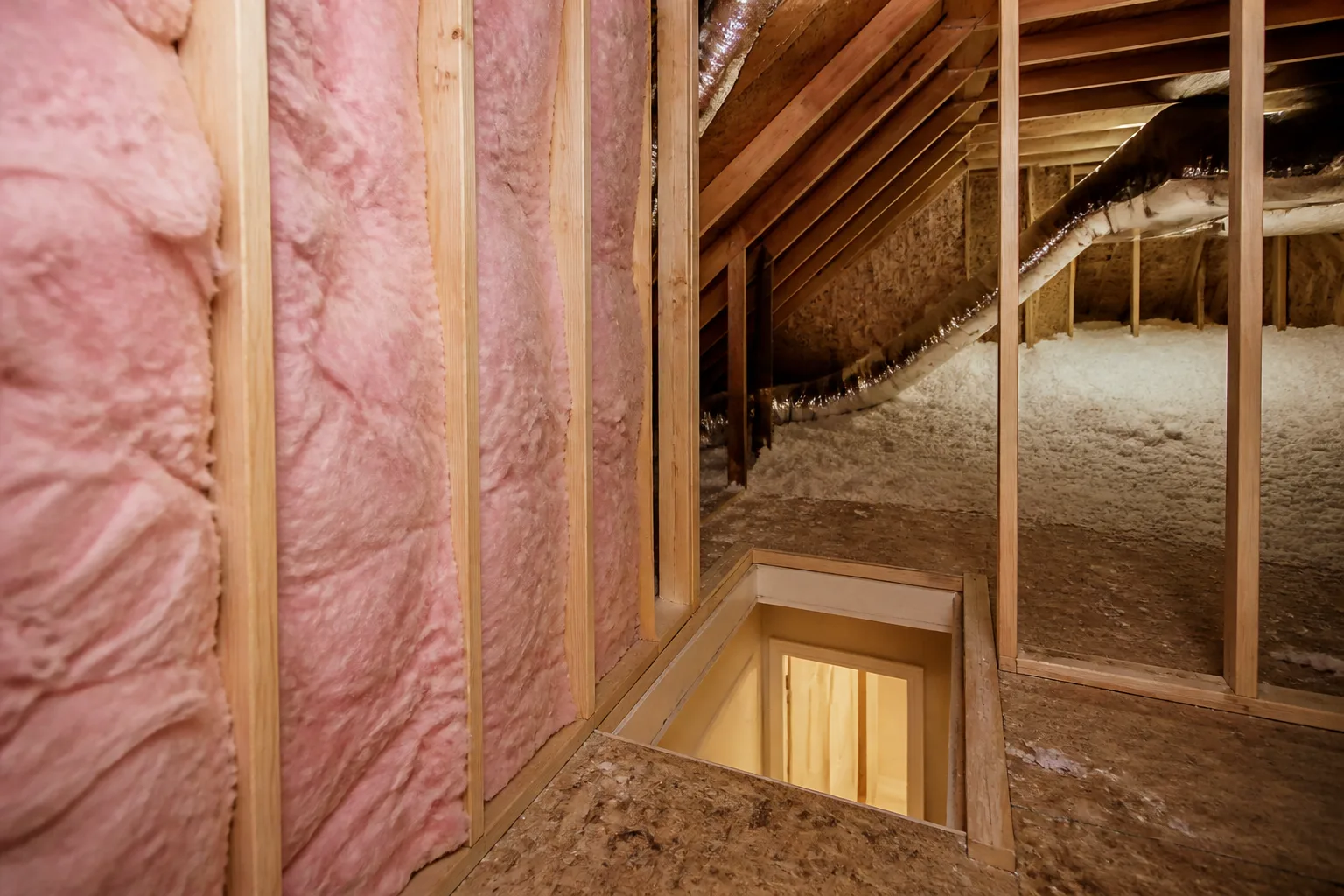
Top Signs You Need Insulation Service – Don’t Ignore These
The signs most often you need insulation service are a utility bill running well above similar nearby homes, rooms that won’t hold temperature, an HVAC system that never shuts off, and drafts you can feel. But here’s the catch: each of those symptoms has several possible causes, and insulation is only one of them. Before you buy insulation, you want to know which cause you actually have. If you’d rather have someone diagnose it for you, call (844) 320-7926 and we’ll take a look.
A bill that’s 40% above your neighbor’s identical floor plan could mean degraded attic insulation in Boulder City. It could also mean a duct system leaking a third of its conditioned air into the attic, which adding insulation won’t fix and might quietly hide. Both produce the same symptoms. They need different work. So this piece treats each “sign” as a diagnostic question, not a purchase trigger.
Sign #1: Your Bill Is Much Higher Than a Similar Home’s
A high bill is real data, but it’s ambiguous data. Three things cause it, and only one is insulation:
- Air leakage through the building envelope. Gaps at the top plates, around can lights, and at pipe and wire penetrations let conditioned air escape and outdoor air come in.
- Duct leakage. In Boulder City’s older housing stock, ducts routed through a hot attic can lose a large share of their cooling before it ever reaches a room.
- Degraded insulation R-value. The insulation is present but no longer performing at its rated resistance because it’s compressed, wet, or displaced.
The way to separate them is a blower-door test, a pressurization measurement that shows in a single number (CFM50) how much air the envelope is losing. We’ve run this on Boulder City homes where the reading pointed straight at duct leakage and the attic insulation was fine. Sealing the ducts fixed it. Nobody needed new insulation. A written price before work starts tells you which fix you’re paying for.
Sign #2: The Second Floor Won’t Cool Down
A hot upstairs is the sign most likely to get misdiagnosed, because it feels like an insulation problem. Sometimes it is. Often it isn’t.
Before we talk about adding insulation, we rule out:
- Return-air imbalance. If the second floor has weak return paths, it stays pressurized and warm regardless of how much insulation sits overhead.
- A single-zone thermostat. One thermostat serving two floors with different heat loads can’t satisfy both. That’s a control problem, not an envelope problem.
- Radiant heat gain through the roof deck. In Boulder City summers, an attic that hits 150°F radiates heat down through the ceiling. Insulation slows that transfer; a radiant barrier can reflect it. Which you need depends on what’s already up there.
A thermal imaging scan of the attic floor shows missing insulation zones clearly. What it cannot show is the air bypass pathways: the gaps and chases where air moves freely. That’s why a scan alone can mislead. It flags the holes in the blanket and misses the holes in the envelope.
Sign #3: Your HVAC Runs Constantly and Never Catches Up
A system that runs all day is telling you it’s moving more air than it should need to. Equipment sized correctly for a sealed, well-insulated home short-cycles on mild days and holds temperature on hot ones. If yours never rests, one of these is happening:
- The system is undersized or low on refrigerant (a mechanical issue, not insulation).
- The envelope is leaking badly enough that the equipment is conditioning the neighborhood.
- The insulation R-value has fallen below what the assembly needs to separate the hot attic from the cool ceiling.
This is where the order of operations matters. We never blow insulation over an unsealed attic floor. Air sealing the top plates, can lights, and penetrations comes first, because insulation that sits over a leaky floor is just a blanket over a draft. Once the envelope is sealed, the blower-door reading tells you whether the insulation you have is enough or whether you need more. On Boulder City jobs, that before-and-after figure is what shows you, in one number, what changed.
Sign #4: You Feel Drafts, or Rooms Smell Different
Drafts at outlets and baseboards, a cold floor over the crawl space, and rooms that smell musty all point to envelope and moisture issues that insulation alone won’t solve. A vapor barrier that’s torn or missing lets ground moisture move up into the home, which is a crawl space encapsulation and vapor barrier in Boulder City problem, not an R-value problem. Sealing drafts without addressing moisture can trap humidity where you don’t want it. We check both before recommending anything.
If your attic is a mess of old, contaminated material, removal and replacement is the honest starting point, and it’s worth a look at attic insulation in Boulder City before you decide what to add.
Sign #5: The One Most Lists Miss – Pest-Displaced Insulation
Here’s a sign almost no checklist includes: insulation that’s been compressed or displaced by pest activity. Rodents tunnel through batts and blown fiber, matting it flat. The material looks present from the living space. R-value drops anyway, because compressed insulation has lost the air pockets that do the insulating. Nothing in the room changes. The bill creeps up.
We pulled a mess out of an attic over in Boulder City last spring where the batts looked fine from below and were tunneled flat up top. The homeowner had been chasing the bill for two heating seasons. Rodent proofing and fresh insulation fixed it, and the photo record showed exactly what had been going on. Same story with spray foam insulation in Boulder City applications into rim joists and wall cavities, where pests find an entry the living space never reveals.
A Self-Check You Can Run Before You Call Anyone
You don’t need a contractor to learn a lot. Run these three checks in order:
- The attic hatch seal. Close the hatch and feel the edges on a windy day, or hold a tissue near the perimeter. Movement means it’s leaking. A gasket fixes it cheaply.
- Recessed light gaps. Go up in the attic and look at the cans. If you can see daylight or insulation sitting loose around them, that’s an air path. They need sealing with an airtight, rated cover, not just more insulation stuffed around them.
- The whole-house pressure test. Turn on every exhaust fan in the house and hold a tissue to the gaps you found. If the tissue flutters, you’ve confirmed air movement. This is a rough version of what the blower door measures precisely.
What these checks won’t tell you is how much R-value you’re missing, or whether the leak is the dominant problem. That’s what a proper test settles.
When to Call a Pro
Call a professional when you’ve confirmed air movement and still can’t tell whether you’re short on sealing, insulation, or both. High-tension attic work, duct systems, and envelope diagnostics are not tasks to improvise. We test, we write a flat price with a written scope and written warranty before anyone lifts a tool, and we publish the blower-door numbers before and after. That’s what a real answer looks like, and it’s how we’ve handled more than 9,000 homes.
Related services in Boulder City: Envelope Insulation Boulder City home has the full picture of what we do and how each job is documented.
The Bottom Line
The signs are real. The diagnosis is the hard part. High bills, hot rooms, constant HVAC, drafts, and pest-compressed insulation each have several causes, and insulation is sometimes the wrong fix. Get the blower-door test, rule out ducts and controls, and let the number tell you what to buy. Our technicians have up to 10 years of experience reading exactly these results, and we back finished work with the 365-Day Done Right Promise.
If you’re in Boulder City and want help, Envelope Insulation Boulder City offers free estimates and a free second opinion on any written quote you already have. Call (844) 320-7926 and a live person answers, any hour.
Frequently Asked Questions
You can’t tell from symptoms alone. High bills, hot rooms, and constant HVAC can come from air leakage or from low R-value, and both produce the same signs. A blower-door test separates them by measuring air leakage directly, and we pair it with an attic scan. Call (844) 320-7926 for an estimate that tells you which fix you actually need.
No. An infrared scan of the attic floor shows missing or thin insulation zones well, but it does not show air bypass pathways such as gaps at chases and top plates. It flags holes in the blanket and misses holes in the envelope, so it should always be read alongside a pressure test.
Insulation compressed or displaced by rodents. Pest tunneling mats the material flat, dropping its effective R-value with no visible change from inside the house. The only sign is often a gradually rising bill. Rodent proofing plus replacement is the fix, and a photo record documents what was found.
Possibly, which is the problem. If your attic ducts leak a large share of conditioned air, new insulation won’t fix the ducts, and it may make the leak harder to spot. Rule out duct leakage first with a pressure test, then insulate.
Written by the team at Envelope Insulation Boulder City.
Need Insulation Help?
Call Envelope Insulation Boulder City - licensed & insured, here with fast after-hours help in Boulder City.
(844) 320-7926