
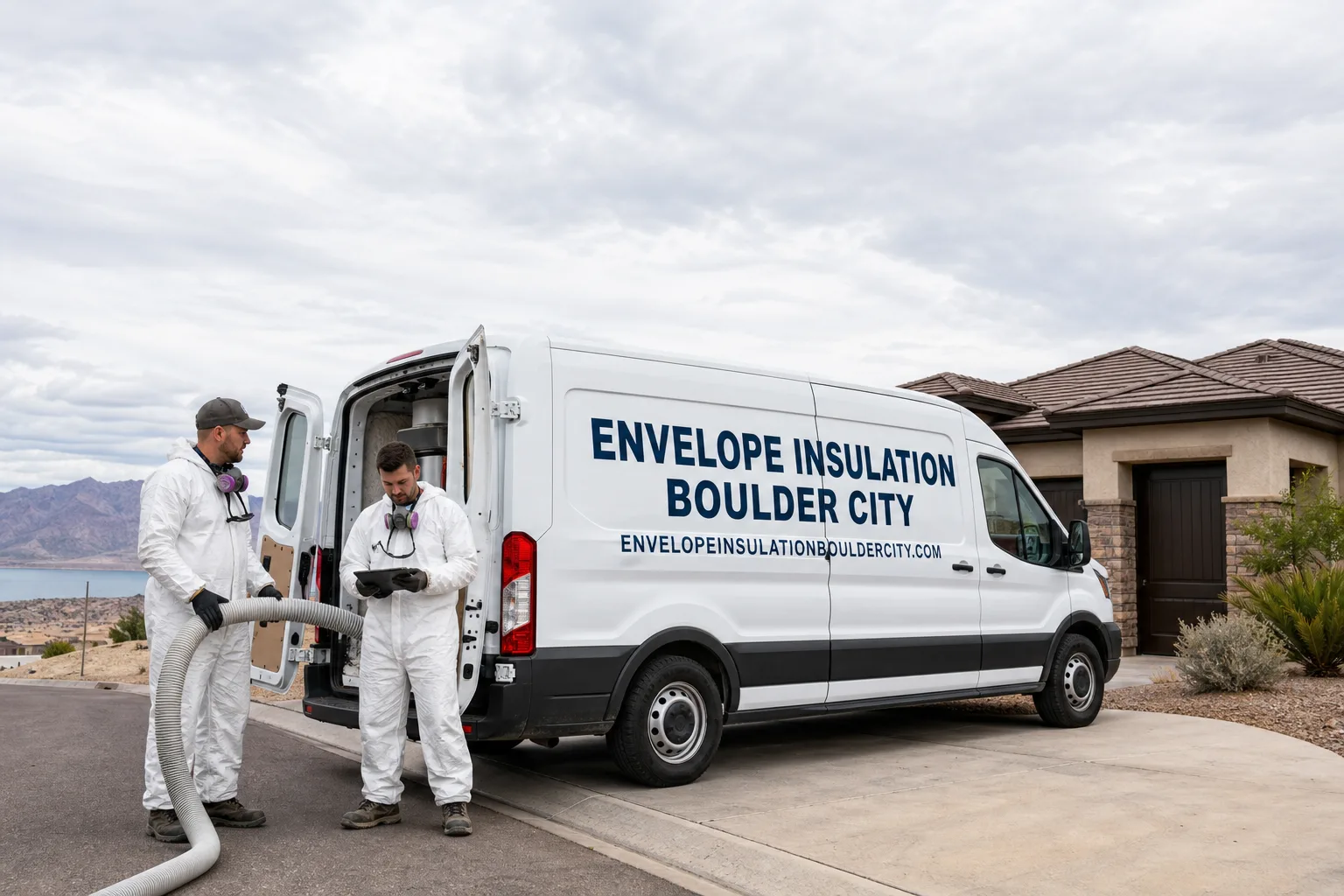
Fast, Reliable Blown-In Insulation Across Paradise
If your attic is hot to the touch by 10 a.m., that’s not normal even by Mojave standards. In Paradise, most of the attics we look at are 1970s to 2000s tract-home spaces where the original fiberglass has settled thin and the ceiling is baking. We know this township block by block, from the stucco subdivisions off Flamingo to the condo towers along the Strip corridor, and we plan every job around its real access. Call (844) 320-7926 and a live person answers, day or night.
Why Envelope Insulation Boulder City Is Paradise’s Preferred Blown-In Insulation Company
Paradise homeowners do their homework. They read the three-star reviews, they compare line items, and they want the price in writing before anyone touches the attic. That fits how we work. Every job starts with a written price and written scope, and closes with a Documented Photo Record, so you can see exactly what went in and where.
Our reputation in Paradise rests on one habit: we air-seal before we insulate. We won’t blow fiberglass over an unsealed attic floor, because that’s how you pay for insulation and still lose cool air through top plates, can lights, and penetrations. On jobs where a blower-door test applies, we publish the before-and-after CFM50 numbers, so you can see in a single figure how much less air the house was leaking after the work.
For Paradise condos and shared-attic buildings, response is scheduled fast and we plan the access route up front. Background-checked, uniformed technicians; calls answered by a live person; a text when the technician is on the way.
Our Blown-In Insulation Services in Paradise
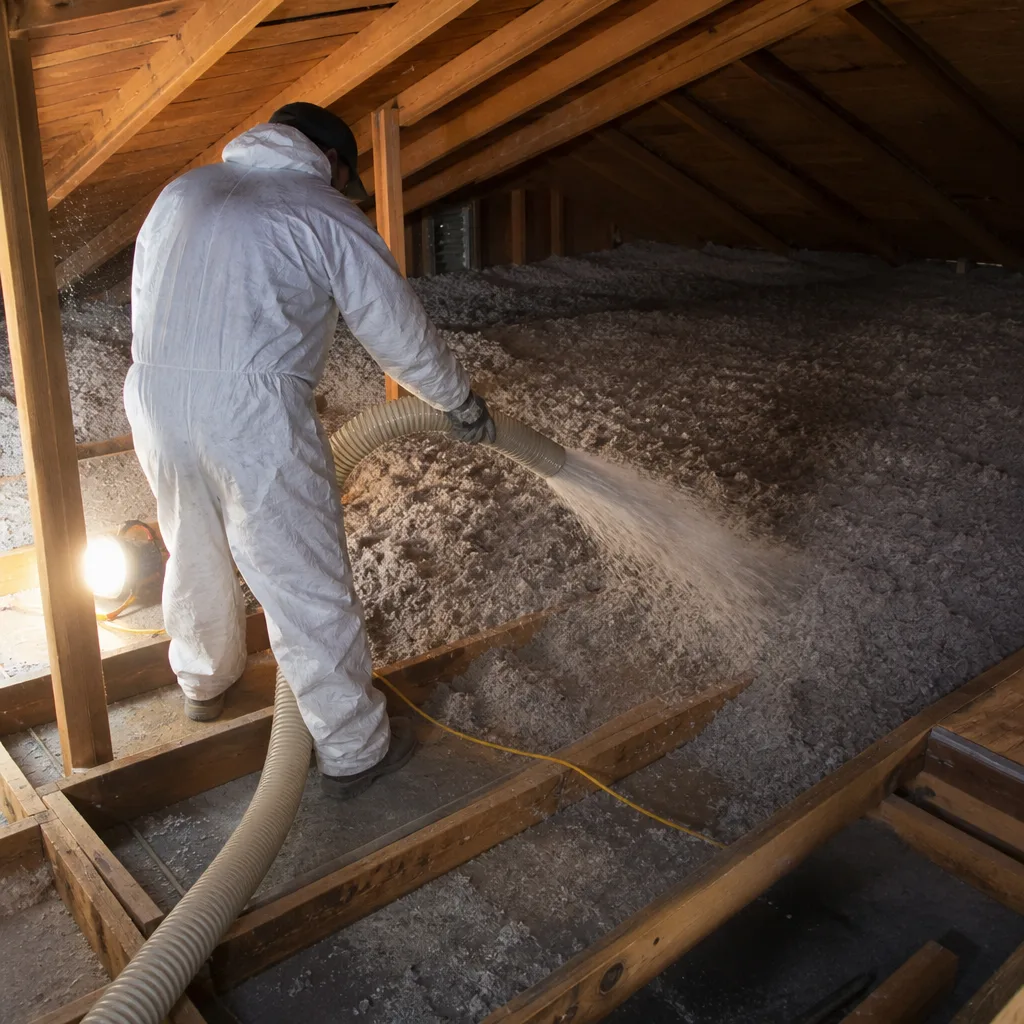
This is retrofit country. Paradise is built up tight against the Strip, with almost no new-construction envelope work, so nearly every job is an upgrade on an existing attic or wall cavity. Here’s what we do most here.
Blown-In Fiberglass
The workhorse for Paradise single-family attics. In a typical 1980s tract home, the original blown-in fiberglass has settled to 3 – 4 inches and compacted under 150°F+ attic heat. We air-seal the attic floor first, then blow in fiberglass to R-38 – R-49, using brands like Owens Corning or Johns Manville.
Dense-Pack Wall Insulation
This is the fix for hot party walls and noisy shared ceilings in Strip-adjacent condos and timeshares. Dense-pack cellulose is injected through small holes in the wall or ceiling, packing the cavity without any open blow-in. It handles the shared-attic and party-wall cavities that a standard attic top-up can’t safely reach.
Blown-In Top-Up
When the attic still has good material but it’s sunk below R-19, a top-up brings depth back to spec. We check the existing depth and settled density first, then add fiberglass to reach the target. If the old material is contaminated, we remove and replace instead.
Blown-In Cellulose
Cellulose’s denser settled pack makes it a good fit for tighter attics and retrofits where we want the material to stay put. It’s common in wall cavities and in older Paradise homes where settling has been a recurring problem.
If you’d like the full range, see our Blown-In Insulation page.
Trusted Brands We Service in Paradise
We source from Owens Corning, Johns Manville, Knauf, CertainTeed and GreenFiber, among others. No proprietary product lock-in, so you’re not tied to one manufacturer’s system. We don’t stock parts locally or run trucks out of a Paradise warehouse; independent local professionals perform the work, and we coordinate materials and scheduling for fast turnaround on your job.
Common Blown-In Insulation Problems We See in Paradise Homes
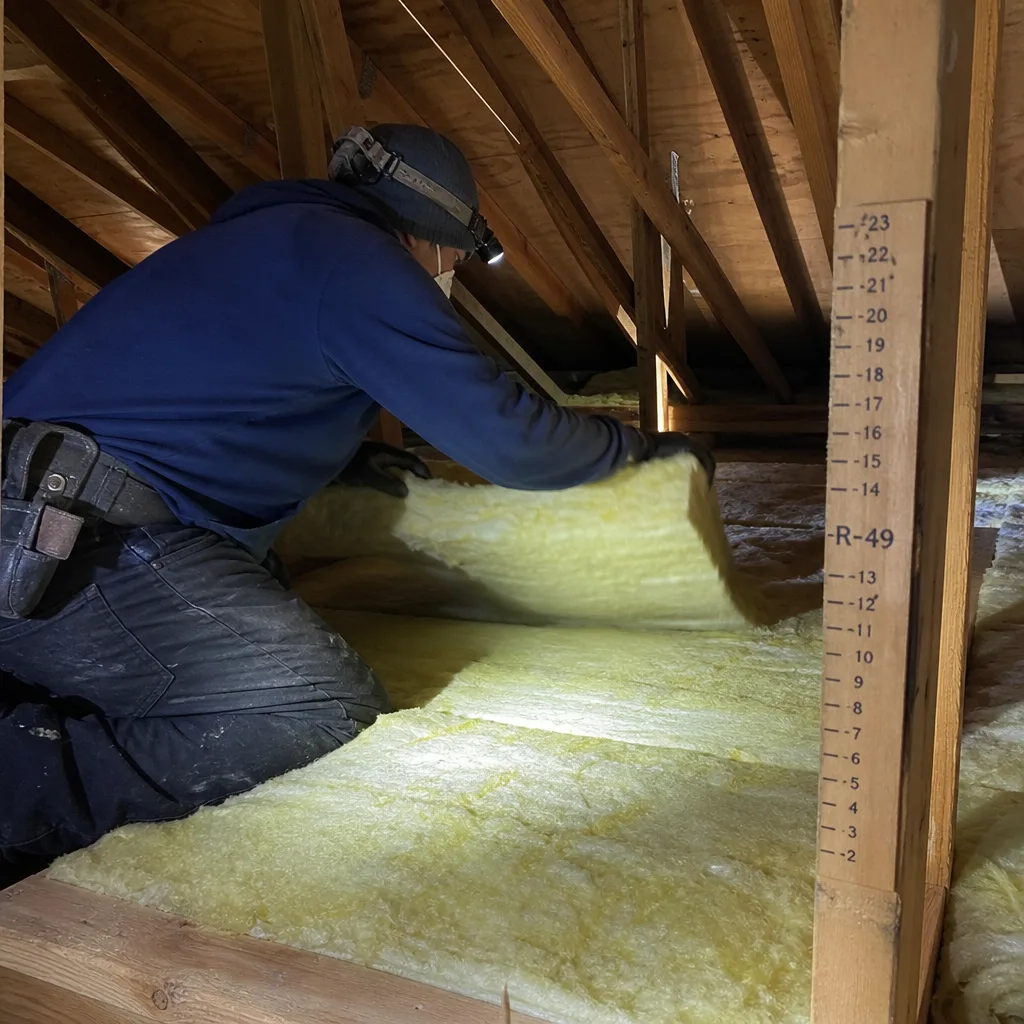
- Settled fiberglass that looks “full” from the hatch. In 1970s – 2000s Paradise attics, thermal cycling under 150°F+ heat compacts the original fiberglass below R-19 over the years. The attic reads full when you peek in, but the depth and density are gone and the cooling bill climbs.
- Shared attics with no fire-rated separation. Condo and timeshare buildings around the Strip corridor often share attic space or party-wall cavities between units. A standard open-blow top-up can violate fire-blocking and fail inspection, which is exactly where dense-pack is required instead.
- Alley-loaded townhomes and mid-rise access. Tight attic hatches and limited parking for hose equipment mean crews must stage remotely and run long hoses. That slows the job and risks incomplete coverage if it isn’t planned properly.
- Missing or degraded radiant barrier. Many older Paradise homes have little to no radiant barrier, so the sun load drives straight through the roof deck. We check for it and recommend an add-on where it makes sense.
Pricing for Blown-In Insulation in Paradise, NV
Most blown-in attic jobs in a Paradise home run between $1,800 and $3,800, depending on square footage, target R-value, and how much old material needs removal. A blown-in top-up typically lands at $1,200 – $2,400. Dense-pack wall insulation in a condo or townhome usually runs $2,000 – $4,500, since party-wall cavities and shared ceilings take more time and access planning. Air sealing adds $600 – $1,400 and is included as a prerequisite before any insulation goes in. Radiant barrier add-ons run $1,000 – $2,500. You get a written price before any work starts, and a free second opinion on any competing written estimate.
We Also Serve Cities Near Paradise
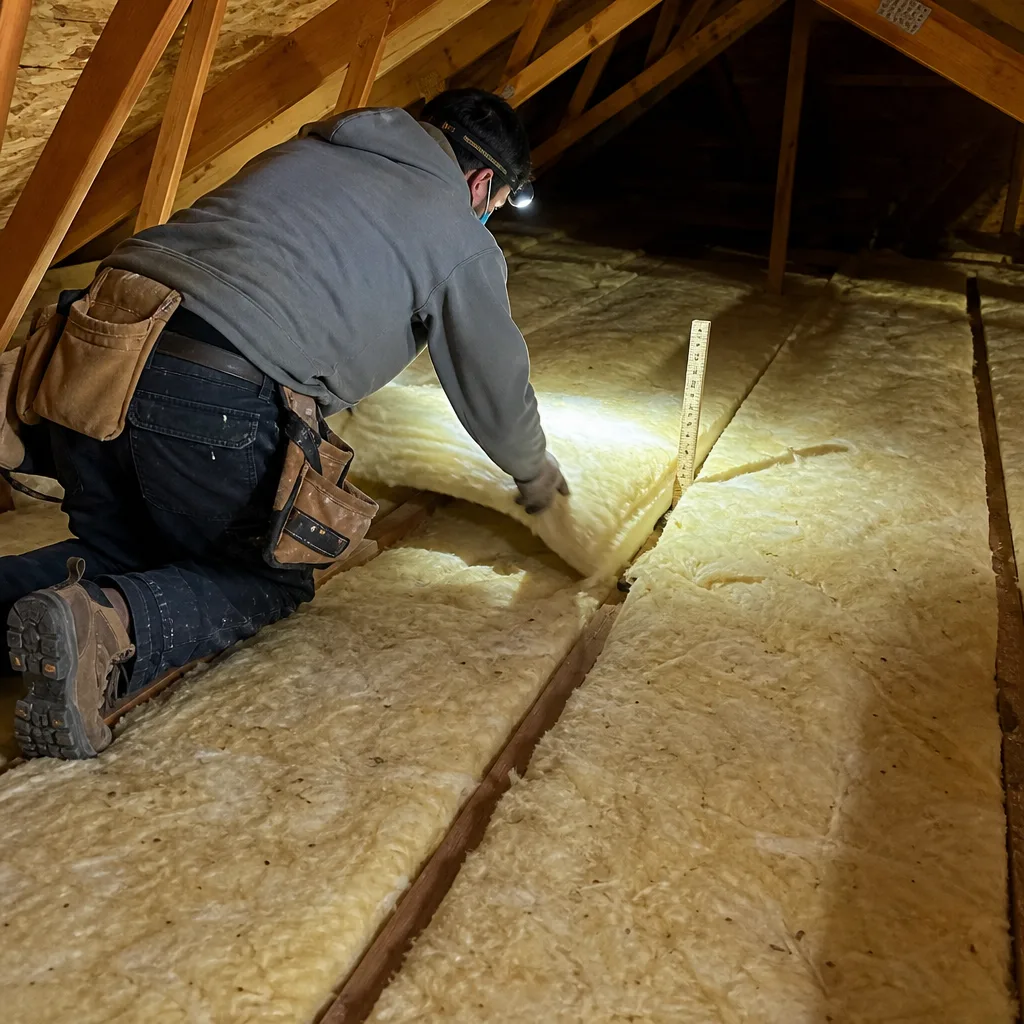
We work throughout the neighborhoods around this part of the valley, including Winchester, Whitney, Spring Valley and Enterprise. If you’re just outside the Paradise line, we can still help. See our Blown-In Insulation in Paradise page for the service area and how scheduling works.
Serving Paradise, NV – Our Local Coverage Area
We serve Paradise and nearby communities. Use the map below to see the area we cover. If you’re nearby, we can almost certainly help.
FAQs – Blown-In Insulation in Paradise
Because Strip-adjacent condos and timeshares usually share attic space or party-wall cavities between units, and a standard open-blow top-up can break the fire-blocking and fail inspection. Dense-pack cellulose is injected through small holes to pack those shared cavities safely without leaving gaps. Call (844) 320-7926 and we’ll scope your building’s access before quoting.
Measure the depth at several spots with a ruler; if the original fiberglass is down to 3 – 4 inches and compacted, it’s settled well below R-19. The attic may still look full from the hatch, but the ceiling will feel hot and the AC will run harder than it should. Call (844) 320-7926 for a free attic check and a written price.
Yes, they can. Tight attic hatches and limited parking mean hose equipment has to be staged remotely and run long distances, which slows the job and risks incomplete coverage if it’s not planned. We plan the access route before the crew arrives so the work doesn’t stall mid-job. Call (844) 320-7926 to talk through your unit’s access.
Owens Corning, Johns Manville, Knauf, CertainTeed and GreenFiber are all common for these retrofits, and we source from that group. No proprietary lock-in, so the material matches the target R-value and your budget rather than a single supplier’s system. Call (844) 320-7926 for current options and pricing.
Often yes, because intense Mojave sun load drives heat through the roof deck and a radiant barrier cuts that solar gain before it reaches the insulation. It pairs well with a top-up or full fiberglass upgrade, though it’s not the right call for every attic. Call (844) 320-7926 and we’ll tell you whether it pays off for your home.
Blown-in insulation in Paradise is an attic upgrade sold on cooling-bill savings, not a new-build product, and that’s what we do here. Whether you’re in a settled 1980s tract home or a condo tower with a shared attic, we start with a written price, air-seal first, and finish with a documented record of the work. Call (844) 320-7926 for a free estimate and a written second opinion on any quote you already have.
Written by the team at Envelope Insulation Co.