

CertainTeed Attic Insulation: The Boulder City Owner’s Guide
We install CertainTeed attic insulation systems for Boulder City homeowners, and most whole-attic jobs in the homes we see here land between $1,800 and $4,600 installed, with same-day availability on many standard homes. You usually discover the failure the same way everyone does: a summer electric bill that climbs past what your neighbors pay, a second-floor bedroom that won’t drop below 82°F by 4 p.m., or a contractor who pulled back a piece of batts near the hatch and found them compressed, dirty, or simply gone. CertainTeed makes fiberglass batts and loose-fill, and the failure modes differ by product, so the first useful step is figuring out which one is actually in your attic.
Which CertainTeed Models This Applies To
CertainTeed’s residential attic lineup runs through a few product families, and the label matters because the replacement decision is different for each. Their InsulSafe loose-fill fiberglass blows in to a settled depth and is the most common product we pull out of Boulder City attics. Thermafiber mineral wool batts show up in homes built to a higher fire rating, often near a garage wall or mechanical chase. SmartBatts and the standard fiberglass batt line cover most batt installations. The specification that actually matters is the R-value printed on the bag or batt face, plus the settled depth in inches. A CertainTeed loose-fill job rated R-38 is typically about 12 to 13 inches settled; if you measure 7 inches under a straightedge, the product is nowhere near what the label claims.
For batts, check the width (15-inch and 23-inch are standard) and whether the facing has a vapor retarder. Boulder City’s dry climate means you usually don’t want an interior vapor retarder on an attic floor, and we’ve seen it installed backwards more than once. On the OEM-versus-aftermarket question, CertainTeed does not sell an attic insulation product that requires a proprietary match; any R-value-equivalent fiberglass or mineral wool performs the same job. That gives you room to compare, which is why we source freely from CertainTeed, Owens Corning, Johns Manville, Knauf, Rockwool, and GreenFiber instead of locking you into one bag. We’re an independent contractor, not affiliated with CertainTeed.
Signs Your CertainTeed Attic Insulation Is Failing
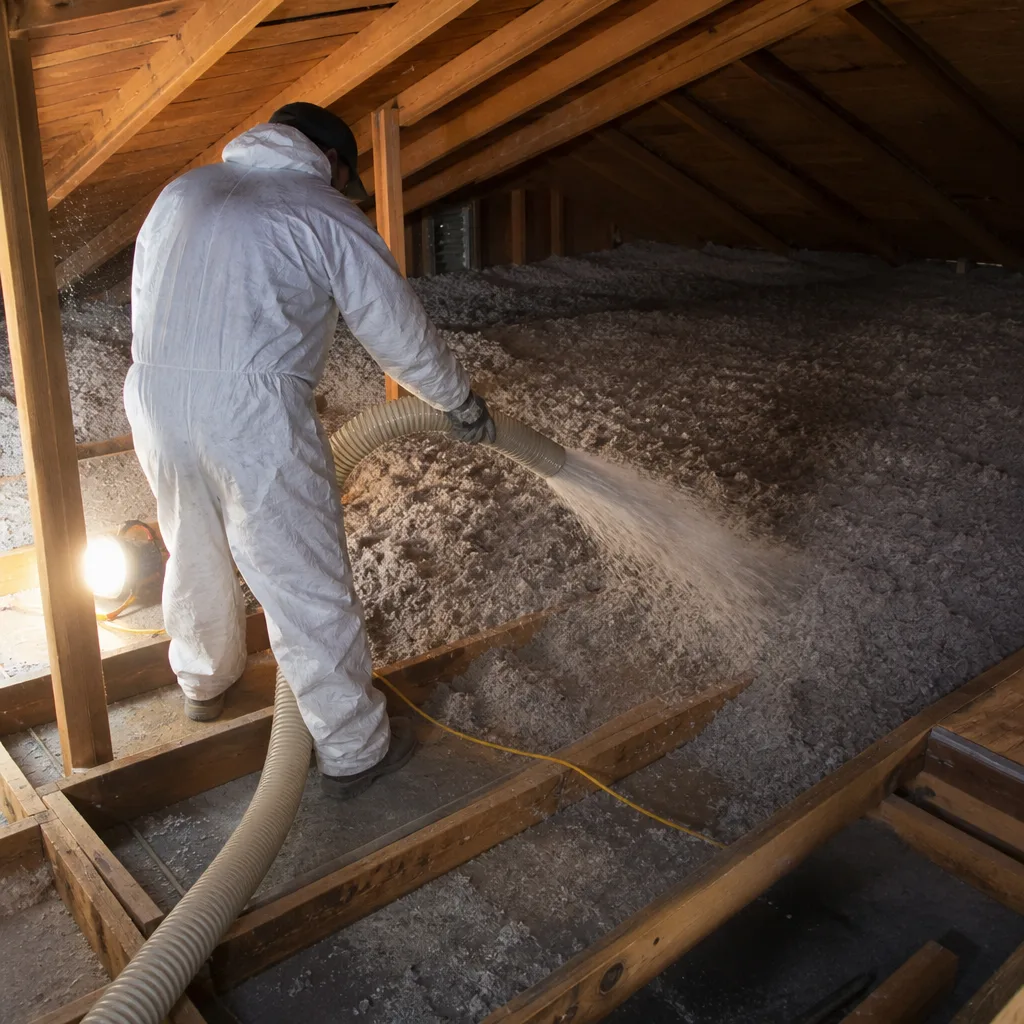
- The material has settled well below its rated depth. Blown fiberglass loses loft over time, and 20 years of thermal cycling in a Boulder City attic can knock several inches off the original depth. A straightedge and a tape measure tell you in two minutes.
- It looks matted, dark, or damp. Compressed batts have lost the trapped air that does the insulating, and dark staining often points to a roof or duct leak that soaked the product. Wet insulation never comes back to full performance.
- You can see the ceiling joists. If the wood is visible across the attic floor, you are likely under R-19, well below the R-49 to R-60 that the Department of Energy recommends for our climate zone.
- Ductwork sits buried under or smashed flat by insulation. Insulation on top of flex duct does not help the house and can trap heat against the duct jacket. Ducts should be insulated separately and left exposed, not entombed.
- Air moves when you stand in the attic on a windy day. That’s not insulation failure exactly, it’s an unsealed attic floor: top plates, can lights, and wire penetrations leaking conditioned air straight up. New insulation over those leaks underperforms from day one.
Replacement Cost & What’s Included
Installed prices for a typical Boulder City attic run $1,800 to $2,600 for a straight blown-in top-up over existing material in good condition, $2,900 to $4,600 when we remove and replace the old insulation, and $600 to $1,100 extra for air sealing the attic floor before any insulation goes down. The range is driven by square footage, how much old material has to come out, and how many penetrations need sealing. We quote parts and labor as one flat figure rather than a line-item markup, and you get that number in writing before a single bag is opened.
Insulation alone rarely solves the bill problem in this climate. Boulder City sits in a desert where summer attic temperatures regularly top 140°F, and heat radiates down through unsealed ceiling penetrations as much as it conducts through the fiberglass. Under The Haven Standard, we seal first, then insulate, in that order, and we don’t skip the air sealing to make the number look smaller. On applicable jobs we publish before-and-after blower-door readings so you can see the change in CFM50 (a pressurization figure showing how much air the house was leaking). Every completed job is backed by our 365-Day Done Right Promise.
DIY or Call Us?
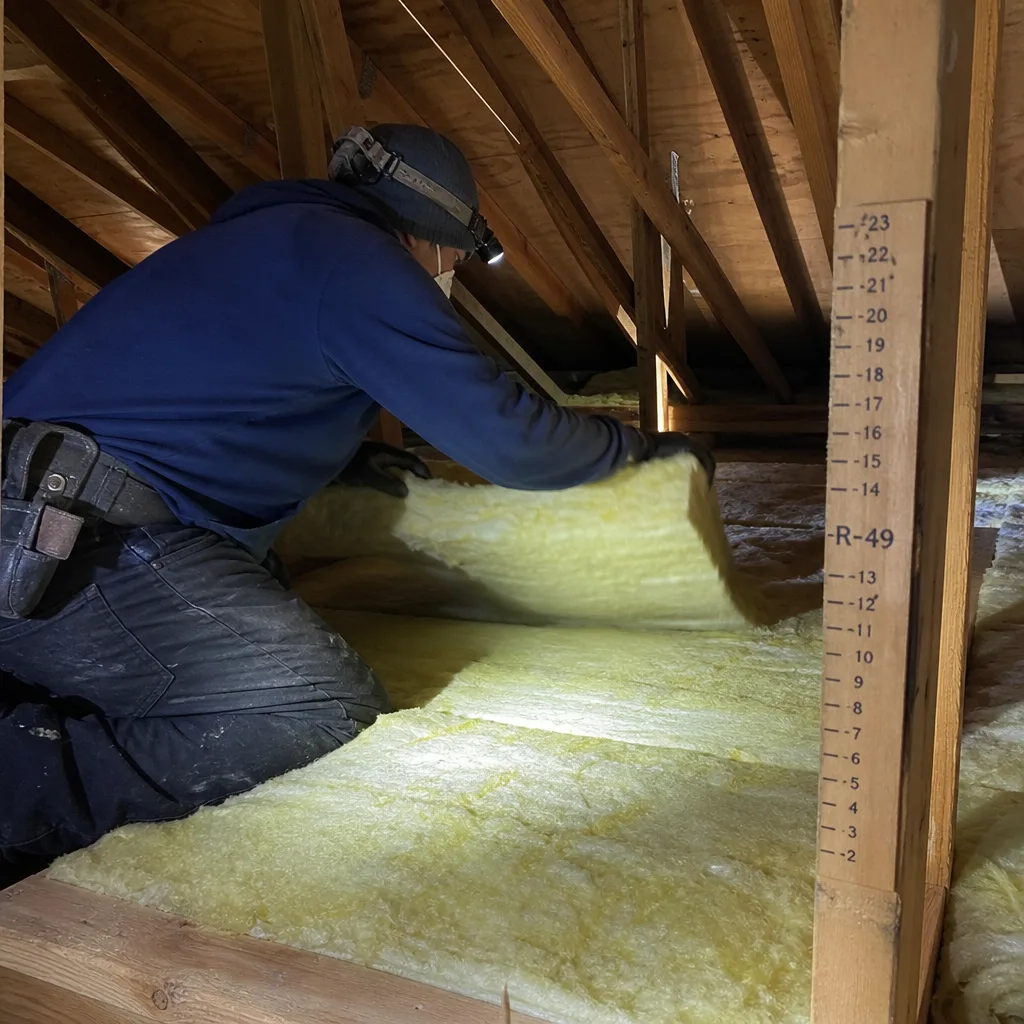
You can safely measure settled depth with a tape and straightedge, check whether the ceiling joists are visible, photograph the label on a bag or batt still in the attic, and note whether any ductwork is buried. Those four checks will tell you whether the insulation is short, which product you have, and whether a top-up or a full replacement is likely.
Where DIY goes wrong is the part that matters most: air sealing the attic floor before adding insulation. Crawling around a Boulder City attic in summer is a genuine heat and air-quality hazard, loose-fill fiberglass is a respiratory irritant, and sealing around can lights and combustion flues incorrectly can create a fire or carbon-monoxide risk. That work belongs to a trained installer, not an afternoon project. If you’d rather have a written price and a documented result than a guess, call (844) 320-7926 and we’ll walk you through what a top-up versus a replacement would actually cost for your attic.
FAQs
CertainTeed fiberglass insulation itself doesn’t expire: the material will sit in an attic for 30 years or more if it stays dry and undisturbed. What fails is the installation. Settling, compression, water damage, rodent activity, and air leaks above it all cut performance long before the product wears out. In our desert climate the realistic performance window for a typical installation is 15 to 25 years before a top-up makes sense, and a tape measure tells you faster than any sales pitch.
Often yes, if the material is clean and dry with most of its depth intact. A top-up to restore R-value and a full air-seal of the attic floor is a common fix that costs a fraction of removal. Repair stops making sense when the insulation is wet, heavily compressed, contaminated, or when settling dropped it 4 inches or more below the rated depth. We’ll tell you honestly which side you’re on, and we offer a free second opinion on any written estimate so you can compare before deciding.
Most single-attic top-ups take half a day, and a full removal and reinstall usually runs one full day for a typical Boulder City home. Air sealing adds a few hours and needs to happen before the insulation goes down, so it happens first in the schedule. You get a documented photo record on every visit so you can see what was there and what we did.
We source from regional suppliers and pull whatever R-value and product the job calls for, whether that’s CertainTeed, Owens Corning, Johns Manville, Knauf, Rockwool, or GreenFiber. We don’t claim a stock of parts on hand or a truck full of product; material is sourced per job so you get the right spec rather than whatever happens to be sitting in a truck. That also means we can compare a CertainTeed spec against Reflectix products and other brands on cost and R-value before you commit.
Call (844) 320-7926 for a free estimate. You’ll get a written price, a written scope, and a written warranty before any work starts, and a live person answers the phone.
Written by the team at Envelope Insulation Boulder City, serving Boulder City and nearby areas.