
GreenFiber Radiant Barrier Installation: The Boulder City Owner’s Guide
We install radiant barrier systems that work alongside GreenFiber insulation in Boulder City, and most whole-attic radiant barrier jobs here run between $1,400 and $3,200 installed, with single-zone or partial retrofits starting lower. In older Boulder City homes with low-slope roofs and no existing vapor control, we often size the work at the lower end; in newer builds with complex rooflines and multiple valleys, it climbs. Same-day scheduling is often possible when you call in the morning.
Owners usually discover the problem the same way. It starts with a second-floor bedroom in Boulder City that stays 8 to 12 degrees warmer than the rest of the house, then a summer NV Energy bill that jumps $40 to $70 month over month with no change in habits. Sometimes it’s more direct: a foil layer sagging against the rafters, torn along a fold, or flaking where it meets a gable vent. Once you see that, the barrier isn’t reflecting anything anymore.
Key Takeaways
- Installed radiant barrier in Boulder City typically runs $1,400 to $3,200, priced on attic geometry and prep work, not on square footage alone.
- GreenFiber is a loose-fill cellulose brand; the radiant barrier in your attic is a separate product line, and we match it to what’s already up there.
- We’re an independent service provider, not affiliated with GreenFiber.
- Sealed first, then insulated. We never lay a barrier over an unsealed attic floor.
Which GreenFiber Models This Applies To
GreenFiber’s best-known product is loose-fill cellulose insulation, sold under names like Natural Fiber and Sanctuary, which reaches your attic as blown fiber rather than as a rigid panel. That matters for this page: when Boulder City homeowners say “my GreenFiber radiant barrier,” they usually mean one of two things. Either they have a foil-faced radiant barrier with GreenFiber cellulose underneath it, or they have a foil product they’ve assumed is GreenFiber because the attic also holds GreenFiber insulation. It’s worth checking before you buy anything.
Here’s how to identify what you actually have. Look at the label printed on the underside staple tab of the foil: real radiant barrier products carry a brand and a product line, and GreenFiber’s own labeling names GreenFiber explicitly. If the only branding you find is on the insulation bag in the corner, the barrier is a third-party product. Measure the roll width too. Standard perforated foil runs 16 or 24 inches; a 48-inch roll is a different category of product entirely, usually a radiant barrier panel rather than a roll. Take a photo of the label and a tape measure against the roll before you order.
On the OEM-versus-aftermarket question, we’re blunt about it: for radiant barrier specifically, there is rarely an OEM match to chase. A quality aftermarket perforated foil that meets the same reflectivity and perm rating does the same job, and we source from Owens Corning, Johns Manville, Knauf, Rockwool, CertainTeed, Icynene, Demilec, and GreenFiber with no proprietary lock-in. If your aim is to keep the GreenFiber system intact, we match the barrier to the insulation already in the attic rather than replacing the insulation to fit the barrier.
Signs Your GreenFiber Radiant Barrier Installation Is Failing
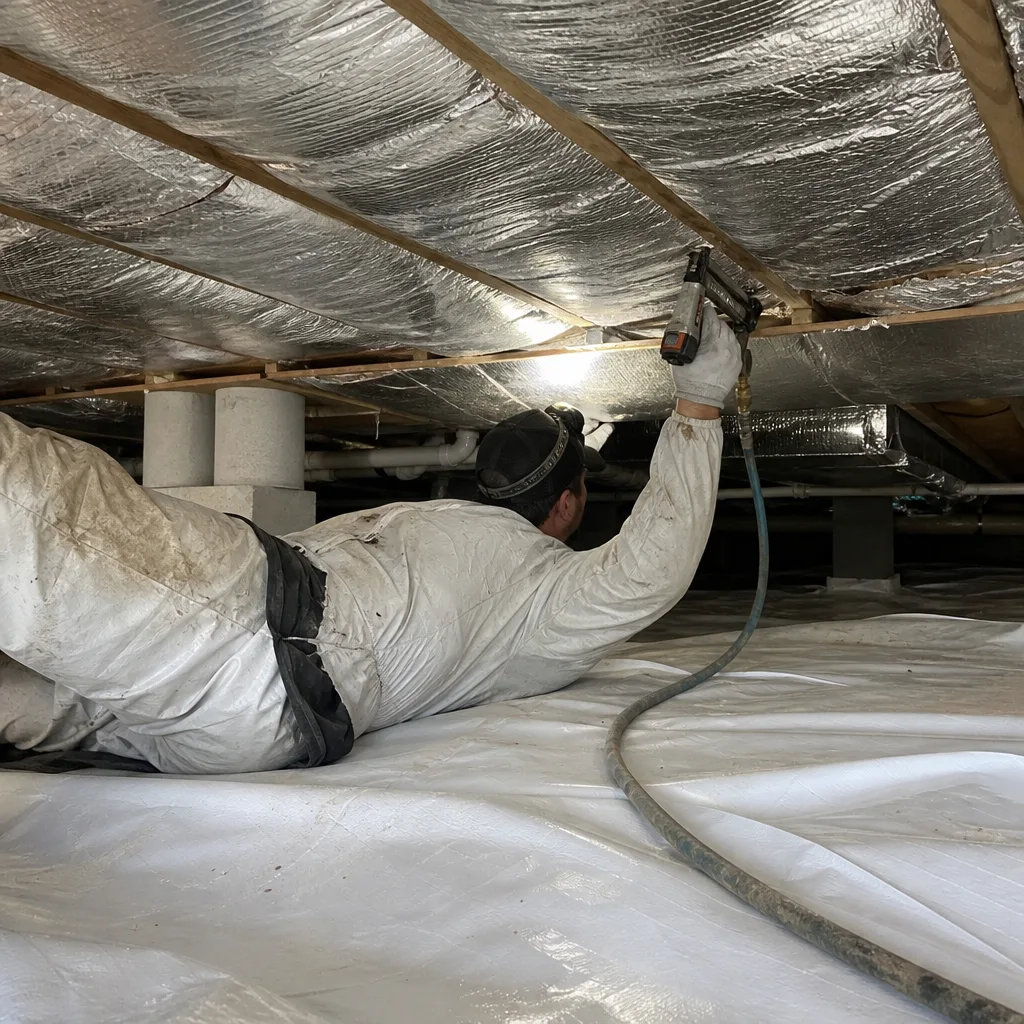
Radiant barrier fails in ways that are visible before they show up on a bill. In Boulder City’s dry desert heat, with attic temperatures that push past 150°F on a July afternoon, materials age faster than they do in milder climates. Here’s what we look for.
- Foil sagging between rafters. Adhesive and staple tabs give out under repeated thermal cycling, and once the foil droops and touches the insulation, it conducts instead of reflecting. The barrier has to maintain an air gap to work.
- Tears along folds and at penetrations. Every nick reduces the reflective surface, and a tear at a can light or vent stack lets heat straight through. This is common at penetrations where the barrier was cut and never sealed back.
- Flaking or delamination of the foil face. On low-grade products, the aluminum layer separates from the backing after a few NV summers. Once it flakes, reflectivity is gone and you’re looking at a plain backing material.
- Condensation staining or rust spotting. A barrier installed face-down on the wrong side of the assembly traps moisture, and you’ll see water marks or fastener rust. Boulder City’s dry air makes this less common than in humid climates, but it still happens in homes with bath fans vented into the attic.
- Hot spots you can measure. If the ceiling in one Boulder City room reads 6 to 10 degrees hotter on an infrared thermometer than an adjacent room with the same sun exposure, the barrier coverage there is compromised.
Replacement Cost & What’s Included
Pricing in Boulder City breaks down like this. These are installed ranges, parts plus labor, and they include removal of the failed barrier where needed.
| Scope | Installed Range (Boulder City) |
|---|---|
| Partial retrofit, single attic zone, 400-800 sq ft | $1,400 – $1,900 |
| Full attic radiant barrier, standard gable roof, 1,200-1,800 sq ft | $2,000 – $2,700 |
| Full attic with complex roofline, valleys, or multiple penetrations | $2,700 – $3,200 |
| Air sealing of top plates, can lights, and penetrations (prerequisite) | $400 – $900 |
What drives the range: attic geometry, how much of the old barrier has to come down, whether the rafters are accessible, and whether air sealing is needed first. On every Boulder City job, air sealing comes before the barrier goes up. We never blow insulation over an unsealed attic floor, and we never cover up leaks with foil. Your written price is delivered before any work starts, and the work is backed by our 365-Day Done Right Promise. On applicable jobs, you also get before-and-after blower-door readings, the pressurization number that shows in one figure how much air your envelope was losing.
DIY or Call Us?
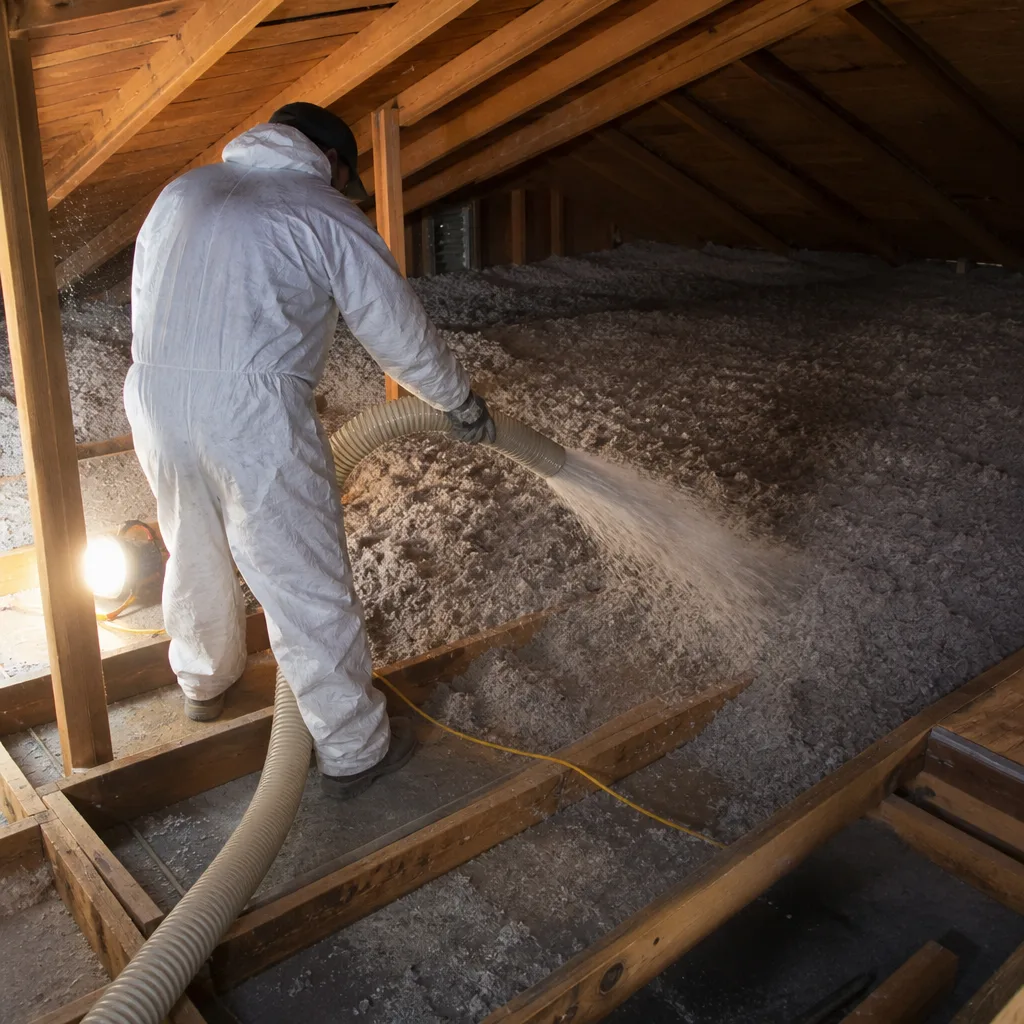
Some of this you can check yourself safely. Walk the attic on a cool morning with a flashlight, photograph the foil label, look for sagging and tears, and note whether the barrier is face-down or face-up. You can also feel for hot spots on the ceiling with an infrared thermometer, which costs less than $30 and tells you more than a bill comparison.
Where DIY goes wrong: attic work in Boulder City means narrow spaces, blown insulation you’ll disturb, and temperatures that hit dangerous levels by 10 a.m. in summer. Radiant barrier also has to be installed with the correct air gap and the correct face orientation, and a barrier installed the wrong way traps moisture and can cause real damage. Beyond the risk, you lose the documented record. When we finish, you get a photo record of the installation and, on applicable jobs, blower-door numbers showing the difference. If you want the price to be someone else’s problem, call (844) 320-7926 for a free estimate.
FAQs
A quality perforated foil barrier lasts 15 to 25 years in Boulder City’s climate, though the intense desert heat shortens that compared to milder regions; expect 15 to 20 years on a standard installation. Cheaper foil-faced products delaminate faster. We tell you the expected service life in writing with your price.
Sometimes yes. Small tears and isolated sagging can be re-tensioned and patched if the foil hasn’t delaminated, and that’s often the right call on a barrier under 10 years old. If the foil face is flaking or more than about a third of the surface is compromised, replacement is the better value. We’ll tell you which one you’re looking at, and a free second opinion on any written estimate means you can bring a competing quote to us.
Most partial retrofits in Boulder City are done in a single day, and full attic installations take one to two days depending on roofline complexity. If air sealing is needed first, add a few hours. We answer the phone 24/7 with a live person and confirm timing with a text when the technician is on the way.
We source from established manufacturers and match the barrier to the GreenFiber insulation already in your attic, with no proprietary lock-in. Reflectix is also among the products we work with. Tell us what’s currently installed and we’ll price the right match, not the most expensive one.
If you’re in Boulder City and your attic is running hot, call Envelope Insulation Boulder City at (844) 320-7926 for a free estimate. You’ll get a written price before any work starts, a documented photo record when we leave, and a crew that seals before it insulates.
Written by the team at Envelope Insulation Boulder City, serving Boulder City and nearby areas.