
Knauf Crawl Space Encapsulation & Vapor Barrier in Boulder City: What to Know First
Envelope Insulation Boulder City provides independent Knauf crawl space encapsulation and vapor barrier work in Boulder City, and most jobs run two to three days from first visit to final photo record. On a standard 1,200 to 1,800 square foot crawl space, homeowners here typically pay $2,400 to $6,800 depending on how much organic debris has to come out and whether we’re installing a fully sealed liner or a reinforced vapor barrier. We state the price in writing before anything starts, and you get the written scope and warranty before a tool comes off the rack.
This page is written for Boulder City homeowners who have Knauf products in the crawl space (or are weighing them) and want to know how the brand actually behaves in our climate, what goes wrong, and what it costs to fix. If that’s you, call (844) 320-7926 and a live person will pick up.
How Knauf Products Fail – and How We Fix Them
Knauf doesn’t make crawl space vapor barriers in the traditional liner sense, so most of the Knauf material we encounter in a Boulder City crawl space is the mineral wool and insulation product line that homeowners have added over time, sometimes under a poorly installed barrier. Here’s what actually fails, and why.
- Knauf mineral wool batts that stay wet. Mineral wool resists moisture better than fiberglass, so homeowners assume it can sit under a leaking vapor barrier. It can’t. When below-grade moisture pushes through a failed seam or a floor-pier gap, the batt’s lower edge wicks and compresses, and by the time you notice, the R-value is gone. Our fix: remove the compromised batt, seal the moisture path first, then reinstall on a sealed liner. We don’t blanket over an active leak.
- Knauf batt compressed against floor joists. In a 1960s-to-1980s Boulder City crawl space (common in the older tracts off Nevada Way and Adams Boulevard), the joist bays run shallow and the original installer jammed Knauf batts into them. Compression kills R-value and leaves a gap above that turns into a convection channel. We pull the batt, air-seal the top plate and rim, then reinstall at full nominal thickness.
- Knauf faced batts installed with the facing down. On a crawl space ceiling, the vapor retarder facing must go to the warm side. Flipped installations trap moisture against the joist, and the paper deteriorates from the underside. We correct the orientation and tape the seams instead of trusting friction fit.
- Knauf products put next to an unsealed vapor barrier. A 6-mil barrier that’s taped with the wrong tape (or not taped at all) is a moisture chimney. The Knauf product above it goes first. Our fix is a proper 10- to 20-mil reinforced liner, mechanically fastened at the foundation wall, sealed at every penetration (piers, plumbing, HVAC boots) with the manufacturer’s seam tape.
- Knauf batts added over a moisture problem. This is the one we see most often. Someone sells the homeowner on more insulation, but the standing water or high relative humidity in the crawl never gets addressed. The batts go in, then fail within a season. We test relative humidity with a meter before we quote; if it’s above 70% and there’s no vapor barrier doing its job, no insulation goes in until the moisture is under control.
On the products themselves: Knauf’s mineral wool line (the R-13 to R-23 batts and the blown-in product) holds up well in a dry crawl space, but no mineral wool is a substitute for a sealed envelope. What we’ve learned in Boulder City specifically is that Knauf batts in a crawl space below grade almost always outlast the barrier above them, which means the barrier is what fails first, and the brand name of the insulation is secondary.
Our Knauf Crawl Space Encapsulation & Vapor Barrier Process
- 1
Free diagnostic visit. We meter relative humidity at three points in the crawl, note standing water, and photograph the debris load. You get the photo record before we quote.
- 2
Written scope and price. Under Haven Standard Clause 1, you get a flat written price, the written scope of what comes out and what goes in, and the written warranty before any work starts. No verbal estimates.
- 3
Cleanout and removal. Debris, old barrier, and compromised Knauf batts come out. We bag and remove rather than leaving it in the crawl.
- 4
Moisture control first. We address the source – perimeter drainage, downspout routing, sump – before the liner. Sealed first, then insulated, in that order, every time.
- 5
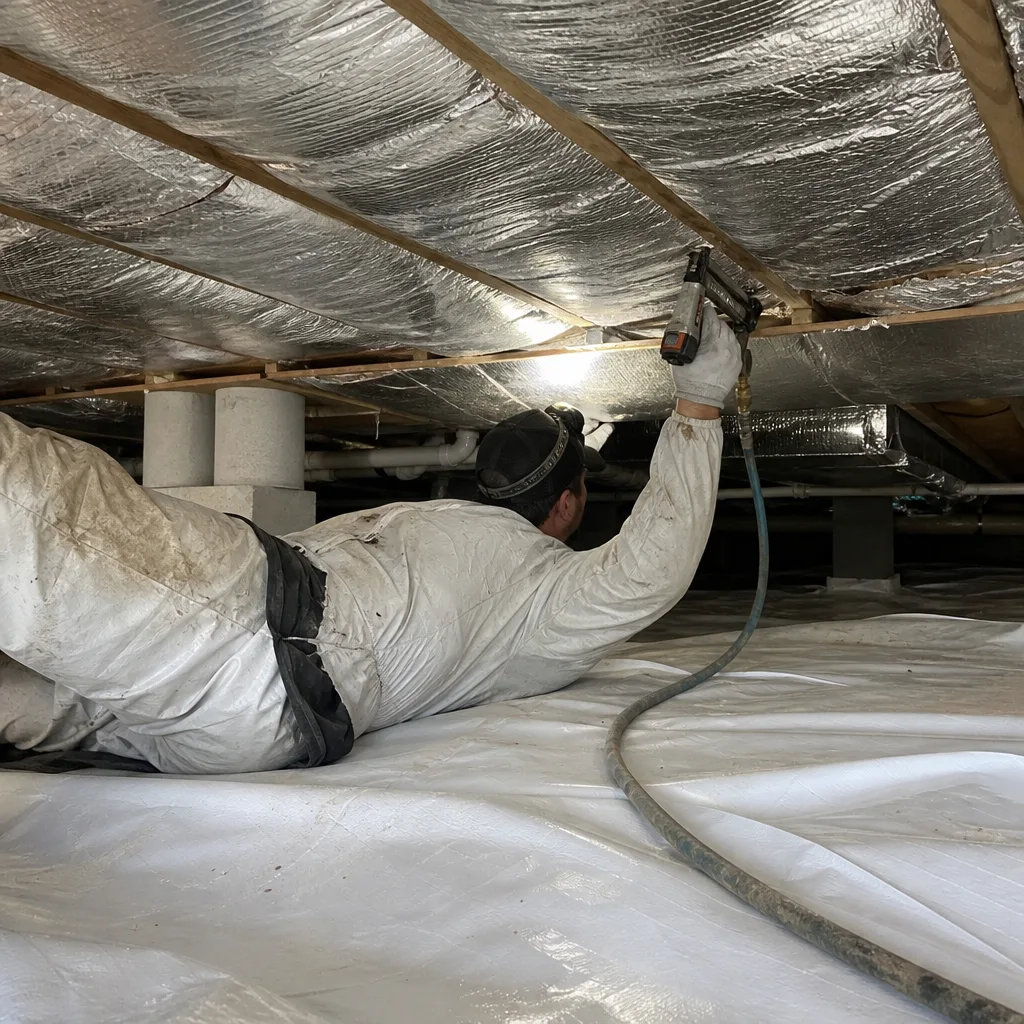
Liner and barrier install. 10- to 20-mil reinforced liner mechanically fastened and sealed. If Knauf insulation stays or goes back in, it goes in after the barrier and only after we’ve confirmed the crawl is dry.
- 6
Final photo record and, where applicable, blower-door numbers. You get before-and-after readings so you can see the envelope change in one figure. The 365-Day Done Right Promise covers the work.
What Knauf Crawl Space Encapsulation & Vapor Barrier Costs in Boulder City
Here are the ranges we actually quote in Boulder City. Prices vary with crawl height, access, and how much Knauf material has to come out.
| Scenario | Typical range |
|---|---|
| Standard vapor barrier on a 1,200 – 1,800 sq ft crawl | $1,400 – $2,600 |
| Full encapsulation, sealed liner with all penetrations taped | $3,200 – $6,800 |
| Knauf batt removal and reinstall at correct thickness | $800 – $1,800 |
| Cleanout and debris removal (organic load) | $400 – $1,200 |
| Moisture control add-ons (drainage, sump) | $600 – $2,400 |
What moves the price up: low crawl access (anything under 18 inches), active water intrusion, and serious debris volume. What moves it down: existing liner in good condition and a clean, dry crawl. Bring us a competing written estimate and we’ll read it with you at no charge; a Free Second Opinion is part of how we operate.
Why Boulder City Homeowners Call Envelope Insulation Boulder City for Knauf Work
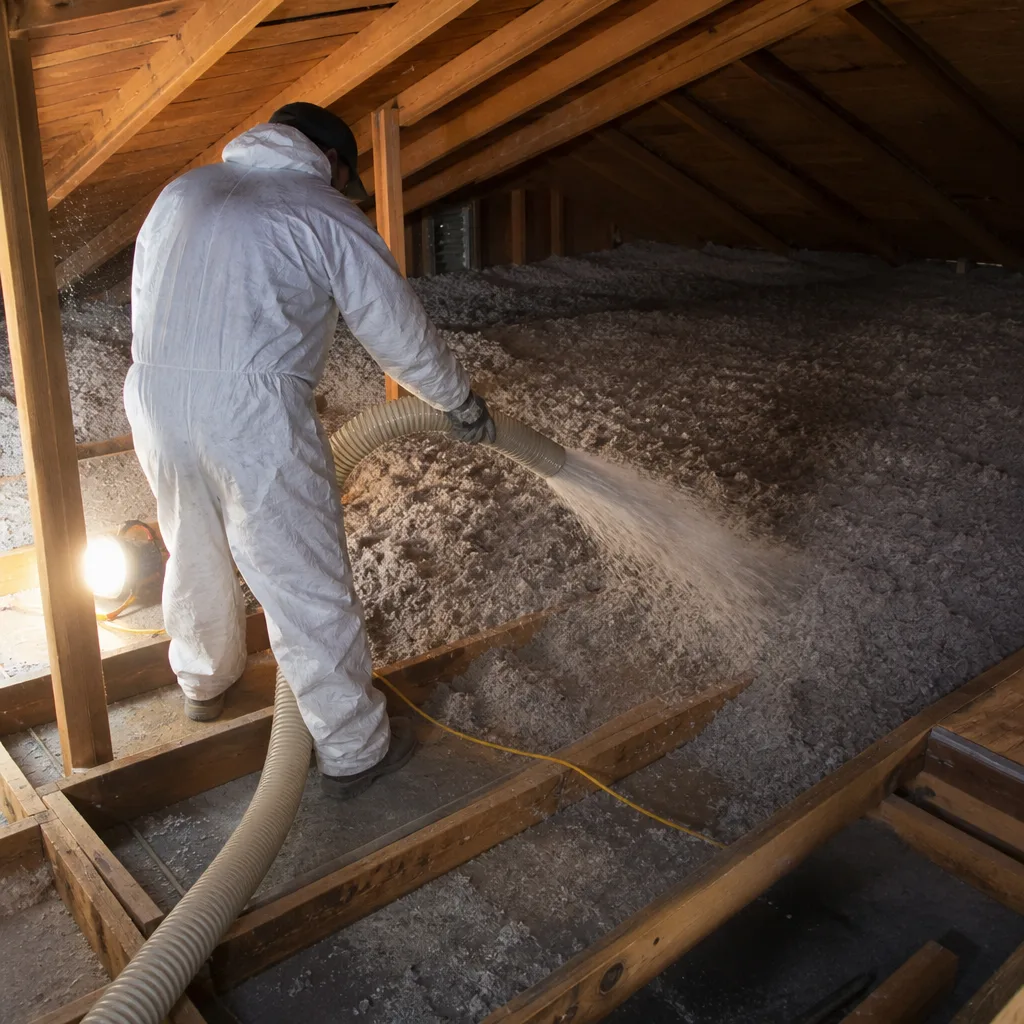
Because we do the sequence in the order that actually works: moisture control and air sealing first, insulation second, every time. We won’t blow Knauf material into an unsealed crawl, and we won’t sell a barrier to a homeowner whose real problem is a downspout discharging under the house. On jobs where the blower door applies, you get before-and-after numbers, not a promise that we improved things. Our technicians have up to 10 years of experience, every job comes with a Documented Photo Record and a written price before work starts, and the 365-Day Done Right Promise stands behind the finished barrier. We also work with Reflectix and the other envelope brands in the crawl, so a mixed crawl space isn’t a problem for us. As an independent Knauf service provider, we’re not affiliated with or authorized by Knauf; we just know their products well enough to know when they belong in a crawl space and when they don’t.
FAQs
Knauf’s warranty covers manufacturing defects in the material, not installation or moisture damage, so a properly installed barrier over Knauf batts doesn’t void the warranty on the material itself. What does void it is moisture damage or compression from a bad install. The barrier helps the batts perform as designed by keeping the crawl dry.
Yes, when the crawl is sealed and dry. Knauf mineral wool is moisture resistant, doesn’t support mold growth as readily as paper-faced fiberglass, and holds R-value well if it isn’t compressed. It’s not a substitute for a vapor barrier, though, and we won’t install it over an active moisture problem.
Sometimes. If the liner is 10-mil or heavier, still pliable, and the failure is limited to a few seams or one pier, we can re-seal and extend. If it’s thin 6-mil, brittle, or the failure is widespread, replacement costs less than patching over a season.
Most diagnostic visits book within a few business days, and a live person answers the phone 24/7 so you aren’t leaving a voicemail. Call (844) 320-7926 and we’ll get the visit on the calendar.
Yes. Bring a written estimate from another contractor and we’ll read it with you and point out what’s included, what isn’t, and whether the sequencing makes sense. There’s no charge for the second opinion.
Call (844) 320-7926 for a free estimate on your Boulder City crawl space. You’ll get a written price before any work starts, a Documented Photo Record on the visit, and the 365-Day Done Right Promise when the crew leaves.
Written by the team at Envelope Insulation Boulder City, serving Boulder City and nearby areas.