
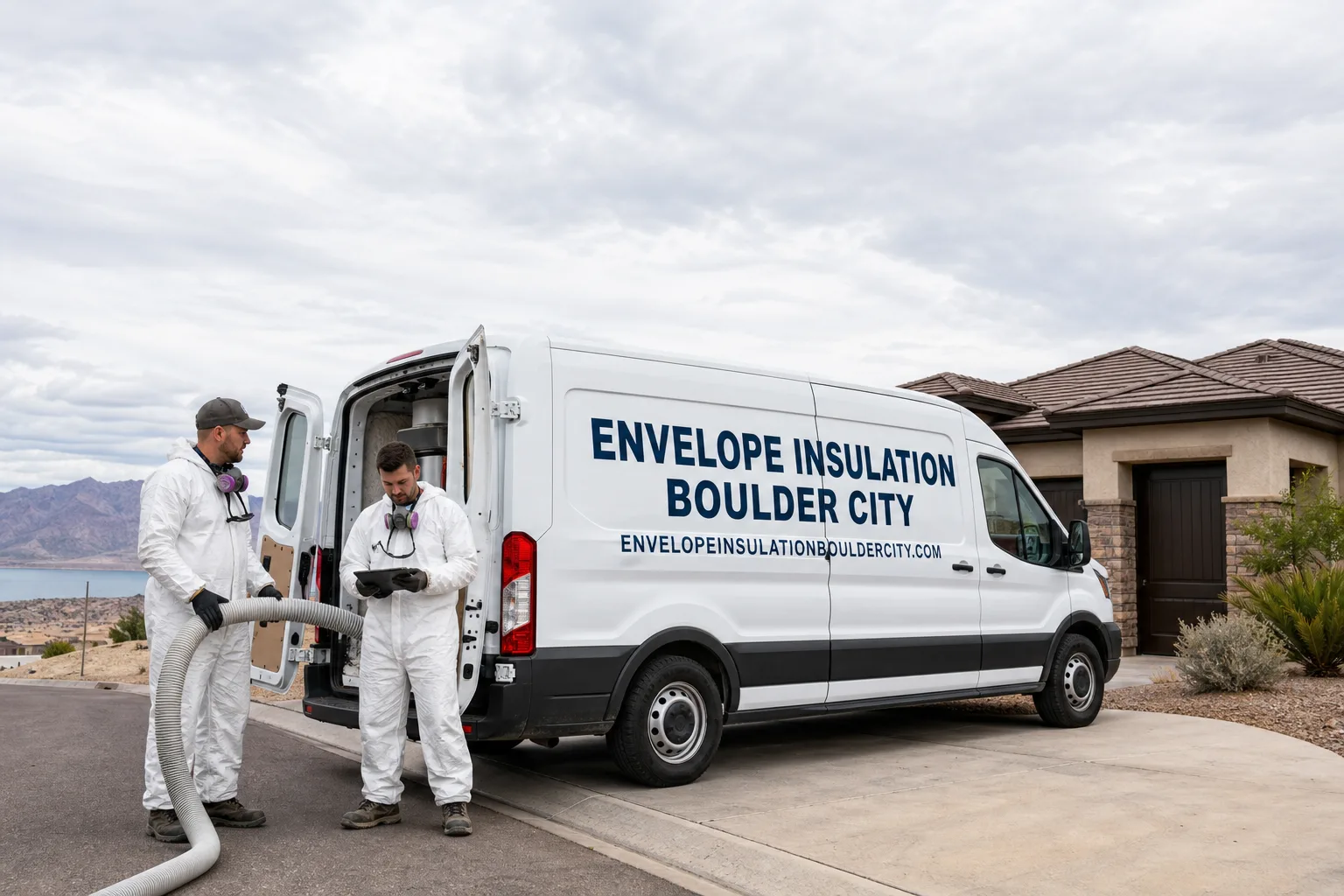
How Much Does Crawl Space Encapsulation & Vapor Barrier Cost in Boulder City?
Most crawl space encapsulation jobs in Boulder City run between $3,800 and $9,400, with the typical homeowner landing near $5,600 for a full 12-mil liner, sealed seams, pipe and pier wraps, and a proper foundation vent seal. A lighter vapor barrier-only install starts around $1,700. On the high end, a larger crawl under a mid-century Henderson-adjacent ranch with active moisture and heavy ductwork can pass $11,000 once drainage and a dehumidifier are added.
We publish the range before we send anyone out, because a written price before any work starts is the foundation of how we operate. Below is a line-by-line breakdown of what drives those numbers in Boulder City, followed by what we check on-site to narrow it down.
Key Takeaways
- Full 12-mil encapsulation: $3,800 – $9,400, most jobs near $5,600
- Vapor barrier only (6-mil, no liner walls): $1,700 – $3,400
- Drainage corrections for Boulder City’s caliche-heavy soils: $600 – $2,800
- Dehumidifier: $1,100 – $2,200 installed and wired
- Free estimates and a free second opinion on any written quote you already have
Crawl Space Encapsulation & Vapor Barrier Cost Breakdown (2026)
These are the numbers we hand over in writing before anyone lifts a tool. Every job gets a documented photo record on the way out, so you can match each line to what was actually installed.
| Line Item | Typical Range in Boulder City | Notes |
|---|---|---|
| Vapor barrier only (6-mil, ground cover) | $1,700 – $3,400 | Best for dry crawls; stops soil vapor, does not seal walls |
| Full encapsulation (12-mil liner, walls + floor) | $3,800 – $9,400 | Most common scope; includes pier wraps and vent sealing |
| Foundation vent sealing (per vent) | $60 – $120 | Sealed with rigid foam, labeled in the photo record |
| Access hatch / crawl door replacement | $280 – $650 | Insulated, gasketed, and sealed |
| Interior drainage correction (French drain or gravel trench) | $600 – $2,800 | Price depends on linear feet and where the water table sits |
| Sump pit and pump installation | $900 – $1,900 | Common when standing water shows up after summer monsoons |
| Dehumidifier (supply, install, wiring) | $1,100 – $2,200 | Required for a sealed system in most Boulder City homes |
| Pipe insulation and duct wrap | $3 – $7 per linear foot | Prevents condensation on cold lines in a sealed space |
| Mold treatment / antimicrobial | $450 – $1,600 | Only where we find active growth, never as an upsell |
| Old liner removal and haul-off | $350 – $800 | If a previous install failed or was never finished |
Two things move the price most: how much water you’re holding and how many obstructions the crawl presents. A clean, empty, 1,000-square-foot crawl with good access is a one-day job. Add standing water, a low clearance under 18 inches, and a hairpin turn at the access hatch, and you’ve just doubled the labor hours.
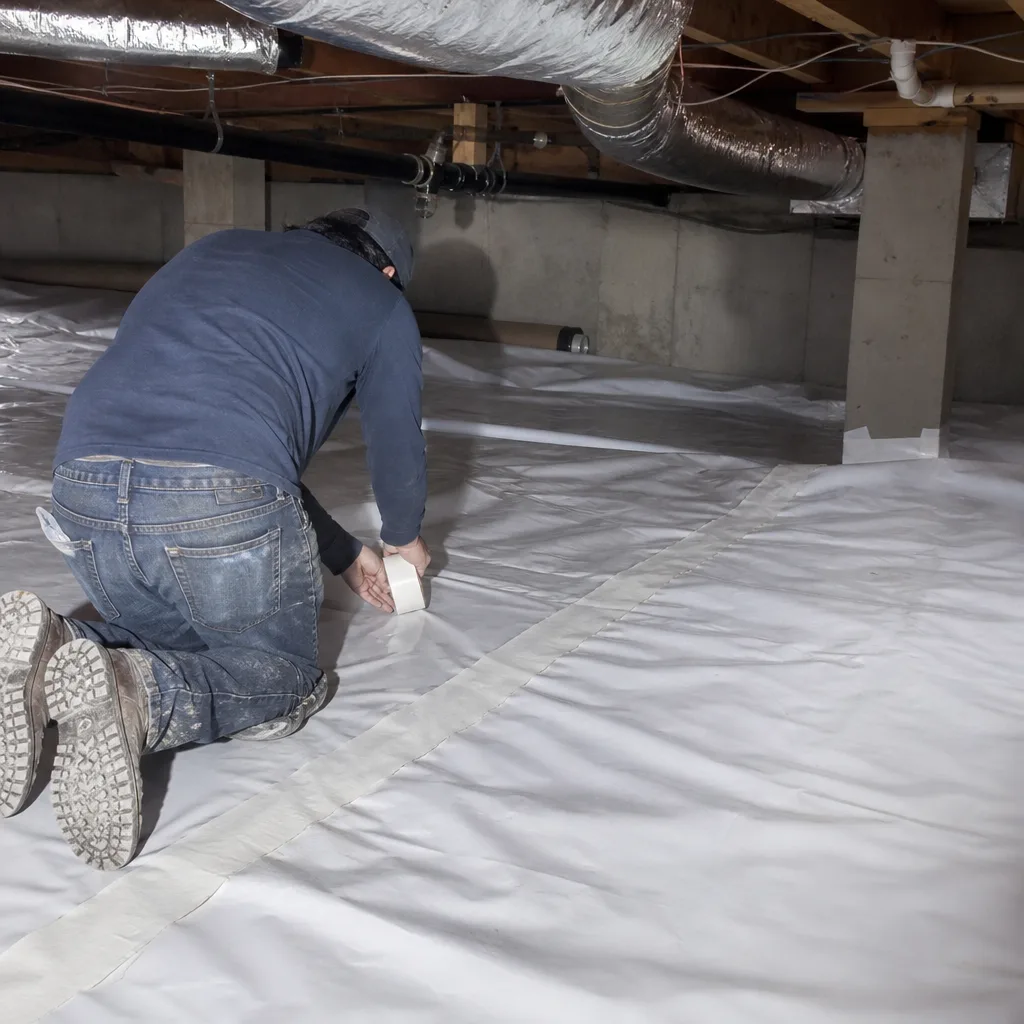
One note on the trade terms: “encapsulation” and “vapor barrier” are often used interchangeably in listings, and they are not the same job. A vapor barrier is a sheet of polyethylene laid on the dirt. Encapsulation extends that film up the foundation walls, wraps piers and plumbing, seals the foundation vents, and either conditions the crawl with the home’s HVAC or installs a dedicated dehumidifier. That’s why the price split between the two scopes is roughly double.
What Affects Crawl Space Encapsulation & Vapor Barrier Pricing in Boulder City
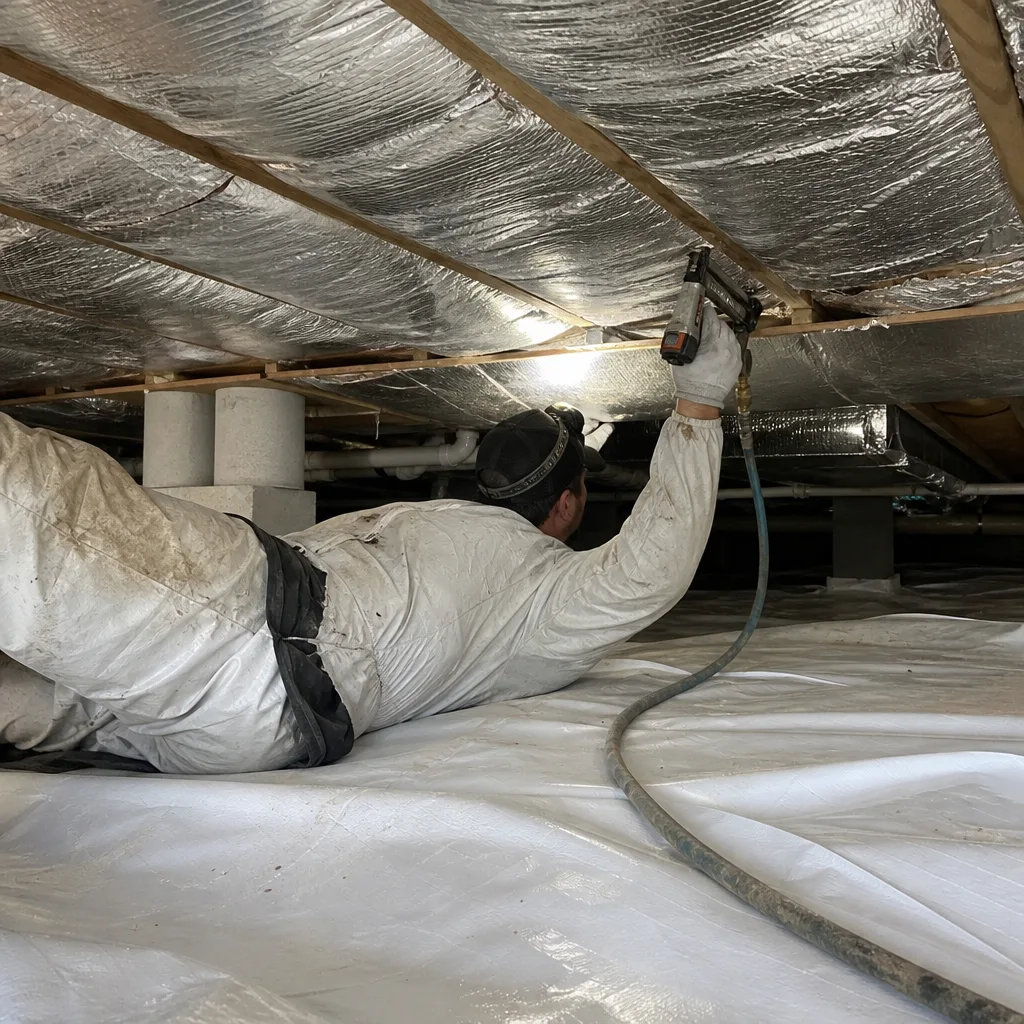
Boulder City is not a typical Vegas Valley crawl space market. The town sits higher (roughly 2,300 to 2,500 feet), the homes on the historic blocks were built in the 1930s under the federal resettlement program, and large stretches of soil are caliche – a cemented calcium carbonate layer that turns a shovel into a pickaxe. Here’s what actually moves your number.
- Crawl space square footage and clearance. A 900-square-foot crawl under a 1950s ranch on Avenue L is a faster job than a 1,800-square-foot crawl under a newer build off Adams Boulevard. Clearance under 18 inches adds labor because the crew is working prone or on creepers rather than kneeling.
- Caliche and soil drainage. Around Boulder City, caliche acts like a shallow bowl. Water doesn’t percolate – it sits. If we find standing water or a saturated layer under the existing dirt, drainage corrections get priced before any liner goes down. Installing a liner over water is the most common encapsulation failure we’re called back to fix.
- Foundation type. Pier-and-beam on the historic blocks versus post-tension slabs with intervening crawl sections both present differently. Pier wraps, pier footing transitions, and crawl door framing all show up as separate lines.
- Summer heat and monsoon season. Crawl temperatures in Boulder City push over 100°F on a late-July afternoon, and the summer monsoon runs July through September. Both affect the sequence – we work the cooler morning hours and stage dehumidifiers early so the liner isn’t sitting in a soup. It also means the seal has to be right the first time: any gap in the vent seal lets in the humid monsoon air that a sealed system is supposed to keep out.
- Existing conditions – mold, rodents, plumbing leaks. Nevada’s roof rats and pack rats are common in older Boulder City crawls, and rodent proofing is priced separately. Active mold growth and any plumbing leak under the liner must be corrected before encapsulation, no exceptions.
- Dehumidifier, sump pump, and electrical needs. A sealed crawl with no airflow needs mechanical moisture control. If the crawl has no dedicated circuit for a dehumidifier, an electrician visit adds $200 to $500.
The other factor is documentation. Some bids include it, some charge for it, and some don’t offer it at all. Under The Haven Standard, every encapsulation job ends with a photo record and, on applicable jobs, before-and-after blower-door readings – a pressurization test that measures in a single number how much conditioned air the envelope was losing before and after the work. You can’t compare two bids without the same paperwork on both.
How to Save on Crawl Space Encapsulation & Vapor Barrier
There’s no cheat code that makes encapsulation cheap in Boulder City, but there are real ways to reduce the total, and none of them involve cutting the scope.
- Fix water first, then encapsulate. If we install a liner before drainage is corrected, you’re paying for the liner twice. Priced together, drainage plus encapsulation is often 15 to 20 percent cheaper than doing them as two separate visits.
- Bundle with attic air sealing. The crawl and the attic are the two biggest holes in a building envelope. Sealing the attic floor – top plates, can lights, penetrations – before blowing insulation in is our standing order. Doing both in one visit shares mobilization and often saves $400 to $900 on labor alone.
- Skip the dehumidifier only if the crawl gets conditioned air. On homes where the crawl already shares conditioned air with the living space, a dedicated dehumidifier may not be required. On homes with no supply ducting to the crawl, it is. We’ll tell you which yours is, in writing.
- Get the free second opinion. Bring us a competing written estimate and we’ll read it with you. Not to pitch – to point out what’s missing from the scope, what’s double-charged, and where the other quote is leaving out a line item that will come back as a call-back in year two.
- Schedule outside the monsoon rush. Late spring and early fall tend to have shorter lead times. There’s no discount for off-season, but a shorter wait means less time for summer humidity to do damage before the liner goes in.
Free estimates are the norm for us. For an exact scope, call (844) 320-7926 – a live person answers, 24/7, and every job starts with a written price before any work begins.
What’s Included in a Boulder City Encapsulation Job?
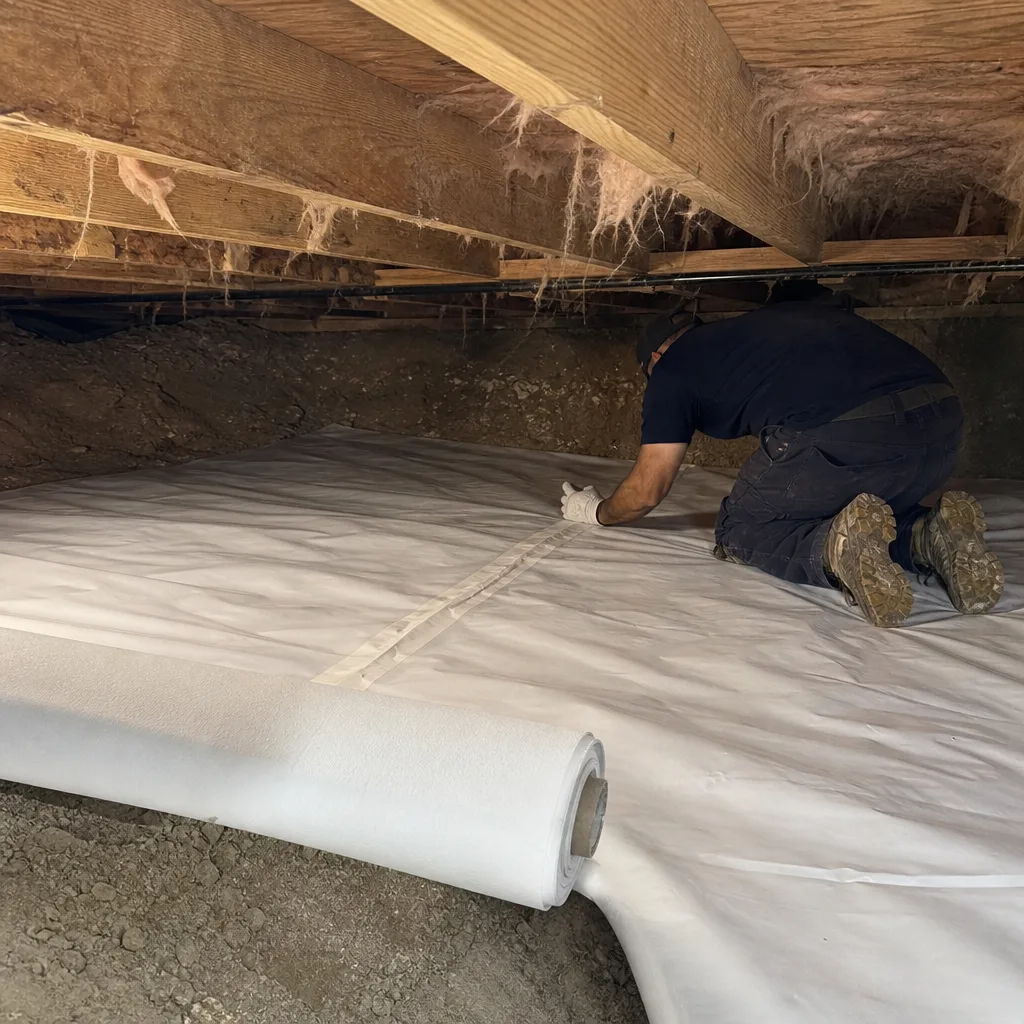
A line-item price is only useful if you know what belongs on the list. Here’s the standard scope we hand over, and what makes it into the documented photo record on every visit.
- Site inspection and moisture reading. We take wood moisture readings on the floor joists and subfloor before quoting.
- Drainage correction, if needed. Gravel trench, French drain, or sump pit, sized to the crawl.
- Rodent proofing. Entry points sealed before the liner goes down. Rats find a way back in if they don’t.
- Liner installation. 12-mil reinforced poly, mechanically fastened to the foundation wall, seams taped and mastic-sealed.
- Pier wraps and pipe wraps. Every pier, plumbing line, and duct run wrapped to prevent condensation.
- Foundation vent sealing. Rigid foam covers, sealed and labeled.
- Dehumidifier installation. Sized to the cubic footage of the crawl, drained to a sump or exterior line.
- Documentation. Photo record at every stage, written warranty delivered before we start, and before-and-after blower-door readings where the work is applicable.
That’s the same scope you’ll see priced on the Crawl Space Encapsulation & Vapor Barrier in Boulder City service page. If you’re still deciding whether encapsulation is the right fix, the home page walks through the full envelope picture – attic, walls, crawl – and where each one ranks in priority.
Encapsulation vs. Vapor Barrier Only: Which Is Right for Your Boulder City Home?
For most Boulder City homes built before 1980, full encapsulation is worth the extra cost. A vapor barrier-only install ($1,700 to $3,400) keeps soil moisture from rising into the joists, but it doesn’t stop humid summer air from entering through open foundation vents. In a town where the monsoon pushes relative humidity over 50 percent for weeks at a time, that matters.
Full encapsulation ($3,800 to $9,400) seals the crawl from outside air. The trade-off is that it needs mechanical moisture control – the dehumidifier line – to stay dry. On a newer home with a tight, well-sealed foundation and no standing water, a vapor barrier plus diligent vent management is sometimes enough. We’ll tell you which side of that line your crawl sits on before you sign anything.
Where does encapsulation rarely pay off?
On homes with active plumbing leaks, foundation cracks, or a crawl that sits below the exterior grade during monsoon runoff, encapsulation can hide a problem rather than fix it. We won’t install a liner over water. If the crawl needs foundation work first, that’s what the written price will tell you, and the liner waits.
What about combining with attic work?
Most households we work with treat the crawl and attic together – sealing and insulating the attic floor while the crawl is being encapsulated. It’s the fastest way to move the blower-door number, and doing both in a single visit shares the mobilization cost. The savings correlate roughly to how much ductwork and plumbing both spaces share.
What Kind of Documentation Should You Expect?
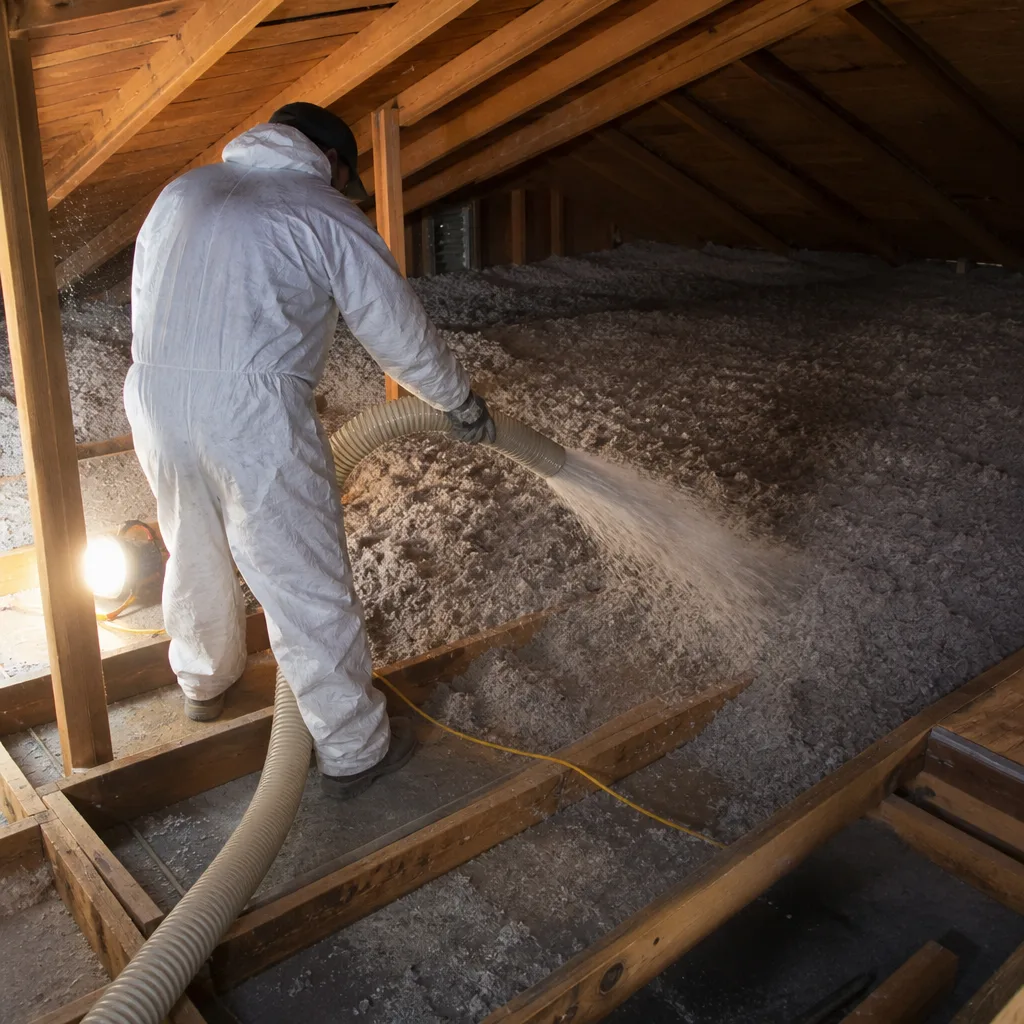
Ask any Boulder City encapsulation contractor what you get in writing when they leave. The answer tells you more than the price does.
- A written price before any work starts – not an estimate of a range, but a flat scope
- A written warranty before the crew arrives
- A photo record at each stage: before, during liner installation, after seam-sealing, after vent sealing, after dehumidifier hookup
- Blower-door readings, before and after, where the work is applicable
- The name of the technician arriving and a text when they’re on the way
This is what Haven Standard Clause 1 means: have it in writing. Every job since 2016 has followed the same sequence – written price, documented record, follow-up. Over 9,000 homes sealed and insulated so far, every one with a paper trail.
Safety Note for Boulder City Crawl Space Work
Crawl spaces are a genuine hazard. Confined-space entry with limited exit, low-clearance work, potential for accumulated gas, and the possibility of exposed wiring or rodent-borne contamination make this a job for background-checked, trained technicians – not a weekend project. If you’re considering a DIY vapor barrier, at minimum get a professional moisture reading first. The three most common encapsulation failures we’re called out to correct all trace back to skipped inspections: a liner laid over active water, a vent sealed with tape that failed within a season, and a missing dehumidifier on a sealed system. A trained professional can spot each of these before the liner goes down. Do not enter a crawl alone, and do not move electrical wiring or gas lines to install a liner.
FAQs – Crawl Space Encapsulation & Vapor Barrier Cost
How much does crawl space encapsulation cost in Boulder City?
Expect $3,800 to $9,400 for a full 12-mil encapsulation, with most Boulder City homes landing near $5,600. Vapor barrier only runs $1,700 to $3,400. Call (844) 320-7926 for an exact quote on your crawl – estimates are free.
Is it cheaper to repair an existing vapor barrier or encapsulate?
Repairing a failed vapor barrier from a prior install typically runs $400 to $1,200 if the original liner is intact and the failure is localized. Full encapsulation replaces the scope entirely and starts at $3,800. If more than 30 percent of the original liner has failed, replacement is usually the better spend. Call (844) 320-7926 and we’ll read your existing liner with you on-site.
Do I need a dehumidifier with encapsulation in Boulder City?
In most cases, yes – a dehumidifier adds $1,100 to $2,200 installed. A sealed crawl in Boulder City has no fresh-air exchange, and monsoon season pushes humid air against the foundation for weeks. Without mechanical moisture control, condensation forms on the joists. On homes where the crawl already shares conditioned air with the living space, the dehumidifier may be reduced or skipped. Call (844) 320-7926 to confirm which case yours is.
How long does encapsulation take, and does timing affect price?
A typical Boulder City encapsulation is a 1 to 2 day job. Crawls over 1,500 square feet or jobs with drainage correction push into a third day. Timing affects labor cost modestly – crews work the cooler morning hours in summer, and scheduling outside the July-to-September monsoon rush means a shorter wait and less exposure to humid air before the liner goes in. Call (844) 320-7926 for available start dates.
Will encapsulation lower my energy bill in Boulder City?
Yes, and the blower-door test is how we show it. Homes we’ve encapsulated and air-sealed typically see their CFM50 reading drop from a leaky 3,500 to 4,500 down to the 2,000 to 2,500 range – a single number that shows the conditioned air your home was losing before and after. Typical savings run 10 to 20 percent on summer cooling in Boulder City, where July and August afternoons regularly top 100°F. Call (844) 320-7926 for a blower-door baseline on your home.
Getting a Written Price on Your Boulder City Crawl
Every job we run starts with a written price before any work begins, closes with a documented photo record, and is backed by the 365-Day Done Right Promise: if it’s not done right, we make it right. Free second opinion on any written estimate you already have. Our technicians have up to 10 years of experience, they’re background-checked, and they’ll text you when they’re on the way. Live person answers the phone, 24/7.
Call (844) 320-7926 for a free estimate on crawl space encapsulation or vapor barrier installation in Boulder City. We’ll walk the crawl, take the moisture readings, and hand you a flat written price – often the same day, always before anyone lifts a tool.
Written by the team at Envelope Insulation Boulder City.
Pricing reflects the Boulder City market as of 2026. Envelope Insulation Boulder City offers free estimates – call (844) 320-7926.
What Our Customers Say
"They air-sealed the attic floor before insulating and showed me the blower-door number before and after. The upstairs is finally the same temperature as downstairs."
- Marisol D."The winter gas bill dropped by about a third. They had estimated a quarter, so they under-promised."
- Genevieve R."Crawl space encapsulation done properly. Photographs of the vapour barrier at every seam, and the damp smell in the hallway is gone."
- Ainsley P.