
How a Radiant Barrier Works in Boulder City, NV: Reflecting Heat, Not Resisting It
A radiant barrier works by reflecting long-wave infrared radiation away from the attic rather than slowing heat as it moves through a material. It’s a low-emissivity foil surface – typically aluminum with an emissivity around 0.03 to 0.05, versus roughly 0.90 for bare wood – that bounces radiant energy back toward its source instead of absorbing and re-emitting it into the attic air. In Boulder City, that mechanism matters more than in most places, because summer heat arrives at your attic almost entirely by radiation. If you want to know whether your attic is set up to benefit, call (844) 320-7926 for a free estimate.
Why Radiation, Not Conduction, Is What Heats a Boulder City Attic
Insulation slows heat by conduction – molecules passing energy to the molecules next to them. A radiant barrier does something different. It stops heat crossing an air space by radiation, electromagnetic energy that travels without touching anything. On a July afternoon, a Boulder City roof deck can reach and hold serious heat, and the underside of that deck radiates the energy straight down into the attic air and across to your ceiling. That’s why the two tools aren’t interchangeable: insulation handles conduction, a barrier handles radiation, and a hot attic needs both.
The reason a radiant barrier works better here than in coastal or humid climates comes down to moisture in the air. In high-humidity environments, water vapor absorbs and re-emits radiant energy, which blunts the barrier’s effect. Boulder City’s summer relative humidity often sits at 10 to 20%, so radiant transfer dominates the heat load and the foil intercepts a much larger share of it. Put a barrier in a muggy climate and you get a modest result. Put it under this sun and the physics works in your favor.
What a Radiant Barrier Actually Changes (and What It Doesn’t)
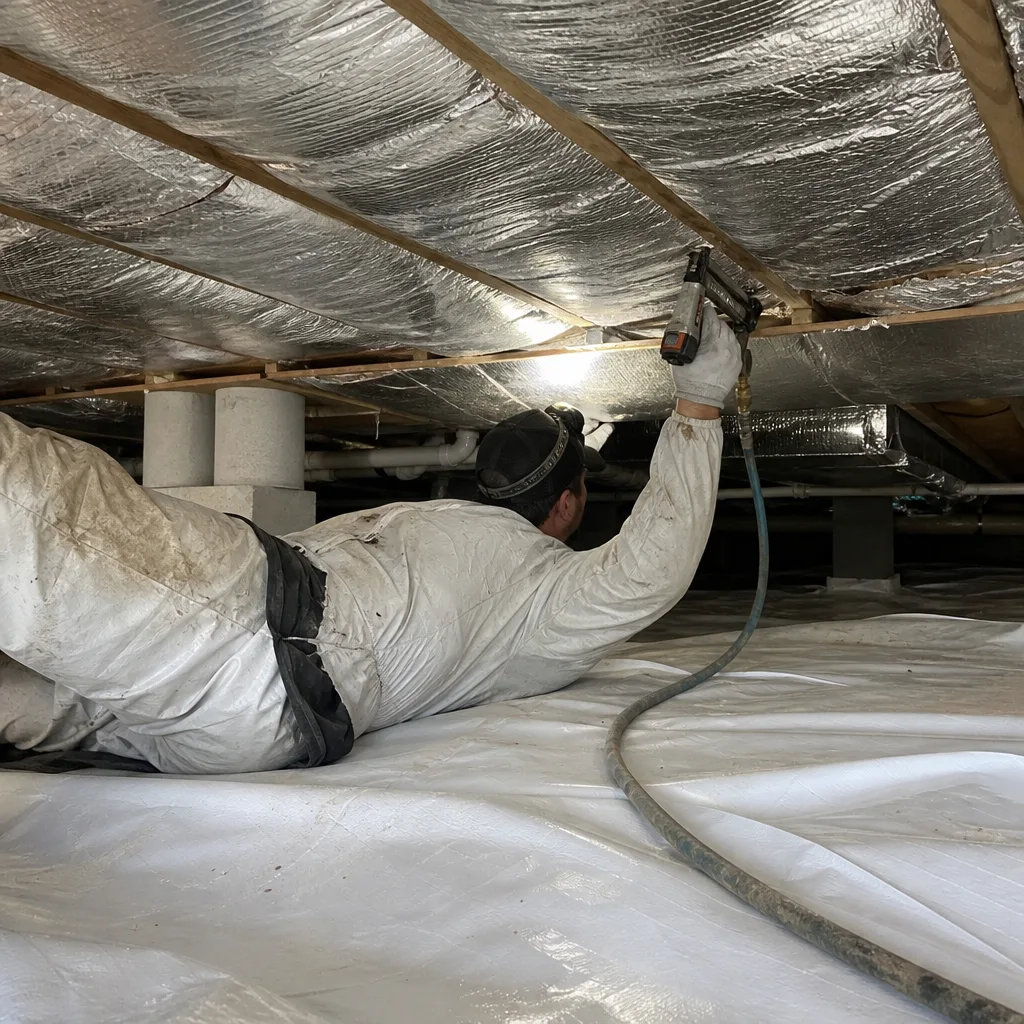
Here’s the distinction that trips people up: a radiant barrier does not add R-value to the ceiling plane. It won’t replace insulation, and no barrier will. What it does, in Boulder City conditions, is pull attic air temperature down by roughly 20 to 30°F, which reduces how hard your air handler and ducts have to work in the hottest hours of the day.
The correct build for a Boulder City home combines both:
- Radiant barrier at the rafter line – facing down into the attic air space, reflecting the roof deck’s radiant heat before it reaches the ceiling.
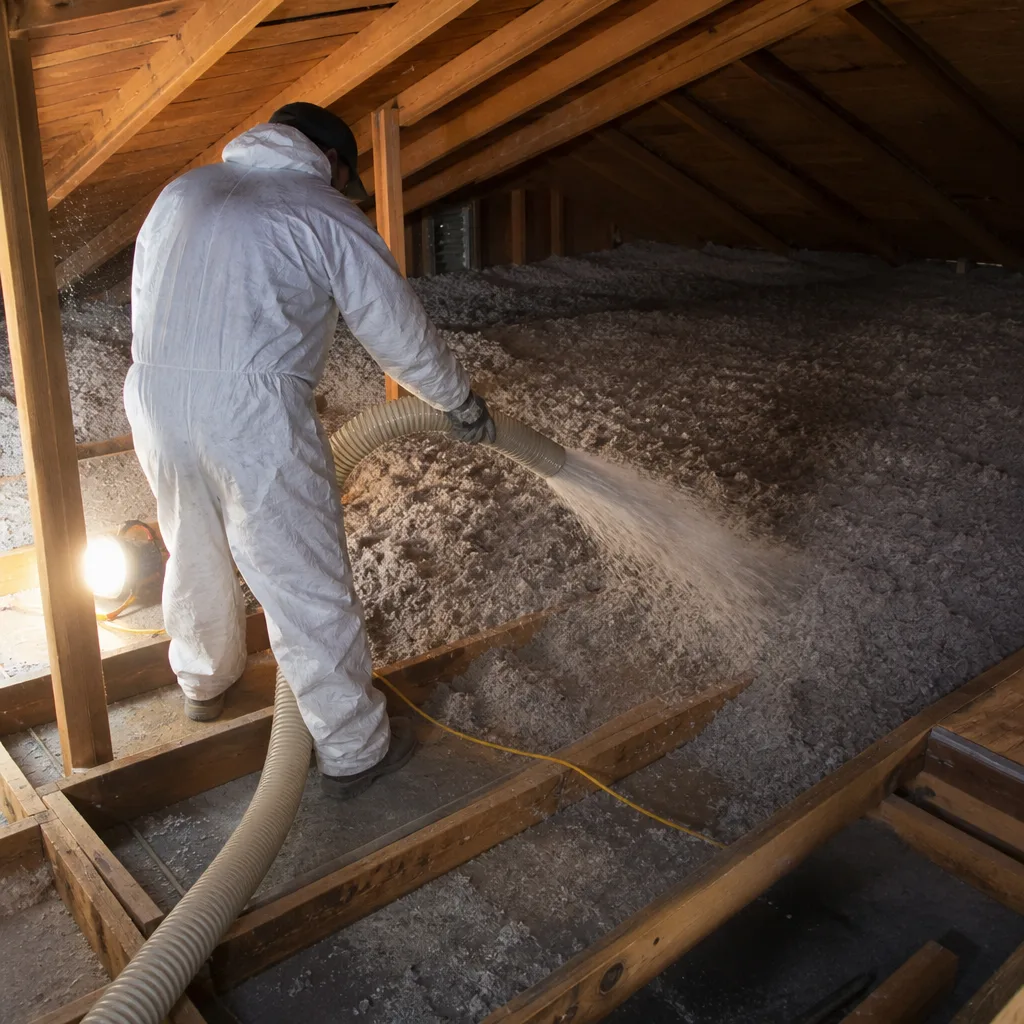
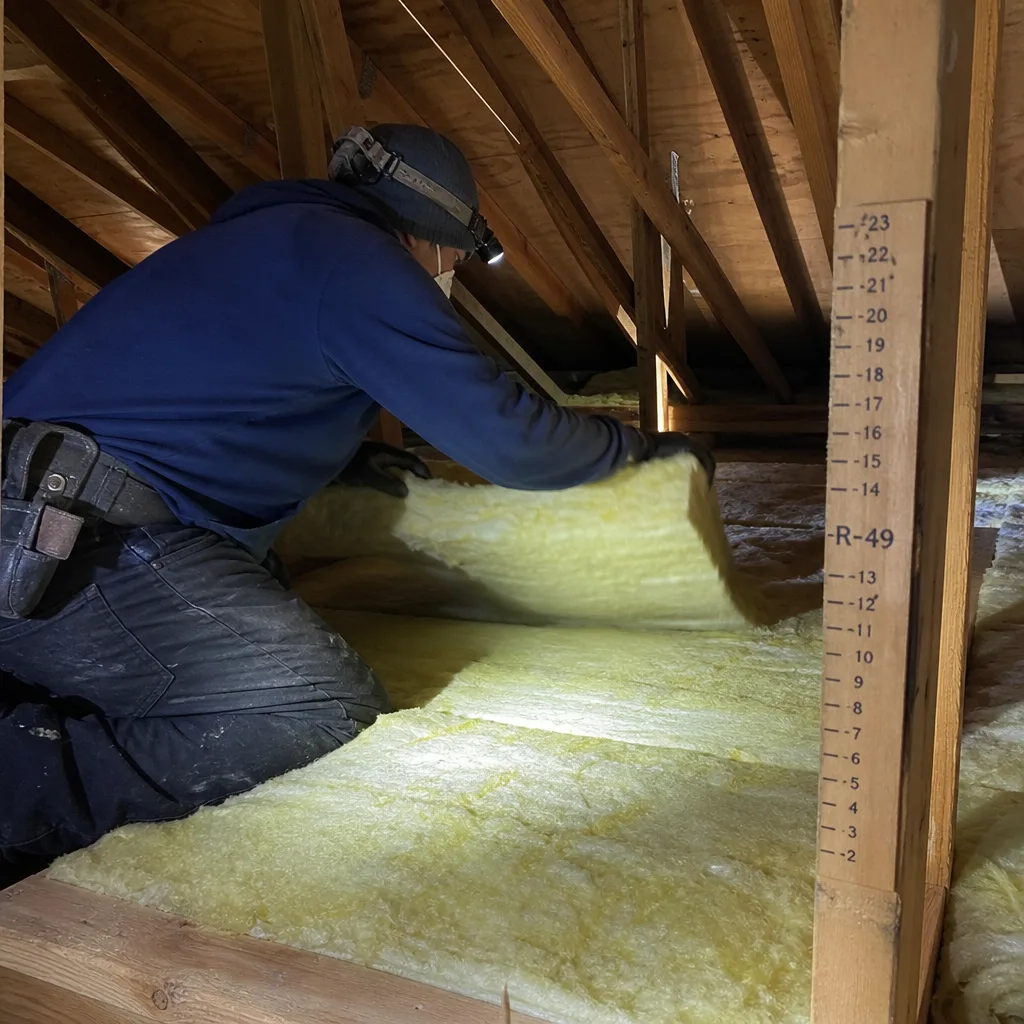
- R-49 blown-in insulation at the attic floor – resisting conducted heat from the living space below and the attic air above.
- Air sealing underneath both – top plates, can lights, and penetrations sealed first, because insulation blown over an open attic floor is insulation working through a sieve.
Each layer addresses a different heat-transfer mode. Skip the barrier and the attic still runs hot. Skip the R-value and you’ve reflected radiant heat but done nothing about conduction. On top of all of it, the air space on at least one side of the foil is required for the barrier to function at all – foil stapled flat against a surface with no gap is just a metal skin.
Where Boulder City’s Housing Stock Changes the Plan
Much of the core of Boulder City is federally built Boulder Homes from the 1930s and ’40s – small single-story houses put up for dam workers, often with no wall cavities or minimal attic insulation. When a technician opens a wall in one of these homes, the only thing between the studs may be 1930s newspaper or horsehair. Retrofits here aren’t really about chasing a code number; they’re closer to reverse-engineering a 90-year-old housing experiment, and a radiant barrier at the rafter line is one of the few improvements that fits a tight, unlined attic without a full rebuild. The rest of town runs to mid-century ranch and newer infill, so the plan shifts from home to home. Our technicians have up to 10 years of experience reading exactly these differences, and every job starts with a written price before any work begins.
Perforated Foil: The Detail That Keeps It Durable
Most residential barriers we specify are perforated – tiny holes at roughly one per square inch. The perforations let incidental moisture vapor pass through rather than accumulate against the roof deck. In Boulder City’s dry climate this matters less than it would in a humid zone, but it’s specified on most jobs as a durability measure, and it has no measurable effect on reflectivity. Materials come from names like Owens Corning and Johns Manville, and we’re not locked into any single manufacturer. If you want to compare barrier options and moisture behavior side by side, see our page on Moisture & Radiant Barriers in Boulder City.
How We Verify It Worked: The Thermocouple Reading
We don’t hand you an estimated savings figure from a brochure. Attic deck temperature readings are taken with a thermocouple at rafter-underside level, on comparable solar-load days, before and after installation. That documents the actual temperature drop – evidence the barrier performed the way the physics predicts. On applicable jobs we also provide before-and-after blower-door readings – a pressurization measurement that shows, in a single number, how much conditioned air the home was losing before and after sealing. You get a Documented Photo Record on every visit and a written scope and warranty before anyone lifts a tool. The 365-Day Done Right Promise backs the work: if it’s not done right, we make it right.
| Item | Typical Range |
|---|---|
| Radiant barrier only (rafter line) | $1.50 – $2.50 / sq ft of attic |
| Radiant barrier + R-49 blown-in | $3.50 – $6.00 / sq ft |
| Attic air sealing before insulation | $600 – $1,400 |
| Thermocouple before/after reading | Included |
Ranges reflect Boulder City attic sizes and access; a written price comes before any work starts. Bring us a competing quote and we’ll read it with you through our free second-opinion review.
FAQs
It reflects long-wave infrared radiation back toward the roof deck instead of absorbing and re-emitting it into the attic air space. Because the foil’s emissivity is around 0.03 to 0.05 compared to about 0.90 for bare wood, most of the radiant heat that would otherwise cross the attic gets bounced back. In Boulder City’s low-humidity summers this cuts attic air temperature by roughly 20 to 30°F. Call (844) 320-7926 for an exact quote – estimates are free.
Usually both, and they do different jobs. A radiant barrier handles radiation at the rafter line; R-49 blown-in insulation handles conduction at the attic floor. Neither replaces the other. On a Boulder City home with an unlined or barely insulated attic, the highest-value first step is often air sealing, then insulation, then the barrier. Call (844) 320-7926 and we’ll tell you which your attic actually needs.
No. A radiant barrier does not add R-value to the ceiling plane; it reduces attic air temperature by reflecting radiant heat, not by resisting conduction. That’s why we pair it with insulation rather than selling it as a substitute. Ask us to show you the before-and-after thermocouple readings on a comparable job – call (844) 320-7926.
Yes. The perforations are tiny – about one per square inch – and have no measurable effect on reflectivity. They’re specified as a durability measure so incidental moisture vapor can pass through rather than collect against the roof deck, which is less critical in Boulder City’s dry air but still good practice. Call (844) 320-7926 for a no-pressure assessment.
If you’d rather have it looked at, Envelope Insulation Boulder City offers a no-pressure assessment in Boulder City – call (844) 320-7926. We’ll read your attic, explain what the physics says, and hand you a written price before any work starts. Start back at our home page for the full service line.
Written by the team at Envelope Insulation Boulder City, serving Boulder City, NV.