
Last updated November 17, 2026
The Complete Spray Foam Insulation Guide for Boulder City Homeowners
Here’s a number that surprises most Boulder City homeowners: on a July afternoon, the plywood sheathing under an unshaded roof can hit 140°F. Most two-component spray foam kits list a maximum substrate temperature around 120°F. Apply foam to a surface hotter than its rated limit and you get poor adhesion, reduced yield, and an R-value that never matches the label. This guide maps Boulder City’s desert climate to the foam decisions that actually matter: which foam belongs in which assembly, how Clark County’s Zone 3B code minimums interact with aged R-value, what a blower-door reading should look like before and after, and why air sealing has to happen first.
Quick Answer
Spray foam insulation in Boulder City works best when the foam type is matched to the assembly and the season: closed-cell for rim joists and any surface exposed to desert heat or exterior vapor drive, open-cell for unvented attic ceilings where code allows and cost matters. The number that proves the job worked isn’t the R-value on the label – it’s the blower-door reading before and after. And no foam should go down until top plates, can lights, and penetrations are sealed.
Table of Contents
- Why Boulder City’s Climate Changes the Foam Spec
- Clark County Zone 3B: The Code Minimums You’re Actually Chasing
- Open-Cell vs. Closed-Cell: A Decision Matrix for Boulder City Homes
- Substrate Temperature: What Happens on a 110°F Afternoon
- Reading Your Blower-Door Numbers in ACH50 Terms
- Why Air Sealing Must Come Before Foam
- Where Foam Goes: Attic, Walls, Rim Joists, and Crawl Spaces
- How to Verify the Job Was Done Right
Why Boulder City’s Climate Changes the Foam Spec
Boulder City sits in IECC Climate Zone 3B – hot and dry. Product data sheets are written for average U.S. conditions, and Boulder City is not average. Summer design temperatures push past 105°F, winter nights drop into the 30s, and relative humidity often sits under 20 percent. Those swings change how foam cures, how it ages, and where vapor drive actually points.
In a humid climate, the concern is moisture pushing inward through the building envelope. In Boulder City, the dominant moisture event is monsoon season – roughly July through September – when a wall or attic can see a sudden burst of humidity after months of bone-dry air. That pattern matters for open-cell foam, which is vapor-permeable. It also matters for rim joists, where cool conditioned air meets hot exterior air and the dew point can land on the wrong side of the assembly.
We’ve seen Boulder City homes near the Historic District and along the Lake Mead corridor where the attic sheathing reads 130°F or higher for weeks at a time. Foam applied there without attention to substrate temperature and adhesion doesn’t fail dramatically. It just underperforms, quietly, for years. The fix is spec’ing the foam to the assembly and the season, not to a generic national template.
Clark County Zone 3B: The Code Minimums You’re Actually Chasing
Clark County adopts the IECC, and Zone 3B sets the baseline R-values for each assembly. Here’s where those minimums land for a typical Boulder City home, alongside where spray foam’s aged R-value – the number after the blowing agents off-gas – actually settles.
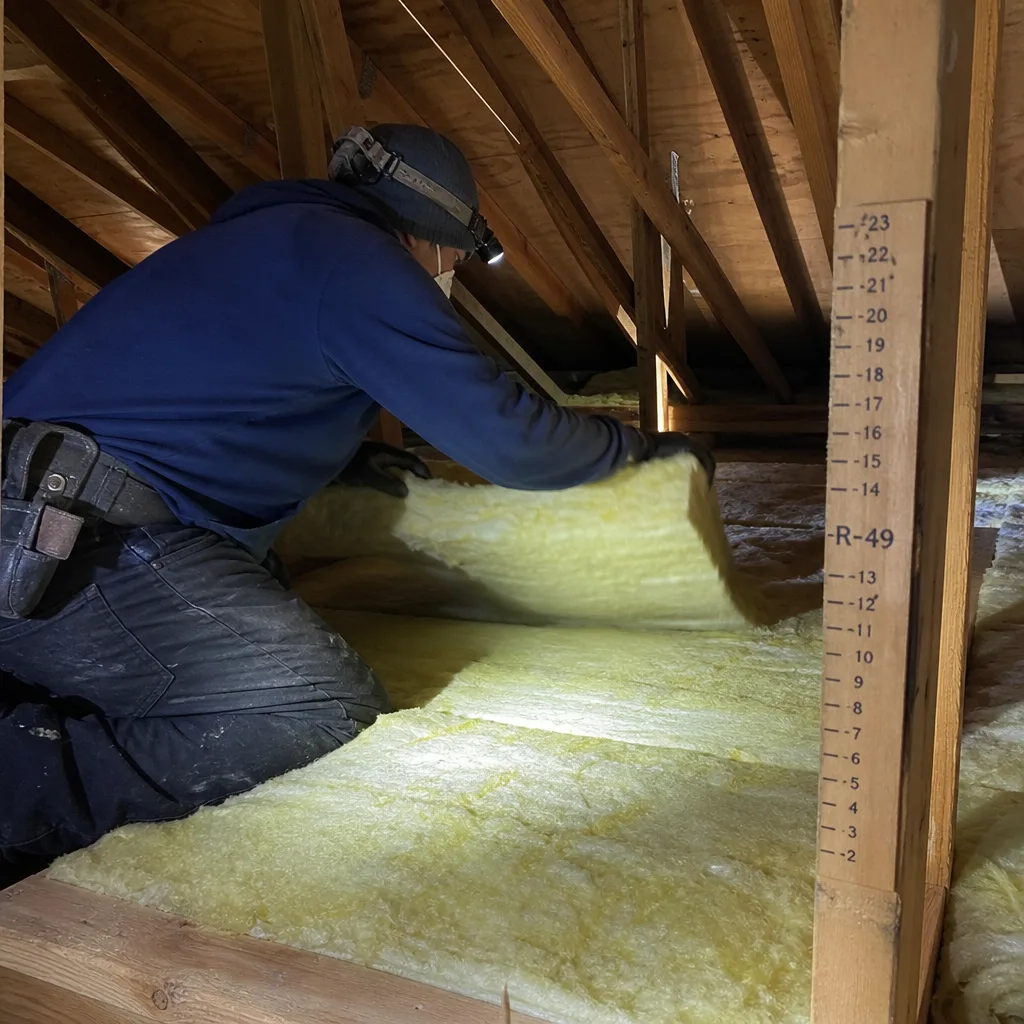
- Attic ceiling (vented): code minimum R-38. Closed-cell foam achieves roughly R-6 to R-7 per inch aged; open-cell runs about R-3.5 to R-3.7 per inch. Open-cell needs roughly 10-11 inches to clear R-38; closed-cell needs about 6.
- Attic ceiling (unvented, foam at the roofline): code typically calls for R-15 to R-20 at the roof deck in Zone 3B. Closed-cell at 3 inches clears the low end; open-cell needs 5-6 inches.
- Wall cavity (2×4): code minimum R-13. Closed-cell at 2 inches gets you there and adds structural rigidity. Open-cell needs the full cavity.
- Rim joist: code minimum R-13 to R-19 depending on the assembly. Closed-cell at 2-3 inches is the standard answer, and it doubles as the air barrier.
The aged R-value is the one that matters. Freshly applied foam can read higher than its long-term value for weeks. Ask any contractor for the aged R-value and the assembly it applies to – if they quote a fresh number, that’s a red flag.
Open-Cell vs. Closed-Cell: A Decision Matrix for Boulder City Homes
The reflexive contractor move is to spec closed-cell on every job. It’s the more expensive product, it’s easier to justify, and it never gets pushback. In Boulder City, that instinct is sometimes wrong. Here’s the matrix we use:
- Rim joists and any exterior-facing cavity with vapor drive: closed-cell. The 2-pound density blocks bulk moisture, handles the dew point, and seals the joist in one pass.
- Unvented attic ceiling (foam at the roofline): either works. Open-cell is code-compliant in most Zone 3B assemblies, costs less per R, and lets the assembly dry inward. Closed-cell is the right call when the roof deck sees extreme heat or the homeowner wants maximum R per inch.
- Interior wall cavities (sound and thermal): open-cell. It’s softer, it fills irregular cavities, and it deadens noise better than closed-cell at the same thickness.
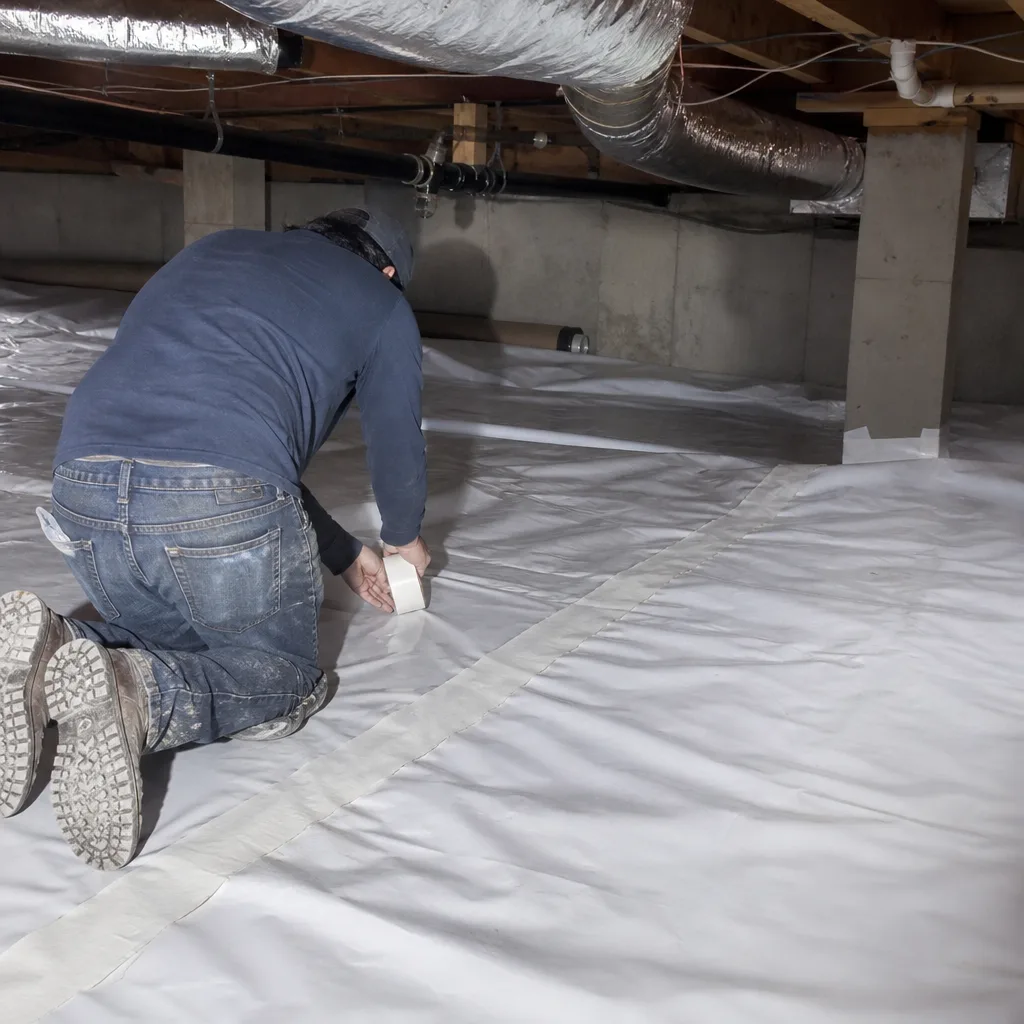
- Crawl space walls and joist bands: closed-cell or a dedicated vapor barrier system. Open-cell in a crawl space without a barrier invites moisture problems in monsoon season.
- Metal buildings and shops: closed-cell. The substrate moves with temperature and open-cell won’t hold as well over decades of expansion.
We source from Johns Manville and Knauf for closed-cell, and CertainTeed and Icynene for open-cell work – no proprietary lock-in, so the spec follows the assembly, not the catalog.
Substrate Temperature: What Happens on a 110°F Afternoon
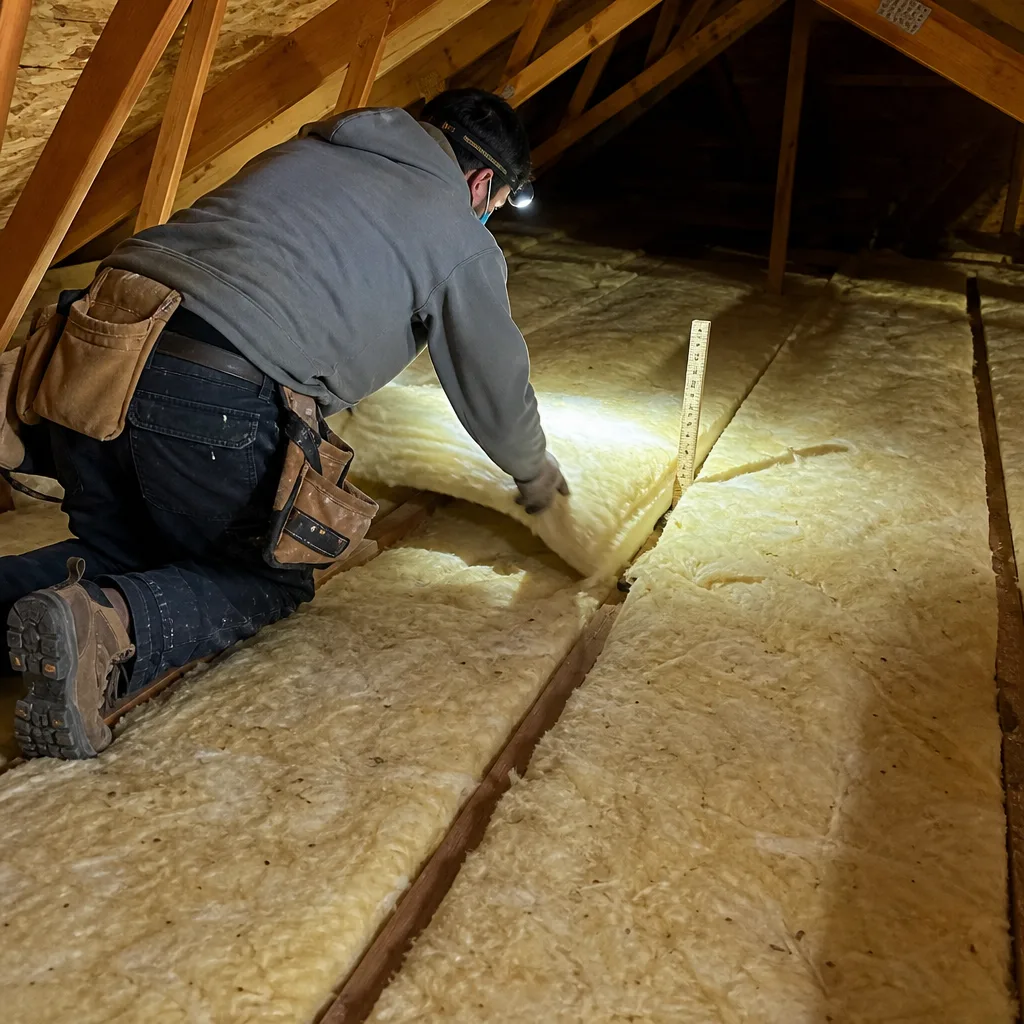
Every two-component spray foam kit carries a substrate temperature limit. Most land between 100°F and 120°F. On a 110°F Boulder City day, attic sheathing under unshaded roof deck easily reads 130°F to 140°F, which means the limit is exceeded before the crew climbs through the hatch.
A responsible contractor handles this three ways, and only one of them involves foam:
- Schedule around the heat. Foam gets applied in early morning or after the roof has cooled, not during the afternoon peak. On a Boulder City July job, that often means a 6 a.m. start.
- Use a product rated for elevated substrates. Some closed-cell formulations handle up to 140°F. That’s a product spec question, not a marketing one, and the answer belongs on the submittal sheet.
- Pre-cool the assembly. A temporary fan pulling ambient air through the attic drops the sheathing temperature 20 to 40 degrees in under an hour. Cheap insurance against a failed bond.
What a contractor should never do is apply foam to a substrate 20 degrees over the rated limit and hope. Poor adhesion at the top of the cavity doesn’t show up on the invoice. It shows up three summers later when the foam pulls away and the R-value collapses.
Reading Your Blower-Door Numbers in ACH50 Terms
A blower-door test – a pressurization reading that shows, in one number, how much air your building envelope is losing – is the only honest way to verify a spray foam job did what it promised. The unit is ACH50: air changes per hour at 50 pascals of pressure. Lower is tighter.
Here’s what a real Boulder City rim-joist and attic-hatch job looks like. A 1970s ranch near the old downtown, before work: 5,800 CFM50, roughly 9.2 ACH50. After sealing the rim joist with 2 inches of closed-cell and foaming the attic hatch: 3,100 CFM50, roughly 4.9 ACH50. That’s a 47 percent reduction in envelope leakage from two small, targeted applications – no attic floor insulation involved.
How to read the document when it arrives:
- Check the before and after are both present. A single post-work number with no baseline tells you nothing.
- Confirm the test conditions match. Same house volume, same pressure reference, same weather window. If the numbers are three months apart, they aren’t comparable.
- Look at ACH50, not just CFM50. ACH50 normalizes for house size, so you can compare your home to the reference thresholds in the code.
- Ask where the remaining leakage is. A good report names the top three remaining leaks. That’s where the next dollar goes.
Envelope Insulation Co. publishes before-and-after blower-door numbers on every applicable job. That’s the difference between “we insulated your attic” and “we cut your envelope leakage by 47 percent.”
Why Air Sealing Must Come Before Foam
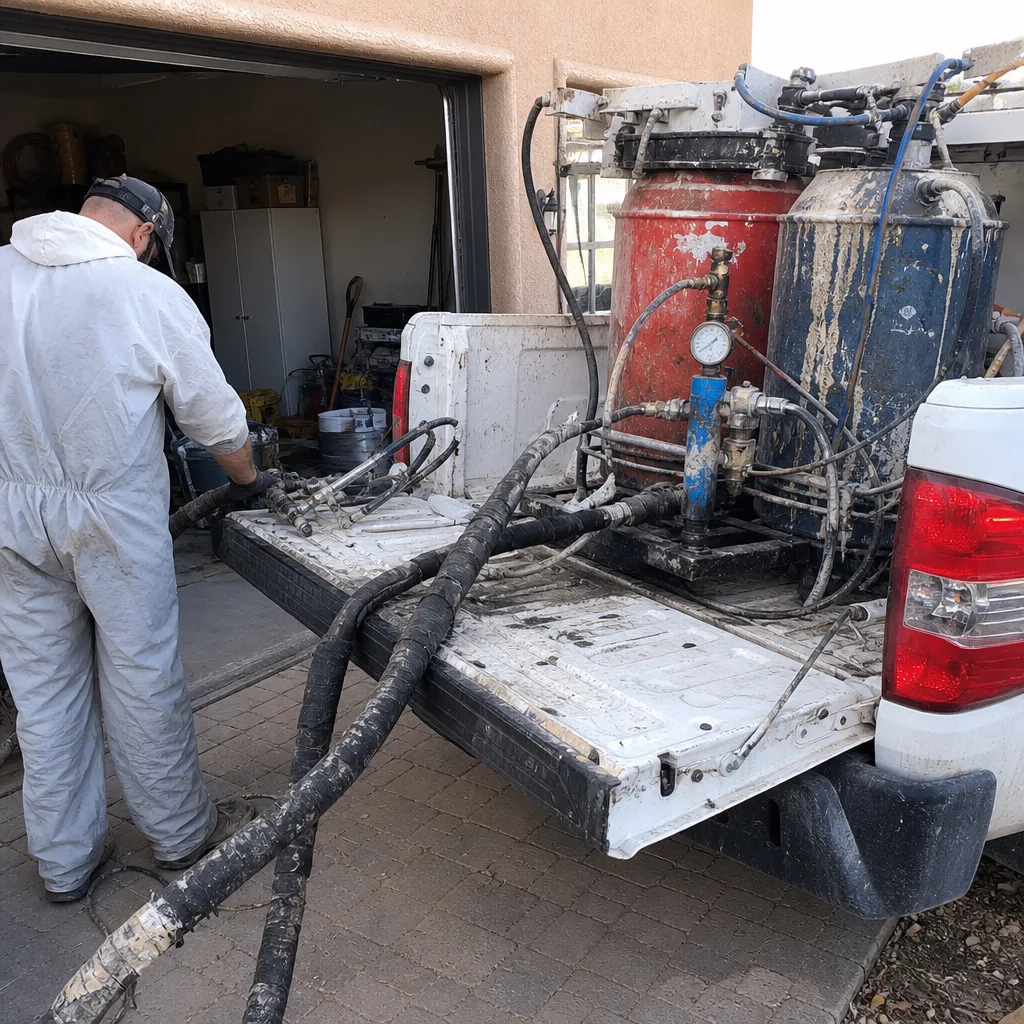
Spray foam is a vapor and air barrier. That’s the whole point of it. Which is why it goes on last, not first. Every bypass, penetration, and gap that gets foamed over becomes permanently sealed – hidden behind an impermeable layer, impossible to fix without cutting the foam out.
Sealing has to happen before foam in this order:
- Top plates and sole plates. Where the wall meets the ceiling framing, gaps run the entire perimeter. Foam over an unsealed top plate traps a continuous leak.
- Can lights and recessed fixtures. Every non-IC-rated can is a hole through the envelope. Seal or replace before foam.
- Plumbing and electrical penetrations. Every wire that passes through a ceiling – dozens in a typical Boulder City home – needs a bead of sealant around it.
- Chimney and flue chases. These are the biggest bypass in many older homes and the most dangerous to seal incorrectly. The flue needs its own clearance; foam goes around the chase, never against the flue.
- Attic hatch and pull-down stairs. Foamed separately, with a weatherstripped cap.
Under The Haven Standard, Envelope will never blow or spray insulation over an unsealed attic floor. The air sealing is completed first, and the Documented Photo Record shows it was done – which is how you verify the sequence the contractor claims to have followed.
Where Foam Goes: Attic, Walls, Rim Joists, and Crawl Spaces
Each zone in a Boulder City home calls for a different foam approach, and each has its own code minimum and its own failure mode.
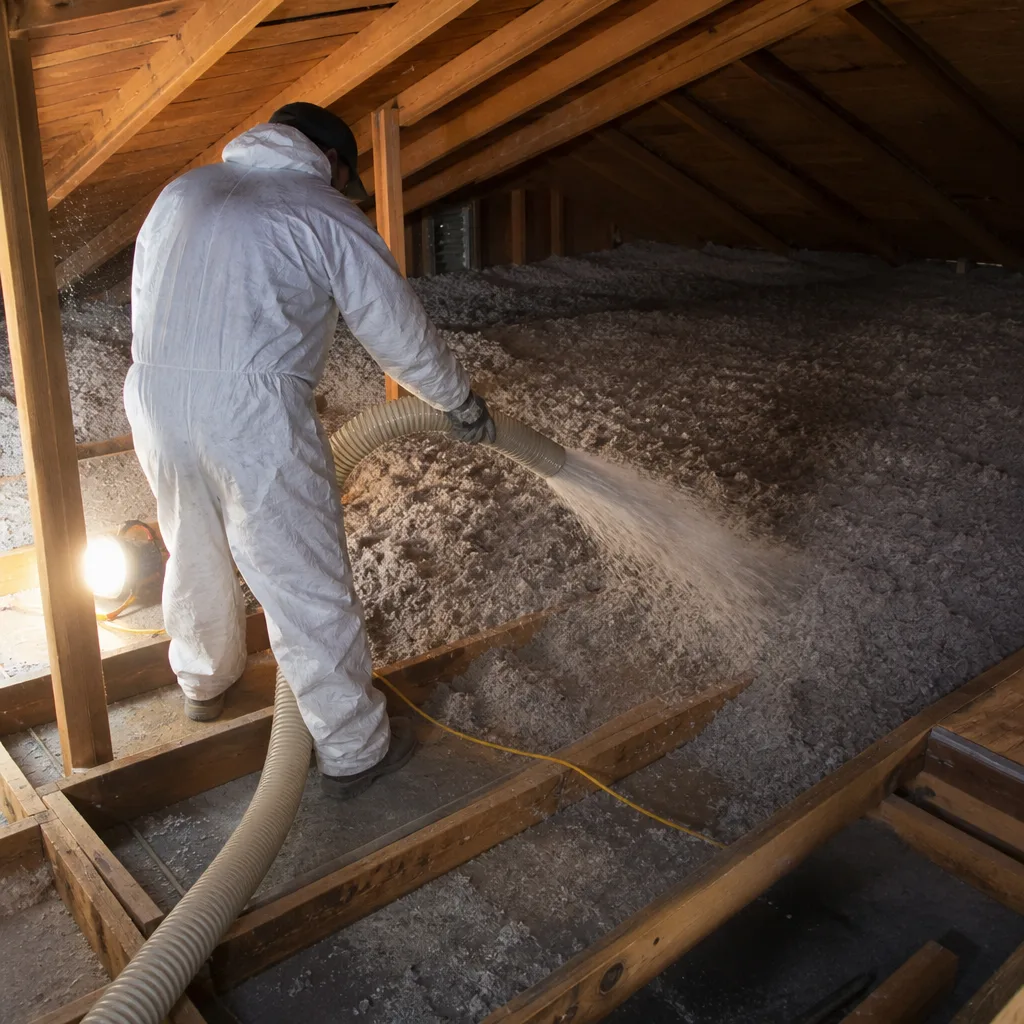
- Attic ceiling (vented assembly): foam is usually the wrong call here – blown-in over a sealed attic floor gets you to R-49 or higher at lower cost. If you’re aiming for the roofline, that’s the unvented assembly below. See our guide to attic insulation in Boulder City for the vented path.
- Unvented attic (roofline): open-cell at 5-6 inches or closed-cell at 3 inches on the underside of the deck and gable ends. This pulls the ductwork inside the envelope, which matters in Boulder City where attic duct runs see 140°F.
- Wall cavities: closed-cell at 2 inches for a 2×4 wall, or open-cell fill for sound. Foam also stiffens the wall against monsoon-season wind loading.
- Rim joists: closed-cell at 2-3 inches. This is the highest-return foam application in a typical Boulder City home because it seals the joint between foundation and framing, which is often the largest single leak in the envelope.
- Crawl spaces: closed-cell on the joist band and foundation wall, plus a dedicated vapor barrier. See crawl space encapsulation and vapor barrier in Boulder City for the full assembly.
If you’re still deciding whether foam is the right tool at all versus a sealed-and-blown attic, our overview of spray foam insulation in Boulder City walks through the full decision.
How to Verify the Job Was Done Right
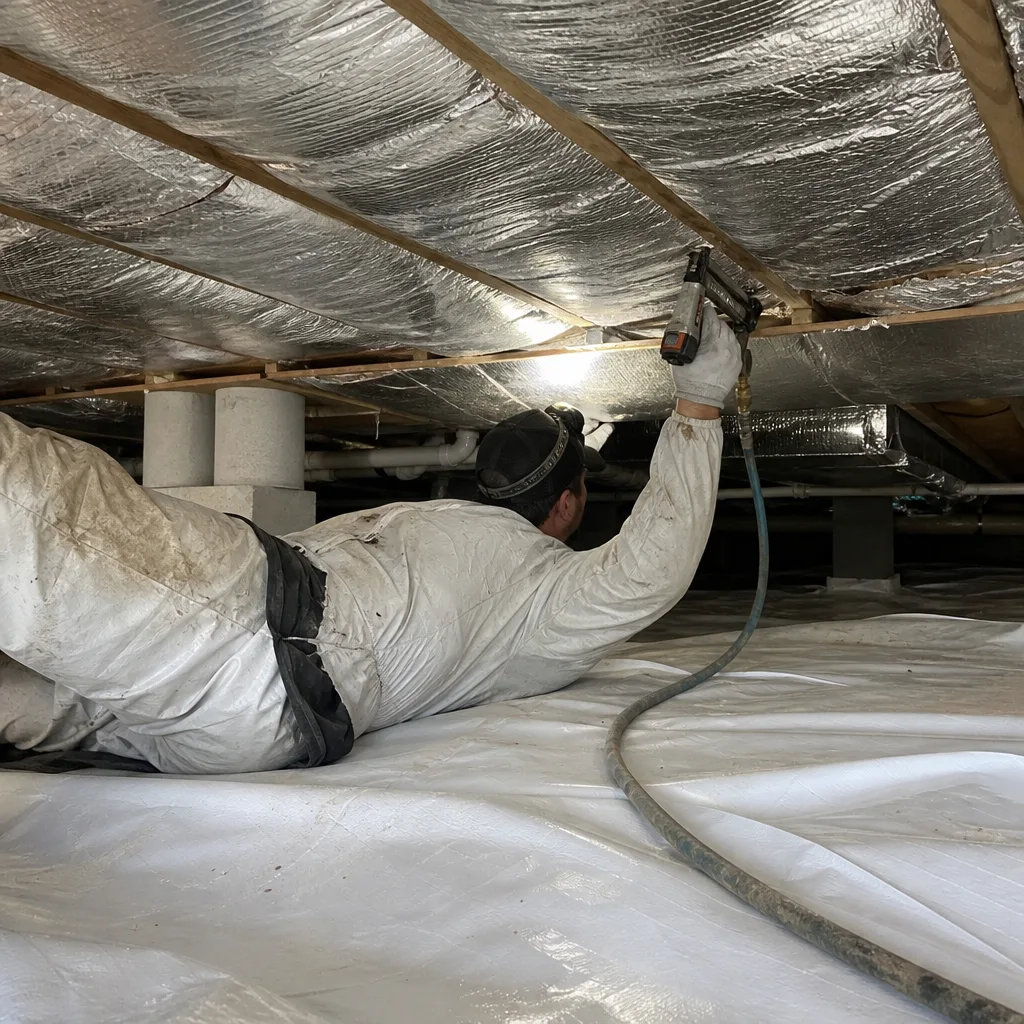
You don’t need a moisture meter or a thermal camera to check a spray foam job. You need four documents, and any contractor operating under a written-scope discipline should hand all four over before they leave.
- The written scope. Foam type, thickness, target R-value, areas covered, and the assemblies they attach to. Signed before work starts.
- Before-and-after blower-door readings. In CFM50 and ACH50, taken under comparable conditions.
- The Documented Photo Record. Photos of the sealed top plates, the foamed rim joist, the attic hatch cap, and any area the contractor claims was addressed.
- The written warranty. Under Haven Standard Clause 1, this is delivered with the written price, before anyone lifts a tool. The 365-Day Done Right Promise is the backstop.
Walk the attic yourself if you can. Foam should be continuous at the rim, flush at the roofline, and free of voids where a can light or wire interrupted the pass. Adhesion should feel solid – no soft spots, no visible separation at the top of the cavity.
Common Mistakes to Avoid
- Foaming over an unsealed attic floor. Every unsealed bypass gets locked behind the foam. The blower door will still read high and the only fix is to cut the foam out.
- Spec’ing closed-cell everywhere. It’s not always the right product. Open-cell in the right assembly at the right thickness meets code and saves Boulder City homeowners real money.
- Applying foam to a hot substrate. On a 110°F Boulder City afternoon, attic sheathing is well over the rated limit for most kits. Yield drops and adhesion fails silently.
- Foaming rim joists without a vapor strategy. Rim joist foam is a vapor barrier. If the dew point lands on the wrong side of the assembly, you’ve built a condensation trap.
- Accepting a single post-work blower-door reading. Without a baseline taken under the same conditions, the number tells you almost nothing.
- Trusting an R-value quote without the word “aged.” Fresh foam reads high for weeks. The aged value is the one your house actually lives with.
- Skipping the attic hatch and pull-down stairs. In many Boulder City homes the hatch alone leaks as much as 10 square feet of open wall. Foam the hatch as its own assembly.
When to Call a Professional
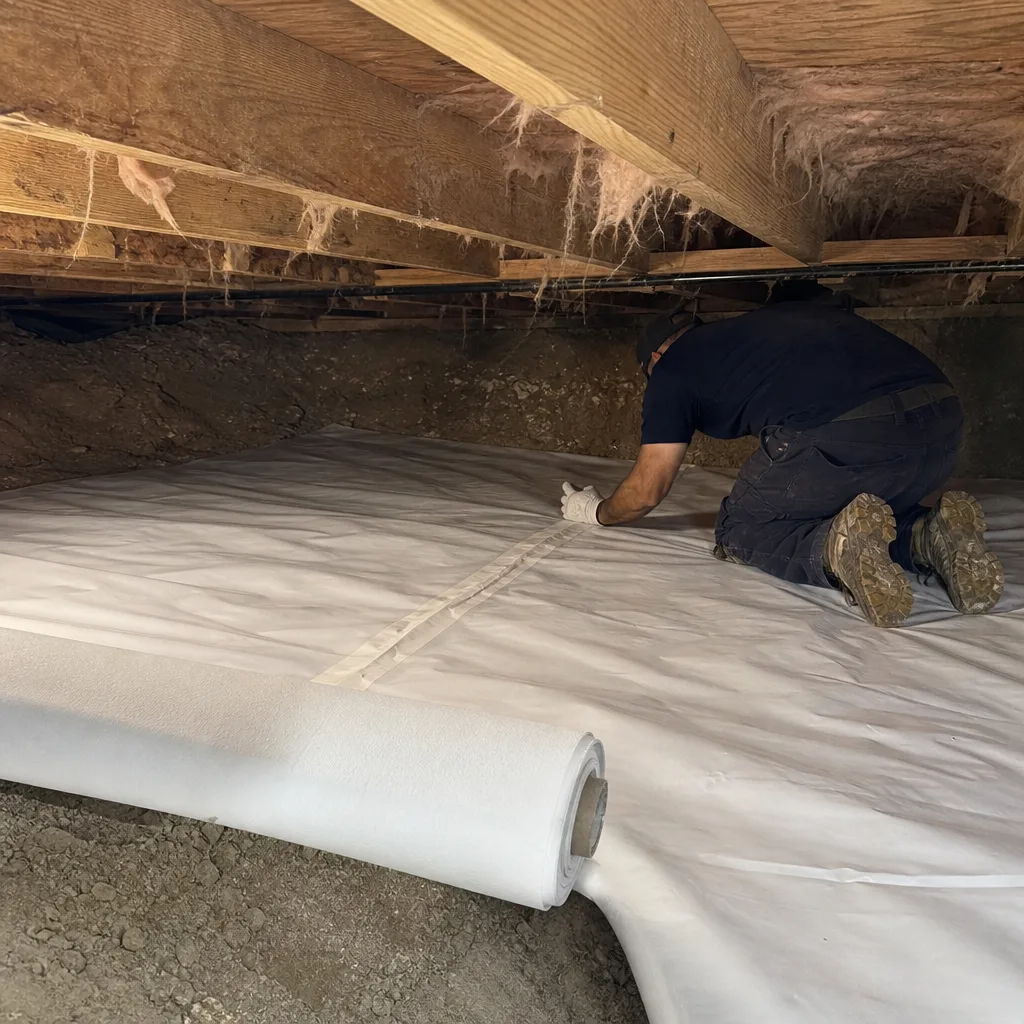
Spray foam involves two-component chemistry, pressure equipment, and substrate temperature decisions that fail silently when they go wrong. If any of these describe your situation, it’s time to bring in a trained installer rather than a rental kit: your attic sheathing reads above 120°F on a summer afternoon, you have a rim joist or crawl space with a vapor concern, your house is older than about 2005 and has never had a blower-door test, you’re planning to convert a vented attic to unvented, or you simply want the before-and-after numbers published rather than promised.
Envelope Insulation Co. has completed more than 9,000 spray foam, sealing, and insulation jobs under The Haven Standard, and offers free estimates in Boulder City. Our technicians have up to 10 years of experience, and every job starts with a written price and ends with a Documented Photo Record. If you already have a competing quote, our free second opinion will read it with you line by line. Call (844) 320-7926 – a live person answers 24/7.
Frequently Asked Questions
Yes, when it’s applied to the right assembly. Rim joists, unvented attic rooflines, and crawl space walls are the highest-return locations because they combine insulation with a permanent air barrier. In a vented attic, sealed-and-blown insulation often delivers more value per dollar than foam. Call (844) 320-7926 for a free estimate that names the price before any work begins.
We don’t recommend it. Substrate temperatures above the kit’s rated limit cause adhesion failures, and once the foam cures poorly there’s no easy fix. A contractor schedules around the heat, uses a product rated for elevated substrates, or pre-cools the assembly. Call us – the price of a proper job is often less than the cost of a failed one.
Either can meet code in an unvented attic; the decision turns on cost, roof-deck heat exposure, and how you want the assembly to dry. Open-cell costs less per R and lets the assembly dry inward. Closed-cell handles extreme heat and gives more R per inch. Our free estimate includes a written recommendation for your specific house. Call (844) 320-7926.
Most closed-cell rim joist and attic-hatch jobs in a typical Boulder City home run in the low thousands of dollars, and open-cell unvented attic conversions run higher depending on square footage and inches of foam. The exact figure depends on assembly, foam type, and access. Envelope will never quote a price over the phone – the written price is delivered after the walkthrough, before any work starts. Call (844) 320-7926 to schedule.
Because foam is an air barrier. Any bypass that isn’t sealed before the foam goes down is trapped behind an impermeable layer and can’t be fixed without cutting the foam out. Envelope’s hard rule is sealed first, insulated second – verified in the Documented Photo Record on every job.
There’s no single answer – it depends on the starting point and what was targeted. A rim-joist and attic-hatch job on an older Boulder City home often drops leakage by 40 to 50 percent. The right question is whether the before-and-after readings were taken under comparable conditions and published in writing. Envelope provides both numbers on every applicable job. Call (844) 320-7926 for a free estimate.
The Bottom Line
Spray foam in Boulder City isn’t a single product decision – it’s an assembly decision, made against a Zone 3B code baseline, applied within a strict substrate temperature window, and verified against a before-and-after blower-door number. Match closed-cell to rim joists and hot substrates, use open-cell where it’s code-compliant and cost-effective, seal every bypass before a single pass of foam goes down, and insist on the written documents: the price, the scope, the photos, the readings, the warranty. That’s what separates a documented envelope improvement from a hopeful one. See the Envelope Insulation Boulder City home page for the full service line.
Ready to see what your envelope is actually losing? Call Envelope Insulation Co. at (844) 320-7926 for a free estimate – a written price, a written scope, and a documented record at the end, every time.
Written by the team at Envelope Insulation Boulder City.