
Last updated November 17, 2026
Spray Foam Insulation Warning Signs Every Homeowner Should Know
A homeowner whose cooling bills climb after a spray foam attic job almost always assumes the foam itself failed. The more common explanation is a sequencing problem: the contractor sprayed over open top-plate bypasses and created an impermeable cap over leaks that now push conditioned air into wall cavities instead of the attic. That’s a harder and more expensive problem than the one the homeowner started with. In our experience working across Boulder City, the signs that actually predict trouble don’t appear on the foam’s surface. They show up in utility data, humidity readings, and blower-door numbers. This guide teaches you to read those signals before a performance complaint turns into a renovation.
Quick Answer
The warning signs that matter most with spray foam insulation are performance-based, not visual: a cooling or heating bill that rises after installation, indoor relative humidity that climbs in summer and stays high through winter, and a blower-door reading (ACH50) that has degraded since the original test. Visible cues like white efflorescence, color gradients, or a shrinkage gap at the sill plate are genuinely diagnostic, but they confirm a problem the numbers usually flag first. If your utility data and humidity readings point to a coverage or air-sealing failure, get a thermal imaging scan run with a blower door simultaneously, not on its own.
Table of Contents
- Energy Bill Patterns That Point to Foam Coverage Gaps
- Indoor Humidity Behavior After Spray Foam
- Visual Signs That Are Genuinely Diagnostic
- How a Thermal Imaging Scan Distinguishes Voids From Thermal Bridges
- What to Do With the Original Blower-Door Report
- Open-Cell vs. Closed-Cell: Signs Differ by Product
- Boulder City Climate and the Signs It Produces
- What Good Documentation Looks Like Before and After
Energy Bill Patterns That Point to Foam Coverage Gaps
Utility data narrows the failure zone before you spend a dollar on diagnostics. The trick is separating a foam problem from an HVAC problem, because both show up as higher bills and both get blamed on the insulation.
Pull twelve months of usage and compare the same months year over year. A coverage gap or bypass failure produces a specific shape: a bill that jumps in the shoulder months (April, October) more than in the peak of summer or winter. That’s because gaps leak conditioned air hardest when the indoor-outdoor temperature difference is moderate and your system is cycling less. An HVAC refrigerant or compressor problem shows the opposite pattern, spiking in the hottest July and August weeks and settling back in mild weather.
- Rising slowly, every year: normal degradation of the building envelope or duct leakage, not a sudden foam failure.
- Jumped after installation and stayed up: coverage void, bypass cap, or an air-sealing step that was skipped.
- Winter heating up, summer cooling down: window and envelope leakage unrelated to the foam, often found in the same blower-door test.
- A single room or zone running hot: often duct work or a thermal bridge, not a missing patch of foam.
- Peak-season spikes only: HVAC equipment sizing or refrigerant, not the insulation.
Write the numbers down month by month. A homeowner in Boulder City comparing two Julys has a much clearer picture than one staring at a single bill. If your attic assembly was recently sprayed but the air sealing wasn’t completed first, our Attic Insulation in Boulder City page walks through the sequence we follow: seal the top plates and penetrations, then insulate.
Indoor Humidity Behavior After Spray Foam
A correctly air-sealed assembly changes how your home handles moisture, and that change is measurable. That’s why rising indoor humidity after foam installation is one of the most reliable performance-based signs a homeowner can track, and it points to a specific location: a bypass.
When spray foam caps an attic floor tightly, the building becomes less leaky, so the moisture your household generates (showers, cooking, laundry, breathing) has fewer escape routes. Properly designed and ventilated, that’s fine. But if the contractor capped leaks that should have been sealed at the source, the moisture has nowhere to go. Two things happen in sequence: in summer, the humidity climbs inside because the assembly no longer vents the air it used to; in winter, that stored moisture condenses on cold surfaces, typically the ceiling drywall under the foam or the window frames.
Track it with a cheap hygrometer (a humidity meter, about the size of a smoke detector) in two rooms. Write down the relative humidity every morning for two weeks. In Boulder City’s dry climate, indoor RH in a healthy sealed home typically sits in the 30 – 50% range depending on season. A home reading 60% or higher in summer, or one where the number keeps climbing after the foam went in, has a moisture problem. The bypass is usually the same one pushing air into wall cavities, and it’s the reason we don’t blow insulation over an unsealed attic floor: foam over leaks traps the air instead of stopping it.
Visual Signs That Are Genuinely Diagnostic
Not every interesting thing on a spray foam surface means trouble. Some marks are cosmetic. Three visual signs are worth acting on, and they each point to a different underlying cause.
- White efflorescence at foam edges. A chalky, powdery residue at the perimeter where foam meets the sill plate or framing indicates moisture intrusion behind the foam. Efflorescence is salt drawn to the surface by water moving through masonry or wood. It’s a moisture problem, not an insulation one, and it needs to be resolved before any new foam is applied.
- Color gradient across the foam surface. Closed-cell foam that was mixed off-ratio cures with a visible color shift: darker toward one end, lighter toward the other, or a blotchy pattern. Off-ratio mix means the two components didn’t combine at the right proportion, and the cured foam is weak, brittle, or poorly adhered. That’s a coverage failure even if the surface looks full.
- Visible shrinkage gap at the sill plate. A gap between the bottom of the foam and the sill plate, or along a stud face, is a path for air and moisture. In our Boise and Boulder City installs we see this most often where the substrate wasn’t clean or dry before spraying. Foam won’t bond to dust or wet wood, so it shrinks back as it cures.
None of these are things you fix by looking at them. Document each one with a photo and a measurement in inches, then have them assessed during a blower-door test. The full picture of your envelope lives on our Envelope Insulation Boulder City home page.
How a Thermal Imaging Scan Distinguishes Voids From Thermal Bridges
A thermal imaging camera shows temperature differences, not insulation. That distinction matters, because a coverage void and a framing thermal bridge look like the same cold patch on the camera when the blower door isn’t running. Homeowners who hire an infrared check without a simultaneous blower-door test often get a page of “problems” that a trained eye would sort differently.
Here’s the correct procedure. Run a blower door first and hold the building at a pressure difference (usually around -50 Pascals, the standard test pressure). Under that pressure, air moves through actual leakage paths, and those paths cool or heat the surfaces they cross. Read the thermal camera at that moment.
- Coverage void: under blower-door pressure, a missed spray area shows a broad, irregular cold or hot patch with no sharp edge, and it changes shape as the pressure changes. That’s air movement, not a missing material.
- Thermal bridge: a stud or joist shows a straight line of contrast regardless of pressure. It’s a heat path through framing, which is normal in every wood-frame assembly and usually a minor performance issue, not a failure.
- Bypass under the foam: the tricky one. The foam looks continuous, but the thermal camera picks up a cold streak along a top plate or a can light housing where conditioned air is escaping under the cap. This is the failure that raises bills and drives up humidity, and you cannot see it visually.
Ask any contractor who performs an infrared scan whether they run the blower door at the same time. If the answer is no, the scan will tell you less than you paid for. Our Spray Foam Insulation in Boulder City service page details how we document that test.
What to Do With the Original Blower-Door Report
If your foam job came with a blower-door report, it’s the single most useful document you own for a performance complaint. The number you want is ACH50 (air changes per hour at 50 Pascals, the standard pressure difference for a blower-door test). It tells you, in one figure, how much air your building envelope was leaking at the time of the test.
Here’s how to use it:
- Find the original ACH50. It’s usually printed on the last page of the report, along with the CFM50 (cubic feet per minute at 50 Pascals). One is a rate; the other is a volume. Either will work for year-over-year comparison.
- Order a new test. A blower-door test at current conditions, ideally during a season with a meaningful indoor-outdoor temperature difference, gives you a second number.
- Compare them. A home that read 4.5 ACH50 at installation and reads 6.8 ACH50 now has degraded by about 2.3 ACH50. That’s a real loss and points to a specific diagnosis: air sealing that failed, foam that shrank away from framing, or a bypass the original test caught but the contractor capped instead of sealed.
- Divide by time since install. A 0.5 ACH50 drift over six years is normal. A 2+ ACH50 drift in two years is not.
If you weren’t given a before-and-after reading at installation, ask why. A contractor who publishes blower-door numbers on every applicable job gives you a baseline to hold them to later. That’s not measurement for its own sake; it’s how you know what you actually bought.
Open-Cell vs. Closed-Cell: Signs Differ by Product
Open-cell and closed-cell foam fail differently, and the warning signs you should watch for depend partly on which product you have. Both are legitimate, both are installed by good contractors, and both have specific failure modes to check.
- Open-cell (about 0.5 lb/ft³ density): softer, sponge-like texture. Watch for sagging or separation from framing, moisture staining along the top edge, and compression where it’s been pressed. Off-ratio mix shows up as a looser, dustier texture rather than a color change.
- Closed-cell (about 2 lb/ft³ density): rigid, hard surface. Watch for shrinkage gaps at framing edges, off-ratio color gradient, and areas that look “frozen” mid-cure (crusty, mottled surface). Closed-cell adds structural stiffness, so a failed patch also shows up as a noticeably soft or flexible area where it should be rigid.
We install materials from Johns Manville and Knauf when the design calls for open-cell and CertainTeed when a closed-cell assembly is specified, so we see both failure profiles on repair calls. A homeowner diagnosing a performance complaint needs to know which one they have before calling. If your original paperwork doesn’t specify, look at the visible surface texture: soft and sponge-like is open-cell; hard and rigid is closed-cell. Either way, the diagnostic procedure in the next section applies.
Boulder City Climate and the Signs It Produces
Boulder City has an unusual climate for southern Nevada. Its elevation (about 2,500 feet) and its position near the McCullough Range mean a bigger daily swing than Las Vegas gets: summers are hot and very dry, but the desert cool-down after sunset is sharper, and the winter nights drop well below what most transplants expect. Those swings produce specific spray foam signs.
- Daily thermal cycling of 30 – 40°F works at the seal between foam and framing. A gap that opens 1/16 of an inch in the afternoon and closes at night shows up as a gradually rising blower-door reading over two or three years, not a sudden failure.
- Monsoon season (July through September) brings the only real humidity of the year. A home with a covert bypass under the foam starts running a humid indoor environment in these weeks and dry the rest of the year. That seasonal pattern is one of the most diagnostic things a homeowner can record.
- Homes in the older Historic District and the neighborhoods off Nevada Way often have original 1940s and 1950s framing with wide top plate bypasses. We see a lot of spray foam installed in these homes over foam that was applied to a bypass the contractor didn’t seal first. The fix is removing and resealing before re-spraying.
If your home was recently weatherized and the bills haven’t behaved, the right move is a documented inspection: photographs, a blower-door reading, and a written scope before anyone touches the foam. We offer that free second opinion on any written estimate so you can compare what a contractor told you with what the numbers show. If you’re dealing with moisture at the crawl space too, our Crawl Space Encapsulation & Vapor Barrier in Boulder City page shows how we document that assembly from the bottom up.
What Good Documentation Looks Like Before and After
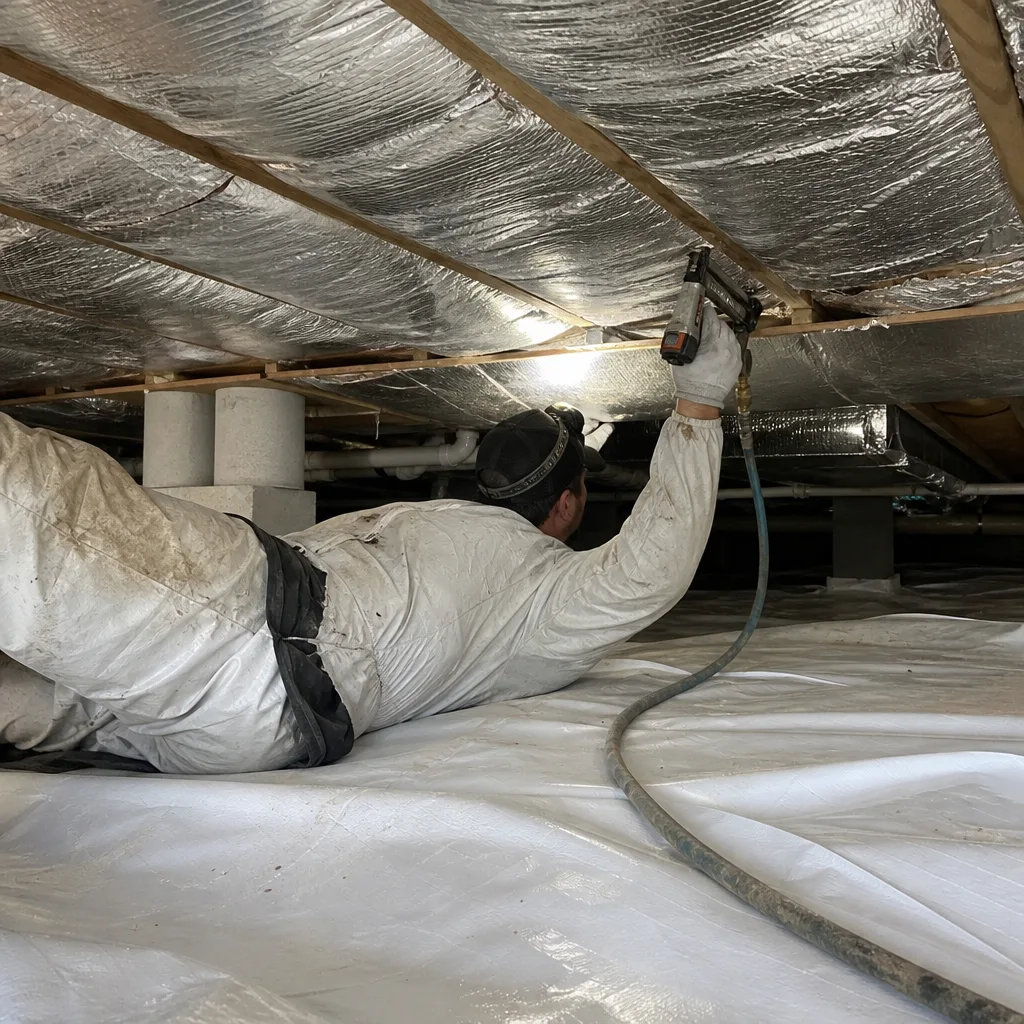
The easiest way to avoid the warning signs in this guide is to hire work that arrives with a paper trail. When a spray foam job is documented correctly, the homeowner ends up with four things you can hold in your hand:
- A written price before any work starts, with a flat scope and flat warranty. Under Haven Standard Clause 1, no work begins without that document in the customer’s hands. The reason it matters here is that spray foam failures are almost always scope failures: the contractor didn’t include air sealing of top plates, can lights, and penetrations, and nobody can prove it later if the scope was verbal.
- A before-and-after blower-door reading, in numeric form, on every applicable job. This is the number that tells you, in one figure, how much conditioned air the envelope was losing before the work and after. It also becomes your baseline for future tests.
- A Documented Photo Record of every bay, penetration, and seal before insulation went over it. Photos are the only way a future homeowner or contractor can see what’s under the foam without tearing it out.
- A written warranty with the 365-Day Done Right Promise on it. If a foam job fails in the first year, that document is what makes the contractor come back.
This same documentation standard is what we apply to attic insulation, crawl space work, and full home energy audits. Every job we complete is finished with the same record, and that record is what you send us when a foam performance complaint needs to be diagnosed.
Common Mistakes to Avoid
- Blaming the foam before checking the blower-door number. A rising ACH50 reading tells you the problem is air sealing, not the foam itself. In Boulder City, a lot of “foam failed” complaints turn out to be a bypass that was capped instead of sealed.
- Hiring a thermal imaging scan without a simultaneous blower door. An IR camera without pressurization shows every framing member as a cold spot. The technician who runs both at the same time is the one whose report you can trust.
- Spraying foam before air sealing is complete. The most expensive and avoidable mistake in the trade. Foam over an unsealed attic floor pushes the leaks into the wall cavities, which is harder to fix than the original problem.
- Taking a “before” reading with no “after” reading. If a contractor doesn’t provide the after number, ask why. There’s no honest reason to leave it out.
- Skipping the seasonal utility data. A single high bill doesn’t diagnose anything. Twelve months of usage, compared month over month, narrows the failure to one season and one zone.
- Ignoring efflorescence or a shrinkage gap. Both are visible, both are easy to dismiss as cosmetic, and both point to a moisture or adhesion problem that worsens with every thermal cycle.
- Not asking for the Documented Photo Record. If the contractor didn’t produce photos, you can’t tell what’s under the foam without removing it.
When to Call a Professional
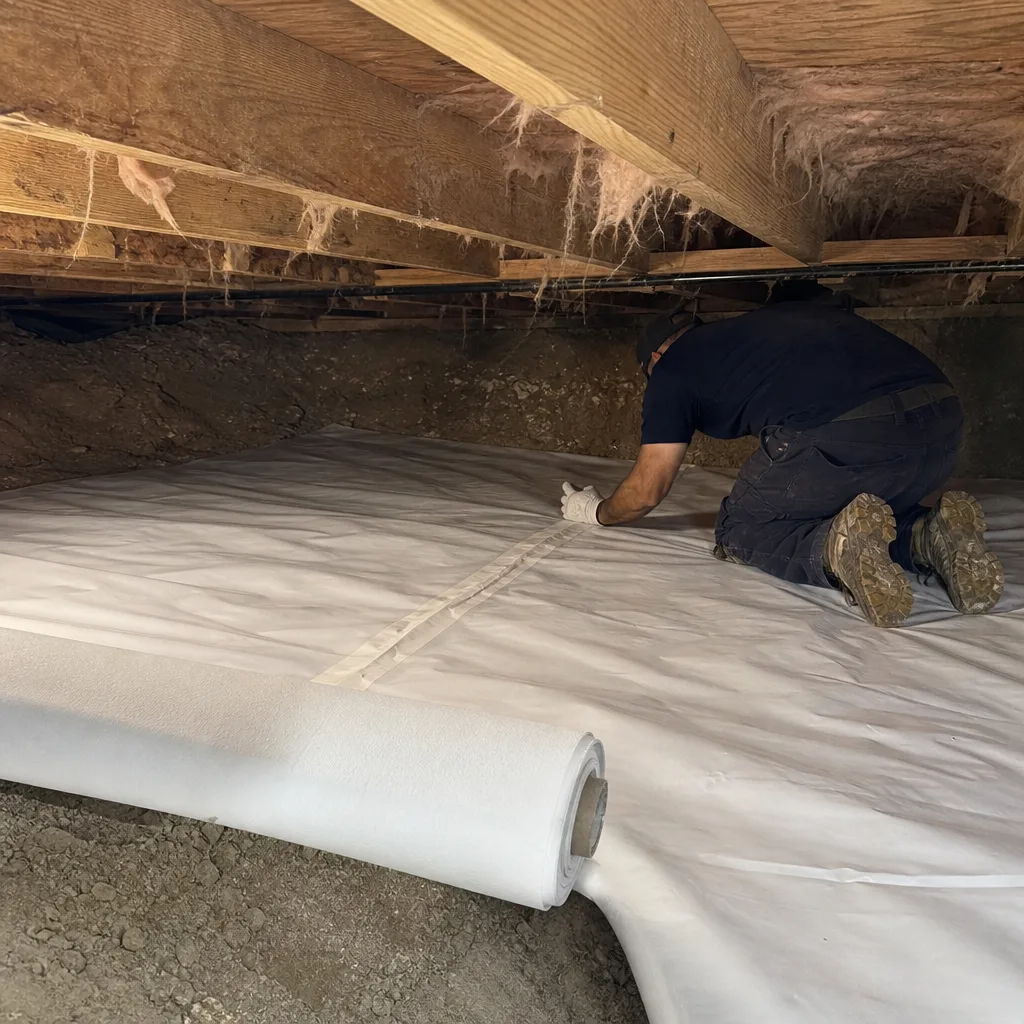
Call a professional if any of the following is true in your Boulder City home: your utility bills rose after installation and stayed up; your indoor relative humidity reads 60% or higher on a consistent basis, especially in summer; you see efflorescence, an off-ratio color gradient, or a shrinkage gap at the sill plate; you have a blower-door report showing ACH50 has degraded by more than 0.5 in the last two years; or your home is in an older neighborhood (the Historic District, the streets near Nevada Way) with a spray foam job that predates a documented air-sealing scope.
If none of those apply but your home still feels leaky, a home energy audit with a blower-door test is the correct next step. Envelope Insulation Boulder City offers free estimates in Boulder City, and we bring a written price before any work starts. Call (844) 320-7926 for a free estimate.
Frequently Asked Questions
The most reliable indicator is a blower-door reading (ACH50) that has degraded since installation, combined with rising utility bills and elevated indoor humidity. Visible clues like efflorescence at the foam edges, an off-ratio color gradient, or a shrinkage gap at the sill plate are genuinely diagnostic, but they usually confirm what the numbers show first. Call (844) 320-7926 for a documented inspection: photos, blower-door readings, and a written scope.
Rising indoor humidity after spray foam usually means the foam capped a bypass instead of sealing it, so household moisture that used to escape through the attic now has nowhere to go. In Boulder City’s dry but thermally swingy climate, this shows up strongest during monsoon season (July through September). A simultaneous blower-door and thermal imaging scan locates the bypass. Estimates are free; call (844) 320-7926.
That’s efflorescence, and it indicates moisture moving through the framing or masonry behind the foam. It’s a moisture intrusion problem, not an insulation failure, but it needs to be resolved before any additional foam is applied. An inspection with a moisture meter and a written scope is the right first step; call (844) 320-7926 to schedule one.
Yes, and that’s the reason a thermal imaging scan without a simultaneous blower-door test is a poor diagnostic. Under blower-door pressure, an actual coverage void changes size and shape as pressure changes, while a framing thermal bridge stays as a fixed line regardless. Any contractor who runs the IR scan alone is likely to misread one as the other. Call (844) 320-7926 if you want both performed together.
Yes, always. Air sealing of top plates, can lights, and all penetrations must be completed before any insulation is added, including spray foam. Spraying foam over an unsealed attic floor creates an impermeable cap that pushes leaks into the wall cavities, which is a harder and more expensive problem to fix than the original. Our Spray Foam Insulation in Boulder City process follows that order without exception. Free estimates: (844) 320-7926.
Compare the ACH50 numbers directly and divide the difference by the time since installation. A drift of 0.5 or less over several years is normal; a drift of 2 or more within two years points to an air sealing failure, foam shrinkage, or a bypass the original contractor capped instead of sealed. Bring both reports and we’ll read them with you: free second opinion on any written estimate. Call (844) 320-7926.
The Bottom Line
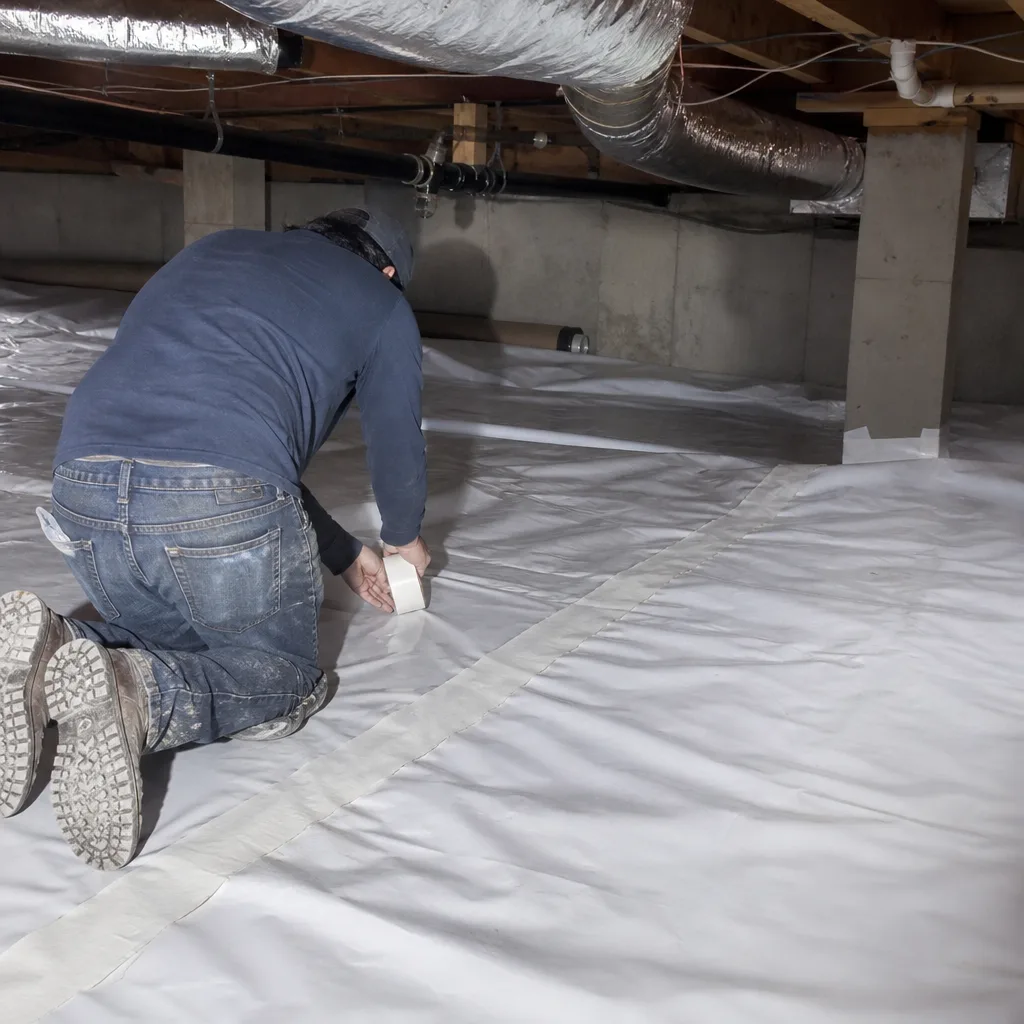
The warning signs of a spray foam problem that actually matter aren’t visible from the floor. They show up in utility data across seasons, in a hygrometer reading that climbs after installation, in a blower-door number that drifts, and in an IR scan run with the blower door simultaneously, not alone. Visual cues like efflorescence, color gradient, and sill-plate shrinkage gaps confirm what the numbers flagged. If your Boulder City home has any of those signs, the next step is a documented inspection with photos, a written scope, and a before-and-after blower-door reading, followed by a written price before any work starts. The spray foam itself rarely fails; the sequence around it does.
Ready for a documented answer instead of another guess? Call Envelope Insulation Boulder City at (844) 320-7926 for a free estimate. We bring a written price before any work starts and publish blower-door numbers on every applicable job, so you can see the change you’re paying for.
Written by the team at Envelope Insulation Boulder City.