
Attic Insulation Removal Cost in Boulder City, NV: What the Job Actually Runs
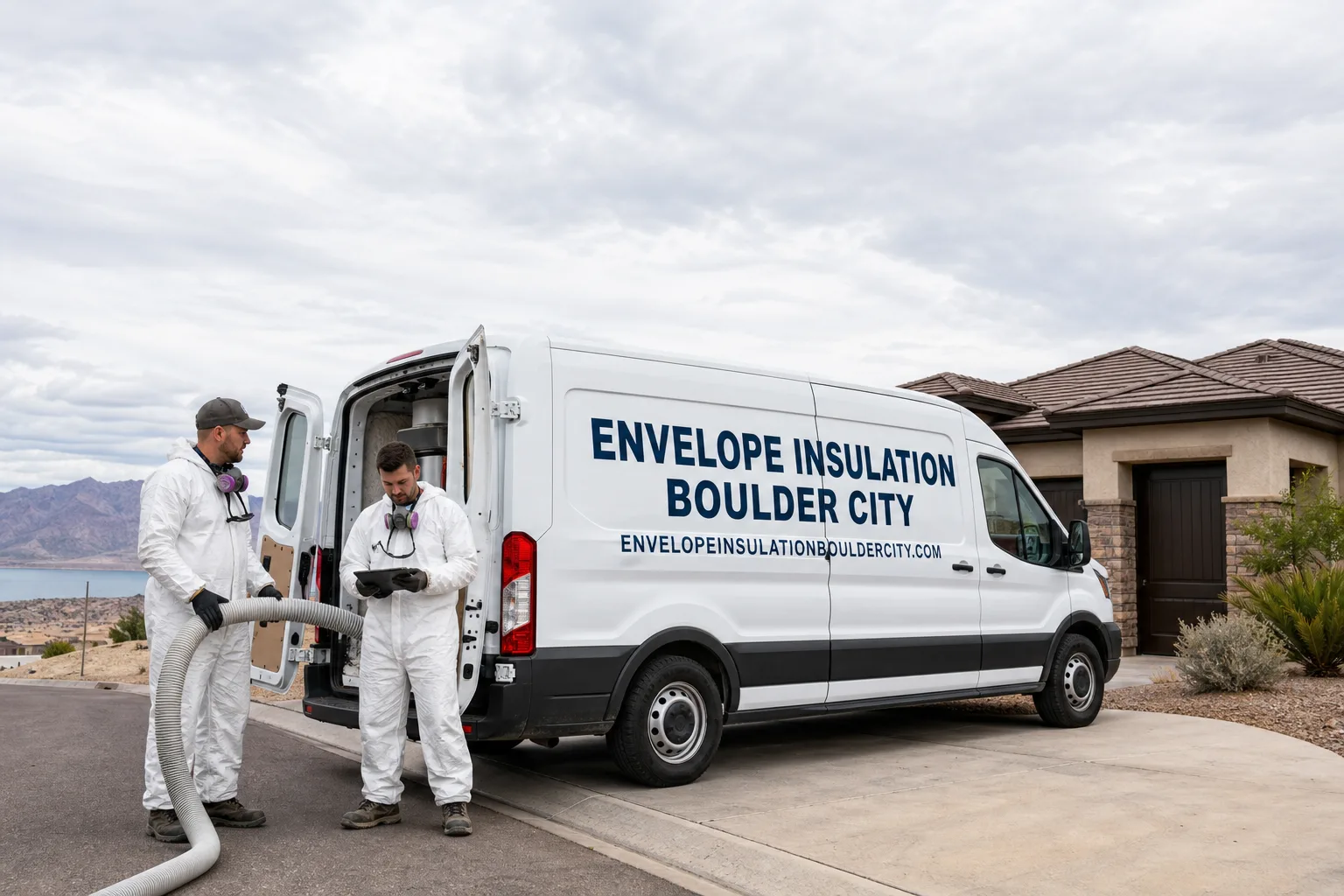
Most attic insulation removal jobs in Boulder City run between $1,200 and $3,800, with the typical single-story Boulder Home landing near $1,900 to $2,600. The low end covers thin, degraded fiberglass in a mid-century ranch with a standard 22-by-30-inch hatch. The high end is federal-era housing: original newspaper or horsehair fill, vermiculite that needs special handling, and a hatch so tight the vacuum hose has to be fed through by hand. We put the price in writing before the vacuum truck arrives. Call (844) 320-7926 for a free estimate and a written price on your specific attic.
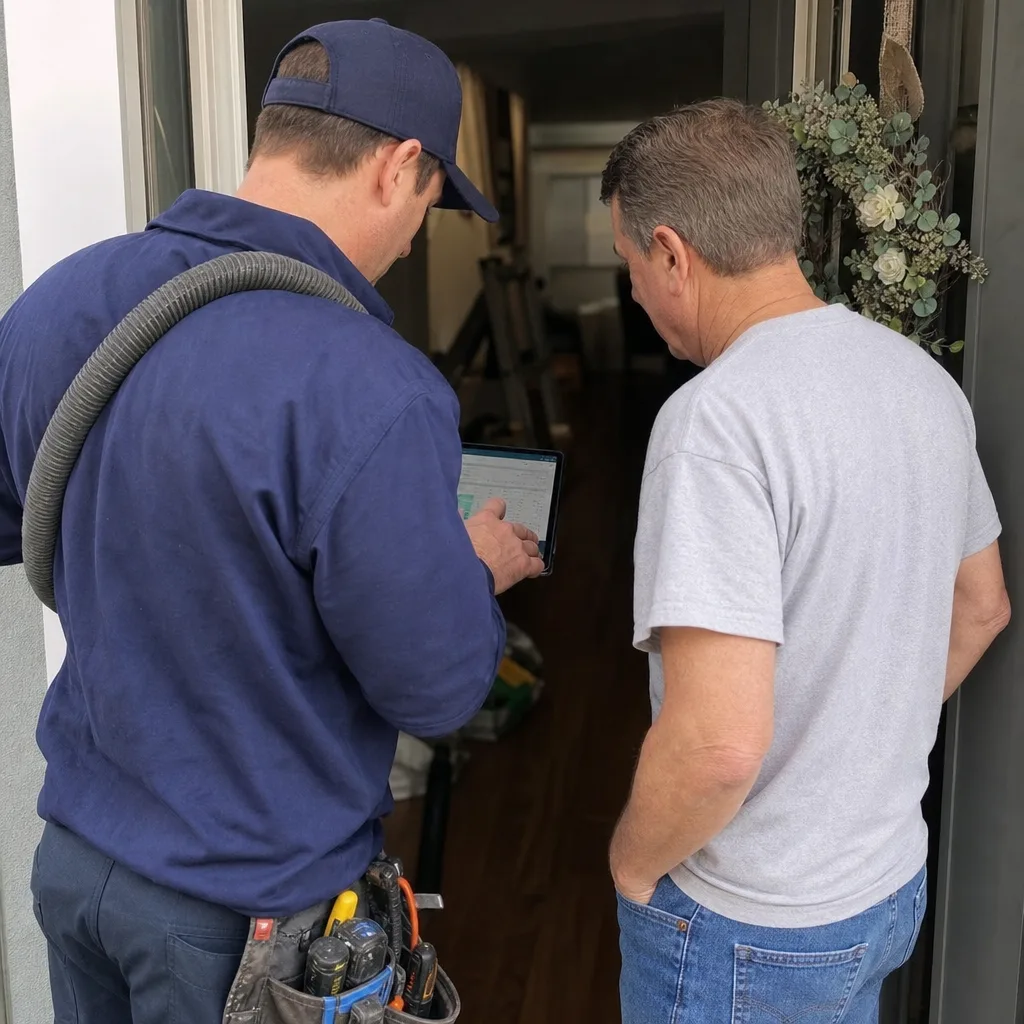
Boulder City is one of the few places in Nevada where a genuine federal housing experiment is still standing. The Boulder Homes built in the 1930s and ’40s for dam workers were designed for a desert that didn’t have air conditioning yet, which means many had no wall insulation at all and attic spaces that were never lined. Walk into one of those attics in July and the air up there is pushing 150°F. What comes out of that space during removal tells us more than any inspection from below ever could.
What Does Removing Old Attic Insulation Cost in Boulder City?
Removal is priced by the square footage of the attic floor, the density and type of the material, and how hard it is to get the hose and the bags into the space. That last part matters more in Boulder City than in most places, because the historic stock has hatch openings that were never designed with modern equipment in mind.
| Removal item | Price range |
|---|---|
| Standard fiberglass removal, attic floor up to 1,200 sq ft | $1,200 – $2,000 |
| Newspaper or horsehair fill, 1930s-’40s Boulder Home | $1,800 – $3,200 |
| Vermiculite or other legacy material, special disposal | $2,400 – $3,800 |
| Restricted hatch access (smaller than 24 inches) | add $250 – $600 |
| Rodent debris and sanitizing after removal | add $400 – $900 |
| Post-removal blower-door baseline test | $150 – $275 |
| Re-insulation (R-38 to R-49, blown-in fiberglass or mineral wool) | $1,600 – $3,400 |
These are the ranges we use for Boulder City work. Old houses usually land in the upper half of each row, not because of the square footage but because of what the material is and how much time it takes to pull it out without tearing up the attic floor underneath. A written price is the foundation of how we work on every home, and it comes before the crew spends two hours on a job that turned out harder than the phone estimate suggested.
Why the Debris Pattern Is the Real Diagnostic
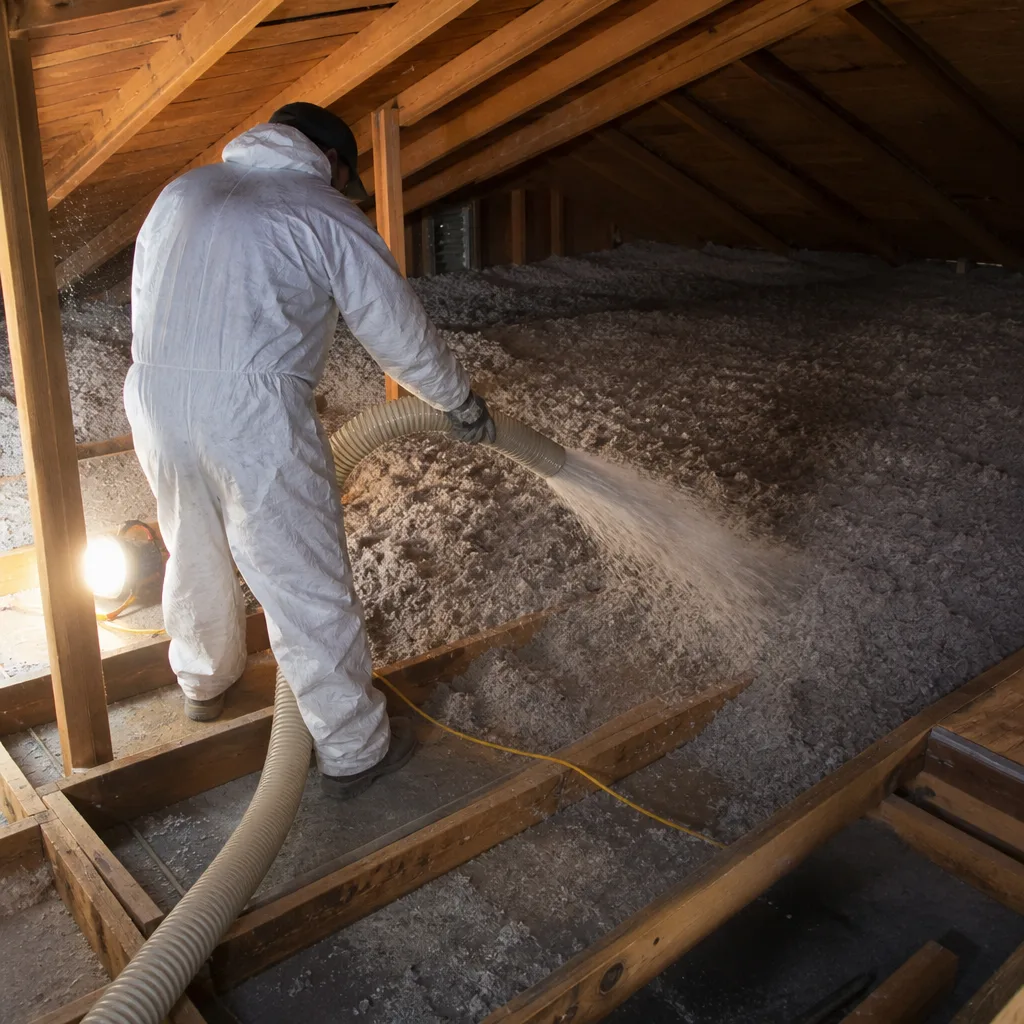
When we pull original material out of a federal-era attic, the leakage map is already written in the debris. Dust-stained insulation sitting directly over a top-plate gap means air has been moving through that joint for decades. Compressed material over a recessed can light is a pressure boundary failure, not a settled bat. Clean spots over solid blocking show you where the envelope is actually tight.
A visual inspection from the hatch can’t give you any of that. You have to be in the attic, moving the material, watching what it looks like as it lifts. That’s the difference between removal as a cleanup and removal as a diagnostic step.
- Dust-stained fill over a penetration – the pressure boundary is leaking at that joint, and it gets a bead of sealant plus a backer in the air-sealing scope.
- Compressed material over can lights – the fixture isn’t sealed to the drywall, and boxing it is part of the repair.
- Clean, undisturbed spots – the envelope is tight there, and no sealant is needed.
- Rust or moisture staining in the corners – often a roof or vent issue that gets flagged in writing before we re-insulate.
All of it gets photographed as we go. The Documented Photo Record is included on every visit, not available on request, so the air-sealing scope is built from actual evidence rather than a technician’s best guess.
Why We Never Remove and Reinstall Straight Through
The exposed attic floor is the one moment in a home’s life when every top plate, can light, and penetration is accessible. Cover it back up without sealing, and you’ve paid for removal twice: once for the vacuum and once for the energy you’ll keep losing through joints you can no longer see. That’s why air sealing is a hard prerequisite at Envelope Insulation Co., not an upsell. We don’t blow insulation over an unsealed attic floor, ever.
In heritage homes, this matters more than the code-driven R-value conversation. The original Boulder Homes were built for a desert that didn’t need cooling, and the retrofit here is closer to reverse-engineering a 90-year-old federal housing experiment than to hitting a number on a chart. Wall assemblies often have no cavity at all, so nearly all the savings have to come out of the ceiling plane. Sealing the top plates and penetrations first is the only way the new insulation performs the way it’s supposed to.
On applicable jobs, we run a blower-door test before and after. That’s a pressurization reading that shows, in a single figure, how much conditioned air the building envelope was losing. With the old insulation pulled and the attic floor exposed, the test quantifies leakage at the ceiling plane alone, which becomes the documented starting point for the air-sealing scope and the before figure in the published report.
What to Look For in an Attic Removal Quote
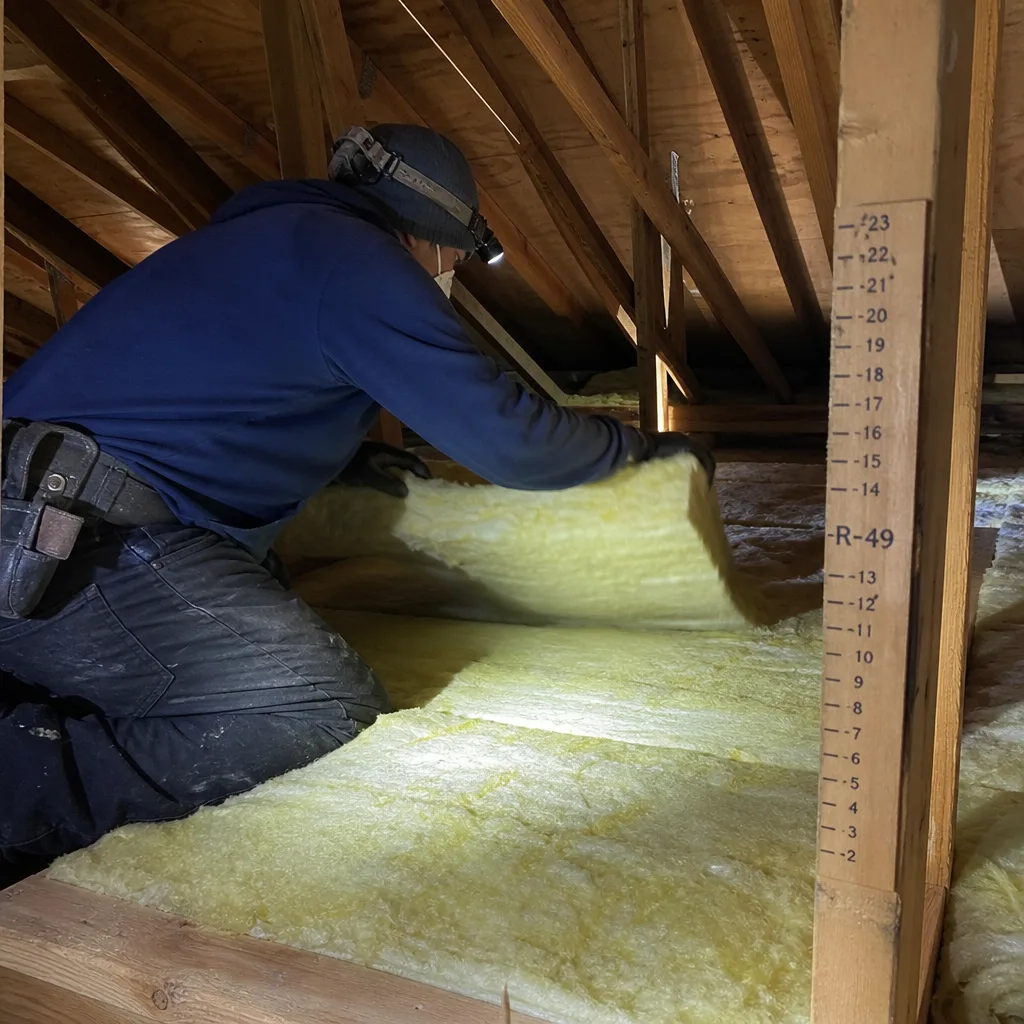
A removal quote in Boulder City needs to name the material, the access, and the disposal. If any of those is vague, the price is going to move once the crew is already on site. Here’s what a usable written estimate contains.
- Material type named – fiberglass, newspaper, horsehair, or vermiculite, each with its own disposal protocol and labor.
- Hatch dimensions measured – a 20-inch opening limits vacuum hose diameter and adds labor.
- Disposal line item – vermiculite and legacy materials cost more to bag and haul, and that cost should be visible up front.
- Air-sealing scope attached – if the removal quote has no follow-on sealing step, question it.
- Written warranty – the 365-Day Done Right Promise is backed by a written scope and warranty delivered before anyone starts. If it isn’t in writing, it isn’t a promise.
A free second opinion on any written estimate is part of how we work, and we’ll read a competing quote with you line by line. That’s Haven Standard Clause 1, Have it in writing, applied to the quote you didn’t get from us.
If the job involves decades of rodent activity or a crawl space that needs work at the same time, the full scope usually belongs with attic and crawl space restoration in Boulder City, which covers the combined job in one written price instead of two separate visits.
FAQs
Attic insulation removal in Boulder City typically costs $1,200 to $3,800, with most single-story Boulder Homes landing around $1,900 to $2,600 once hatch access and material type are accounted for. Vermiculite and legacy material push the top of the range because of separate disposal handling. Call (844) 320-7926 for a written price on your attic; estimates are free.
Yes, and it’s routine work in 1930s-’40s Boulder Homes, but it has to be bagged differently than fiberglass because it breaks apart and creates more airborne dust during the vacuum. The right equipment and containment matter more than the material itself. If vermiculite is present, bagging and disposal follow separate protocols, and we confirm that in writing before the crew arrives. Call (844) 320-7926 to schedule an assessment.
Adding over unsealed old material usually costs less up front and more over the next decade, because the air leaks underneath keep working and the new insulation sits on top of a failing pressure boundary. In Boulder City’s heritage stock, the ceiling plane is often the only place real air-sealing gains can happen. Removing and sealing first is the cheaper path once you count the energy lost in between. Call (844) 320-7926 for an honest comparison on your house.
Most standard removal-and-reinsulate jobs in Boulder City finish in one day, provided the hatch lets the vacuum hose through and the material is fiberglass. Jobs with vermiculite, extensive rodent debris, or a hatch smaller than 24 inches usually need a second visit so the air sealing has time to cure before new insulation goes down. Call (844) 320-7926 and we’ll give you the realistic timeline with the written price.
If your Boulder City attic still has the original newspaper fill, or you’re not sure what’s up there, the fastest way to a number you can plan around is to call (844) 320-7926. We’ll arrange a visit, put a written price in front of you before any work starts, and bring the photo record and blower-door readings back with the finished job. Calling is answered by a live person, day or night.
Written by the team at Envelope Insulation Boulder City, serving Boulder City, NV.
What Our Customers Say
"They air-sealed the attic floor before insulating and showed me the blower-door number before and after. The upstairs is finally the same temperature as downstairs."
- Marisol D."The winter gas bill dropped by about a third. They had estimated a quarter, so they under-promised."
- Genevieve R."Crawl space encapsulation done properly. Photographs of the vapour barrier at every seam, and the damp smell in the hallway is gone."
- Ainsley P.