
Last updated November 17, 2026
Blown-In Insulation Warning Signs Every Homeowner Should Know
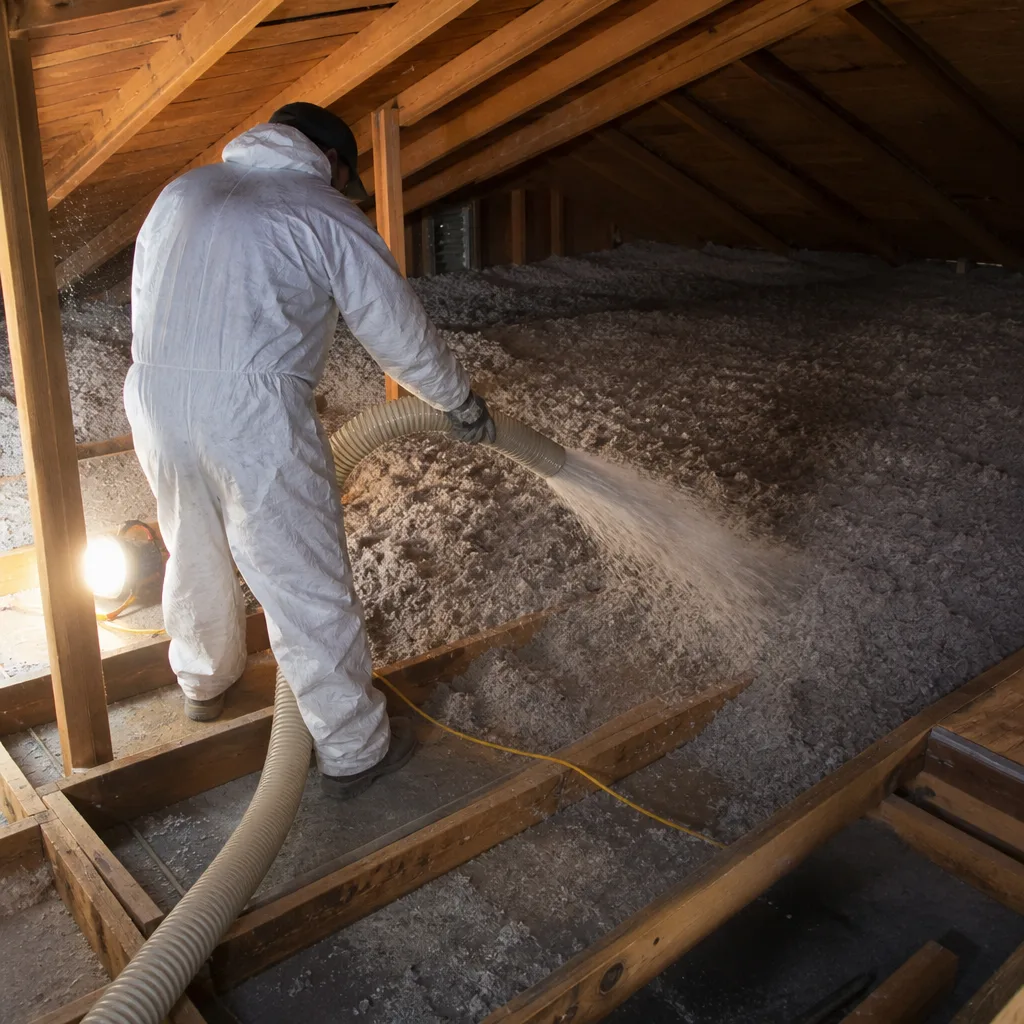
Settled cellulose that has lost two inches of depth across a 1,200-square-foot attic can drop effective R-value by 15-20%, and it looks completely fine from the attic hatch. The warning sign isn’t what you see. It’s the June cooling bill that should have flattened but didn’t. In our experience across Boulder City, the homes that need attention first are almost never the ones where something looks wrong. They’re the ones where the numbers quietly stopped making sense two summers ago. This guide teaches you to read your house’s energy data first and your attic second, so you catch degradation before it costs you another full season. We’ll cover the utility-data tells, the physical checks you can do with a tape measure, the one sign that needs a professional instrument, and the exact documentation to ask for when you call someone out.
Quick Answer
The earliest blown-in insulation warning signs are utility-data problems: cooling costs rising faster than your rate has changed, HVAC runtime climbing with no change in occupancy or setpoint, and room-to-room temperature gaps that weren’t there after installation. Physical signs come second and include depth below spec at three or more sample points, visible gaps around recessed lights and the attic hatch, and dust streaking that signals air bypass. If your data or your tape measure raises a flag in Boulder City, get a written blower-door reading and a depth survey at five or more points before you spend anything.
Table of Contents
- The Warning Signs That Show Up in Your Utility Data First
- HVAC Runtime and Room Temperatures: The Second Data Layer
- Physical Checks You Can Do With a Tape Measure
- The One Sign That Needs Professional Equipment: A Rising ACH50
- Moisture Signs Specific to Boulder City’s Climate
- What Documentation to Request When You Call
- How to Read a Depth Survey and a Blower-Door Number
The Warning Signs That Show Up in Your Utility Data First
Before you climb into an attic, pull twelve months of electric bills and your utility’s rate history. The first question is whether your cooling cost per kilowatt-hour has climbed faster than the rate itself. If your rate went up 4% and your June-to-September usage went up 18%, roughly 14 points of that gap is your house, not your utility. That gap is the single most reliable early signal we see in Boulder City, where summer cooling loads are the dominant part of the bill and a degraded attic shows up as real money fast.
Run the comparison like this:
- Pull three summers of bills, June through September, for the same address.
- Divide each summer’s total dollars by that summer’s average rate per kWh to get usage in kilowatt-hours. This strips out rate increases.
- Compare the kWh figure year over year. Steady occupancy and setpoints should give you a flat or gently drifting line, not a climbing one.
- Flag any summer where usage rose more than about 8% with no change in how the house is used.
- Check your utility’s online usage dashboard if it offers one. Many show daily peaks that reveal a step change on a specific week, which is often the week the insulation shifted or an air seal opened.
The trap is assuming a rising bill is normal because rates rise every year. Rate changes are visible and documented. Usage changes are the part you control, and they’re the part that points at the building envelope. For a fuller baseline on the whole envelope, our guide to Envelope Insulation Boulder City walks through how the attic, walls, and crawl space work together.
HVAC Runtime and Room Temperatures: The Second Data Layer
Your thermostat and smart-home app log how many hours your system runs each day. That number is a cleaner signal than dollars because it isn’t touched by rate changes at all. If your air conditioner ran 6.2 hours a day last July and 7.9 hours this July with the same setpoint and the same number of people in the house, your house is losing more heat than it used to. Blown-in insulation that has settled or been disturbed shows up here before it shows up anywhere else.
Look for three specific patterns:
- Runtime creep. A gradual 15-25% increase across two or three summers, holding setpoint and occupancy steady.
- Longer recovery after setback. If you let the house warm up during the day, note how long it takes to recover in the evening. A house that used to recover in 40 minutes and now takes 90 has lost envelope performance.
- New room-to-room temperature gaps. A spare bedroom or a room over the garage that was comfortable at installation and now runs 4-6 degrees warmer is often sitting over a section of settled or bypassed insulation. Uneven temperatures that weren’t there when the insulation went in are a top-tier warning sign.
One caveat in Boulder City: desert afternoon sun on a west-facing wall can mimic an insulation failure. Compare like days, not your hottest day to a mild one, and look for the pattern across a season rather than a single afternoon.
Physical Checks You Can Do With a Tape Measure
When your data raises a flag, the attic gives you confirmation. You can do these checks safely from the hatch with a flashlight and a tape measure, without walking the joists. If your attic has no stable walking surface, stay on the hatch platform and measure what you can reach, then leave the rest to a pro.
Run this simple survey:
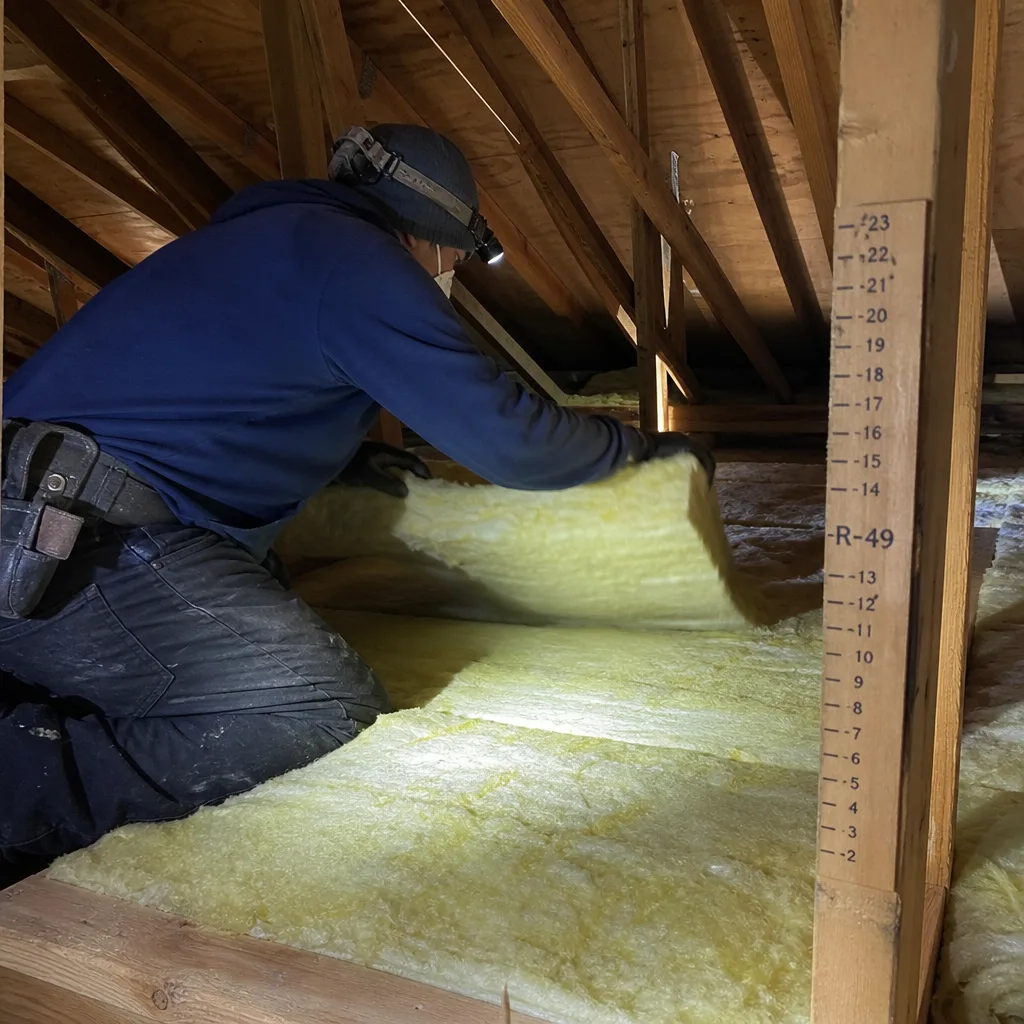
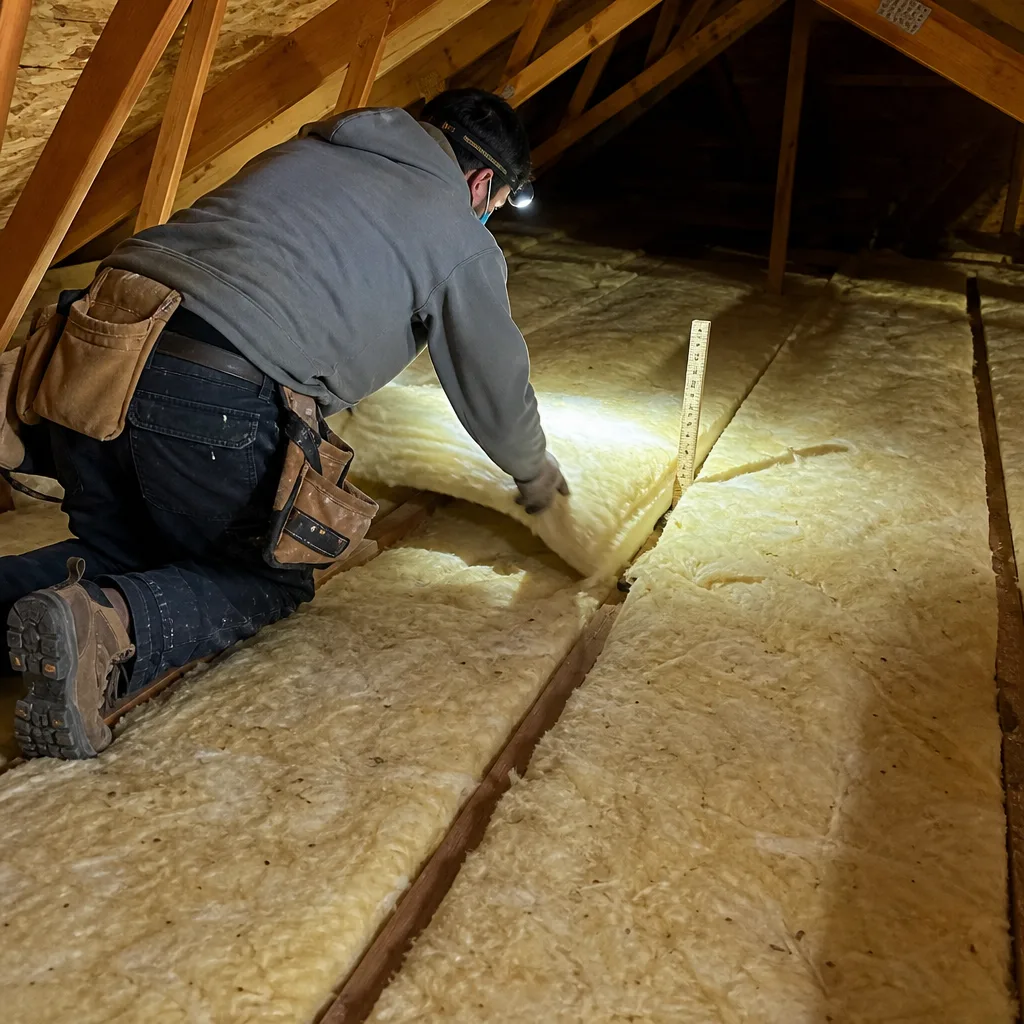
- Mark your installed spec first. If you don’t know it, ask the installer or find it on the original invoice. Typical blown-in attic targets in this region run R-38 to R-49, which corresponds to roughly 11 to 15 inches of settled fiberglass or 10 to 14 inches of cellulose depending on the product.
- Measure depth at three separate points at least ten feet apart. Note each number.
- Check for visible gaps around recessed lights, the attic hatch framing, plumbing penetrations, and the tops of interior walls. Dark or dusty framing around a can light means air is moving through it.
- Look at the eave baffles. Batt insulation that has been pushed against or over the baffles blocks the soffit vent and chokes attic airflow. Displaced batts at the eaves are common and easy to spot.
- Note any area where insulation looks thinner, darker, or compressed, especially near the hatch where foot traffic disturbs it.
If three or more of your depth measurements land below spec, you have a documented reason to bring someone in. Two points below spec might be a single cold spot. Three points spread across the attic means a real loss of coverage, which at 1,200 square feet can mean 15-20% of your effective R-value is gone. The fix is usually not a full removal but a top-up, which our Attic Insulation in Boulder City page covers in detail.
The One Sign That Needs Professional Equipment: A Rising ACH50
Here’s the sign you can’t check yourself, and it’s the most important one: a rising ACH50 on a repeat blower-door test. ACH50 is air changes per hour at 50 pascals of pressure, the standardized number that tells you how leaky the building envelope is. A blower-door test is a pressurization reading that shows, in one figure, how much conditioned air the home is losing. If a home measured 4.2 ACH50 after air sealing and reads 5.4 two years later, the insulation didn’t fail. The air sealing did. Caulk and foam age, penetrations open back up, and top plates separate slightly as framing moves with the seasons.
Why does this matter so much? Because blowing more insulation over a leaky attic floor just buries the leak. The air still escapes, and the insulation loses effectiveness because moving air carries heat past the fibers. That’s why we seal first and insulate second, in that order, always. We won’t blow insulation over an unsealed attic floor. A homeowner watching a bill climb has no way to know whether the problem is settled insulation or an air-seal failure without the equipment, and those two fixes are not the same job or the same price.
The practical takeaway: if your home had a blower-door test at installation, find that number and any later retest. A rising figure is your cue to investigate air sealing before you pay to add material. Air leaks in Boulder City attics are common around can lights, plumbing chases, and the attic hatch, and our spray foam work is often the cleanest way to close the tricky ones. See Spray Foam Insulation in Boulder City for how those penetrations get sealed.
Moisture Signs Specific to Boulder City’s Climate
Boulder City sits in a high desert, so the moisture story is different from what you’d expect in a humid region. The danger isn’t a wet attic; it’s a small amount of warm, moist indoor air leaking up and condensing in a cool spot, over and over. Three signs tell you that’s happening:
- Efflorescence on attic framing. That white, powdery crust on rafters or sheathing comes from moisture moving through wood or masonry and leaving mineral salts behind when it dries. In a desert attic it almost always means interior air is leaking up and condensing.
- Rust on metal fasteners near the ridge. Ridge and roof fasteners that show light rust while the rest of the attic hardware is clean point to a recurring moisture cycle in the upper attic, often from air bypass.
- Dust streaking on the insulation surface. Dark, streaky stains on the top of your blown-in insulation, especially in lines radiating from a can light or hatch, are the classic visual for air bypass. Air moving through the fibers filters dust out of the air as it goes, and the pattern marks exactly where the leak is.
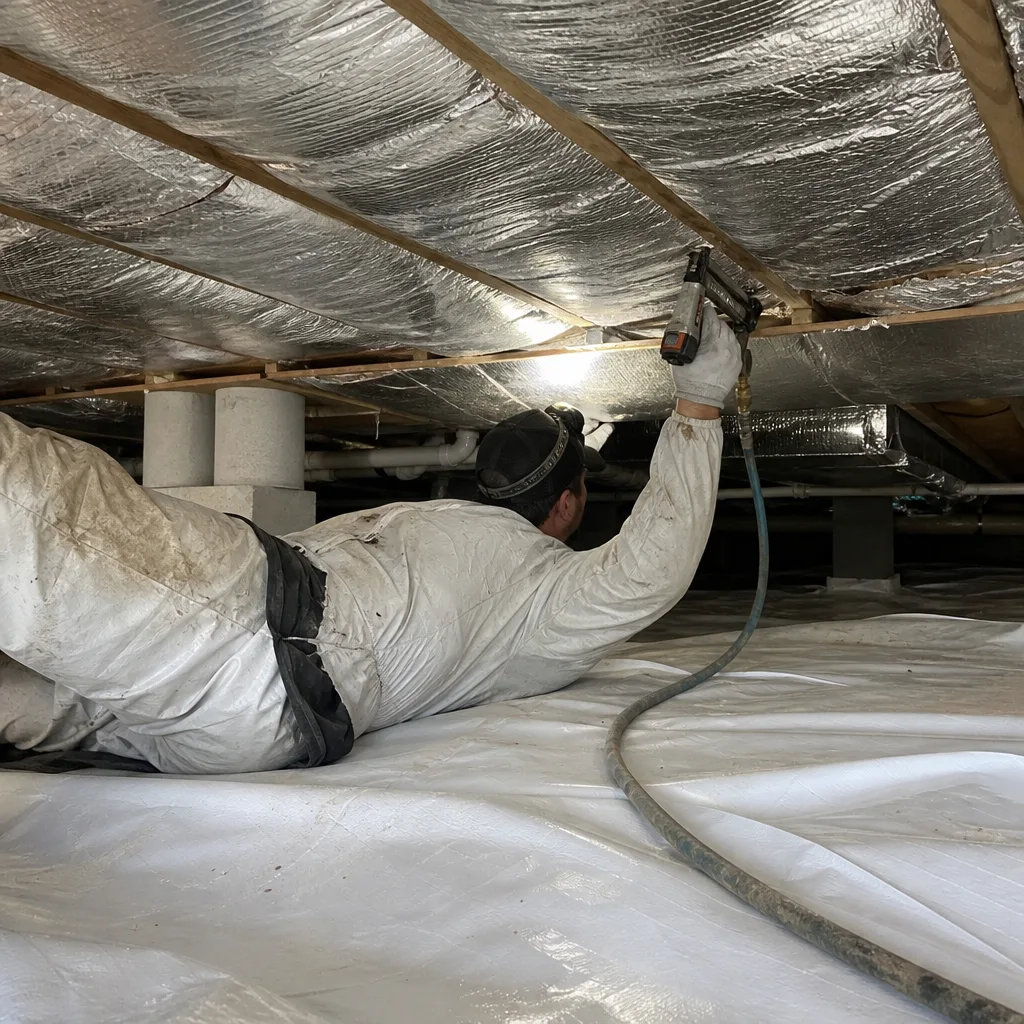
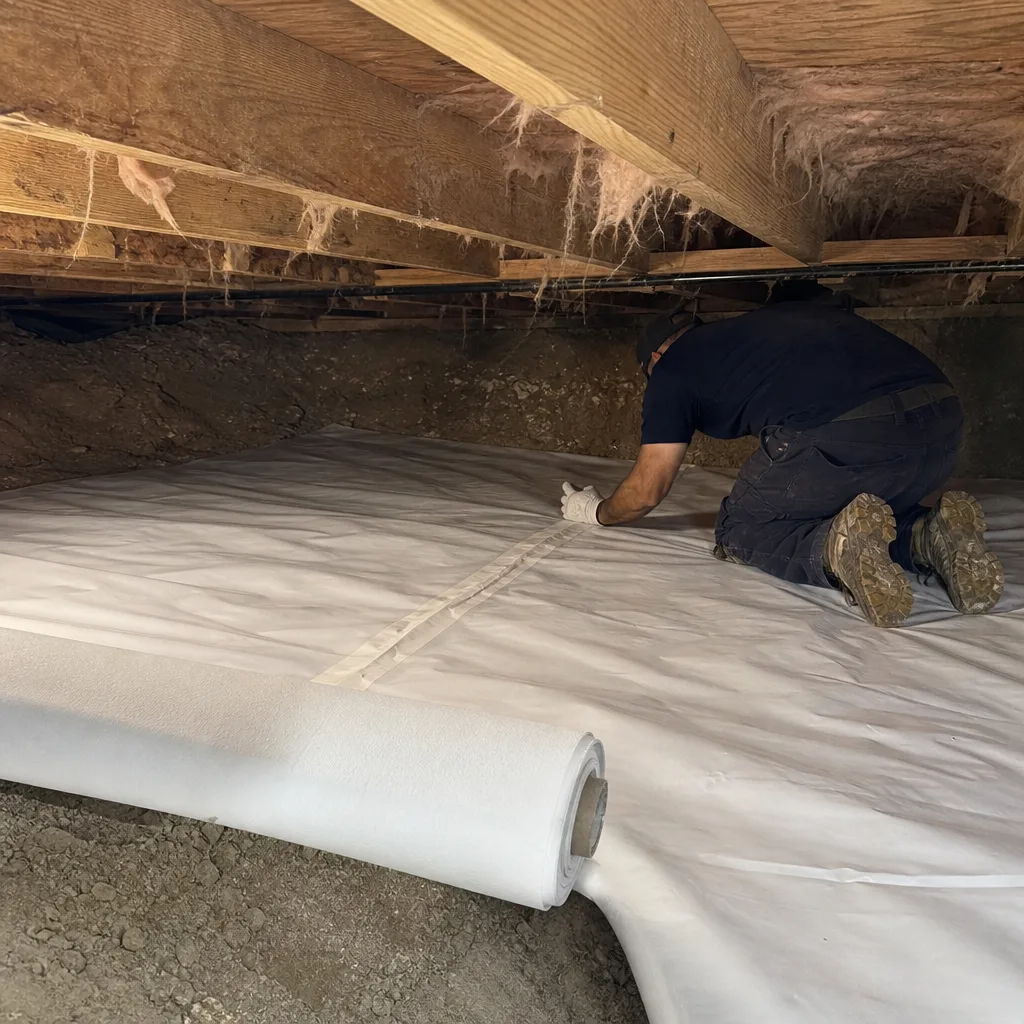
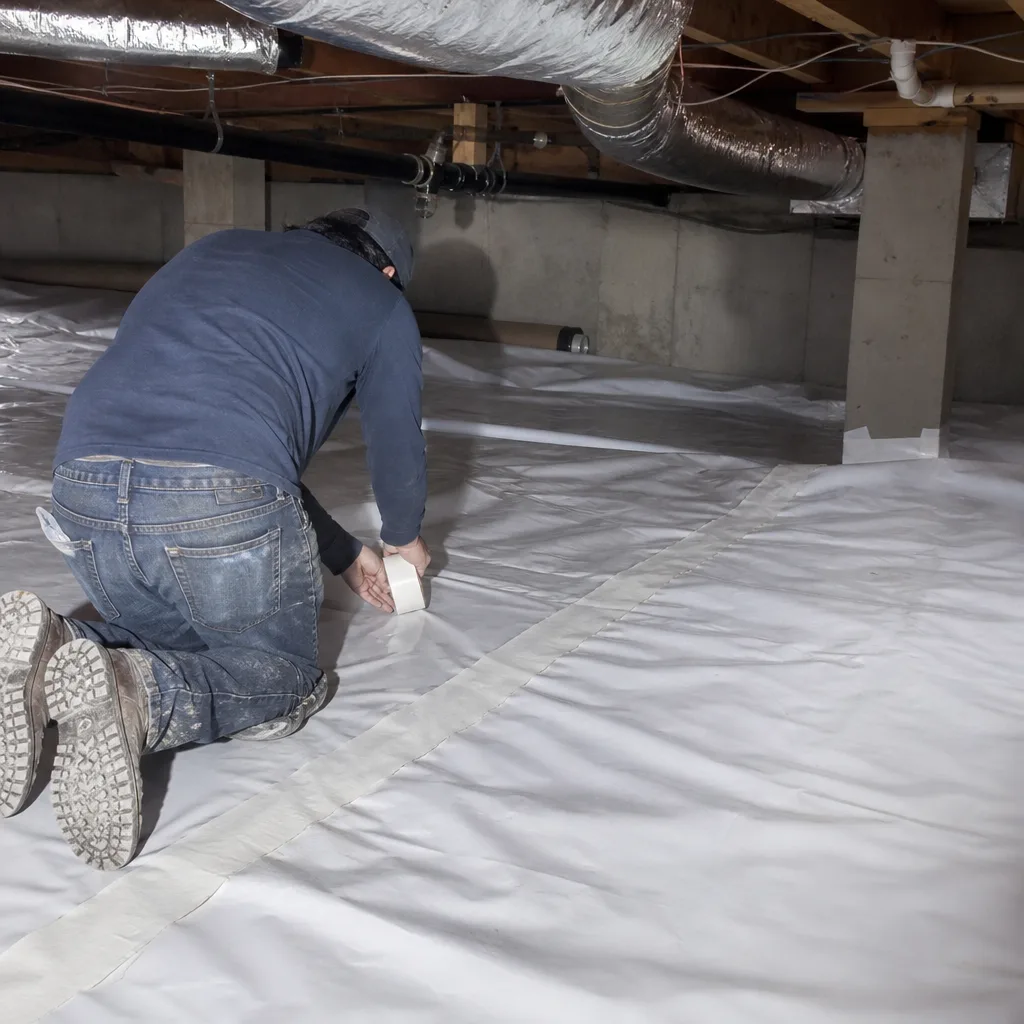
The climate detail that trips people up in Boulder City: low humidity makes these signs appear slowly, so by the time efflorescence or rust is visible, the air exchange has been happening for years. We also watch the crawl space for the same reason. Moisture that starts down there migrates up through the floor assembly. Our Crawl Space Encapsulation & Vapor Barrier in Boulder City service corrects the source rather than masking it.
What Documentation to Request When You Call
Here’s the part most homeowners never hear: when a contractor evaluates a warning sign, you’re entitled to more than a verbal opinion. Ask for two documents before anyone touches the attic.
First, a written ACH50 reading, not just “we did a blower-door test.” That means the actual number before any work, and if the work involves air sealing, the number after. Second, a depth survey at a minimum of five sample points, written down with the measurement location and the measured depth at each. A visual estimate of “looks a little low” tells you nothing you can compare in two years. If your contractor balks at either request, that’s your answer about the engagement.
Under The Haven Standard, which we operate under, every job begins with a written price and ends with a documented record. That record includes a Documented Photo Record, and on applicable jobs, the before-and-after blower-door readings so you can see the actual performance change you paid for. We’ve done this across 9,000+ homes sealed and insulated. The number is the point: the reading shows, in one figure, how much conditioned air the house was losing and how much it lost after. When you get competing estimates, our free second opinion service will read the other quote with you and point out exactly where the scope leaves a warning sign unaddressed.
How to Read a Depth Survey and a Blower-Door Number
A depth survey is only useful if you can read it, so here’s how. The report should pair each sample point with a location and a depth. Compare the measured depth to the installed spec for the product, not a generic number. Fiberglass settles differently than cellulose, so the product name matters. We source minerals and fiber from manufacturers including Owens Corning, Johns Manville, and GreenFiber, and each has its own settled thickness for a given R-value. A depth that’s two inches below spec across half your sample points means you’re under-insulated even though the material is still there.
For the blower-door side, look at the direction of change. A number that dropped from a higher ACH50 to a lower one after air sealing means the house got tighter, which is the goal. A number that has risen since the original install means the envelope has opened back up, and the conversation should be about re-sealing before adding material. If there’s no original number, a single current reading tells you where you stand, but a repeat reading over time tells you where you’re headed. That trend is the whole game. It’s the difference between fixing a problem once and watching it quietly undo itself across seasons.
Common Mistakes to Avoid
- Adding insulation before fixing air sealing. Blowing fresh material over an unsealed attic floor buries the leak instead of stopping it. The new insulation loses effectiveness because moving air carries heat right past it.
- Trusting a visual estimate over a measurement. “Looks fine from the hatch” is the one thing insulation failure is best at. Ask for depth measurements in writing and, where air sealing is involved, an ACH50 number.
- Blaming the utility for a usage climb. Rates go up in Boulder City and everywhere else, but rate changes are documented. Strip them out and compare the kWh, not the dollars.
- Pushing batts against the eave baffles. Blocking soffit ventilation chokes attic airflow. Good attic insulation keeps the airways open along the eaves.
- Ignoring a new hot room because it’s “just the desert.” A room that was comfortable at install and now runs 4-6 degrees warmer is often sitting over a settled or bypassed section. That’s a fixable problem, not a fact of life.
- Letting foot traffic destroy coverage near the hatch. Excavation around a common entry point is one of the most common reasons a small area underperforms while the rest of the attic is fine.
- Skipping the crawl space. Moisture and air leaks often start in the crawl space and migrate up. Checking only the attic can miss the actual source.
When to Call a Professional
Call a professional when your data first turns, not after a full season of it. That means a summer where usage climbed more than 8% with no change in setpoint or occupancy, an HVAC runtime that increased without explanation, or three or more depth readings below spec. Call a professional, too, if you see dust streaking, efflorescence, or rust in the attic, since those point to air bypass that needs proper sealing, not a top-off. And call one if you simply don’t have a baseline, because a professional can establish a starting ACH50 and depth survey you can measure against next year.
This is genuinely a job where a real measurement beats a guess, and where the hazards are real enough to warrant training. Our technicians have up to 10 years of experience and are background-checked and uniformed. Envelope Insulation Boulder City offers free estimates in Boulder City – call (844) 320-7926. A live person answers around the clock, and you’ll get a written price before any work starts.
Frequently Asked Questions
The earliest sign is usually a utility or thermostat data change: summer cooling costs rising faster than your rate changed, HVAC runtime climbing with the same setpoint and occupancy, or new room-to-room temperature gaps. Physical attic signs like depth below spec and dust streaking come second. Call (844) 320-7926 for a free estimate and a proper measurement.
You can safely measure depth at a few reachable points from the attic hatch with a tape measure and note visible gaps and dust patterns. You can’t measure air leakage yourself, because that requires a blower door. If your depth readings land below spec at three or more points, it’s worth a professional look. Estimates are free; call (844) 320-7926.
Because insulation looks fine even after it settles two inches and loses 15-20% of its effective R-value, and because a failing air seal doesn’t change the appearance of the material at all. The performance drop shows up in your bill and your runtime before it shows anywhere visible. Call for a documented reading and put a number on it: (844) 320-7926.
A blower-door test is a pressurization reading that shows, in one number called ACH50, how much conditioned air the building envelope is losing. It matters because a rising ACH50 means air sealing has failed, which is a different and separate fix from settled insulation. Under The Haven Standard we publish before-and-after readings on applicable jobs so the change is visible. Call (844) 320-7926 to schedule one.
Often just a top-up plus re-sealing, not a full removal, especially if the existing material is intact and only settled. The decision should be made from a written depth survey at five or more points and, where relevant, an ACH50 reading, not a visual guess. We’ll put the scope and the price in writing before any work starts. Call (844) 320-7926.
Yes, but from the inside out: warm indoor air leaking up and condensing in a cool attic leaves efflorescence on framing, rust on ridge fasteners, and dust streaks that mark the escape points. Boulder City’s low humidity makes these signs slow to appear, so they indicate a leak that’s been running for a while. Call (844) 320-7926 to have it checked.
The Bottom Line
Your house tells you it has an insulation problem through its data before it tells you through its appearance. Rising summer usage that outpaces rate changes, climbing HVAC runtime with no change in how you live, new hot rooms, and three or more depth readings below spec are the signs worth acting on. Dust streaking, efflorescence, and rust point to air bypass that needs sealing, not just material. And a rising ACH50 needs the equipment only a trained professional carries. In Boulder City, the homeowners who come out ahead are the ones who read the number early, get a written ACH50 and a five-point depth survey, and fix air sealing before adding insulation.
If your data has turned, call Envelope Insulation Boulder City at (844) 320-7926 for a free estimate. You’ll get a written price before any work starts, a Documented Photo Record when we’re done, and on applicable jobs the before-and-after blower-door numbers that show the performance change you paid for.
Written by the team at Envelope Insulation Boulder City.