
Last updated November 17, 2026
Choosing the Right Insulation Brand: A Buyer’s Guide for Boulder City
Here’s the number that should change how you shop. The R-value printed on a bag of blown fiberglass is measured in a lab at a 75°F mean temperature. A Boulder City attic in July sits somewhere between 120°F and 130°F, and at that mean temperature the same material delivers roughly 8 – 12% less effective R-value than the label promises. That gap is where most brand decisions go wrong. This guide sorts the Boulder City insulation market by installed performance instead of manufacturer spec sheets, and it shows you how material type, specification, and brand rank in the order that actually matters.
Quick Answer
The best insulation brand for a Boulder City home is the one whose material is right for the application zone, installed at the correct density and depth, after air leaks are sealed. Brand is the third decision, not the first. For most attics here that points to a reputable blown product like CertainTeed, Owens Corning, or Johns Manville, while wall cavities and crawlspaces often call for Icynene or Demilec spray foam applied by a skilled contractor. Get the material and the spec right, then the brand name is mostly a matter of verifiable third-party certification.
Table of Contents
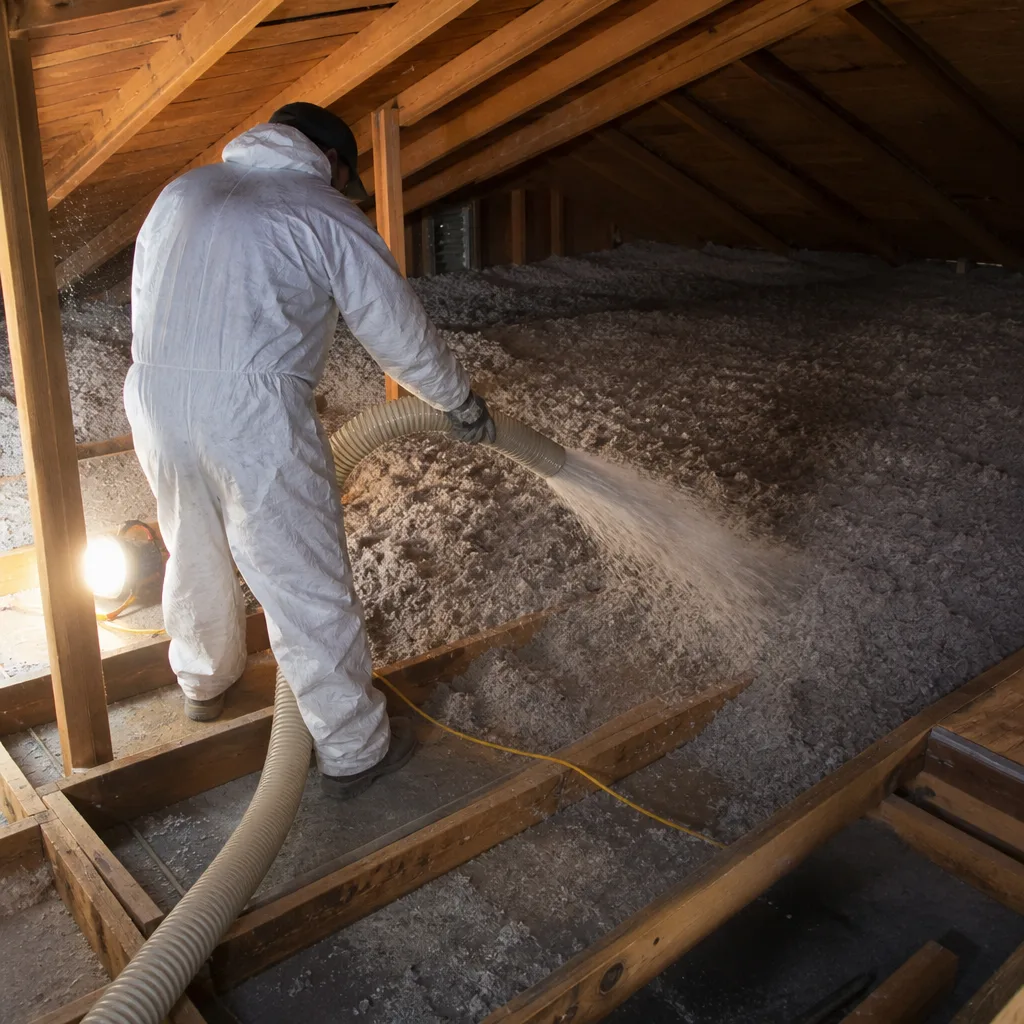
- Why Labeled R-value Misleads in Boulder City Heat
- The Blown-Insulation Brands Sold Around Boulder City
- Why Spray Foam Is a Skill Question, Not a Brand Question
- How to Verify a Brand Claim: Reports and Certifications
- The Decision Matrix: Material, Then Spec, Then Brand
- Boulder City Applications: Attic, Wall, Crawlspace
- Air Sealing Comes Before Any Insulation Brand
Why Labeled R-value Misleads in Boulder City Heat
R-value is a measure of thermal resistance, and manufacturers test it under ASTM C518 in a lab at a controlled 75°F mean temperature. That’s a fair way to compare products against each other. It’s a poor way to predict what a product does in a Boulder City attic that bakes at 120 – 130°F for weeks at a stretch. As a material’s mean temperature climbs, its resistance drops, and different material types lose different amounts. That erodes the advertised number in real conditions.
Here’s how the common material types hold up at high attic temperatures:
- Blown fiberglass loses the most effective R-value at high temperature, which is one reason depth and settled density matter more than the bag number.
- Cellulose holds its value relatively well at temperature and adds density that resists air movement, though it settles over time.
- Mineral wool (Rockwool is the common brand in this market) performs steadily at high heat and resists moisture well.
- Closed-cell spray foam carries the highest stated R-value per inch and, more importantly, seals air as it cures, which changes the calculation entirely.
What this means for a Boulder City buyer: when you compare two brands of blown fiberglass, you’re comparing near-identical lab numbers. The installed performance difference comes from how much you blow in, how evenly it’s distributed, and whether the attic floor was sealed first. That’s why our crews insist on sealing before insulating – the Envelope Insulation Boulder City home page walks through the whole order of operations, and it’s a point worth internalizing before you look at a single spec sheet.
The Blown-Insulation Brands Sold Around Boulder City
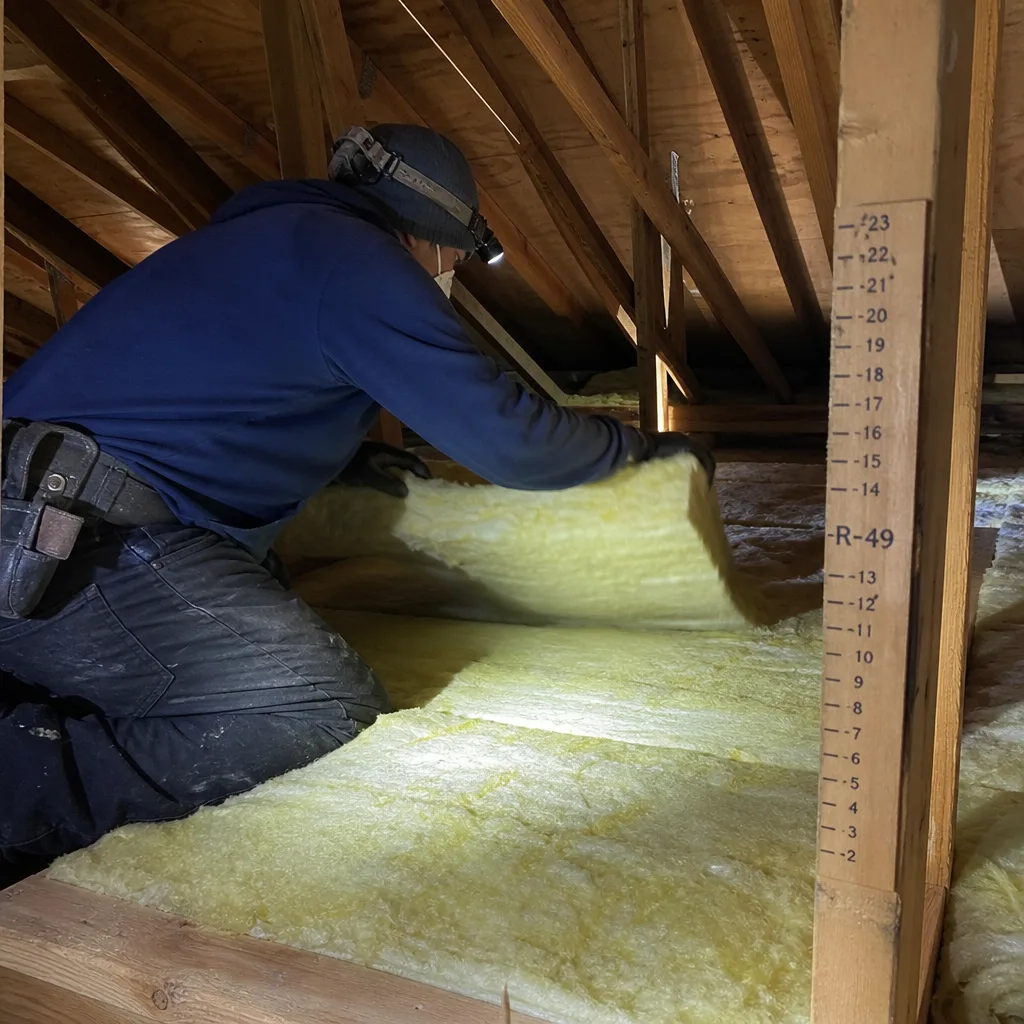
The blown products you’ll actually find through Boulder City and Henderson distributors tend to be the familiar names: CertainTeed, Owens Corning, Johns Manville, and GreenFiber. They’re all legitimate. The differences that matter on a real job come down to three things – settled density, required depth per R-value target, and the dust-fiber ratio at installation.
Settled density is what the material compresses down to after it’s blown and settles. A product that starts fluffy and settles hard leaves you with less R-value than you paid for. Required depth per R-value tells you how deep the installer has to lay it to hit your target; two brands can need meaningfully different depths to reach the same number. The dust-fiber ratio is the proportion of fine particles that go airborne during installation – it affects how much cleanup you’re left with and, on older homes, how carefully the crew has to mask off living spaces.
A few practical notes for the Boulder City market:
- GreenFiber (cellulose) tends to hold temperature performance well and is a common choice for a hot attic floor, provided depth and density are right.
- CertainTeed and Owens Corning blown fiberglass are widely stocked and easy to source, which matters if a job needs a mid-project top-off.
- Settled density should be checked on the bag’s installed specifications, not the loose-fill rating, and written into your scope.
Ask the contractor which product they plan to blow and how deep, and get both in writing before work starts. Under our Haven Standard, a written price and a written scope come before anyone lifts a tool – that clause exists precisely because brand talk without numbers is meaningless.
Why Spray Foam Is a Skill Question, Not a Brand Question
For spray foam, the brand on the drum tells you far less than the hands on the gun. The performance of spray foam depends on how the two components are mixed, the temperature at application, and whether the substrate was prepped correctly. Get those wrong and even a top-shelf Icynene or Demilec product underperforms. Get them right with a mid-tier product and you get exactly what you specified.
The three variables that decide spray foam outcome:
- The two-component ratio. The A and B side have to be proportioned correctly. An off ratio cures poorly, and you can see it in the foam’s color and texture.
- Temperature at application. Substrate and ambient temperature affect adhesion and cure. In a Boulder City attic in summer, that means careful timing and sometimes shading the substrate.
- Substrate prep. Foam bonds to clean, dry, sound surfaces. Dust, moisture, or peeling paint undercut the bond no matter the brand.
This is the short version of why we treat spray foam as a contractor skill question rather than a product shopping question. If your project needs it, the Spray Foam Insulation in Boulder City page covers prep and application in more depth. Ask any contractor how they verify mix ratio and who inspects the foam after cure. The answer tells you more than the brand label.
How to Verify a Brand Claim: Reports and Certifications
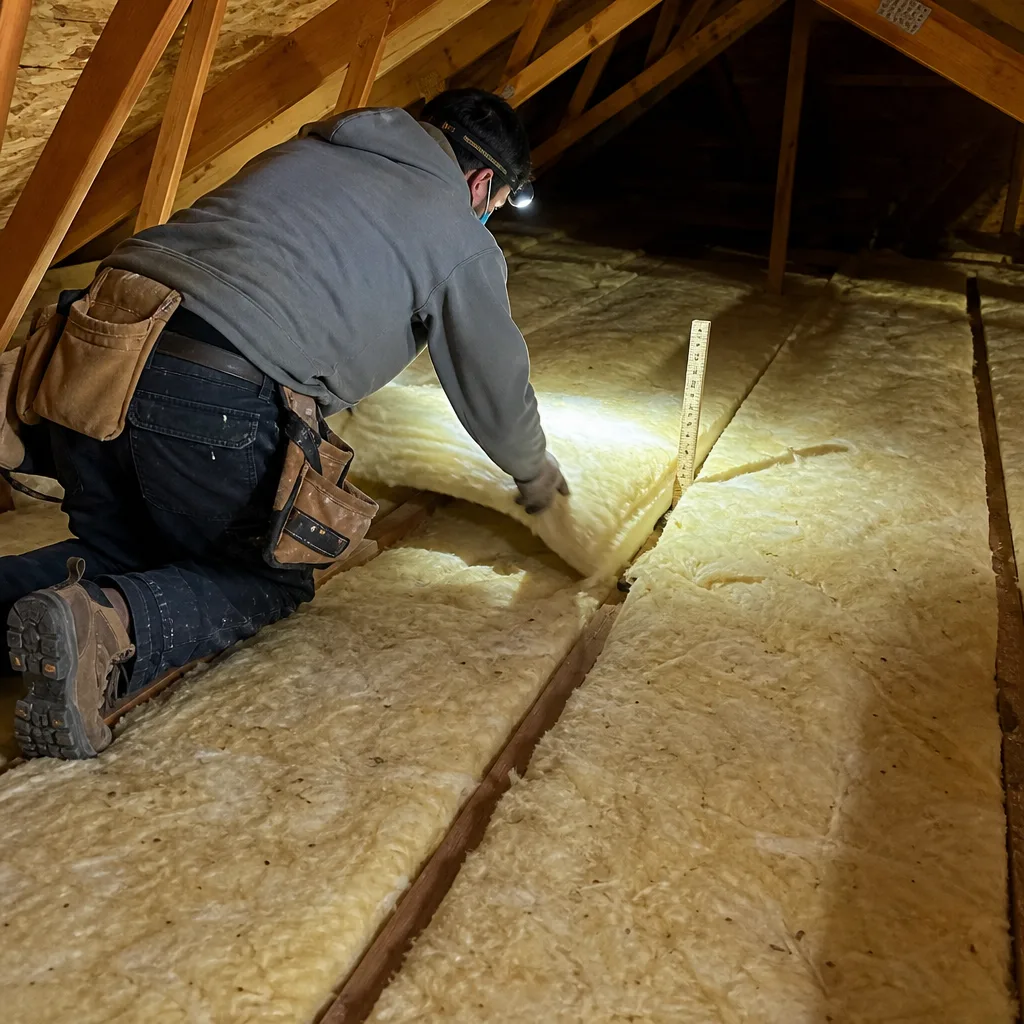
A brand’s marketing sheet is not evidence. A valid third-party test report is. Two report types carry the most weight, and knowing them lets you check any claim yourself.
The first is an ICC-ES evaluation report (often labeled ESR followed by a number). It’s an independent evaluation of whether a product complies with building code requirements, and it’s typically available on the manufacturer’s site or through ICC-ES directly. The second is an ASTM certification for the tested R-value and material properties. Together, they tell you the product has been evaluated by someone other than the company selling it.
Then comes the step most buyers skip: confirming the brand quoted is the brand that arrives. Check it in three ways:
- The written scope should name the exact product and manufacturer, not a generic “blown insulation.”
- Bags and drums carry brand labels with lot or batch numbers; ask to see the label at delivery.
- Match the delivered label to the scope and to the certification report you reviewed.
On every job we leave a Documented Photo Record, and on applicable jobs the label shots are part of it. That’s how a homeowner in Boulder City can confirm after the fact that the product specified is the product installed.
The Decision Matrix: Material, Then Spec, Then Brand
Brand selection is a real decision, just not the first one. Worked in the right order, it gets simple. Here’s the sequence that keeps you from overpaying for a name without buying performance.
- Material type first. Driven by the application zone and how the material performs in Boulder City’s climate. Attic flat, wall cavity, and crawlspace all point to different materials.
- Specification second. Settled density, required depth per R-value target, and R-value goal for your climate zone. These are numbers you write down and hold the contractor to.
- Brand third. Pick from the reputable manufacturers for your chosen material, then confirm it with a third-party certification and a labeled delivery. The brand is a check on quality, not a substitute for spec.
Get the order wrong and the common failure is paying a premium for a well-known name blown at the wrong depth, over an unsealed attic floor. That combination underperforms a mid-tier product installed correctly every time. Our technicians have up to 10 years of experience reading exactly this, and the first thing they look at is the attic floor, not the label.
Boulder City Applications: Attic, Wall, Crawlspace
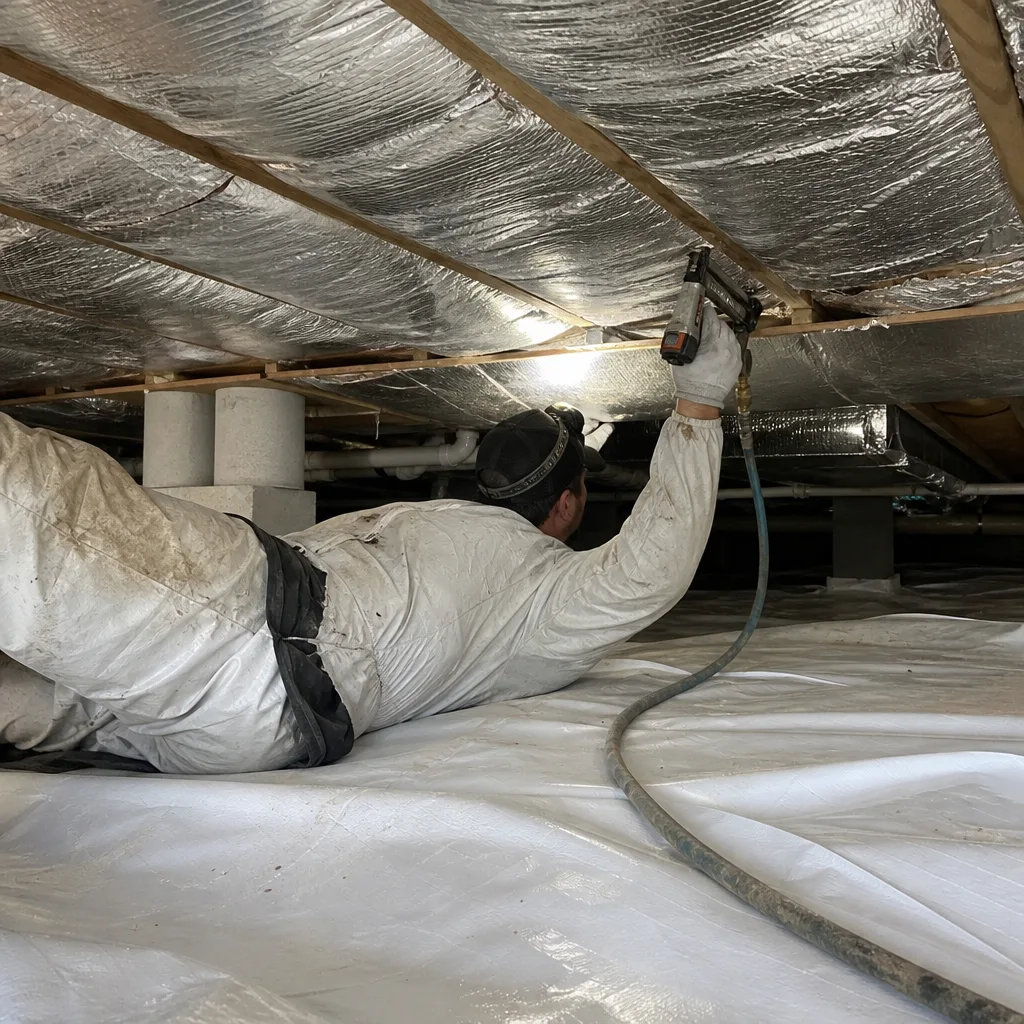
Each zone in a Boulder City home calls for its own material and specification. Here’s how the recommendation shakes out for a typical home built between 2015 and 2025.
Attic flat (the biggest lever). Blown fiberglass or cellulose at the correct settled density and depth to hit your R-value target. Cellulose holds temperature performance a bit better at our summer attic heats, and it’s often a fine choice if the supplier stocks GreenFiber or an equivalent. The other important piece is the air-sealing you do first – the Attic Insulation in Boulder City page covers that sequence in detail.
Wall cavity. Dense-packed blown material or injected spray foam where access allows; closed-cell foam is the more reliable choice when the cavity is a retrofit and you can’t guarantee packing density. Icynene and Demilec are the common brands here.
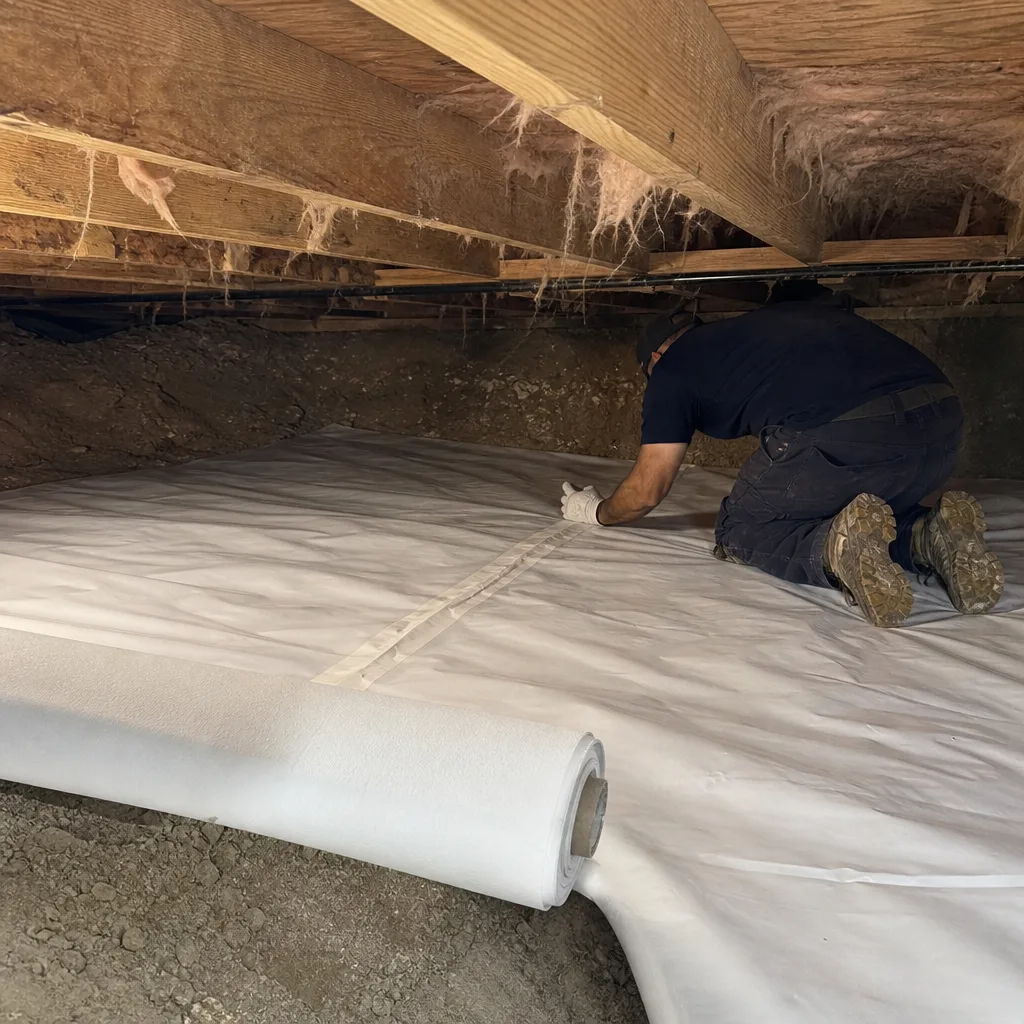
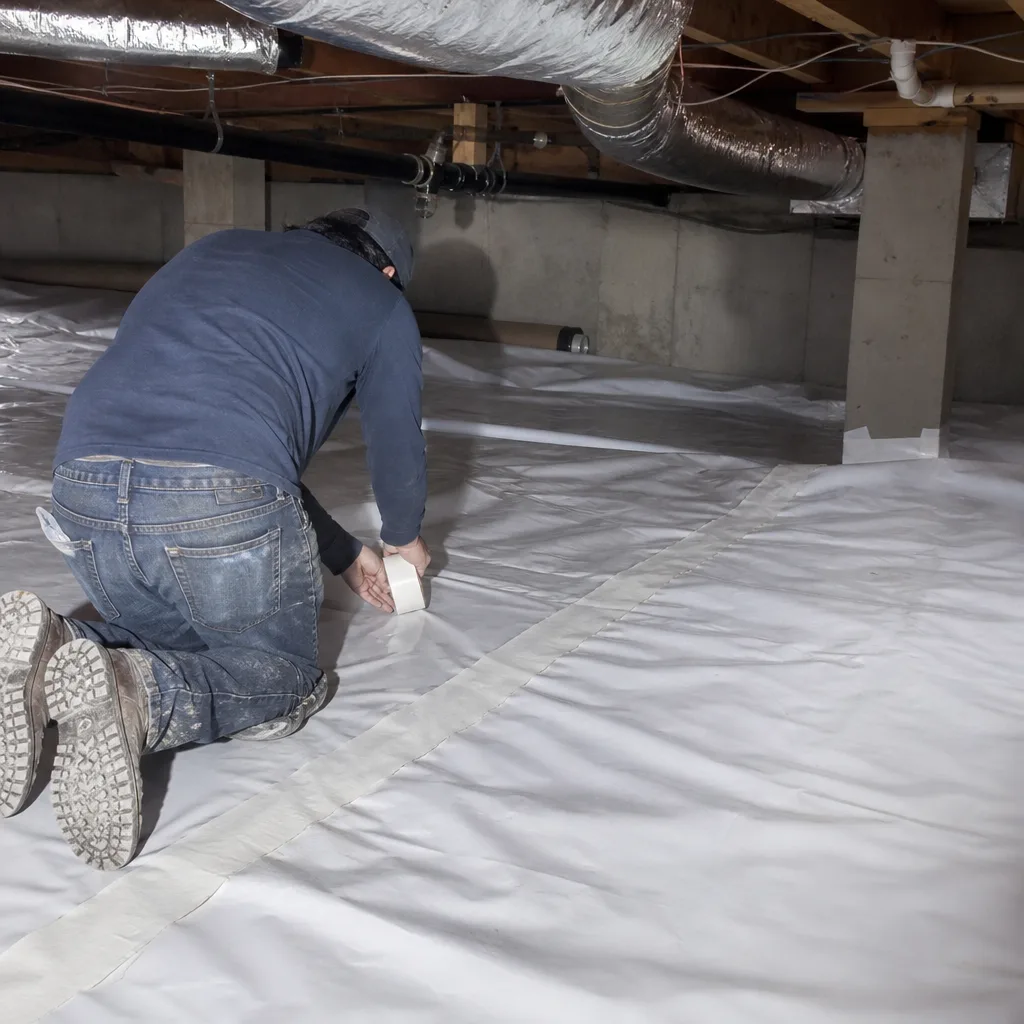
Crawlspace. This is where Boulder City’s dry soil and roof runoff patterns make moisture control the deciding factor. Encapsulation with a proper vapor barrier often matters more than any insulation brand in the crawl, and the Crawl Space Encapsulation & Vapor Barrier in Boulder City page explains why. Material and vapor control first, brand second.
Air Sealing Comes Before Any Insulation Brand
No insulation brand performs on an unsealed attic floor. Insulation resists heat flow; it does not stop air movement. Blow a premium product over an attic floor with open top plates, leaky can lights, and unsealed penetrations and you’ve spent money on a material that’s leaking conditioned air around its edges. The air finds the gaps, not the R-value.
The right sequence is to seal first, then insulate. Top plates, can lights, plumbing and electrical penetrations, and chases all get sealed before any insulation goes down. Then the material goes in, seated against a sealed surface where it can do its job. That’s why we treat air sealing as a hard prerequisite rather than an upsell, and why we publish before-and-after blower-door numbers on applicable jobs – a pressurization reading that shows, in a single figure, how much air the envelope was losing before and after. A number like 4,200 CFM50 before sealing and 2,100 after tells you exactly what you paid for.
When you’re evaluating any Boulder City contractor, ask whether they seal before they insulate and whether they’ll measure the result. If the answer is no to either, brand selection won’t save the job. Bring us a competing estimate and we’ll read it with you – a Free Second Opinion on any written estimate, no hassle.
Common Mistakes to Avoid
- Buying the brand before the spec. Choosing a well-known name without a written depth and density target leaves you with no way to confirm what you got. Write the spec, then the brand.
- Trusting the bag R-value at face value. That 75°F lab number overstates a Boulder City attic’s real performance. Compare installed performance, not the loose-fill rating.
- Insulating over an unsealed floor. Skipping air sealing is the costliest error here, and no brand fixes it. Seal top plates and penetrations first.
- Accepting a generic “blown insulation” line item. Insist the scope names the product, manufacturer, and depth. A vague line item is how the wrong material shows up.
- Never checking the delivered label. Product substituted on delivery is easy to catch if you look at the bag or drum. Ask to see it, and get it in the photo record.
- Skipping the crawlspace because the attic got done. Moisture control in the crawl drives the whole-house result in Boulder City’s dry, runoff-heavy conditions. Don’t neglect it.
- Assuming spray foam brand equals quality. Application skill, mix ratio, and prep decide the outcome. Question the process, not just the label.
When to Call a Professional
Call a professional whenever the job involves air sealing before insulation, spray foam in a wall or rim cavity, or any crawlspace encapsulation, because those decisions are easy to get wrong and expensive to redo. The material choice, the depth and density spec, and the brand confirmation all benefit from someone who does this daily. Our technicians have up to 10 years of experience, and we answer the phone with a live person 24/7. If you have spray foam, blown insulation, air sealing, or a crawlspace in your plans, Envelope Insulation Boulder City offers free estimates in Boulder City – call (844) 320-7926 and we’ll put a written price in your hands before any work starts. Bring a competing quote if you have one; a free second opinion is part of the deal.
Frequently Asked Questions
The best brand is the one matched to the right material and installed at the correct spec, but for most Boulder City attics that means a reputable blown product from CertainTeed, Owens Corning, or Johns Manville. For spray foam in walls or crawlspaces, Icynene and Demilec are common. Confirm the brand with a third-party certification and a labeled delivery, and call (844) 320-7926 for a free estimate.
Because R-value is measured at a 75°F lab mean temperature, while Boulder City attics run 120 – 130°F in summer, where effective R-value drops 8 – 12%. That gap means installed depth and density matter more than the label number. Call (844) 320-7926 for a written estimate that specifies depth and density.
For spray foam, the contractor matters more than the brand because mix ratio, application temperature, and substrate prep decide performance. For blown insulation, the spec matters more than the brand. In both cases the installer carries the outcome. Call (844) 320-7926 to talk through your job.
Check three things: the written scope should name the product and manufacturer, the delivered bag or drum should carry a brand label with a batch number, and that label should match the scope and a third-party ICC-ES or ASTM report. Call (844) 320-7926 for a documented, photo-recorded install.
Yes, always. Air sealing of top plates, can lights, and penetrations should happen before any insulation goes down, because insulation resists heat flow but does not stop air movement. We never blow over an unsealed attic floor. Call (844) 320-7926 for a free estimate that includes air sealing.
Yes. We remove and replace under-spec or poorly installed insulation, and we correct unsealed attics before putting new material in. Under our 365-Day Done Right Promise, if it’s not done right, we make it right on our own completed work. Call (844) 320-7926 for a free second opinion on any written estimate.
The Bottom Line
Choose material type first, then the specification in settled density and depth, then the brand. That order is what separates a Boulder City homeowner who buys performance from one who pays for a name. The labeled R-value overstates what you’ll get in a 120 – 130°F attic, so compare installed performance and write the spec down. Confirm the brand with a third-party report and a labeled delivery, and seal the attic before any insulation goes in. Do those things and the brand decision becomes the easy part. When you’re ready, the team at Envelope Insulation Boulder City can put a written price and a documented plan in front of you – call (844) 320-7926 for a free estimate.
Written by the team at Envelope Insulation Boulder City.