
Last updated November 17, 2026
The Complete Crawl Space Encapsulation & Vapor Barrier Guide for Boulder City Homeowners
Boulder City averages under four inches of rain a year, so it should be the last place on earth where a crawl space grows damp. Yet every August, we get the same call: the floor above the crawl space feels soft, or a musty smell has crept up through the registers. The culprit almost never is a wet slab. It is monsoon humidity pulled in through open foundation vents that condenses on cold ductwork and cool subfloor framing. That distinction matters because the fix is different from the standard encapsulation pitch. This guide covers what actually needs to go into a Boulder City crawl space assembly, how to tell the three kinds of moisture apart, and what the paperwork should look like when the job is finished.
Quick Answer
A crawl space encapsulation in Boulder City is not mainly a ground-moisture fix. It is a vapor-drive and duct-condensation control system. The correct assembly typically pairs a reinforced ground barrier (20-mil or heavier, not the 6-mil sheeting often quoted) with sealed and insulated duct runs, managed foundation vents, and mechanical dehumidification if the space is brought inside the conditioned envelope. Done right, it stops the August humidity problem; done as a generic moisture wrap, it usually fails within two summers.
Table of Contents
- Why Boulder City Crawl Spaces Get Wet in a Desert
- Three Kinds of Moisture and Three Different Fixes
- Vapor Barrier Specs That Actually Matter Here
- Nevada Code: Vented vs. Conditioned Crawl Spaces
- What the Written Scope of Work Must Include
- The Post-Job Documentation Package
- Duct Sealing and Insulation: The Half Everyone Skips
- What Encapsulation Costs in Boulder City
Why Boulder City Crawl Spaces Get Wet in a Desert
Boulder City sits at roughly 2,500 feet in the Mojave, with summer relative humidity that routinely drops into the teens. That dry air is exactly what makes the monsoon problem worse, not better. Dry framing and dry soil pull moisture greedily when humid air arrives in July and August. A closed-up crawl space that has baked all spring is a desiccant waiting for the first Gulf of California moisture surge.
The mechanics work like this. Warm, humid outdoor air enters through the foundation vents. Inside the crawl space, the supply and return ducts are running at 55 to 60 degrees. The humidity in that air hugs the cold metal and condenses. Within a few weeks you have standing water in the duct insulation jacket, saturated fiberglass around the ducts, and dark staining on the joists above. Homeowners often assume the slab is leaking or the plumbing is failing. In our experience, most Boulder City crawl space moisture calls trace back to duct condensation, not to groundwater.
The other local factor is soil. Boulder City sits on caliche and decomposed granite in most neighborhoods, and caliche drains poorly in the rare event it does rain. When a two-inch storm hits, water can pool against the foundation and find its way under the stem wall. That is a real problem, but it is a ground-sourced one, and it is not the August problem most homeowners are calling about.
Three Kinds of Moisture and Three Different Fixes
Before you approve any encapsulation quote, figure out which moisture problem you actually have. A contractor who quotes the same package to every home without diagnosing the source is selling a product, not a solution. Here is how to tell them apart.
- Ground-sourced moisture. Symptoms: damp soil, a wet or muddy crawl space floor after rain, efflorescence (white mineral crust) on the foundation walls, moisture readings high in the soil and low at the joists. Fix: a continuous reinforced ground barrier, sealed to the foundation walls, with no exposed soil.
- Duct-condensation moisture. Symptoms: water in the duct jacket, wet insulation around the ducts, rust on the duct boots, staining concentrated along the duct runs, complaints of a musty smell only when the AC runs. Fix: seal every duct joint with mastic or code-approved tape, insulate ducts to at least R-8, and address the source of the humid air (vent management or dehumidification).
- Infiltration moisture. Symptoms: moisture readings highest near the foundation vents, dust and debris accumulation near vents, musty smell during monsoon season only. Fix: close or regulate the vents (with a code-compliant conditioned-space design), air-seal the rim joist and penetrations, and control interior humidity.
Most Boulder City homes have a combination, but the dominant problem usually points to the right assembly. Our team runs these diagnostics on every crawl space encapsulation & vapor barrier in Boulder City project before we write the scope, because the number you see in the “before” reading only matters if you know what caused it.
Vapor Barrier Specs That Actually Matter Here
The most common encapsulation failure we see in Boulder City is a 6-mil poly barrier. That sheeting is thin enough to puncture on gravel, tears at the seams, and does not survive foot traffic during a service call. It is also the cheapest, which is why it shows up in entry-level quotes. In a desert climate where the barrier is asked to control both soil vapor and dust, 6-mil is the wrong tool.
Here is what the specification should say, at a minimum:
- Thickness: 20-mil reinforced polyethylene or a comparable woven or reinforced product. 12-mil is acceptable on a clean, gravel-free flat slab; 20-mil or heavier is the standard for homes with any debris, foot traffic, or a liner that will be inspected annually.
- Overlap: 12-inch minimum at all seams in a vented assembly, 12 to 18 inches in a conditioned assembly. The overlap should be taped with a compatible vapor-barrier tape rated for the material, not duct tape.
- Wall termination: the barrier runs up the foundation wall to the sill plate or to the top of the stem wall, mechanically fastened with a termination bar and sealed with mastic or vapor-barrier tape. A barrier that stops at the floor is a puddle liner, not a barrier.
- Penetration sealing: every pier, pipe, sump, and post base gets a fitted boot or a taped collar. Penetrations are the leak points.
- Reinforcement: a fabric or dimple mat under the barrier on rough soil prevents punctures. In caliche-heavy Boulder City soils, this matters more than in most markets.
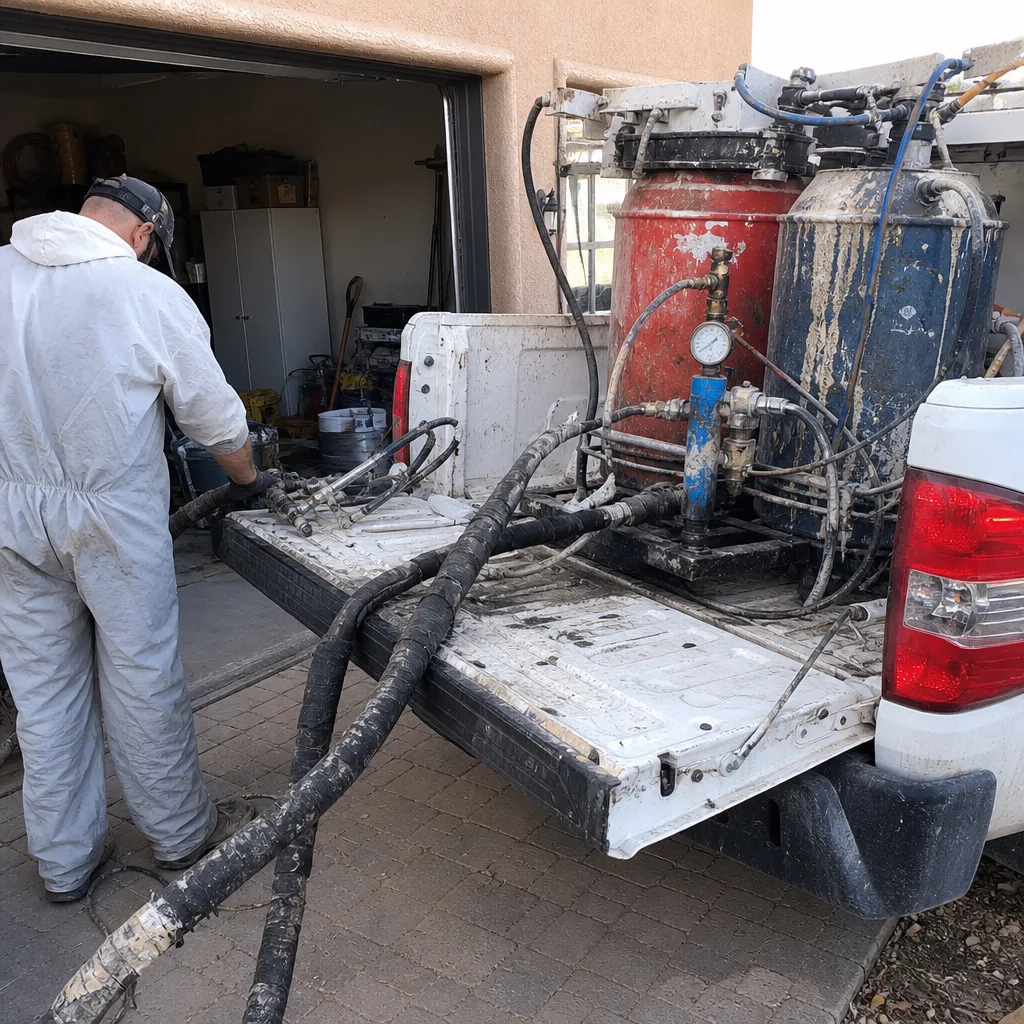
If you are sealing ducts as part of the same project, products like Icynene spray foam (used sparingly at duct boots and rim joists) fill gaps that mastic alone cannot reach, while Rockwool or Knauf batts wrap the ducts themselves. We source from those manufacturers so you are not locked into a proprietary product you cannot get serviced later.
Nevada Code: Vented vs. Conditioned Crawl Spaces
Nevada adoption of the International Residential Code (IRC) governs how crawl spaces are required to ventilate. The two legal paths are:
- A vented crawl space with a ground cover and open foundation vents sized to code. In this path, the encapsulation is a ground barrier plus vent management. The space remains outside the conditioned envelope.
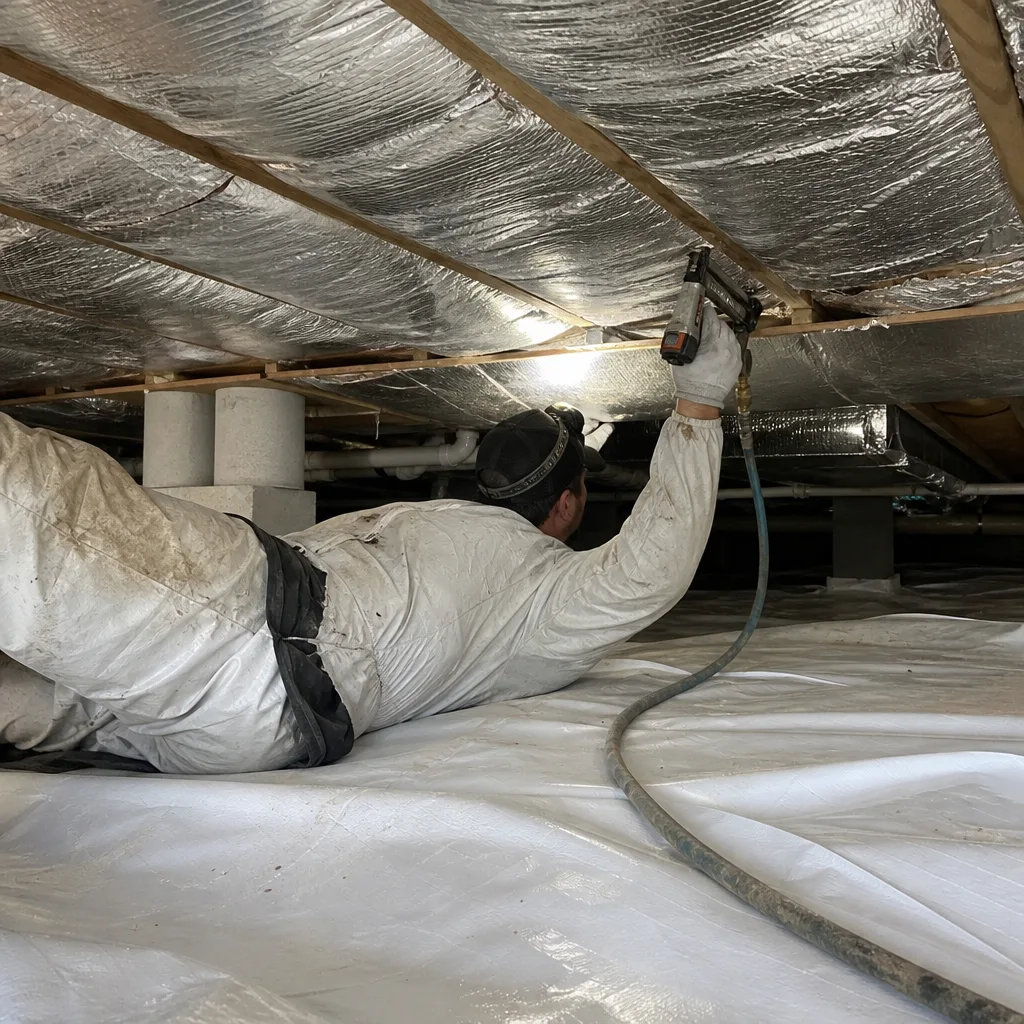
- A conditioned crawl space with the vents sealed and the space brought inside the building envelope. This path requires a continuous sealed barrier at the walls and floor, and typically requires mechanical air movement or dehumidification and ductwork within the space.
This is the design choice most Boulder City homeowners have never been asked to make. It matters, because the vented path is cheaper up front and often fails in monsoon humidity, while the conditioned path is more expensive and reliably solves duct condensation. A full encapsulation of a vented space is technically a code conflict unless the vents are also addressed, which is why a permitting conversation belongs early in the project, not after the liner is unrolled.
In Boulder City, a full conditioned-space encapsulation, or any structural change to the crawl space access or stem wall, will typically require a permit through the city building department. That means a written scope, a drawing or sketch, and a documented inspection at rough-in and final. If a contractor tells you encapsulation never needs a permit, ask them to put that in writing. In our experience, the written price and the permit go together, and any contractor who is uncomfortable with both is a contractor to skip.
What the Written Scope of Work Must Include
The scope is the document you will rely on if anything goes wrong. Before work starts, you should be holding a written price with the following line items spelled out. No exceptions.
- Ground coverage percentage. A true encapsulation is 100% of the exposed ground. If the scope says 90%, ask why. A partial cover leaves a vapor source.
- Seam overlap dimension and taping method. Specific inches, specific tape product, and whether overlaps are taped or just overlapped.
- Penetration sealing method. How each pier, post, pipe, and drain is sealed, and with what material.
- Wall termination height and fastening. How far up the wall the barrier runs and how it is mechanically secured.
- Vent management design. Which vents are closed, which remain, and how the decision matches the code path chosen above.
- Drainage provisions. Where any future water goes. A sump, a pit, a slope between the barrier and the footing. In caliche soils, this is not optional.
- Duct sealing scope, if included. Number of joints, method, and testing. A duct sealing scope without a before-and-after pressure or leakage reading is a promise, not a specification.
- Warranty and material spec sheet. Written warranty term, materials brand, and manufacturer warranty documentation attached to the scope.
This is the same principle we apply to every part of the building envelope, including our attic insulation in Boulder City work: if the scope is not in writing, you cannot verify it was done. Under The Haven Standard, a written price, scope, and warranty are delivered before anyone lifts a tool.
The Post-Job Documentation Package
The encapsulation is not finished when the crew leaves. It is finished when you have a documentation package you could hand to a buyer, a home inspector, or a future contractor. The package should include:
- Relative humidity readings in the crawl space before work started and after the system stabilized (usually within a week). A single time-stamped reading on completion day is not enough; humidity equilibrates slowly.
- Photo record of the seam coverage including the wall termination, every pier, and any taping that will be under-passed by an inspector.
- The written material specification with the barrier brand and mil thickness, tape product, and any duct sealing material, tied to the manufacturer warranty.
- Before-and-after blower-door numbers, when applicable. This is the air-sealing verification. On applicable jobs, we publish the CFM50 reading before and after so you can see, in one figure, whether the assembly is actually tightening the house.
- A written warranty statement covering labor and materials, with the term and the trigger conditions spelled out.
Ask any Boulder City contractor for a sample documentation package before signing. The contractors who do this well hand theirs over without a pause.
Duct Sealing and Insulation: The Half Everyone Skips
Here is the part that separates a Boulder City encapsulation from the standard pitch. If you seal the ground and manage the vents but leave the ducts unsealed and under-insulated, the August condensation problem usually returns, just in a different spot. Duct leakage in an unconditioned crawl space pulls humid outdoor air into the return side and blows conditioned air out into the cavity. That air is what condenses on the cold supply runs.
The fix has three pieces. First, seal every accessible joint: mastic on the hard joints, code-approved tape on the flex, spray foam or a cartridge sealant at the boots. Second, insulate the ducts to at least R-8 in the unconditioned assembly; R-6 was the old standard and is not enough in a Boulder City monsoon. Third, verify. A duct leakage test or a blower-door reading after sealing shows whether the assembly is leak-tight enough to hold the encapsulation result.
If you are also addressing the attic above, spray foam insulation in Boulder City can be used at the rim joists and duct boots to close the penetrations that the crawl-space barrier cannot reach. And if you want a home-wide view of where air is leaving, our Envelope Insulation Boulder City home energy audit page walks through the testing.
What Encapsulation Costs in Boulder City
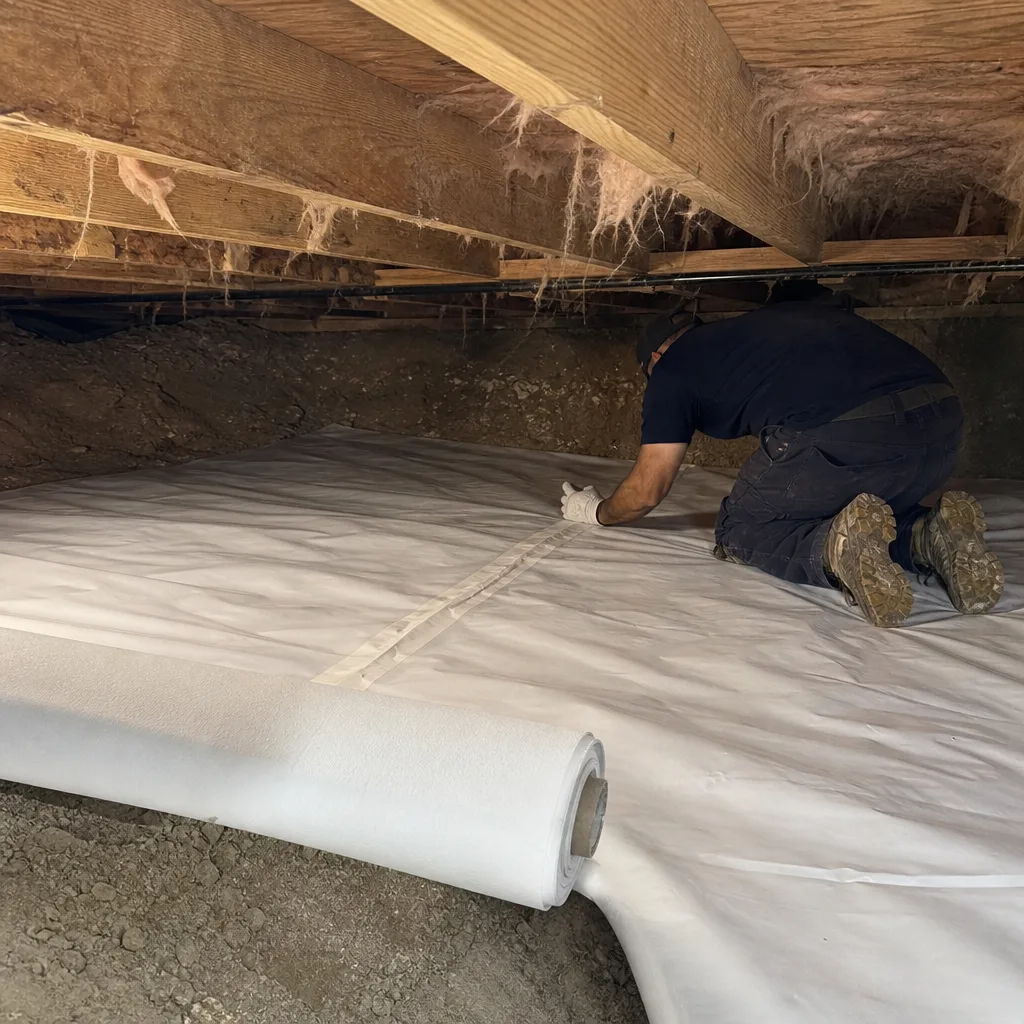
Boulder City encapsulation pricing tracks the assembly choice, barrier thickness, and whether duct work is included. Line-item ranges you can expect in the local market:
- Ground barrier only, 20-mil reinforced, 100% coverage, wall termination and penetration sealing: $1,800 to $3,400 for a typical 1,000 to 1,600 square foot crawl space.
- Barrier plus vent management to the conditioned-space path: add $400 to $900, depending on the number of vents and whether a crawl space dehumidifier is included.
- Duct sealing across a typical single-story Boulder City home: $600 to $1,400.
- Duct insulation to R-8: $900 to $1,800, depending on run length.
- Permit and inspection fees through the city: typically $150 to $350, pass-through.
For most Boulder City homes, a full assembly (barrier, vents, ducts, documentation) lands between $3,200 and $6,500. The cheapest quoted encapsulation you will see in the market is almost always the 6-mil ground barrier with no duct work, and it is the assembly that most often requires replacement within a few years. Get the assembly you actually need, in writing, with the documentation package included.
Common Mistakes to Avoid
- Accepting 6-mil sheeting because it is what the quote lists. In desert soils with any foot traffic, 6-mil tears at the first service call. Ask for 20-mil reinforced or a spec sheet that justifies anything lighter.
- Encapsulating without addressing ducts. Sealing the ground while leaving the ducts open almost guarantees the August condensation problem returns, sometimes worse, because the humidity is now trapped under the barrier.
- Skipping the vent decision. A sealed barrier with open vents is a code conflict in most jurisdictions. Ask the contractor which code path (vented or conditioned) they are designing to.
- No permit on a structural crawl space change. Any change to the access, stem wall, or removal of existing vents typically needs a permit. An encapsulation company that avoids permits is a company that will not document its work.
- A one-time humidity reading. A completion-day reading proves nothing. Insist on a before-work reading and a post-equilibration reading.
- No drainage provision. Even in a low-rainfall city, a single two-inch storm can push water against the foundation. The scope should say where that water goes.
- No duct leakage verification. Duct sealing without a before-and-after reading is an assumption, not a measurement.
When to Call a Professional
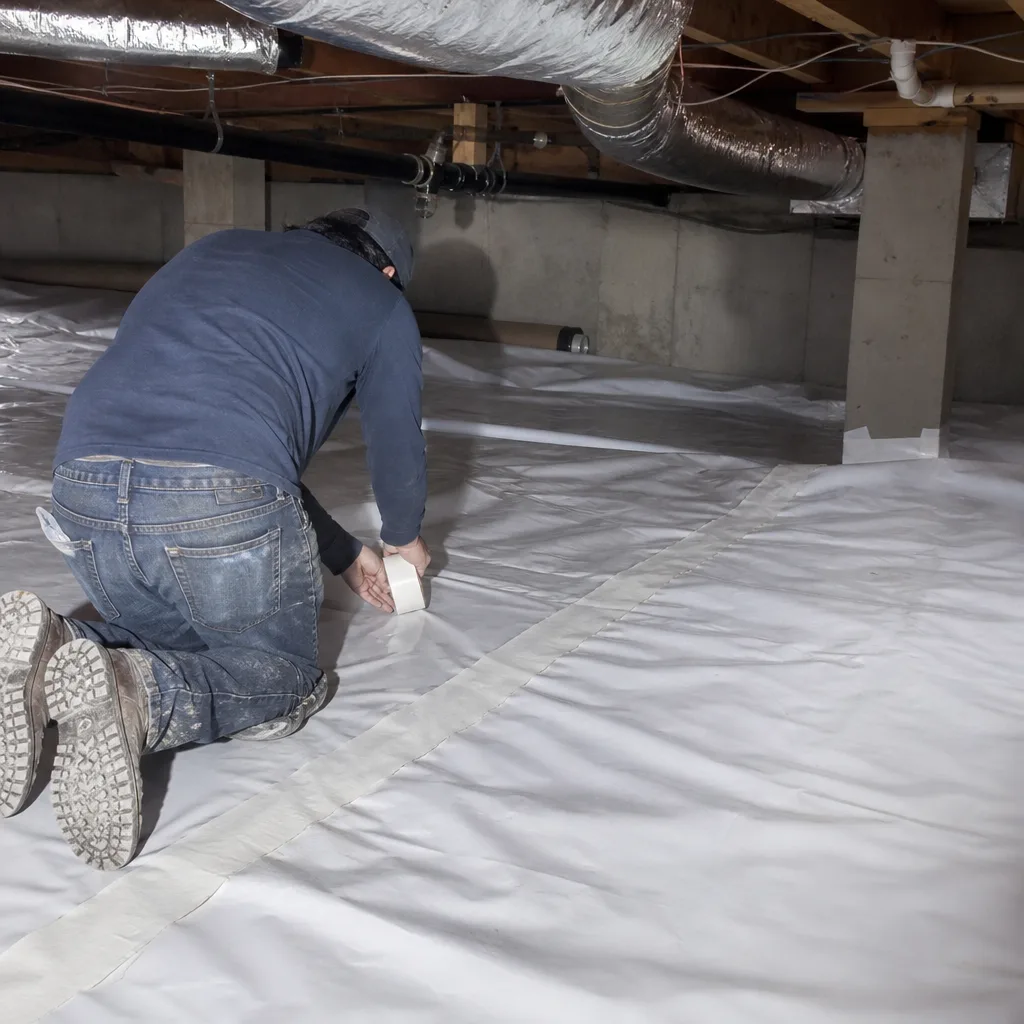
If you see wet insulation around the ducts, rust on the duct boots, dark staining on the joists, a musty smell that appears only in monsoon season, or soft spots in the floor above the crawl space, that is a call-a-professional moment. Crawl space work involves confined-space entry, potential for hidden electrical or gas lines, and, in caliche soils, a very real risk of puncturing a drain or water line while digging a sump. It also involves code decisions (vented versus conditioned assembly) that require a permit and an inspection. We do not recommend DIY encapsulation for the same reason we do not recommend DIY electrical: the failure mode is slow, hidden, and expensive to correct. Envelope Insulation Boulder City offers free estimates in Boulder City. Call (844) 320-7926 and we will schedule a diagnostic visit and hand you a written scope before anything starts.
Frequently Asked Questions
Most Boulder City encapsulation projects land between $3,200 and $6,500 for a full assembly that includes a 20-mil reinforced ground barrier, vent management, duct sealing, and the documentation package. A ground-barrier-only job runs $1,800 to $3,400. Call (844) 320-7926 for an exact quote built from your crawl space’s actual conditions.
If the space is genuinely dry and the ducts are sealed and insulated, encapsulation may only need to be a ground barrier and vent screening. But “dry today” in Boulder City is not the same as “dry in August.” A diagnostic visit with humidity and moisture readings tells you whether you have a real problem or just need monitoring. That diagnostic is free; call (844) 320-7926 to schedule it.
20-mil reinforced polyethylene is the practical minimum for most Boulder City crawl spaces, especially where the barrier will see foot traffic during HVAC service. 12-mil is workable on a clean slab; 6-mil sheeting tears too easily and is the most common cause of a re-do. Call (844) 320-7926 with the dimensions of your crawl space and we will quote the right thickness for your conditions.
No, but it is one of two code-compliant paths (the other is a vented assembly with a proper ground cover). Most Boulder City ducts run in the crawl space, and a conditioned design is often the only reliable way to stop the monsoon condensation problem. Call (844) 320-7926 to discuss which path makes sense for your home’s layout.
Yes, if the smell is coming from the crawl space, which is the usual case in Boulder City homes. Musty smell is a symptom of moisture, duct condensation, or mold growth on the framing. Encapsulation stops the moisture source; the smell follows. Call (844) 320-7926 for an inspection before the problem spreads into the living space.
Most Boulder City crawl space projects (barrier, vents, duct sealing) run one to two working days, depending on crawl space size and duct runs. We confirm the schedule in the written scope. Call (844) 320-7926 to get yours started.
The Bottom Line
Crawl space encapsulation in Boulder City is not a moisture blanket for wet ground. It is a humidity and duct-condensation control system for a desert climate that gets surprisingly humid every August. The assembly that works specifies a 20-mil reinforced ground barrier with taped 12-inch overlaps and sealed penetrations, a documented vent-management decision matched to the Nevada code path, and sealed and insulated ducts verified with before-and-after readings. The paperwork matters as much as the materials: a written scope with coverage percentages, a photo record of the seams, and a post-equilibration humidity reading. Get those in writing and you will get a Boulder City crawl space that stays dry through the monsoon, not just the week the crew leaves.
Written by the team at Envelope Insulation Boulder City.