
Last updated November 17, 2026
Attic Insulation Maintenance Checklist for Boulder City Homeowners
Blown fiberglass compacts roughly 1 inch per decade under its own weight in a hot attic, so a Boulder City attic insulated to R-38 in 2010 may be sitting closer to R-30 today with no visible damage at all. Nothing tears, nothing stains the ceiling, and nothing announces the loss. The insulation just gets thinner and less effective while the summer electric bill creeps up a little each July. This checklist gives you the specific inspection criteria we use on Boulder City homes, tied to the wind, dust, and heat this valley produces, so you can see the problem before it costs you a season of comfort.
Quick Answer
A proper attic insulation maintenance check in Boulder City covers four things: measure settled depth against the depth you paid for, look for wind-scoured bare spots near eave vents, check for rodent compaction, and confirm the attic floor was air sealed before any material went down. If measured R-value has dropped below code minimum, or your home tests above 7 ACH50 on a blower-door test, the check has become a remediation job and needs professional verification. Most Boulder City attics need this review every 3 to 5 years, not annually.
Table of Contents
- Why Attic Insulation Fails in Boulder City
- Step 1: Measure Settled Depth Against Installed Ruler Stakes
- Step 2: Run the Room-by-Room Ceiling Temperature Test
- Step 3: Check for Wind Infiltration at Soffit and Ridge Vents
- Step 4: Identify Rodent Compaction vs. Normal Settling
- Step 5: Confirm Air Sealing Came Before Insulation
- The Threshold: When a Check Becomes a Remediation Job
- How Often to Repeat This Checklist in Boulder City
Why Attic Insulation Fails in Boulder City
Insulation in Boulder City doesn’t degrade the way homeowners expect. It doesn’t rot, shred, or disintegrate on a schedule. It loses performance through three predictable sequences, and each one leaves a signature you can measure with a flashlight and a tape measure.
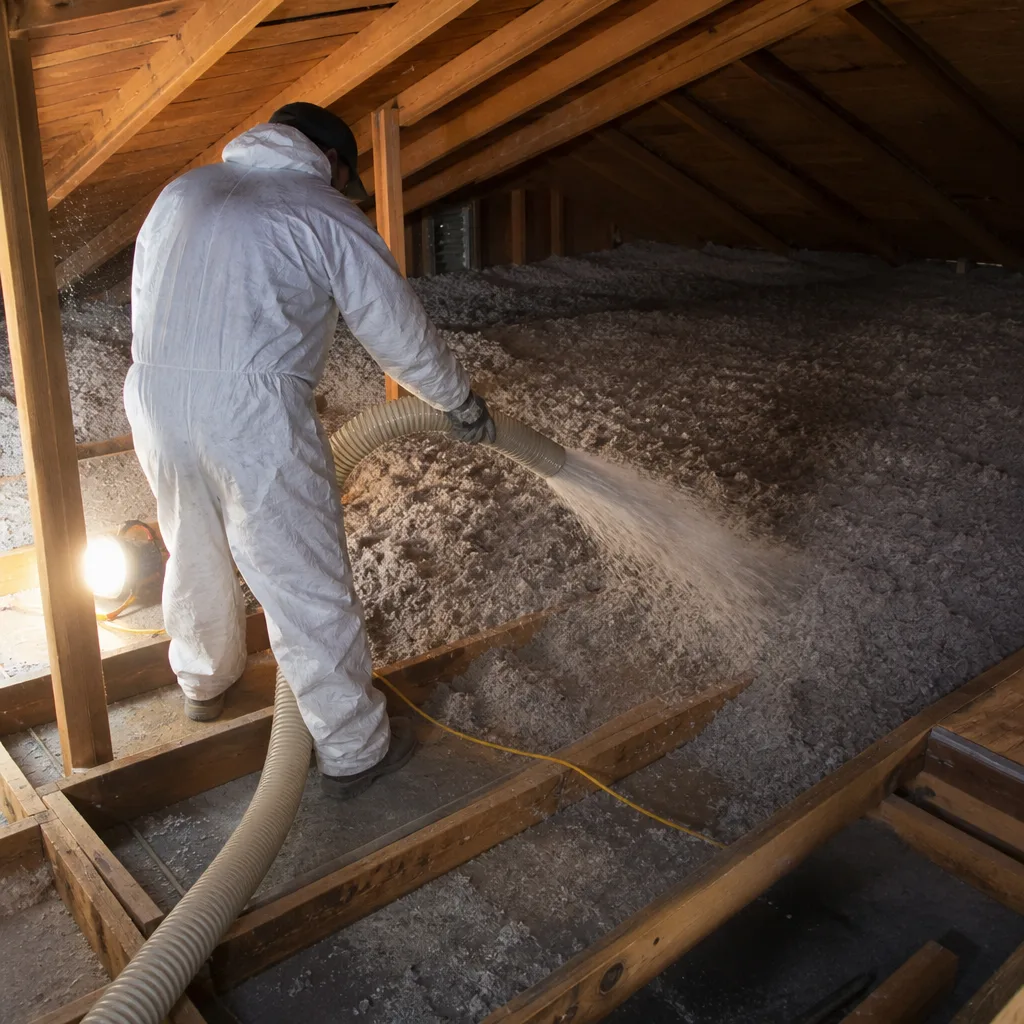
The first is settling. Blown fiberglass and cellulose both compact under their own weight, and a hot, dry attic accelerates the process because material that stays dry and undisturbed compacts faster than material that gets occasional humidity. The second is wind infiltration. Boulder City sits high on the Colorado River corridor and takes consistent wind through soffit and ridge venting, and loose-fill near the eaves gets scoured away from the vent bays over time. The third is rodent compaction. Desert pack rats and field mice tunnel through loose-fill, and the material that gets pushed or soiled performs at a fraction of its rated value even though the depth reads close to normal.
What makes this tricky is that all three problems look like a fine attic from the hatch. Depth looks reasonable, the ceiling isn’t stained, and the HVAC still runs. The only way to catch it before it becomes a comfort complaint is to measure, not eyeball. Our technicians have up to 10 years of experience in this climate, and the pattern is consistent: the homes that fail a blower-door test after a top-off are almost always the ones where air sealing was skipped. That’s why we treat sealing as a hard prerequisite, not an add-on. You can see how that sequence works on our attic insulation for Boulder City homes page.
Step 1: Measure Settled Depth Against Installed Ruler Stakes
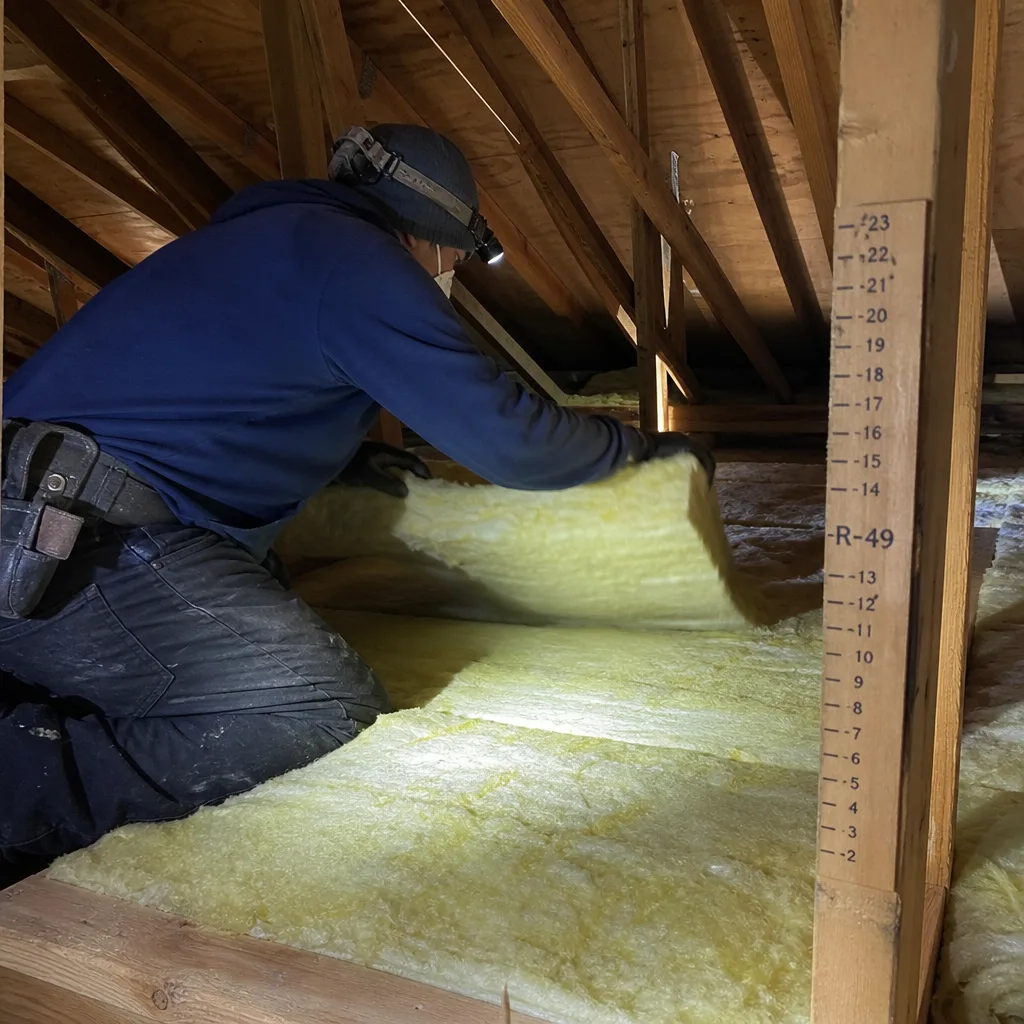
Every blown-in insulation installation should leave ruler stakes in place, and those stakes are the fastest check you can run. Modern installation standards under the IECC require the installer to leave depth markers at regular intervals and post the achieved R-value in the attic. Find them, then read them against what’s actually there.
- Find the ruler stakes. They’re rigid plastic or cardboard markers pushed into the insulation at roughly 300-square-foot intervals. There should be at least four in a typical Boulder City single-story attic.
- Read the number at the settled surface. A stake marked for R-38 fiberglass should read about 12 to 14 inches installed. If the settled depth is 10 inches, you’ve lost roughly 2 to 4 inches of effective depth.
- Record every stake reading. A wide spread between stakes (say 8 inches at one and 13 at another) tells you something has moved material around, usually wind at the eaves.
- Multiply depth by the settled R-value per inch. Fiberglass runs about R-2.5 to R-3.0 per inch settled, cellulose about R-3.2 to R-3.8. Compare the result against your local code minimum, which for a Boulder City attic in a typical wood-frame home is R-38.
If you don’t find stakes, that tells you something too: the original job wasn’t documented to installation standards. That’s the moment to bring in a written scope and a documented photo record so the next check has a baseline to work from.
Step 2: Run the Room-by-Room Ceiling Temperature Test
You don’t need a thermal camera to find insulation voids. A $20 infrared thermometer from any hardware store will do the job, and the test takes about 15 minutes on a hot Boulder City afternoon.
- Pick a day above 95°F. Mid-afternoon in July or August gives you the widest indoor-outdoor differential and the clearest readings.
- Point the thermometer at the ceiling in each room. Hold it 12 to 18 inches from the drywall and note the temperature. Do this in the center of each room and again near the perimeter walls.
- Compare ceilings to interior walls. A ceiling within 3°F of an interior wall in the same room is likely performing normally. A ceiling running 8°F to 15°F hotter than the adjacent wall almost always means a void, a settled area, or a compressed batt above that spot.
- Map the hot spots. Voids typically cluster near can lights, bathroom exhaust fans, and the attic hatch. Note their locations on a sketch you can bring to an inspection.
This test won’t tell you why the ceiling is hot, only where to look. But it’s a genuinely useful first-pass indicator, and it lets you walk into a professional conversation with room-by-room data instead of a general complaint that the house feels warm.
Step 3: Check for Wind Infiltration at Soffit and Ridge Vents
Boulder City tract homes from the 1990s through the 2010s share a common venting pattern: continuous soffit vents along the eaves feeding a ridge vent at the peak, with the roof framed with a low pitch that keeps the attic shallow. That configuration works well for passive ventilation, and it also turns every wind event into a pressure cycle on the loose-fill near the eave bays.
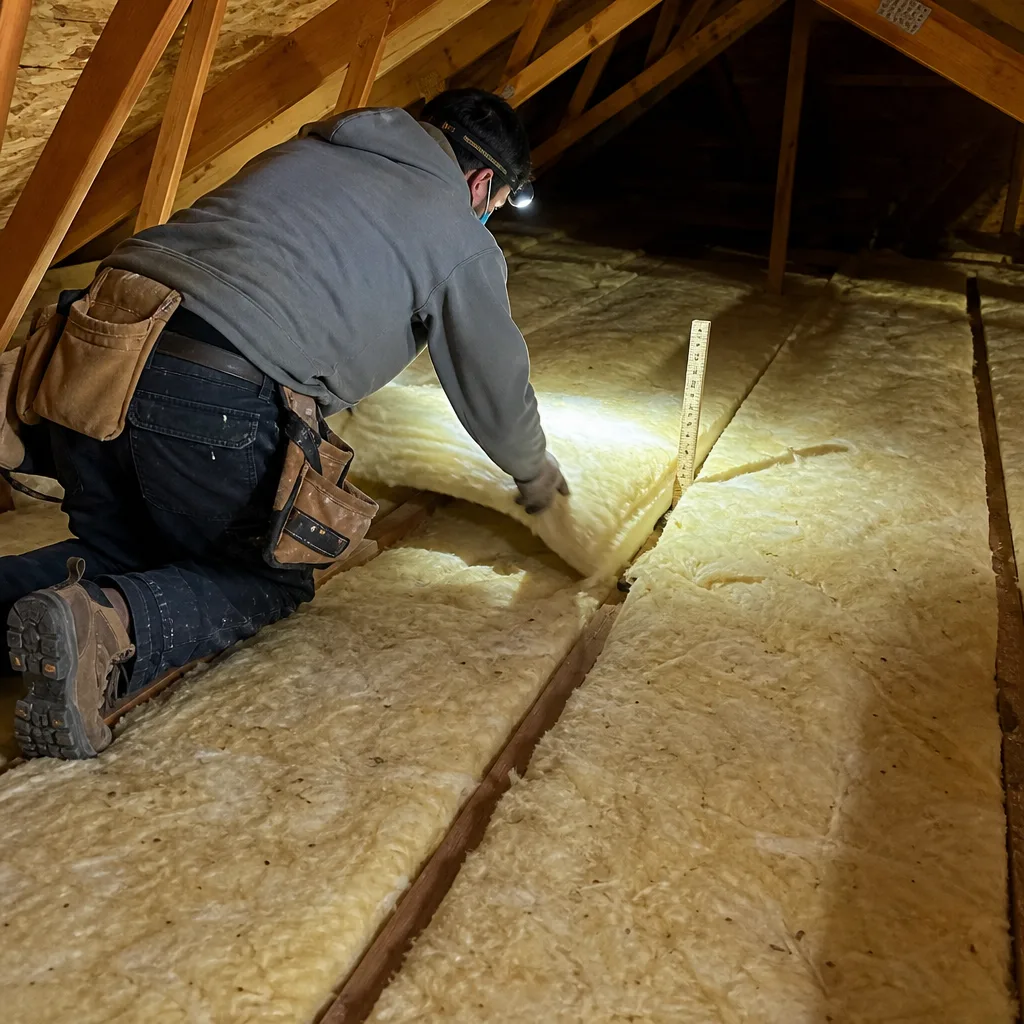
Here’s what to look for. Go into the attic with a flashlight and check the last 24 inches of insulation between the top plate and the eave. In a healthy attic, the material sits flush against the soffit baffle and stays roughly the same depth as the center of the attic floor. In a wind-scoured attic, you’ll see bare drywall, bare top plates, or a lighter drift of material pushed toward the center of the ceiling field.
- Wind-scoured eave bays: bare drywall within 18 to 24 inches of the soffit, with material drifting toward the middle of the attic.
- Baffle gaps: soffit baffles that have pulled loose or were never installed, letting wind drive directly into the loose-fill.
- Daylight at the ridge: visible daylight at the ridge vent is normal for an open vent, but a wind-driven dust streak along one side of the ridge tells you air is moving harder than the vent was designed for.
A note of caution: don’t crawl out to the eave bays yourself if the attic is shallow or the roof pitch is low. Walking near the eave line on the ceiling drywall side is where most attic falls happen. Photograph the bays from the hatch area and let someone trained to move safely in the attic do the inspection.
Step 4: Identify Rodent Compaction vs. Normal Settling
Rodent compaction and normal settling look different once you know the signature, and mistaking one for the other wastes money. Settled insulation is uniform: consistent depth across the field, a smooth settled surface, and readings that match the ruler stakes within an inch or two. Rodent compaction is uneven and directional.
- Settled insulation: even depth, smooth surface, ruler stakes match, no tunneling.
- Rodent compaction: visible tunnels 3 to 5 inches wide running along joists or against the top plate, compressed material at tunnel edges, and a hard-packed feel when you press a gloved hand into it. Droppings, dark urine staining, and gnawed soffit baffles confirm the pattern.
Rodent-compacted insulation performs far below its rated value even when the calibrated depth reads normal, because the point of loose-fill is trapped air and compacted material has lost the air space. Top-off won’t fix it. If you have rodent activity in the attic, the sequence is: remove the soiled material, air seal the attic floor, rodent-proof the entry points (typically the eave returns, plumbing penetrations, and the ridge cap seams), then re-insulate to full depth.
This is also the step where we see the biggest performance gap in Boulder City homes from the drought years. Drier material stays loose longer, but the desert pack rat pressure pushes harder, and attics that have never been rodent-proofed tend to fail the four-to-five-year interval review more often than attics that were. If your last work included rodent proofing, our team on crawl space encapsulation and vapor barrier in Boulder City can confirm the entry points and tie the attic work to the rest of the envelope.
Step 5: Confirm Air Sealing Came Before Insulation
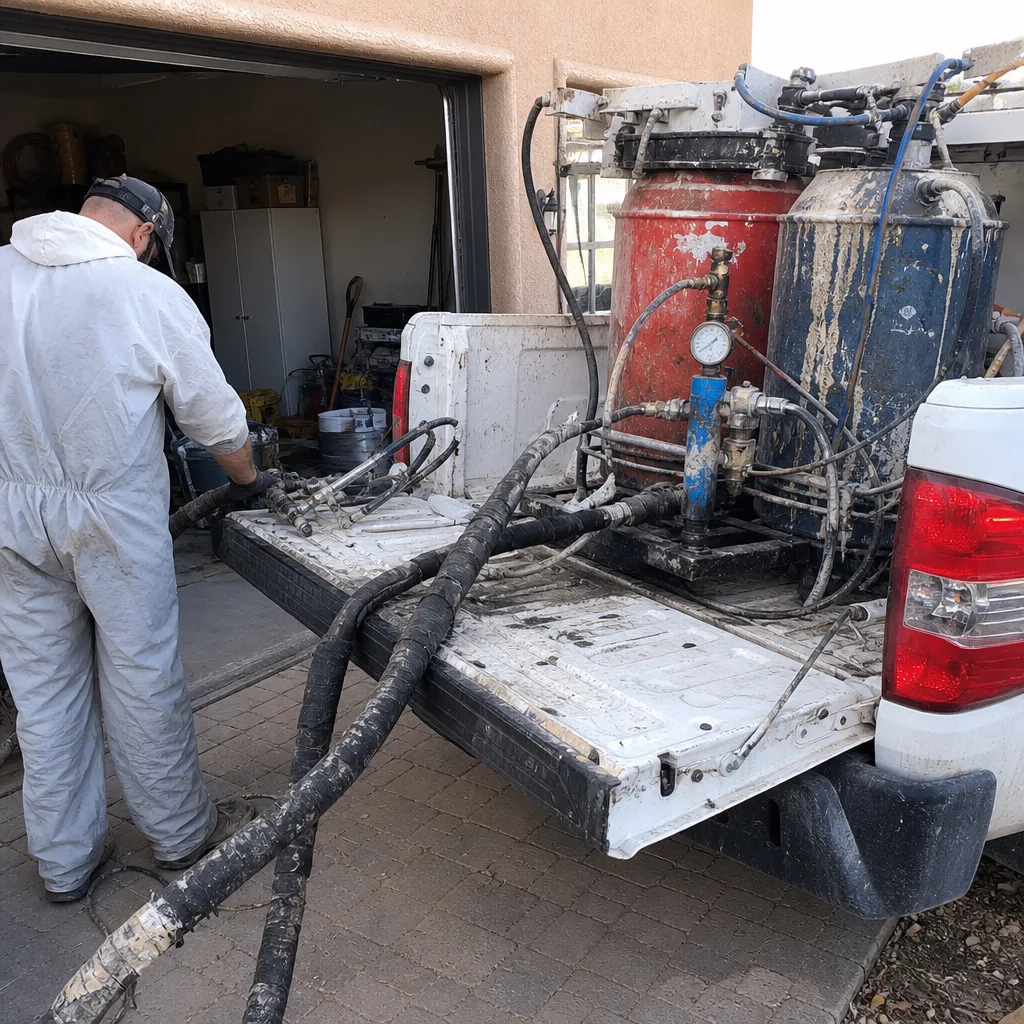
Air sealing is what stops warm air from escaping the conditioned space into the attic, and it has to be done before insulation covers the surface, not after. In a Boulder City attic, the check is straightforward: lift a few inches of insulation at the top plate and look for foam, caulk, or gasket material at the penetrations. If you see raw drywall and bare top plates underneath clean insulation, the original job was a top-off without a seal.
We treat sealing as a hard prerequisite, in that order, for a simple reason. Insulation slows heat transfer; air sealing stops air movement. Blowing material over an unsealed attic floor leaves the leaks in place and traps them, which is why two identical homes in Boulder City can show wildly different blower-door numbers even when both were insulated to the same R-value. Blower-door testing is a pressurization measurement that shows, in one number, how much air your building envelope is losing. The typical unsealed Boulder City attic tests between 6 and 12 ACH50; a sealed and insulated attic typically lands between 2.5 and 5 ACH50 depending on the house.
Look for the evidence at the penetrations you can reach from the hatch: can lights, plumbing stacks, the furnace flue, bathroom exhaust fan housings, top plates around the perimeter, and the hatch itself. Caution here is real: the furnace flue, gas lines, and any chimney pass-through are not DIY territory. A flue sealed with the wrong material is a fire or carbon monoxide problem, and that part of the check belongs to a trained professional. You can see how the sequence works in practice on our spray foam insulation in Boulder City page.
The Threshold: When a Check Becomes a Remediation Job
Most homeowners want a clear line between “keep watching it” and “fix it.” We use two hard thresholds and recommend treating either one as a trigger for a professional inspection.
- Measured R-value below code minimum. For a Boulder City attic, that’s an effective R-38. If your settled depth times R-per-inch comes out below that, the attic needs a top-off at minimum, and often a full remediation if the material is compacted or compromised.
- Blower-door reading above 7 ACH50. That’s the air leakage threshold where the envelope is losing enough conditioned air to change your energy bill and comfort regardless of how much insulation sits on the floor. A home testing above 7 ACH50 needs air sealing before any new material goes down.
Other triggers worth a call: measured ceiling temperature differential above 10°F in more than two rooms, confirmed rodent activity in the attic, visible moisture staining at the ceiling plane, or insulation that has pulled away from the top plate by more than 4 inches in multiple locations. In a home with any of those, a maintenance check has become a remediation job, and remediation ends with a blower-door verification so the homeowner can see the change in a single number. That’s the whole point of the measurement, and it’s why we publish before-and-after readings on every job rather than a written “we improved your efficiency” letter. For a full walkthrough of what an inspection covers, see our Envelope Insulation Boulder City home services page.
How Often to Repeat This Checklist in Boulder City
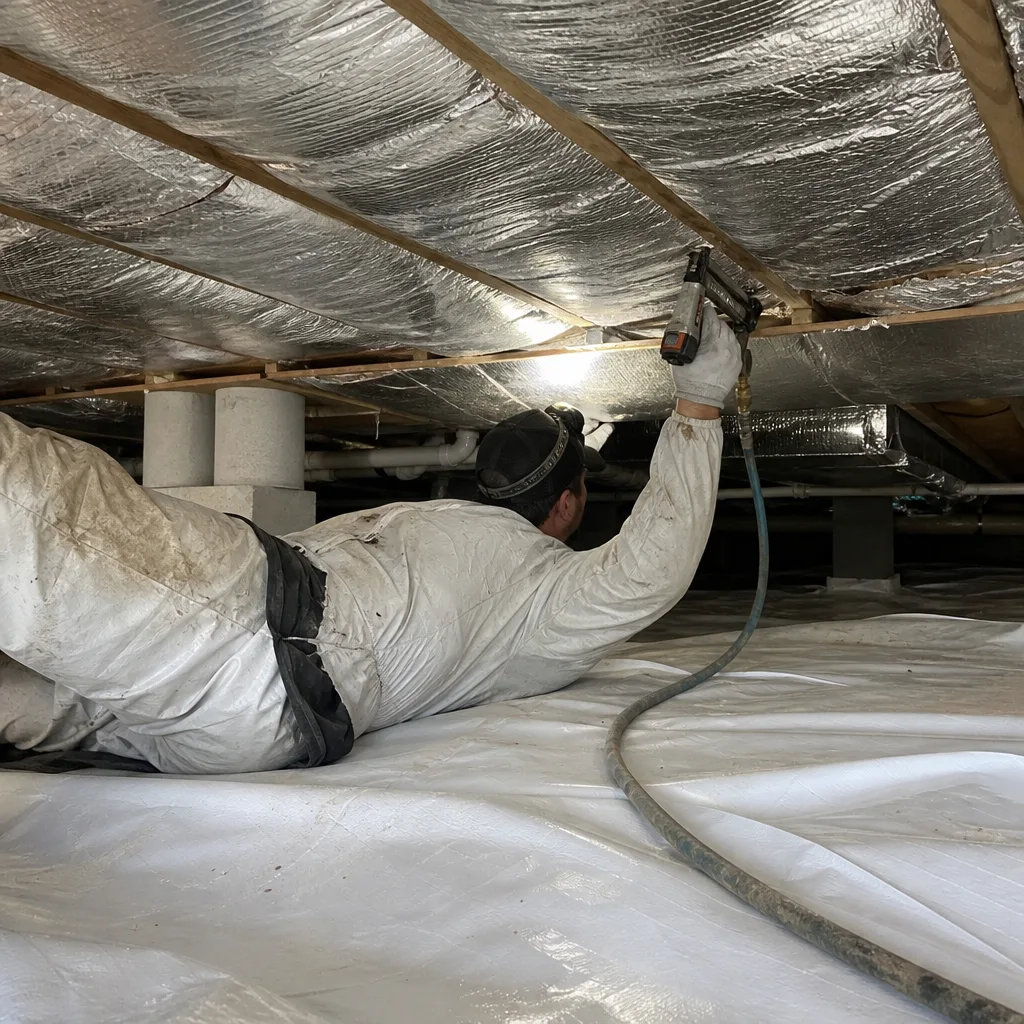
The calendar is less useful than the conditions, but a few intervals hold up well here. Check the ruler stakes and the eave bays every 3 to 5 years. Run the ceiling temperature test every summer, ideally in the same two-week window so readings are comparable year over year. Do a rodent compaction check every 2 years if you’ve previously had activity or if your home backs onto open desert, which describes most of the neighborhoods along the edge of Boulder City. And get a professional blower-door verification every 5 to 7 years, or any time you’re about to spend money on HVAC work that might be masking an envelope problem.
Homes in the historic downtown blocks tend to have older framing, more penetrations, and original 1950s-era construction, which means the air-sealing check tends to find more leaks than on newer tract homes. Homes on the city’s newer perimeter have tighter framing but take more wind at the soffits. Both patterns show up in our work, and both are fixable when the diagnosis is correct.
Common Mistakes to Avoid
- Top-off without air sealing. Blowing new insulation over an unsealed attic floor traps the leaks and wastes most of the added R-value. Seal first, then insulate; there’s no shortcut that skips that order.
- Trusting depth alone. A ruler stake reading 13 inches tells you nothing about compaction or wind scour. Read every stake and check the eave bays, not just the center of the attic.
- Topping off rodent-soiled insulation. Compressed, contaminated material should be removed and the entry points rodent-proofed before new material goes down. Adding clean material on top just hides the problem.
- Skipping a blower-door verification. Without a before-and-after reading, you can’t tell whether the same material actually changed how tight your house is. The number is the record.
- Ignoring the furnace flue and can lights. These are the penetrations where a well-meaning homeowner with a tube of caulk can create a fire or carbon monoxide hazard. Leave those to a trained professional.
- Assuming a hot room means the HVAC is undersized. In our experience across Boulder City homes, more summer comfort complaints trace back to attic voids, wind-scoured bays, and unsealed top plates than to HVAC capacity.
- No written scope, no baseline. If the original job didn’t leave a written scope, photo record, and material list, the next check has nothing to measure against. Insist on the paperwork before anyone starts.
When to Call a Professional
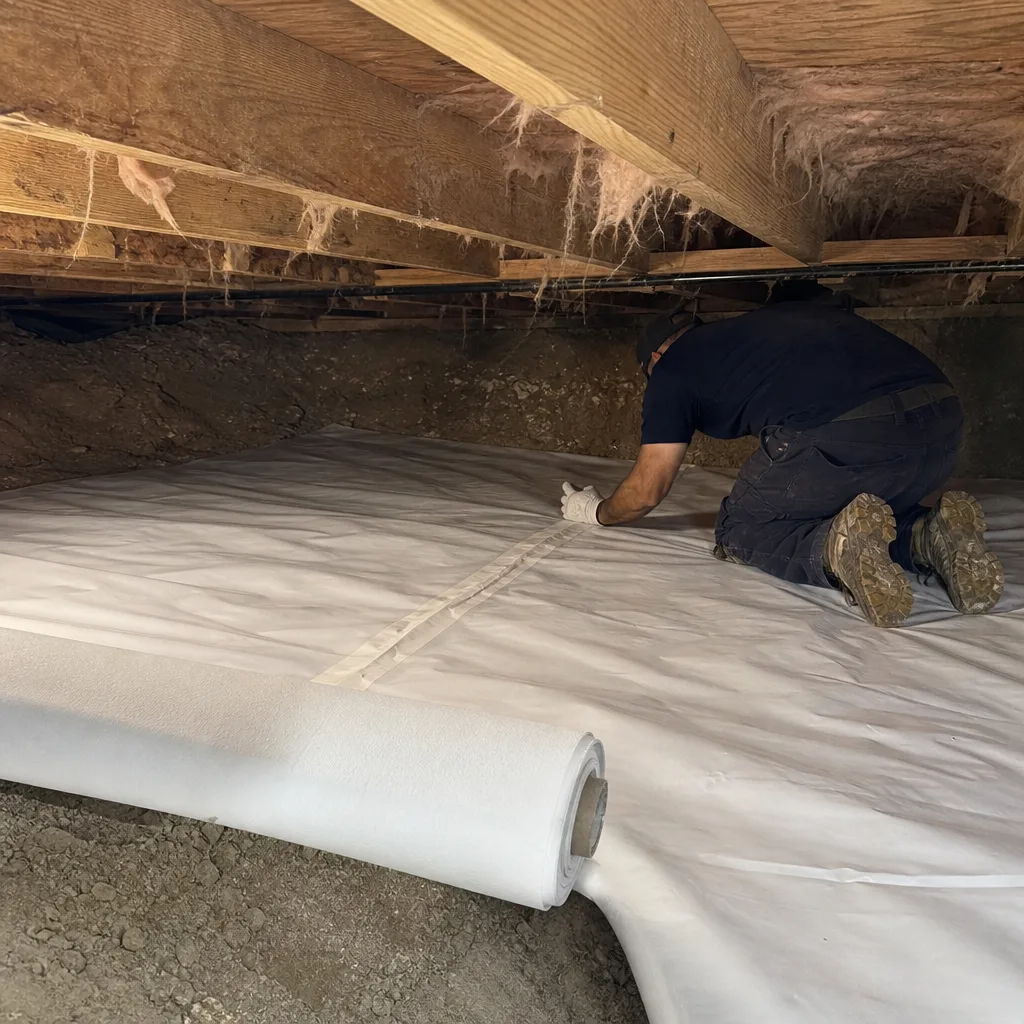
Call in a professional if any of the following is true on your check: settled R-value has dropped below R-38 on the ruler stakes, the ceiling temperature test shows more than 10°F differential in two or more rooms, you find rodent tunnels or droppings in the insulation, the attic is shallow and you can’t safely reach the eave bays, or you see the top plate exposed anywhere from the hatch. All of those point to a remediation job that needs a written scope, air sealing done in the right order, and a blower-door verification at the end. Dust masks and eye protection are the minimum for any attic crawl, and any part of the check near the furnace flue, gas lines, or the electrical panel belongs to a trained technician. Envelope Insulation Boulder City offers free estimates in Boulder City – call (844) 320-7926 to schedule a written inspection.
Frequently Asked Questions
Every 3 to 5 years for a full depth and sealing check, plus a ceiling temperature test every summer. The hot, dry climate accelerates settling and the wind through eave vents scours loose-fill faster here than in a humid climate, so the interval runs shorter than the typical annual-inspection template you’ll see online.
Read the ruler stakes against their original R-value markings. A stake marked for R-38 fiberglass should show 12 to 14 inches installed; if it’s showing 10, you’ve lost roughly a quarter of your effective depth. If you can’t find stakes, the original job wasn’t documented and you need a professional depth measurement.
It tells you your building envelope is losing enough conditioned air that insulation alone can’t fix the comfort problem. ACH50 measures air changes at 50 pascals of pressure – essentially how leaky your house is. Below 5 ACH50 is a well-sealed home; above 7 needs air sealing before any new insulation goes down.
No, and we’d advise against it. Topping off over an unsealed attic floor traps the leaks and wastes most of the added R-value. Air sealing the top plates, can lights, and penetrations comes first, then insulation goes down. That’s the order we hold to in every Boulder City job – sealing first, then insulating.
Look for tunnels 3 to 5 inches wide running along joists or the top plate, compressed material at the tunnel edges, and material that feels hard-packed under a gloved hand. Settled insulation is uniform; rodent-compacted insulation is directional and uneven. If you find tunnels, the material needs removal and the entry points need rodent-proofing, not a top-off.
A measured depth log from every ruler stake, a written scope, an upfront flat price before any work starts, a documented photo record of the attic conditions, and – on applicable jobs – before-and-after blower-door readings. Under Haven Standard Clause 1, you get the flat price, the scope, and the warranty in writing before anyone lifts a tool. Call (844) 320-7926 to schedule yours.
The Bottom Line
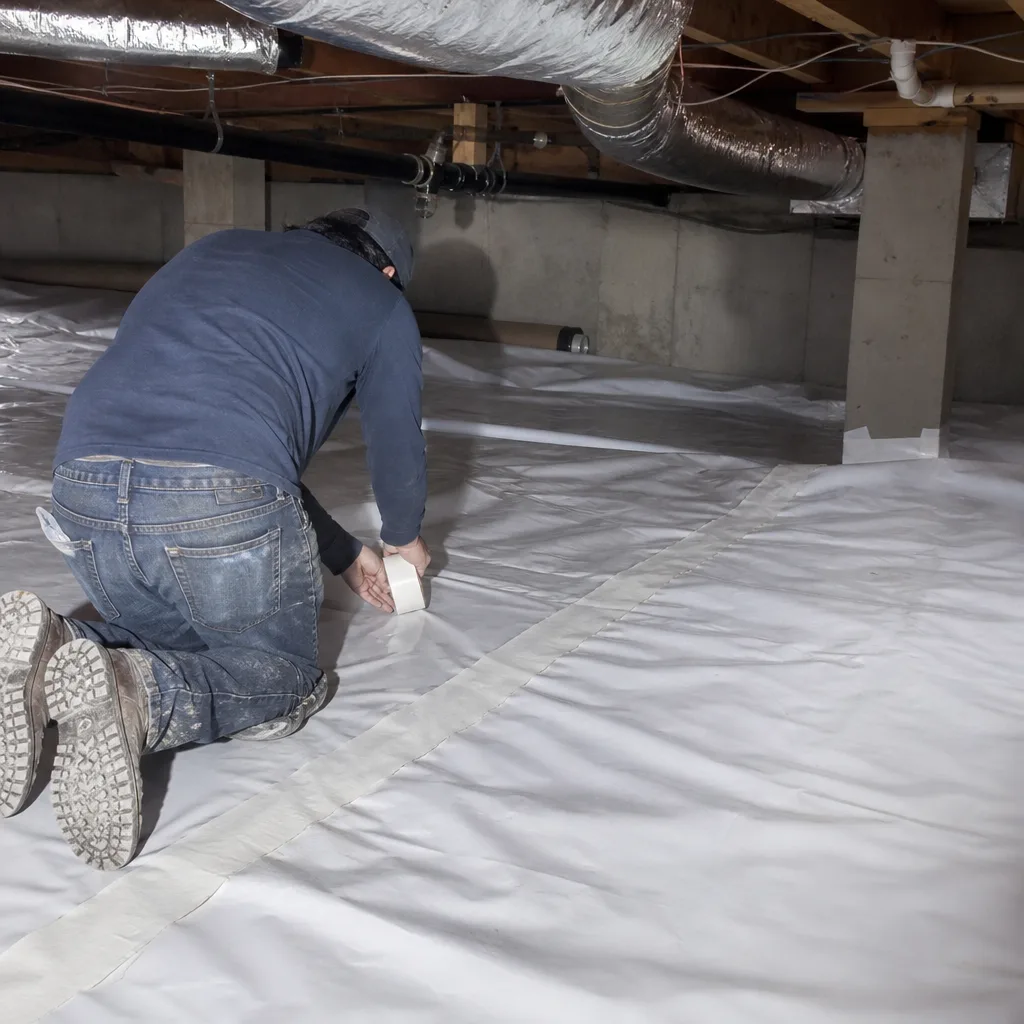
Boulder City attic insulation doesn’t fail in one event, it fails in sequence: settling first, wind scour at the eave bays second, rodent compaction third, and a skipped air-sealing step underneath all of it. The check that actually works measures depth against the ruler stakes, runs a room-by-room ceiling temperature test with an infrared thermometer, checks the soffit and ridge vent bays for wind scour, distinguishes rodent compaction from settling, and confirms the top plate was sealed before anything went on top. If measured R-value has dropped below R-38 or ACH50 is above 7, the check has become a remediation job, and the verification at the end should be a blower-door reading you can hold in your hand. Sealing first, then insulating – in that order. That’s the standard we work to, and it’s why we publish the before-and-after numbers.
Envelope Insulation Boulder City provides attic insulation, air sealing, and home energy audits across Boulder City. Call (844) 320-7926 for a free estimate in Boulder City – upfront pricing, a written scope before any work starts, and a documented photo record on every visit. Materials are sourced from Owens Corning, GreenFiber, and Icynene, with no proprietary product lock-in.
Written by the team at Envelope Insulation Boulder City.