
Last updated November 17, 2026
How to Hire an Insulation Contractor in Boulder City: A Step-by-Step Guide
Of the insulation bids we read that include a blower-door test, fewer than a third specify that air sealing will be finished before the insulation goes in. That single omission tells you more about how a job will perform than any product name on the proposal. A blower-door reading taken after insulation has been blown over an unsealed attic floor documents the leak you already paid to install. This guide walks through how to hire an insulation contractor in Boulder City the way the work actually gets judged: documentation, sequence, and the numbers you walk away with. You’ll learn what to ask, what to verify, and what a real scope of work looks like.
Quick Answer
To hire an insulation contractor in Boulder City, verify an active Nevada C-2 (insulation) license through the Nevada State Contractors Board, get a written scope that lists material type, installed thickness, R-value, a zone-by-zone air-sealing spec, and before-and-after blower-door numbers, and confirm in writing that air sealing happens before insulation. Ask seven specific questions before accepting any bid. The contractor who can answer them with documentation is the one to hire.
Table of Contents
- Why documentation matters more than brand or price
- How to verify a Nevada license in under three minutes
- What a real written scope of work contains
- The seven questions to ask before accepting a bid
- Sequencing: why sealed-first beats insulated-first
- How to read a blower-door result in Boulder City
- Boulder City red flags specific to bids
- Common mistakes to avoid
Why documentation matters more than brand or price
Homeowners comparing bids tend to weigh two things: the number on the page and the logo on the bag. Both matter less than the sequence a contractor follows. In Boulder City, homes sit in a high-desert climate with intense summer heat, sharp winter swings, and wind that finds every penetration. Insulation R-value is nearly meaningless if conditioned air is escaping through unsealed top plates, recessed can lights, and plumbing chases before the insulation ever settles. That’s why the single most predictive variable in an insulation bid isn’t the material brand. It’s whether the contractor measures air leakage before and after the job, and whether they use that first measurement to fix the leaks.
The trade vocabulary helps here. A blower-door test is a pressurization reading that shows, in one number, how much air your building envelope is losing. Measured before the crew touches anything, that number tells a contractor where the leaks are. Measured after sealing and insulation, it tells you what you bought. If a bid offers the test but skips the step of sealing first, the after-reading can’t improve much. The measurement exists for show, not for the job.
Price and brand still belong in the conversation. But they belong after the sequencing question. Evaluate them last, not first.
How to verify a Nevada license in under three minutes
Nevada requires contractors to be licensed by classification, and insulation work falls under the C-2 classification. The Nevada State Contractors Board lets you check a license in under three minutes. Do it before you negotiate, not after.
- Open the Nevada State Contractors Board license lookup on the Board’s website.
- Enter the contractor’s license number exactly as it appears on the bid or business card.
- Confirm the classification is active and that it covers the work being bid. C-2 is the insulation classification. A bid for attic insulation from a contractor without an active C-2, or an appropriate combined classification, is worth questioning before you sign.
- Confirm the license status is active, not simply “issued.” The database shows status and expiration, and a license that has lapsed is not a license.
- Confirm insurance and bond. A contractor working with an active Nevada license and current insurance is one whose crew shows up covered. Ask for the certificate and match the dates.
A qualifying contractor will offer the license number on the bid and expect you to look it up. A deflection is a real answer: hemming and hawing on the license number, or offering to send it over later, is a reason to move on.
Nevada also requires permits for certain residential work. Ask whether the job needs a building permit and whether the contractor will pull it. In Boulder City, the permit question is worth asking early because the local building department has its own approach to documentation, and a contractor who has pulled permits here will know what the inspector expects to see.
What a real written scope of work contains
A written scope is more than a line item with a square-footage count. It’s the document that determines whether the finished job matches what you thought you bought.
- Insulation material by type and manufacturer. Installers commonly use products from Owens Corning, Johns Manville, Knauf, and GreenFiber. Naming the specific product means the price can be compared apples to apples.
- Installed thickness in inches. R-value is a function of both material and thickness. Loose-fill settling to the same R-value can be a thinner or thicker install depending on the material. Thickness is what gets installed; R-value is what gets quoted.
- R-value target. For a Boulder City attic, the target should follow IECC 2021, which specifies attic R-values for this climate zone. Ask for the number in writing.
- Loose-fill density specification. Loose-fill insulation is blown at a target density, and density determines whether it holds its R-value or settles unevenly. A bid that quotes R-value without density is missing the number that determines performance.
- Zone-by-zone air-sealing spec. Top plates, recessed can lights, plumbing and wiring penetrations, soffits, chimneys, and attic hatches each need a specific treatment. A scope that says “air sealing included” without naming zones is not a scope.
- Blower-door pre and post numbers. Ask for the before-reading and the after-reading on the same form. A contractor who doesn’t offer the test in writing is telling you something.
- Photo record and warranty. Ask what documentation you’ll receive when the crew leaves, and ask for the written warranty in advance. At Envelope Insulation Co., the written price, written scope, and written warranty arrive before anyone lifts a tool, and a documented photo record is included on every visit.
The seven questions to ask before accepting a bid
Each question below tells you what a qualified answer sounds like and what a deflection sounds like. Print the list. Take it to the bid meeting.
-
Do you perform a blower-door test before and after the job? A qualifying answer describes the test, names the equipment, and says you’ll receive the readings in writing. A deflection says the test isn’t necessary for this job or that they’d be happy to bring one “if you want it.”
-
Is air sealing completed before insulation, and is it in the scope? The qualified answer is “sealed first, then insulated” and shows the air-sealing zones named in the written scope. A deflection frames air sealing as an optional upgrade, or describes it as something the crew will handle “as needed.”
-
What is the Nevada license classification and number? The qualified answer is a C-2 license number offered on the bid itself. A deflection is a license number that arrives by text three days later, or an attempt to skip the question.
-
What is the installed thickness and target R-value? The qualified answer names inches and R-value, matched to the IECC 2021 target for the attic. A deflection is a quoted R-value with no thickness, or vice versa, or a promise to “make it look right.”
-
What density will the loose-fill be blown to? For loose-fill jobs, the qualified answer gives the density spec and names the material. A deflection is a puzzled silence or “whatever the bag says.”
-
Will the price change once the work is underway? The qualified answer is a flat written price with scope attached. A deflection is a price that’s “subject to what we find,” with no written scope to hold them to.
-
What documentation do I receive at the end of the job? The qualified answer names the blower-door readings, the photo record, and the written warranty. A deflection is “we’ll send a receipt.”
Bring every written bid to one table and ask each contractor the same questions. A competing estimate is easier to read with help. Under The Haven Standard, Envelope Insulation Co. offers a free second opinion on any written estimate. You can sit with it, line by line, and see where a scope is thin.
Sequencing: why sealed-first beats insulated-first
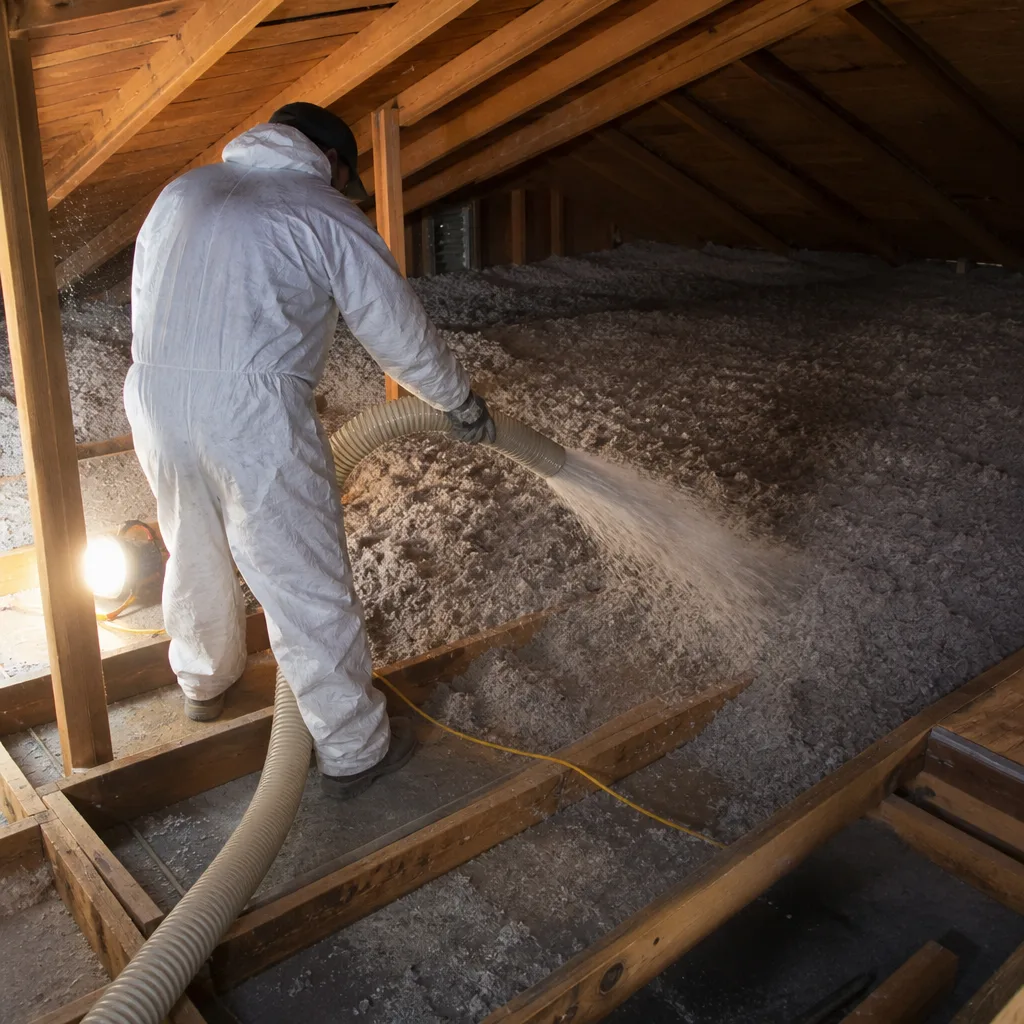
Of all the decisions in an insulation job, the order of operations has the biggest effect on the result. An unsealed attic floor is a highway for conditioned air. If a crew blows insulation over unsealed top plates and recessed can lights, the insulation is now sitting on top of a leak that continues to move air. The can lights remain a leak point. The plumbing chases remain a leak point. The measured R-value of the insulation becomes a number on paper that doesn’t match what the house is doing.
Sealed-first, insulated-second means the leaks are closed before the insulation settles in. The top plates, the can lights, the wiring and plumbing penetrations, the soffits, the attic hatch, and the chimney chase each get a specific treatment. Then the insulation goes in. When the blower-door test runs at the end, the ratio between the two numbers tells you what the sealing did. When the test runs before and after sealing but before insulation, you get an even clearer picture: how much of the improvement came from sealing versus insulating.
This is where a lot of bids get templated. The proposal says “air sealing included” as a line item and the photos show the crew laying insulation with only a quick door sweep at the attic hatch. An honest scope names the zones. An honest blower-door pair shows the change. When we read bids in Boulder City, the difference between a sealed-first proposal and a sealed-anything proposal is often a single word on a single line.
How to read a blower-door result in Boulder City
Blower-door results come in two units, and they’re not interchangeable. Read them carefully:
- CFM50 is the airflow required to maintain a 50-pascal pressure difference across the building envelope. It’s the raw number and it changes with the size of the house. A larger house has a higher CFM50 for the same quality of envelope.
- ACH50 is air changes per hour at 50 pascals. It normalizes the CFM50 to the volume of the house, which makes it comparable across homes of different sizes. This is the number IECC uses.
For an 1,800 square foot single-story Boulder City home, an ACH50 target under IECC 2021 falls well below the pre-1990 housing stock figures you’ll see on older homes here. Ask the contractor what their target ACH50 is for a house of your size, and how they plan to reach it. Then compare their post-job reading to that target. The number makes the evaluation easy because it compares like to like across bids.
Two cautions. First, the readings should come with test conditions (indoor temperature, outdoor temperature, wind). These affect the reading. A blower-door test on a windy day in Boulder City reads differently than a test on a calm morning. Second, the before and after readings should be from the same equipment and the same tech on the same day whenever possible. A before-reading on one visit and an after-reading on a different visit with different weather is a rough comparison, not a clean one.
The reason before-and-after blower-door numbers matter more than most line items on the bid is that they’re the only measurement that proves the job did what it was supposed to. Envelope Insulation Co. publishes those numbers on every applicable job, along with the photo record. You can read the documented change in a single figure.
Boulder City red flags specific to bids
Some bid patterns show up in Boulder City more than others because of how the housing stock and market interact.
- Single-line-item bids with no zone breakdown. A bid that says “insulate attic, $X” with no square footage, material, thickness, R-value, or air-sealing zones is a bid you cannot compare to any other. It’s a number, not a scope.
- Air sealing as an upsell. If the bid frames air sealing as a premium option or a separate line item “if you want it,” that contractor is telling you they’ll skip it by default. Sealed-first is a sequencing rule, not a premium tier.
- R-value quotes without density specs for loose-fill. R-value without density is a promise without a plan. Loose-fill insulation quoted at R-49 without a density specification can settle to a lower effective R-value than the bid implies.
- “Blower-door test included” followed by no number in the scope. A test with no promised reporting format is a test you won’t see the result of.
- No permit discussion. A contractor who doesn’t mention permitting on work that needs a permit is a contractor who may not pull one.
- Hold-harmless language in the bid. If the price is “subject to change based on what we find,” the price isn’t a price. It’s an estimate with a disclaimer.
- Pricing that’s dramatically lower than the field. The lowest bid is usually the one with the thinnest scope. The scope you compare is what gets performed, not the price.
For a full walk-through of the materials and R-value targets we install in Boulder City, see Attic Insulation in Boulder City.
Common Mistakes to Avoid
- Choosing on brand name alone. Owens Corning and Johns Manville sell good materials, but the product can’t fix a leak underneath it. Judge the sequence before you judge the label.
- Accepting a bid without a license number. In Nevada, the C-2 classification exists to protect you. Use it.
- Assuming air sealing is part of the job. If the scope doesn’t say sealed first and name zones, it’s not included. Ask.
- Skipping the blower-door pre-reading. A job without a before-reading has no baseline. The after-reading alone can’t tell you what the job accomplished.
- Comparing R-values across bids without comparing thickness and density. Two bids at “R-49” can install different amounts and different densities of material. The larger number isn’t always the better job.
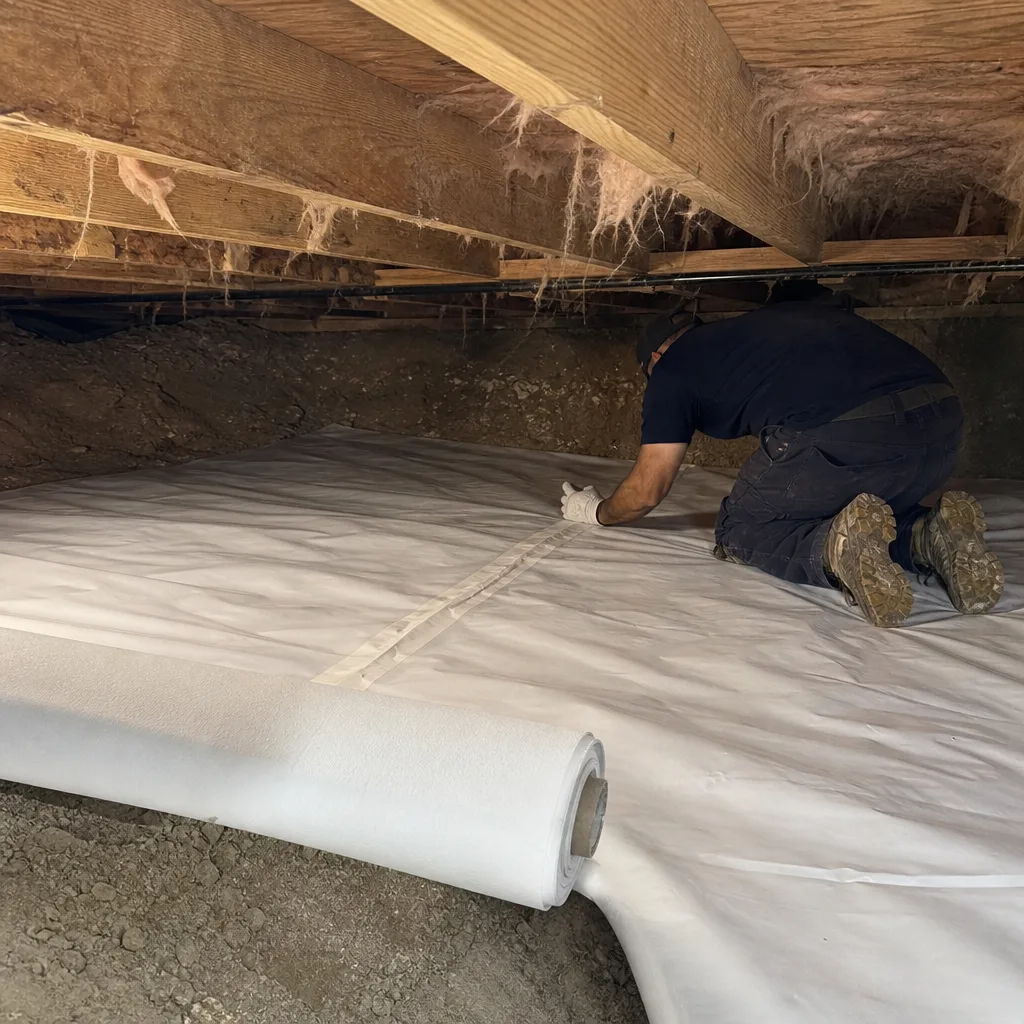
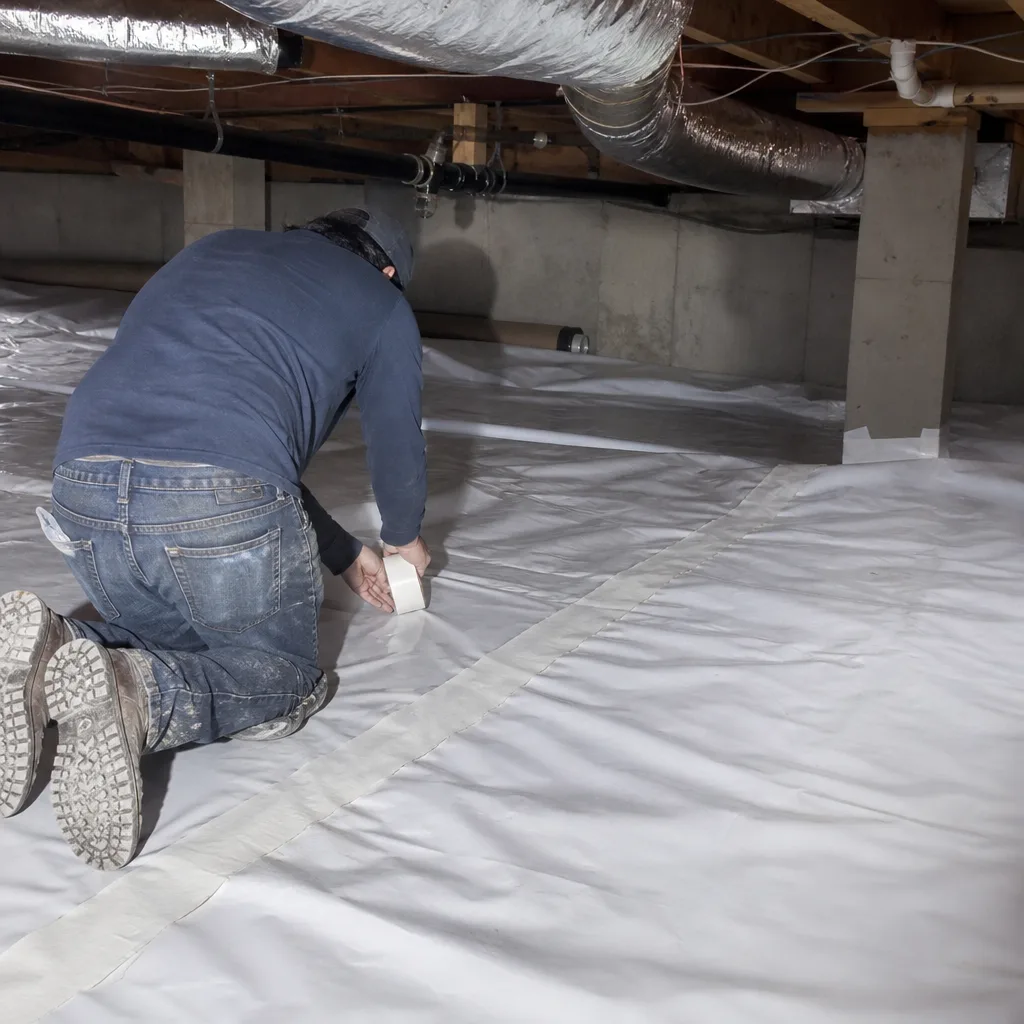
- Overlooking crawl space and wall work. Insulation in the attic doesn’t fix a leaky crawl space vapor barrier. If the lower envelope is open, ask about Crawl Space Encapsulation & Vapor Barrier in Boulder City.
- Not bringing a competing bid to a second set of eyes. A line-by-line review of another contractor’s estimate is free, and it shows you what’s thin. If you have a bid from a spray foam contractor, the comparison works the same way; see Spray Foam Insulation in Boulder City for the product and application notes we work from.
When to Call a Professional
Some insulation decisions genuinely warrant a trained crew with the right equipment, and a few of them are safety matters. If your attic has high-tension springs on the attic access, or if you plan to add insulation over knob-and-tube wiring, a ceiling with recessed can lights that aren’t rated for insulation contact, or a gas appliance flue, call a professional before you touch anything. Sealing around a gas flue with the wrong material is dangerous, not just ineffective. The same goes for any job that requires crawling through a narrow crawl space or moving through a tight attic with a steep or low-clearance roof. Those are situations where a trained technician with the right protective gear should do the work.
Beyond safety, call a professional if you’ve had a recent ice dam, a noticeably cold room despite heating, high summer bills that don’t match your thermostat schedule, or visible rodent activity in the attic that isn’t fixed. Each of these points to envelope work, not simply to more insulation. If you’re unsure whether the job is envelope work or a smaller repair, a home energy audit answers the question. Envelope Insulation Co. offers free estimates in Boulder City. Call (844) 320-7926 and a live person will answer.
Frequently Asked Questions
For an 1,800 square foot home with a typical attic, most Boulder City installs run in the low-to-mid four-figure range for sealed-first work, with the exact number depending on whether there’s old insulation to remove, how many air-sealing zones are involved, and whether a blower-door test is included. Get the price in writing before work starts. At Envelope Insulation Co., a flat written price arrives ahead of any tool being lifted. Call (844) 320-7926 for an exact quote – estimates are free.
Yes if you want a documented result. The before-reading is the baseline, and without it you can’t evaluate the after-reading. Ask the contractor to include both readings on the written scope. Call (844) 320-7926 if you’d like a free second opinion on a bid that doesn’t include one.
Air sealing is a sequencing rule, not a premium tier. If it’s skipped, the insulation goes over the leaks and the envelope performance stays limited by the leaks underneath. Under The Haven Standard, Envelope Insulation Co. treats air sealing as a hard prerequisite and completes it before any insulation is added. Call (844) 320-7926 to walk through what sealing involves for your attic.
CFM50 is the raw airflow required to hold 50 pascals of pressure difference; ACH50 normalizes that number to the volume of the home and is the figure IECC uses. For an 1,800 square foot home in Boulder City, ask the contractor what ACH50 they’re targeting and compare your post-job reading to it. Call (844) 320-7926 if you’d like help reading a blower-door report.
Use the Nevada State Contractors Board lookup online. Confirm the classification (C-2 for insulation), the active status, and the insurance and bond dates. A qualifying contractor puts the license number on the bid and expects you to verify it. Call (844) 320-7926 to request a written bid from Envelope Insulation Co. and check the license at your convenience.
For most residential jobs we schedule the estimate and then the work, but a live person answers the phone 24/7 to get you on the schedule. Brownouts and summer heat spikes bring a rush of calls, so if you’re concerned about performance before the next heat wave, call early. Call (844) 320-7926 and a live person will answer.
The Bottom Line
Hiring an insulation contractor in Boulder City comes down to a question most bids don’t answer: did they measure the air leakage before they touched anything, and did they seal before they insulated? Verify the C-2 license, require a written scope with material, thickness, R-value, density, and air-sealing zones, and ask for a blower-door pre and post reading in writing. Insist on a flat written price with a written warranty before work starts. The documentation is what you actually keep. The insulation is what the documentation proves you bought.
When you’re ready to compare bids on the same scale, call Envelope Insulation Co. at (844) 320-7926 for a free estimate. A written price, a written scope, and a written warranty arrive before anyone lifts a tool. A free second opinion on a competing bid is available on request, and every completed job comes with a documented photo record. Start from the Envelope Insulation Boulder City home page to see the full building-envelope service line, or read attic insulation in Boulder City for the room-by-room approach we use.
Written by the team at Envelope Insulation Boulder City.