
Last updated November 17, 2026
Insulation Cost Breakdown: The Boulder City Homeowner’s Reference for 2026
The average gap between the lowest and highest bid for an attic re-insulation project in Boulder City is about $1,100. That number surprises people, but here’s the part that costs more: a job that skips air sealing will run the average homeowner $340 to $480 extra per year in cooling costs, which means the “cheaper” bid breaks even with the complete job in under three years and then keeps costing you after that. Bids don’t vary because contractors are greedy or generous. They vary because contractors are pricing different work and calling it the same thing. This guide separates every line item in the 2026 Boulder City market and shows what happens to your HVAC bill when each piece is left out.
Quick Answer
Attic insulation in Boulder City runs roughly $1,900 to $4,600 for most homes in 2026, and air sealing adds $600 to $1,400 on top. A complete job, meaning air sealing first, insulation second, and a blower-door test to verify the result, typically lands between $2,800 and $6,200. The price gap between bids isn’t about material cost. It’s about whether air sealing and testing are in the scope at all.
Table of Contents
- Why Insulation Bids in Boulder City Vary by 60 to 80 Percent
- Per-Square-Foot Cost by Material Type
- Air Sealing as a Separate Line Item
- What Blower-Door Testing Actually Costs and What It Proves
- Job A Versus Job B: A Five-Year Cost Model
- NV Energy Rebates Active in 2026
- Boulder City Climate and Construction Factors
- Common Mistakes to Avoid
- When to Call a Professional
- Frequently Asked Questions
Why Insulation Bids in Boulder City Vary by 60 to 80 Percent
Two contractors can hand you quotes for “R-38 attic insulation” that differ by $1,100, and both can be honest. They’re pricing different scopes. The low bid usually covers blowing insulation over whatever is already on the attic floor: material, labor, disposal of nothing. The high bid usually covers removing the old material where it’s compromised, sealing the top plates and can lights and penetrations, then insulating, then testing the envelope with a blower door. Those are not the same job.
In our experience across 9,000+ homes sealed and insulated, the scope gap breaks down into four categories:
- Air sealing: Some bids include it, some don’t. It’s the single biggest driver of performance difference and the easiest thing to leave out because you can’t see it after the insulation goes in.
- Removal of old insulation: Discolored, compressed, or rodent-contaminated material needs to come out before new insulation goes in. A bid that skips removal and blows over it will be cheaper and perform worse.
- Verification testing: A blower-door test before and after the work costs $250 to $450. Most bids skip it entirely because most homeowners don’t ask.
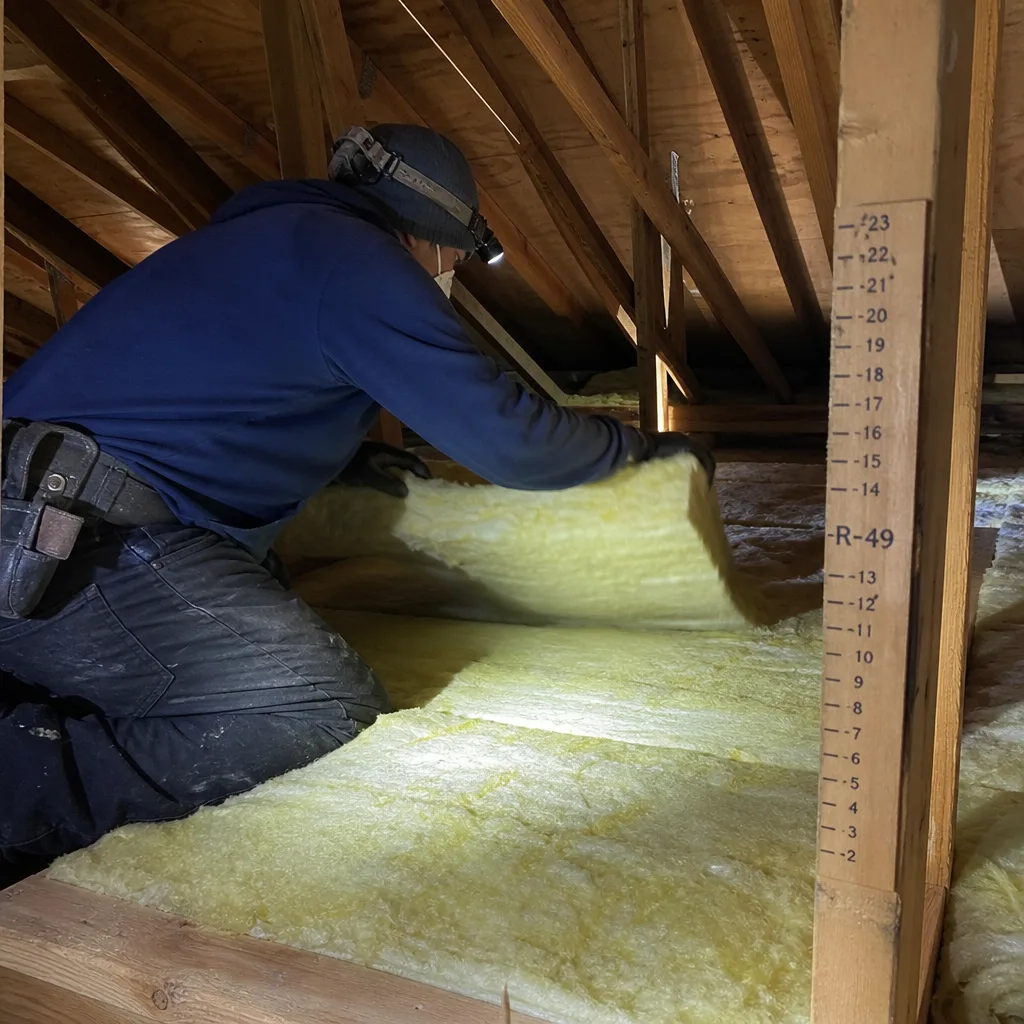
- Depth and R-value: “R-38” can be installed at 12 inches or at 15 inches with different densities. The depth chart matters more than the R-value printed on the bid.
Boulder City homes in the older blocks near downtown, many built in the 1970s and 1980s, tend to have the widest bid spread because the existing insulation often needs removal, the attic decks are irregular, and the ductwork runs through the thermal envelope in ways that affect the scope. Newer construction in neighborhoods near the Boulder Creek golf course tends to bid tighter because the attic is cleaner and the penetrations are more predictable.
Per-Square-Foot Cost by Material Type
These ranges reflect what Boulder City and Henderson suppliers are charging contractors in 2026 for installed work, meaning material, labor, and normal prep. They assume an accessible attic with no removal required. Removal adds $1.50 to $3.00 per square foot depending on how much is there and whether it’s contaminated.
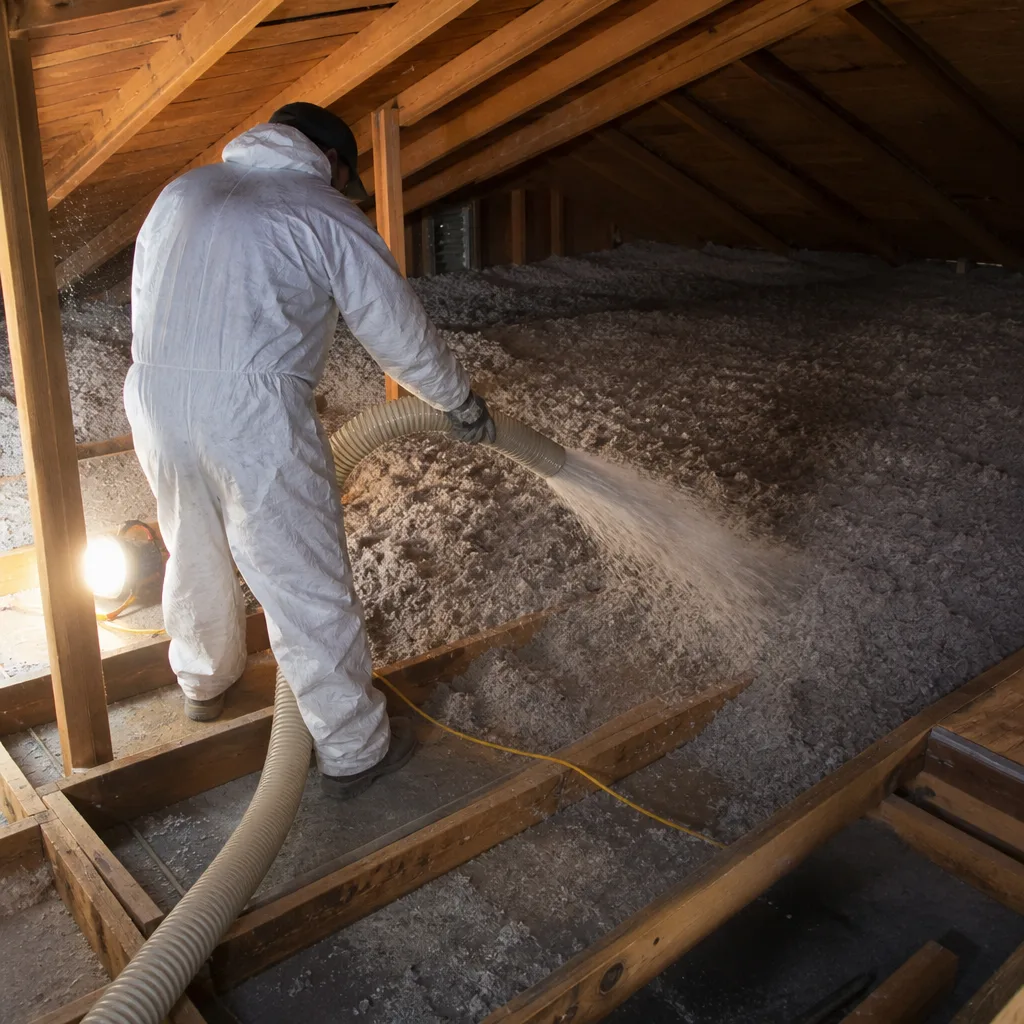
- Blown fiberglass (Knauf or CertainTeed): $1.40 to $2.10 per square foot installed for R-38 to R-49. It’s the most common choice in Boulder City because it’s affordable and handles desert heat without settling much. It doesn’t block airflow well on its own, so it depends entirely on air sealing underneath it.
- Blown cellulose: $1.65 to $2.35 per square foot installed for R-38 to R-49. Denser than fiberglass, better at resisting the convective loops that form in hot attics, and a good fit for older Boulder City homes with leaky attic floors. It settles over time, so installers need to account for that when they set depth.
- Open-cell spray foam: $2.80 to $4.20 per square foot installed for R-20 to R-24 at the roof deck. It air-seals as it installs, which is a real advantage in Boulder City’s wind-driven dust environment. Sometimes called Icynene-type foam. It requires a trained installer and a properly ventilated space during application.
- Closed-cell spray foam: $3.80 to $5.80 per square foot installed for R-20 to R-30. Highest performance per inch, and it doubles as a vapor barrier. It costs roughly double what blown fiberglass does, so it makes the most sense on a roof deck or in a tight space where depth isn’t available.
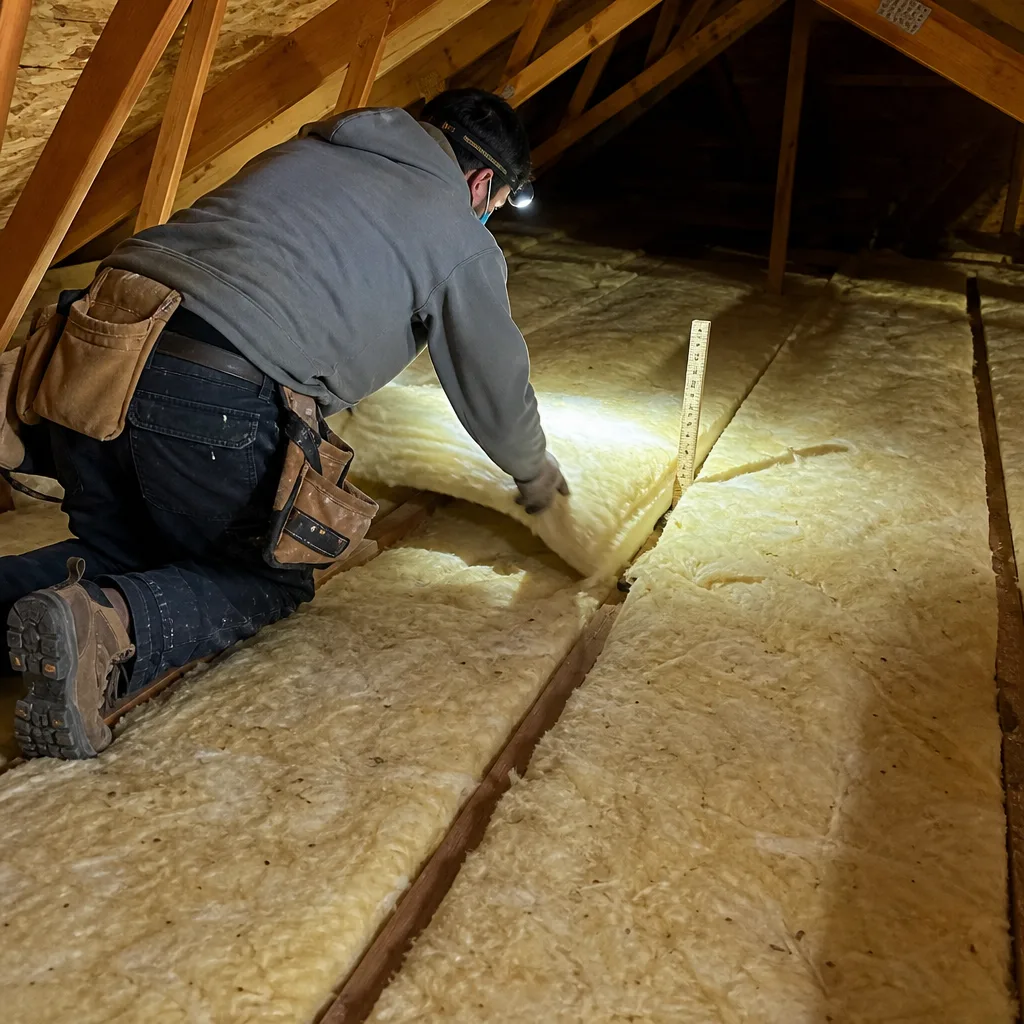
- Rockwool batts: $2.20 to $3.60 per square foot installed, mainly used on walls and where fire resistance matters. Less common in attics because batts underperform when they don’t fit tightly around obstructions.
For a home in Boulder City with about 1,500 square feet of attic floor, that puts a straightforward blown fiberglass job at roughly $2,100 to $3,150 and a closed-cell foam roof deck job at $5,700 to $8,700 before air sealing. Those are two very different jobs serving two different problems, and the quoted number tells you which one you’re buying.
Air Sealing as a Separate Line Item
Air sealing in Boulder City typically runs $600 to $1,400 for a residential attic. It cannot be lumped into insulation labor without cutting the scope, and here’s why. Air sealing means finding and sealing every penetration between your conditioned space and the attic: top plates where the wall meets the ceiling, can lights, recessed fixtures, plumbing chases, electrical boxes, bath fan housings, and the gaps around them. Each one takes a technician with a foam gun or caulk gun and a few minutes. There are usually 40 to 80 of them in a typical home. That’s real labor, and a contractor pricing “insulation” doesn’t have time built into a per-square-foot rate to do it.
What happens when air sealing is skipped? The insulation becomes a filter. In a Boulder City attic in July, the attic can hit 140°F while your conditioned space sits at 78°F. That temperature difference creates pressure that pulls the hottest air through the fiberglass and down through every unsealed can light and top plate into the rooms below. The insulation isn’t broken. It’s just sitting on top of a hole. Sealing the holes first is what makes the insulation work.
We won’t blow insulation over an unsealed attic floor. It isn’t a policy choice to sell you more; it’s that the installed R-value won’t perform at its rated level if the air underneath it is moving. Air sealing done right goes in before any insulation, and the sequence shows up in the blower-door numbers.
What Blower-Door Testing Actually Costs and What It Proves
A blower-door test, also called a pressurization reading, costs $250 to $450 for a pre-and-post pair in Boulder City. The technician sets a calibrated fan in an exterior doorway, pulls the house to a standard pressure (50 pascals), and reads how much air the envelope is losing, measured in cubic feet per minute at 50 pascals, or CFM50. One number. Before the work it might read 4,200. After sealing and insulating it might read 2,100. That’s a 50% reduction in air leakage, and it’s the only way to know what you actually bought.
Why does verification matter? Because without it, nobody knows whether the air sealing was complete. A contractor can seal 30 penetrations out of 60 and the insulation still looks the same after it’s blown in. A blower-door reading makes the difference visible: the pre and post numbers are a fact, not an impression.
The other thing blower-door testing proves is whether the installed R-value is delivering its thermal performance. R-value measures resistance to conduction, but air leakage bypasses it entirely. A house at R-49 with a leaky envelope performs like a house at R-20 in terms of cooling load. The blower-door number tells you which of those you’re living in.
If a bid says “insulation” but doesn’t include a blower-door test, ask what number the contractor expects before and after. A contractor who can’t answer that isn’t tracking performance.
Job A Versus Job B: A Five-Year Cost Model
Here’s the comparison that matters more than the bid comparison. Both jobs are for a 1,500 square foot attic in a 2,000 square foot Boulder City home that was built in 1985 and is currently running a cooling bill of about $280 per month in summer.
Job A: Insulation only. Blow R-38 blown fiberglass over the existing compressed material. No removal, no air sealing, no blower-door test. Price: about $2,200.
Job B: Air sealing first, insulation second, blower-door verification. Remove the degraded 1980s insulation, seal top plates and penetrations and can lights, install R-49 cellulose at proper depth, run a pre and post blower-door test. Price: about $4,900.
The $2,700 gap looks significant. But the annual utility delta tells a different story. Air sealing alone in a home of this age typically cuts cooling costs by $340 to $480 per year, and the added R-value and removal of degraded material adds another $60 to $120 depending on the summer. Take the low end of $400 per year against the $2,700 gap and Job B pays back the difference in just under seven years. Take the high end of $600 and it’s four and a half years. Meanwhile Job A doesn’t pay back at all beyond its first-year small savings because it isn’t fixing the air leakage that drives most of the loss.
Over five years, total cost of ownership looks like this:
- Job A: $2,200 upfront plus roughly $2,000 extra in utility costs over five years = $4,200 total.
- Job B: $4,900 upfront plus roughly $1,000 extra (residual baseline) in utility costs over five years = $5,900 total.
The gap has narrowed to $1,700. Add in that Job B’s insulation won’t need replacing for decades and Job A’s will likely need another look inside ten years, and the math inverts. The “cheaper” bid costs more over the life of the home.
NV Energy Rebates Active in 2026
NV Energy’s Home Energy Rebates program through the residential insulation and air sealing pathway has been active in Boulder City through 2026, and it’s worth claiming if you’re going to do the work either way. Typical rebate amounts run $250 to $750 for attic insulation upgrades and $200 to $500 for air sealing, with higher amounts available for homes that also complete a home energy audit or install a heat pump system in the same visit.
The documentation required to claim a rebate is specific, and missing any piece will get a claim denied:
- Pre-work and post-work receipts from the contractor, both showing the scope in detail.
- The installed R-value before and after, documented with photos of the depth marker.
- The blower-door reading before and after, which is required for air-sealing rebates and strongly encouraged for insulation claims.
- A completed rebate application signed by the homeowner, submitted within the program window.
- Proof the contractor is licensed and insured in Nevada, which NV Energy verifies before processing.
Processing typically runs six to twelve weeks from submission to payment. Cash rebates sometimes take longer than bill credits. If you’re working with a contractor, ask whether they’ll assemble the documentation for you, because a complete packet is the difference between approval and a denied claim. Envelope Insulation Boulder City includes the Documented Photo Record of every visit, which usually covers the photo and R-value requirements without any extra work on your part.
The 25C federal tax credit for residential energy efficiency is also in effect for 2026 at up to $1,200 per year for insulation and air sealing, which stacks with NV Energy rebates if you have tax liability to apply it against. A qualified accountant or tax preparer is the right person to confirm your eligibility.
Boulder City Climate and Construction Factors
Boulder City’s climate is the reason insulation costs here don’t map neatly to national numbers. Summer attic temperatures routinely hit 140°F to 160°F, and the winter low occasionally dips into the teens. That swing, more than any other factor, is what separates a well-sealed envelope from a leaky one in performance.
Construction era also matters. Homes built in the 1970s near the historic district often have no attic floor air sealing at all, and some have ductwork running outside the thermal envelope through the attic, which is a hidden loss most bids don’t address. Homes built in the 1990s and 2000s tend to have some insulation but with degraded batts and gaps around can lights. Homes built after 2010 in the Boulder Creek corridor tend to have better initial sealing but under-insulated attics because the original builder targeted the code minimum, not the comfort target.
Two other local factors push costs:
- Supplier distance: Boulder City contractors pull material from Henderson suppliers, which adds freight time and cost compared to a Las Vegas-side contractor working closer to the yard. Expect $100 to $250 of material cost difference on a typical attic job.
- Dust and wind: Boulder City sits at the edge of the Mojave and gets regular wind-driven dust. Attic vents draw that dust into the insulation over years, which is one reason a properly-installed job often includes a fresh air-seal check on every penetrations before blowing new material.
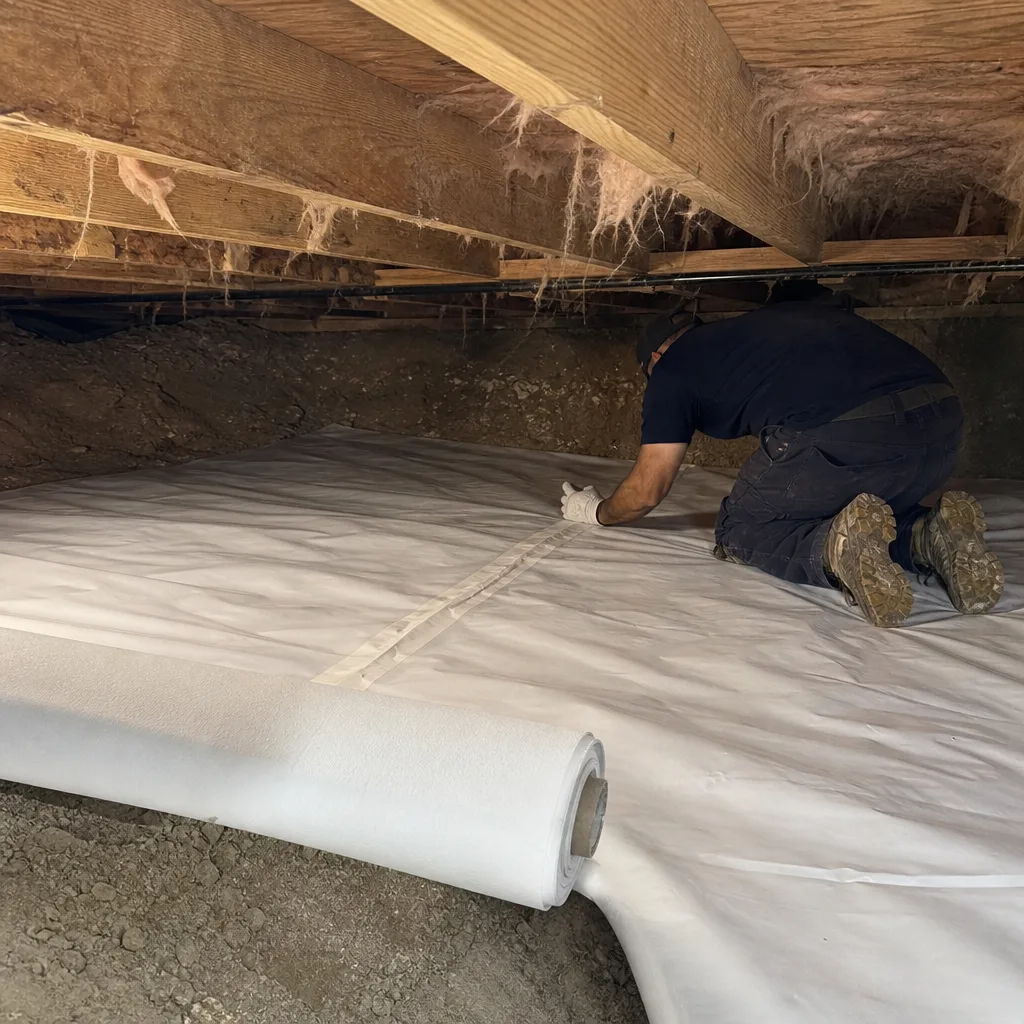
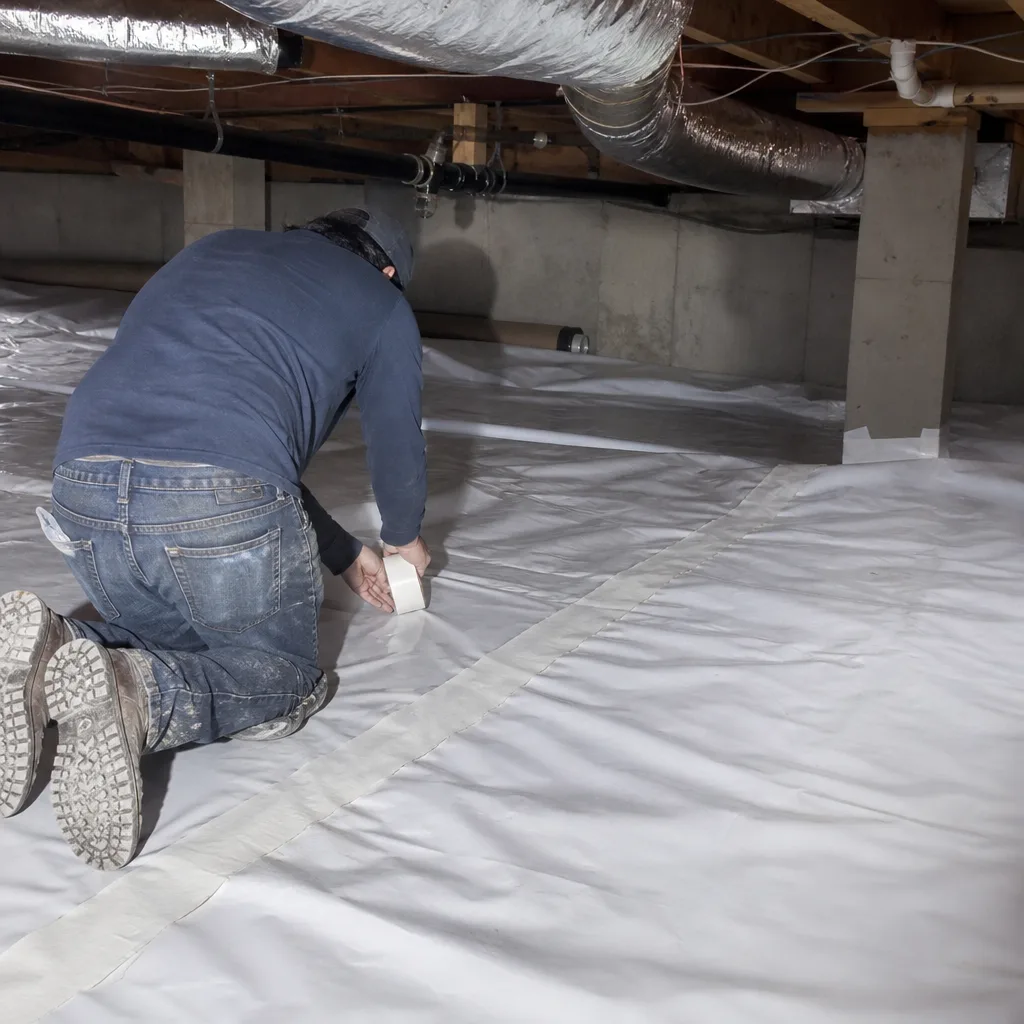
For crawl space considerations, which change the total job math significantly in older Boulder City homes, see our page on crawl space encapsulation & vapor barrier in Boulder City. And for spray-foam pricing at the roof deck versus the attic floor, see spray foam insulation in Boulder City.
Common Mistakes to Avoid
- Choosing the lowest bid without comparing scope. Two bids that say “R-38” can cover completely different work. The line items that matter (air sealing, removal, blower-door testing) are usually the ones missing from the low bid.
- Skipping the blower-door test to save $250. The test is the only way to know what you actually bought. Skipping it means you’re trusting the contractor’s estimate of performance instead of measuring it.
- Letting insulation go over an unsealed attic floor. Blown insulation over unsealed can lights and top plates is a filter, not a barrier. It’ll look right in the attic and won’t perform.
- Ignoring the existing insulation’s condition. In older Boulder City homes, insulation that was installed in the 1980s has often been compressed, contaminated by rodents, or degraded by heat cycling. Blowing over it without inspection skips a real problem.
- Assuming closed-cell foam is always better. It’s the highest performance per inch, but for a typical attic floor with 14 inches of space available, a well-sealed R-49 blown job performs comparably at about half the price.
- Not asking about the rebate documentation. NV Energy will deny a claim if photos, R-value records, or blower-door readings are missing. Ask before work starts what documentation you’ll receive.
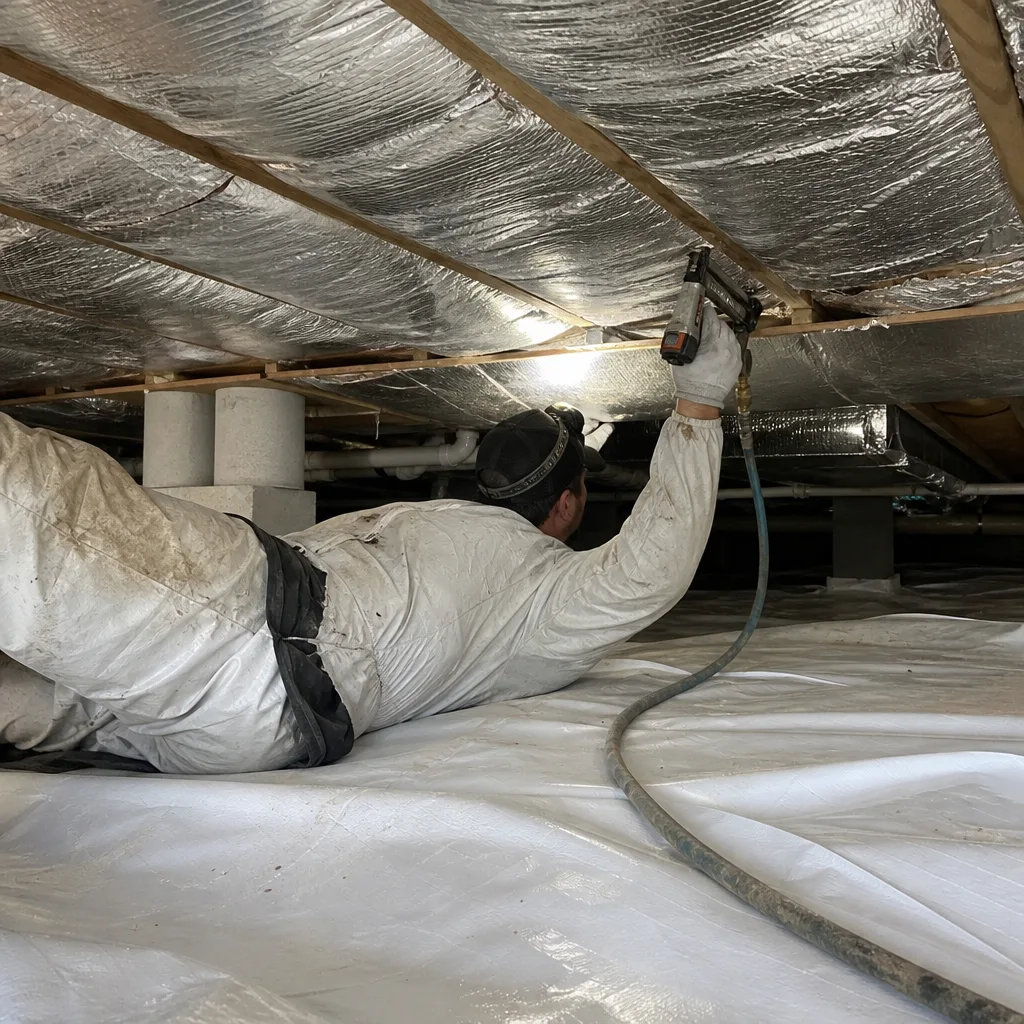
- Missing the crawl space. In many Boulder City homes, especially those built before 1990, more heat comes up through the crawl space than through the attic. Skipping it means the attic work underperforms.
The team at Envelope Insulation Boulder City keeps these mistakes in view on every job, and Haven Standard Clause 1 guarantees a written price, written scope, and written warranty before anyone lifts a tool, which makes them easier to catch before the insulation goes in.
When to Call a Professional
Call a professional if your attic has visible gaps around can lights or top plates, if your cooling bills have crept up over the last two summers, if you’ve had rodents in the attic, if the insulation depth is below 10 inches, or if you’re planning any HVAC work that would run through the attic. Those are the cases where a blower-door reading and a written scope actually change the outcome. Blown insulation and spray foam both involve equipment and safety considerations (respirators, attic heat, electrical hazards near can lights) that aren’t a homeowner DIY project, and the risk of doing it wrong is invisible until the bill arrives. Under The Haven Standard, Envelope Insulation Boulder City offers free estimates in Boulder City, with a written price before any work starts. Call (844) 320-7926 for an exact quote on your attic. If you’ve already got a competing bid, the Free Second Opinion service reads it with you line by line, no charge.
Frequently Asked Questions
Most attic insulation jobs in Boulder City run $1,900 to $4,600 for a standard home, with air sealing adding $600 to $1,400 and blower-door testing adding $250 to $450. A complete job with sealing, insulation, and verification lands between $2,800 and $6,200. Call (844) 320-7926 for an exact quote on your home; estimates are free and come with a written scope.
In most Boulder City homes built before 1995, replacing is cheaper over the life of the home because the existing material has lost most of its rated R-value to compression and dust infiltration. Repair-only makes sense when the insulation is under 10 years old, at proper depth, and clean. A blower-door test tells you which situation you’re in for under $450.
We answer calls 24/7 and can usually schedule an estimate within a few business days, with same-week assessment available in most of the Boulder City area. Call (844) 320-7926 to check current availability on your block.
Air sealing alone runs $600 to $1,400 for a typical attic in Boulder City, and it’s the highest-return single line item in the entire insulation scope because it addresses the leakage that drives most of the cooling loss. On its own it typically cuts cooling costs $340 to $480 per year in a home of this age.
Yes, NV Energy’s Home Energy Rebates program has been active in Boulder City through 2026, offering $250 to $750 for attic insulation and $200 to $500 for air sealing with the right documentation. You’ll need before and after R-value records, blower-door readings, and receipts from a licensed contractor. Processing takes six to twelve weeks.
The lowest bid is usually missing air sealing, removal, or blower-door verification, which together account for most of the performance you’re actually buying. The price gap between bids is real, but the utility cost gap between the two scopes is larger over five years. Under Have It in Writing, Envelope Insulation Boulder City provides a written scope on every estimate, free of charge.
The Bottom Line
Insulation cost in Boulder City in 2026 depends far less on material choice than on scope. Blown fiberglass, cellulose, open-cell, and closed-cell foams all have their place, and per-square-foot prices range from about $1.40 to $5.80 depending on what you pick. But the $1,100 bid gap comes mostly from air sealing and blower-door testing, and the utility savings from those two line items alone run $340 to $480 per year in a typical Boulder City home. That pays back the price gap in four to seven years and keeps paying it back after that. Pick the bid that includes both, ask for the written scope before anyone lifts a tool, and ask what blower-door number the contractor expects to hit.
Ready for a written price on your Boulder City home? Call (844) 320-7926 for a free estimate. If you already have a bid in hand, we’ll read it with you line by line and tell you what’s missing before you sign. And if you want to see the whole picture of how a full envelope job comes together in Boulder City, start at Envelope Insulation Boulder City or read our attic insulation in Boulder City guide for the step-by-step on what the work actually involves.
Written by the team at Envelope Insulation Boulder City.