
Last updated November 17, 2026
DIY vs Professional Attic Insulation: What’s Safe to Do Yourself
Here’s the counterintuitive part: in most Boulder City attics, you can safely blow loose-fill insulation over what’s already there. What you shouldn’t do yourself is the air sealing that has to happen first. Blow insulation over an unsealed attic floor and you’ve locked your air leaks in place under a layer of fiberglass, permanently. We’ve opened Boulder City attics where a homeowner added six inches of material and the winter gas bill didn’t move a dollar, because the leaks were already buried. This guide draws the line between what’s genuinely safe for a careful homeowner and what carries liability you don’t want. You’ll get the exact conditions that make a DIY top-up safe, the tasks that should never be DIY, and the real per-R-value cost math behind renting a blower versus hiring a contractor with before-and-after documentation.
Quick Answer
Topping up loose-fill insulation depth in an attic that is already air-sealed is safe DIY work for a careful homeowner. Air sealing before you insulate is not DIY-safe: sealing top plates, recessed lights, and penetrations correctly requires a blower-door baseline and trade judgment, and any work near knob-and-tube wiring requires a licensed electrician. Blowing insulation without air sealing first produces an unmeasurable result and typically wastes most of the money.
Table of Contents
- What Attic Insulation Tasks Are Safe to Do Yourself?
- Which Tasks Carry Real Risk and Require a Professional?
- Why DIY Without a Blower-Door Baseline Is Unmeasurable
- DIY vs Professional: The Real Cost Per R-Value
- Nevada Licensing and What You’re Liable For
- What’s Different About Boulder City Attics
- What Documentation Should You Walk Away With?
What Attic Insulation Tasks Are Safe to Do Yourself?
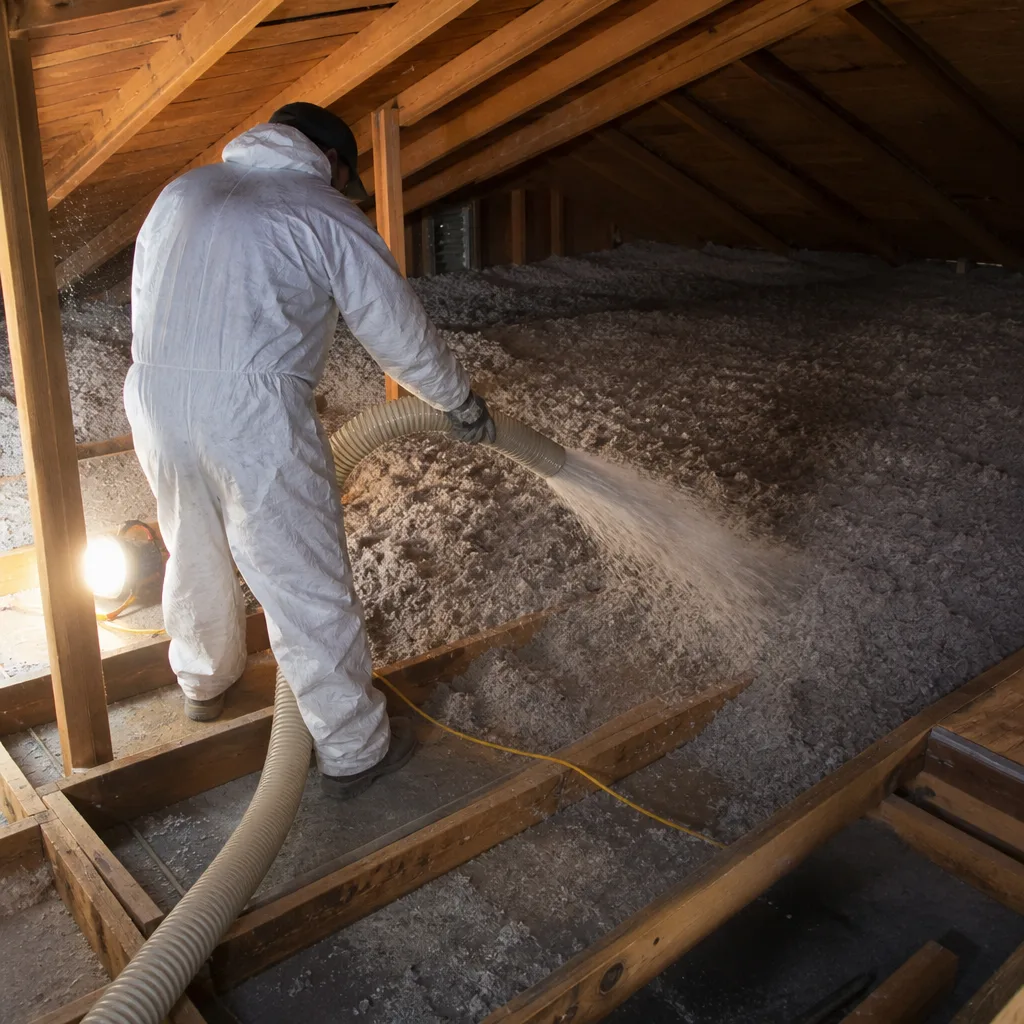
Three jobs in a Boulder City attic are legitimately safe for a homeowner who reads the instructions and wears the right gear: topping up loose-fill depth, installing an attic hatch cover kit, and adding weatherstripping to the hatch frame. Each one has conditions that keep it safe, and if any condition fails, the job moves to the professional column.
Topping up loose-fill depth. This is safe only when all of the following are true:
- The attic floor is already air-sealed: no visible gaps around top plates, can lights, or plumbing penetrations.
- Existing insulation is dry. Wet or damp material means a moisture problem that has to be fixed first, not covered.
- There is no knob-and-tube wiring anywhere in the attic. If you see cloth-wrapped wire strung across joists, stop.
- You can move safely on joists or a walkway without stepping through the ceiling drywall.
- You wear an N95 respirator, eye protection, gloves, and long sleeves. Loose fiberglass in a closed attic in a Boulder City summer is a genuine hazard.
Attic hatch cover kit. A pre-made insulated box that sits over the attic access. It installs with a few screws and dramatically cuts one of the biggest heat leaks in a typical Boulder City home. Safe DIY with basic tools.
Weatherstripping the hatch frame. Foam or rubber gasket tape around the hatch edges, installed per the manufacturer’s instructions. Safe DIY. It only helps if the hatch sits flush; if the frame is warped, weatherstripping won’t seal it.
If you check every box, a DIY top-up moves the needle. If you fail even one, stop and get a professional reading before you spend money on material.
Which Tasks Carry Real Risk and Require a Professional?
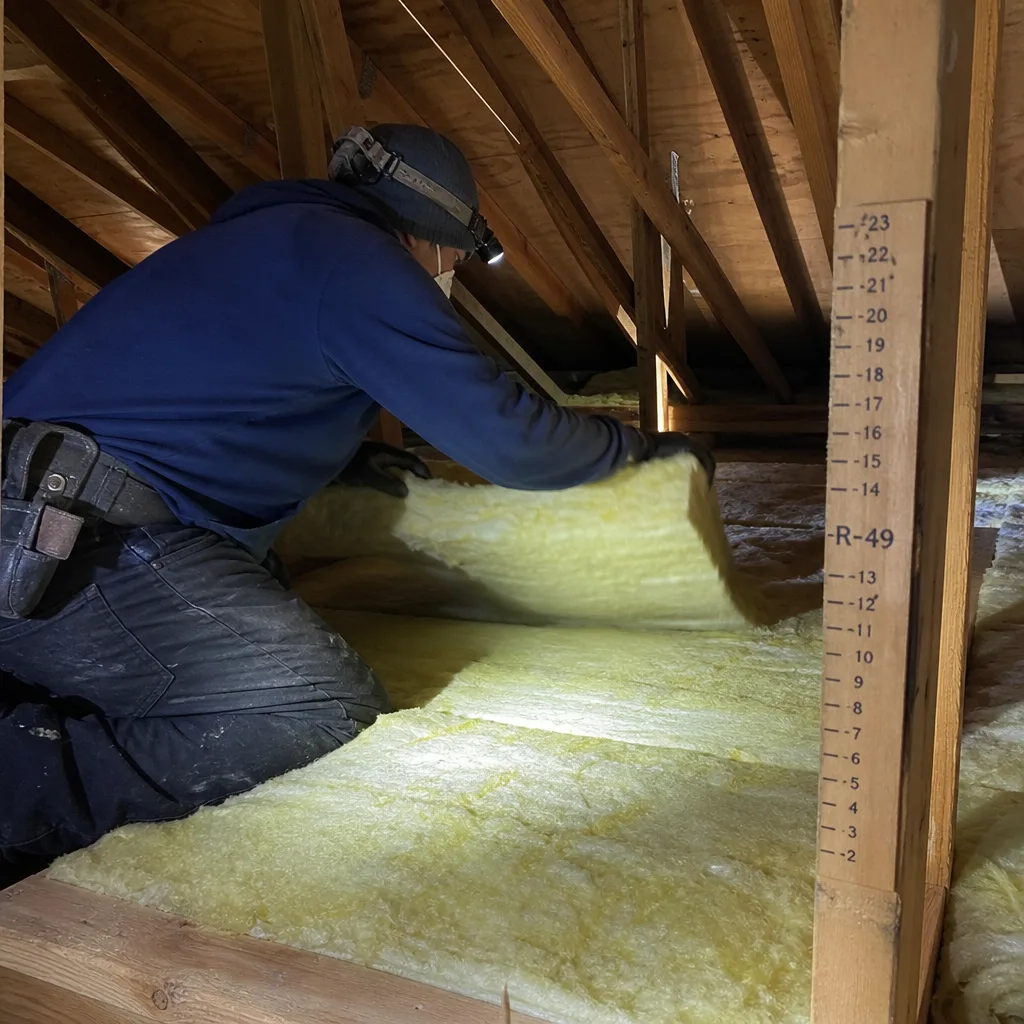
The tasks below carry liability that is not worth carrying yourself, and two of them are genuinely dangerous. We’ve seen each of these go wrong in Boulder City homes where a homeowner or an unvetted contractor got it half right.
Spray foam air-sealing of top plates. Spray foam is a two-part chemical reaction, and the ratio between the A-side and B-side components has to be correct within tolerance. Off-ratio foam can remain tacky, off-gas, or fail to cure properly, and once it’s on your top plates you’re living with it. An experienced applicator uses metered equipment and knows the temperature and humidity windows that change the ratio. This is not a can-of-foam job.
Recessed light sealing with fire-rated separation. An older can light in a Boulder City ceiling often has a fire-rated separation between the fixture housing and the insulation. Seal it wrong and you either trap heat against the fixture or break the fire rating. Sealing must be done with a rated product, and the fixture has to be rated IC (insulation contact) before you can put anything over it.
Any work near knob-and-tube wiring. Knob-and-tube is ungrounded, brittle, and often buried under old insulation. Touching, moving, or insulating over it is an electrical hazard. This work belongs to a licensed electrician, and sometimes the answer is a partial rewire before any insulation work.
Duct sealing and plenum work. Attic ductwork carries conditioned air. Sealing the wrong joints with the wrong mastic can trap carbon monoxide or create pressure problems. Licensed HVAC territory.
Removal of old or contaminated insulation. Rodent-contaminated, moldy, or asbestos-containing insulation (common in homes built before 1980) is a health hazard. Removal requires containment, HEPA vacuuming, and disposal per Nevada rules.
If you’re in Boulder City and any of the above is present, that’s when the professional line is drawn. Attic insulation in Boulder City begins with a written inspection, not with a bag of loose fill.
Why DIY Without a Blower-Door Baseline Is Unmeasurable
A blower-door test is a pressurization measurement. A calibrated fan is mounted in an exterior doorway, the house is pulled to a known pressure difference, and the CFM50 reading tells you, in a single figure, how much air your building envelope is leaking. That number is the only honest way to know whether insulation work helped.
Here’s the mistake we see over and over: a homeowner rents the blower machine from a home improvement store, blows twelve bags of loose fill over an unsealed attic floor, and then has no idea whether the winter bills improved or not. Two things go wrong when that happens.
- You’re insulating the outside of a leaky bucket. Air moves through the attic floor through every unsealed top plate, can light, and plumbing penetration. Adding R-value on top doesn’t stop the leak; it only slows the heat loss around it.
- You can’t verify the result. Without a before number and an after number, you have no baseline. If the bills don’t drop, you don’t know whether the insulation failed, the air sealing was the real problem, or the issue lives somewhere else entirely (windows, ducts, the crawl space).
The fix is not complicated. Before any insulation goes in, a blower-door reading is taken. Air sealing is completed. A second reading is taken. If a Boulder City home reads 4,200 CFM50 before sealing and 2,100 after, the homeowner has a single number that shows exactly what they paid for. That’s the standard we work to on every applicable job. Without it, “I think it feels warmer in here” is the only evidence you get.
If you own a home in Boulder City built before 2005, you’re a good candidate for the pressure test before you spend anything on material. Envelope Insulation Boulder City opens every visit with a written inspection and a blower-door reading where it applies.
DIY vs Professional: The Real Cost Per R-Value
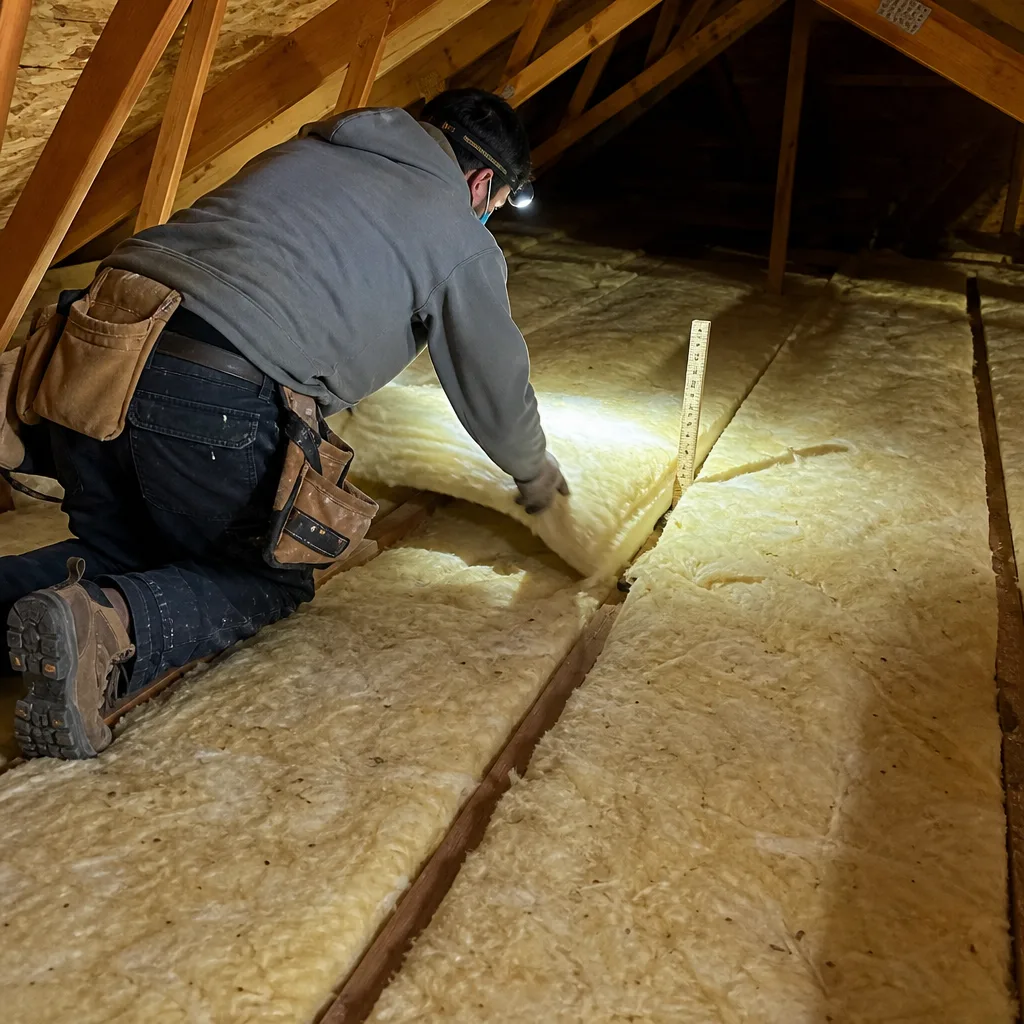
The DIY math looks obvious until you build in every cost. A homeowner doing a Boulder City attic top-up pays for the blower machine rental (typically $70 to $120 per day in the metro market), the bags of loose fill (around $15 to $25 per bag at a big-box store, and a 1,200-square-foot attic at R-49 needs roughly 12 to 18 bags), protective gear ($40 to $80), a staple gun, a light, and two full weekend days of labor in a space that reaches 130°F in July.
A typical Boulder City professional job, by comparison, runs roughly $1.60 to $2.60 per square foot for blown-in only, and $3.00 to $5.00 per square foot when air sealing is included. On a 1,200-square-foot attic, that lands in the $1,900 to $6,000 range depending on what’s in the attic, whether old insulation is removed, and whether the job includes duct sealing or vapor barrier work.
Here’s the per-R-value comparison that matters. A DIY top-up that skips air sealing might add R-19 to an attic that’s leaking 4,500 CFM50, and the “effective” R-value delivered to the living space may only be a fraction of that, because air is still whistling through the ceiling plane. A professional job that seals first and insulates second delivers the R-value it promises, and the before-and-after blower-door numbers prove it. On a per-dollar, per-effective-R basis, the sealed job usually wins. The DIY job wins on sticker price and loses on outcome.
Two more costs to price in: the extra material you’ll buy because you misfigured the bag count (common), and the weekend you’ll lose to a job that takes a two-person crew six hours.
Nevada Licensing and What You’re Liable For
Nevada requires contractors performing insulation work to be licensed with the Nevada State Contractors Board. Insulation work falls under the board’s building classification, and a contractor performing attic insulation in Boulder City for compensation should be able to produce a state license number on request. Ask for it before anyone starts.
Here’s the part homeowners underestimate: if unpermitted or improper work later causes a moisture event (rot, mold, structural damage from trapped vapor) or a fire (from insulation over an unrated can light or near knob-and-tube wiring), the homeowner’s insurance may deny the claim on the grounds that the work was not permitted and not performed by a licensed contractor. That’s the hidden liability the DIY forum posts never mention. The money you saved on labor can be dwarfed by a denied claim.
There’s also a resale angle. Boulder City homes sold with a documented, permitted insulation retrofit carry a record. Homes sold with an undocumented DIY top-up can trigger buyer questions and inspection pushback. A written scope, a photo record, and a warranty transfer carry value at closing.
When you hire a contractor, ask four things before signing: state license number, proof of insurance, a written scope that names exactly what will be sealed and where insulation will be added, and a written warranty. Any legitimate contractor working under a written-price standard provides all four before anyone lifts a tool. Under spray foam insulation in Boulder City, the same rule applies: written price first, spray second.
What’s Different About Boulder City Attics
Boulder City sits at roughly 2,500 feet in the Mojave, and the attic conditions here are not the same as Phoenix or Las Vegas proper. Three specific factors change the DIY analysis.
Summer attic temperatures. Attic air in a Boulder City home in July regularly hits 140°F or higher. Loose-fill fiberglass installed in that environment has to be handled with real respiratory protection, and spray foam has to be applied within a temperature window or it off-gasses and fails to cure properly. This is one of the most common reasons a DIY foam project goes wrong here; the foam was applied at the wrong temperature.
Monsoon-season moisture. Boulder City gets a chunk of its annual rain in a short monsoon window from July through September. Attics with poorly sealed penetrations show up wet in the weeks after a monsoon. Blowing insulation over a moisture problem before the monsoon is a recipe for mold by October. The right order is to inspect, seal, and then insulate, and to time it outside the monsoon window when possible.
Older housing stock. A meaningful share of Boulder City homes date to the 1930s through the 1970s, including a large number of homes in the Historic District and around Nevada Way. Homes from that era often carry knob-and-tube remnants, unrated can lights, and pre-code ceiling penetrations. Each of these is a reason to bring in a licensed pro before touching the attic.
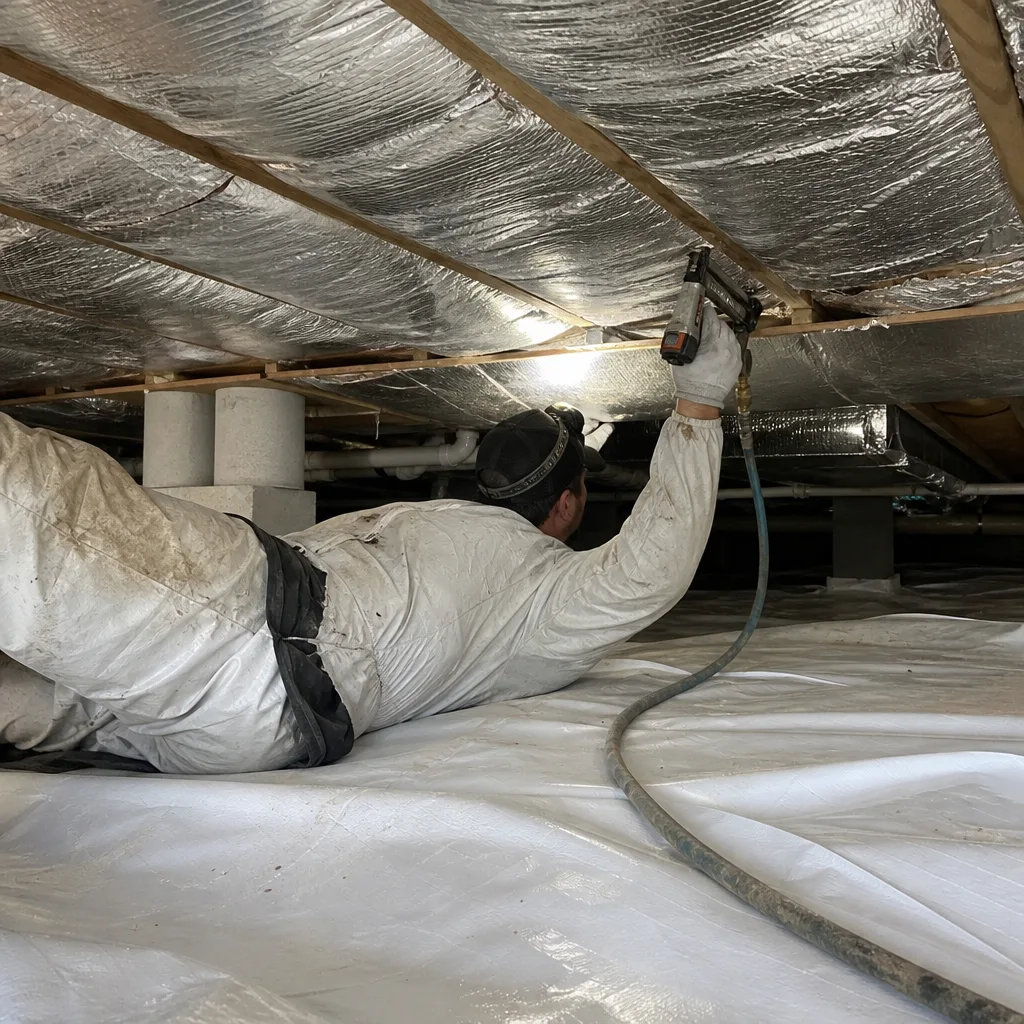
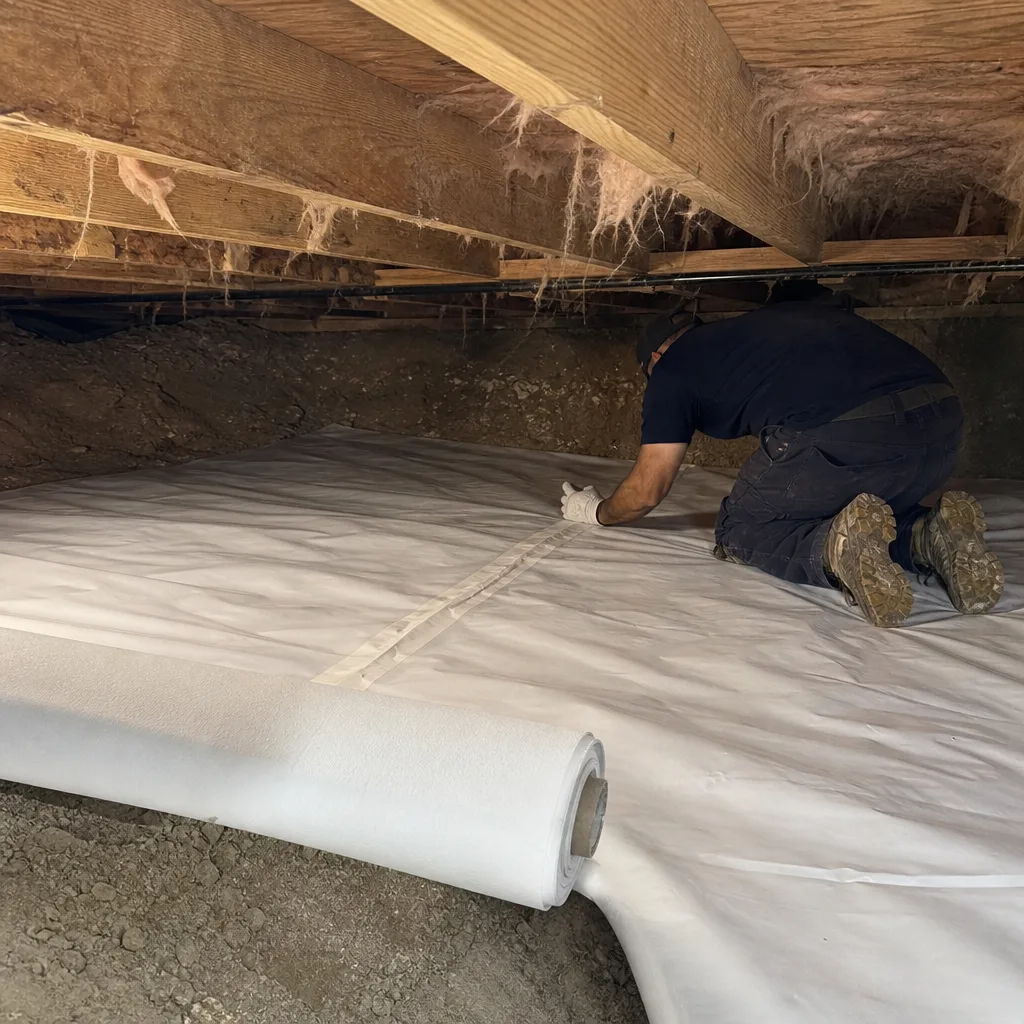
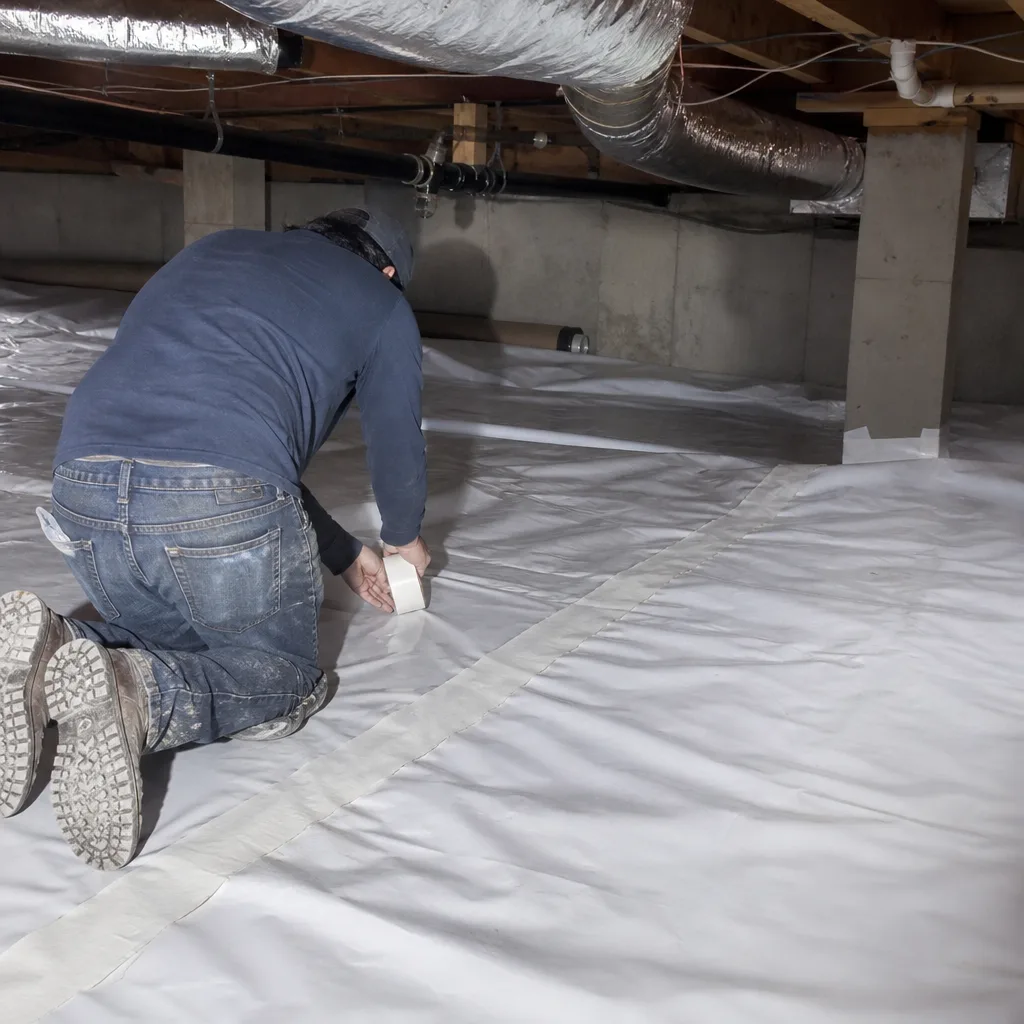
The crawl space is the other half of the envelope question here. A sealed, insulated attic combined with an uncontrolled crawl space still leaks. Crawl space encapsulation and vapor barrier in Boulder City closes the bottom of the envelope, and the two work best together.
What Documentation Should You Walk Away With?
Whether you DIY or hire, the documentation is what protects you later. If you’re hiring, ask for these and don’t take “we don’t do that” for an answer.
- A written price before any work starts. Flat, itemized, signed. A phone-quoted number that changes on the day is not a written price.
- A written scope. Exactly what will be sealed (top plates, can lights, plumbing penetrations, duct boots), what material will be used (Owens Corning, Johns Manville, Knauf, GreenFiber, Rockwool, and Icynene are all fine, and there’s no reason to accept a proprietary lock-in), and the target R-value.
- Before-and-after blower-door readings. Two numbers, in CFM50, dated. This is how you verify the job did what it was supposed to do.
- A documented photo record. Photos of the attic before, during, and after. This is what let a future buyer, inspector, or insurance adjuster know what was done, when, and by whom.
- A written warranty. The length and the terms, in writing, before the work starts.
We’ve delivered this package on 9,000+ homes since 2016, and the pattern hasn’t changed: the written record is what homeowners go back to when they have a question a year later. The 365-Day Done Right Promise is only credible because the written scope and warranty came first.
Common Mistakes to Avoid
- Blowing insulation over an unsealed attic floor. Every dollar spent on top-up material over an unsealed ceiling plane is largely wasted. Seal first, insulate second, or don’t start.
- Skipping the blower-door baseline. Without a CFM50 reading before the work, you have no way to know whether what you did helped. It’s the only honest measure of air-sealing performance.
- Using spray foam at the wrong temperature. Boulder City attics hit 140°F in July. Off-ratio or cold-applied foam is a permanent problem. Let an experienced applicator handle the two-part chemistry.
- Insulating over non-IC recessed lights. A can light not rated for insulation contact needs a protective barrier or a replacement fixture. Otherwise you’re a fire waiting to happen.
- Insulating over wet or vermiculite-contaminated material. Wet insulation traps moisture into the ceiling assembly. Vermiculite (common in mid-century Boulder City homes) may contain asbestos and requires testing before you touch it.
- Going into a knob-and-tube attic without an electrician. Old ungrounded wiring in a hot attic is the most underrated hazard in this trade. Stop if you see it.
- Doing a top-up before the monsoon without checking for penetrations. A wet August can undo a summer of insulation work entirely. Inspect, seal, then insulate.
When to Call a Professional
Call a professional if any of the following applies: knob-and-tube wiring anywhere in the attic, unrated recessed lights, suspected vermiculite or asbestos, an existing moisture problem, a blower-door reading you don’t have and need, or a home built before 1980 where the ceiling plane hasn’t been touched. The same goes for any job that includes air sealing at the top plate level. If you’re not sure which category you’re in, a written inspection answers it in under an hour.
Envelope Insulation Boulder City offers free estimates in Boulder City. Call (844) 320-7926 and a live person answers. Under the Haven Standard, you’ll get a written price before any work starts, a written scope and warranty in hand before anyone lifts a tool, a free second opinion on any competitor’s estimate you bring us, and a documented photo record when we leave. Our technicians have up to 10 years of experience, and every job that involves air sealing gets before-and-after blower-door numbers so you can see what you paid for in one figure.
Frequently Asked Questions
Yes, if your attic floor is already air-sealed, the existing insulation is dry, there’s no knob-and-tube wiring, and you have proper protective gear. In any other condition, blowing more material over an unsealed floor locks the air leaks in place and produces an unmeasurable result. Call (844) 320-7926 for a free estimate and a written inspection first.
Blown-in insulation in Boulder City typically runs $1.60 to $2.60 per square foot. When air sealing is included, expect $3.00 to $5.00 per square foot. On a 1,200-square-foot attic, that lands between $1,900 and $6,000 depending on scope. Call (844) 320-7926 for an exact written price before any work is scheduled.
If the existing insulation is dry, clean, and uncontaminated, topping up is almost always cheaper than replacing. Replacement becomes the right answer when the material is wet, compacted, moldy, or contaminated with rodent waste. In Boulder City, monsoon-season moisture is the most common reason we recommend replacement over top-up; call (844) 320-7926 and we’ll tell you which applies in your attic.
You can rent a loose-fill blower from most home improvement stores for roughly $70 to $120 per day, and you can do the top-up safely if the attic is already sealed. What you can’t do yourself is the blower-door pressure test that gives you the before-and-after numbers proving the work helped, or the air sealing that should precede the top-up. Call (844) 320-7926 for a free second opinion on what your specific attic needs.
Yes, for compensated work. Nevada requires insulation contractors to be licensed with the Nevada State Contractors Board, and unpermitted work can complicate a homeowner’s insurance claim if a later moisture or fire event occurs. Always ask for the state license number before signing. Call (844) 320-7926 for a free estimate from a licensed, insured, and bonded contractor.
A blower-door test is a pressurization reading that shows, in a single figure, how much conditioned air your building envelope is losing. It matters because it’s the only honest measure of whether air sealing and insulation work actually changed how tight your home is. On applicable jobs, Envelope Insulation Boulder City provides before-and-after readings so you can see the number change; call (844) 320-7926 to schedule one.
The Bottom Line
Top-up loose-fill, hatch covers, and hatch weatherstripping are safe DIY work in a Boulder City attic that’s already air-sealed. Spray foam air sealing, recessed light sealing, knob-and-tube wiring, and any work in a pre-1980 attic with unrated fixtures belong to a licensed professional. Blowing insulation without an air-sealing baseline produces an unmeasurable result and locks air leakage in place. On a per-effective-R-value basis, the sealed-then-insulated job usually beats the DIY top-up once you build in material, rental, protective gear, and the value of the before-and-after blower-door numbers. If you’re in Boulder City, start with a written inspection and a written price before anything else; call (844) 320-7926 for a free estimate, and ask for the photo record and blower-door readings in writing.
Written by the team at Envelope Insulation Boulder City.