
Last updated November 17, 2026
How Long Does Spray Foam Insulation Take? Timelines and What to Expect
Most homeowners are quoted a number for the spray gun, not for the whole job. The spray itself is the short part. The clock that actually decides when your house is usable again includes sealing prep, the chemical cure and off-gassing window, and the blower-door test that closes the work. OSHA’s re-occupancy guideline for two-component spray polyurethane foam is a minimum of 24 hours with ventilation, but in a tightly closed Boulder City attic in July, an application can take 48 to 72 hours to clear isocyanate concentrations to safe ambient levels without mechanical purging. This guide sequences the full job clock, zone by zone, so you know what day you get your rooms back.
Quick Answer
A typical spray foam job takes 2 to 10 hours of actual spray time depending on the zone, and the house is generally safe to re-enter 24 to 72 hours after spraying, with the longer end applying to hot, tight attics that hold off-gassing. Add a cure window of several days before the assembly is closed, and one scheduled blower-door test after full cure. For most Boulder City homes, plan on a two-visit job that spans three to five calendar days from prep to sign-off.
Table of Contents
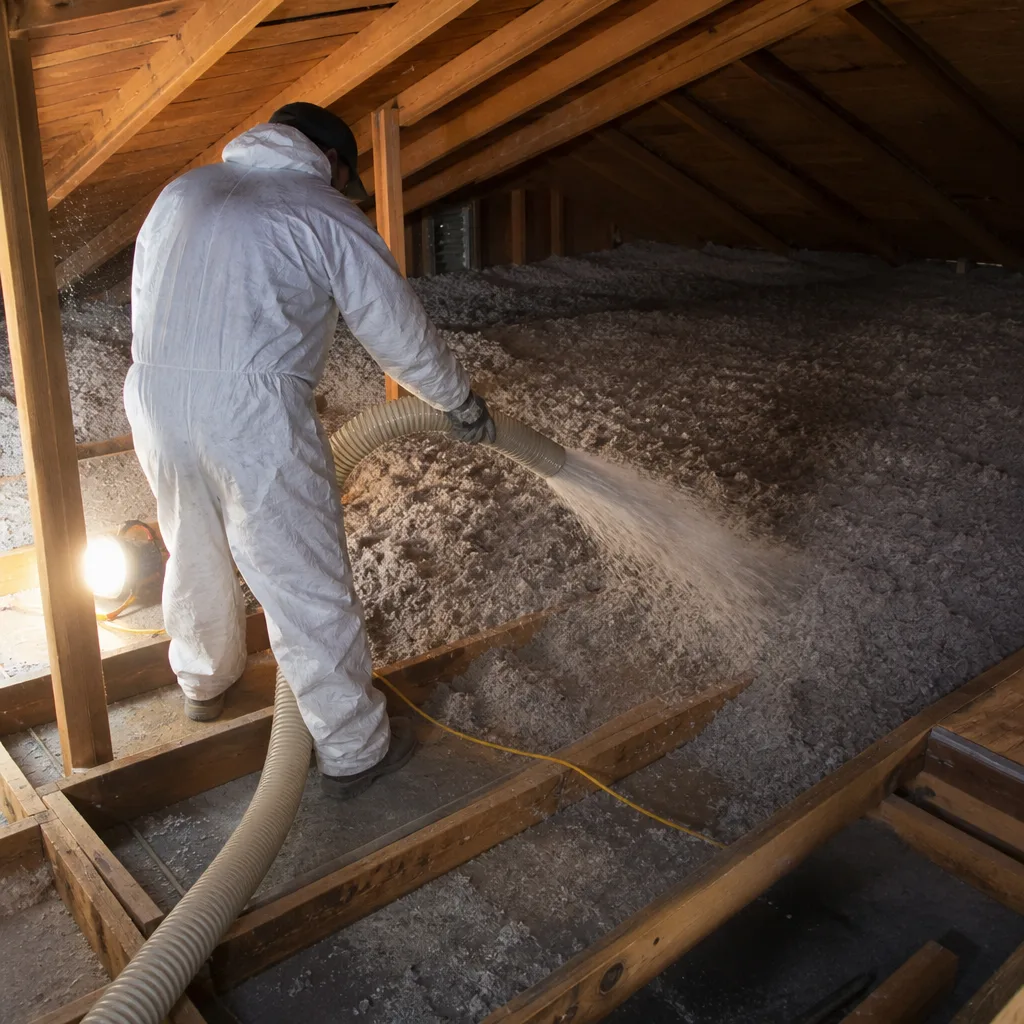
- Spray Foam Timelines by Application Zone
- The Off-Gassing Window: Tack-Free Is Not the Same as Safe
- Re-Occupancy: Who Should Stay Out, and For How Long
- Why Boulder City Summer Heat Changes the Cure Clock
- Scheduling the Blower-Door Test: Before or After Cure?
- What a Realistic Job Day Looks Like, Hour by Hour
- What Should Be in Writing Before Anyone Sprays
- Common Mistakes to Avoid
Spray Foam Timelines by Application Zone
Spray time is a function of square footage, thickness, and how much access the crew has. Here are the ranges we plan around, and what we tell homeowners in Boulder City to expect when they ask how long the crew will be in the house.
- Rim joist on a 1,500 sq ft home: 2 to 4 hours. The band along the top of the foundation is where cold air and desert heat both enter, and two-part foam here is usually a 2-inch pass.
- Unvented attic conversion: 6 to 10 hours for a typical 1,500 to 2,000 sq ft attic floor or roofline, depending on whether the foam goes on the roof deck or the flat ceiling plane. Rafters take longer because every bay is a separate pass.
- Wall cavity injection: adds 1 to 2 hours per 500 sq ft. Existing walls get drilled from the outside or inside, and each stud bay is filled before the plugs go back in.
The Off-Gassing Window: Tack-Free Is Not the Same as Safe
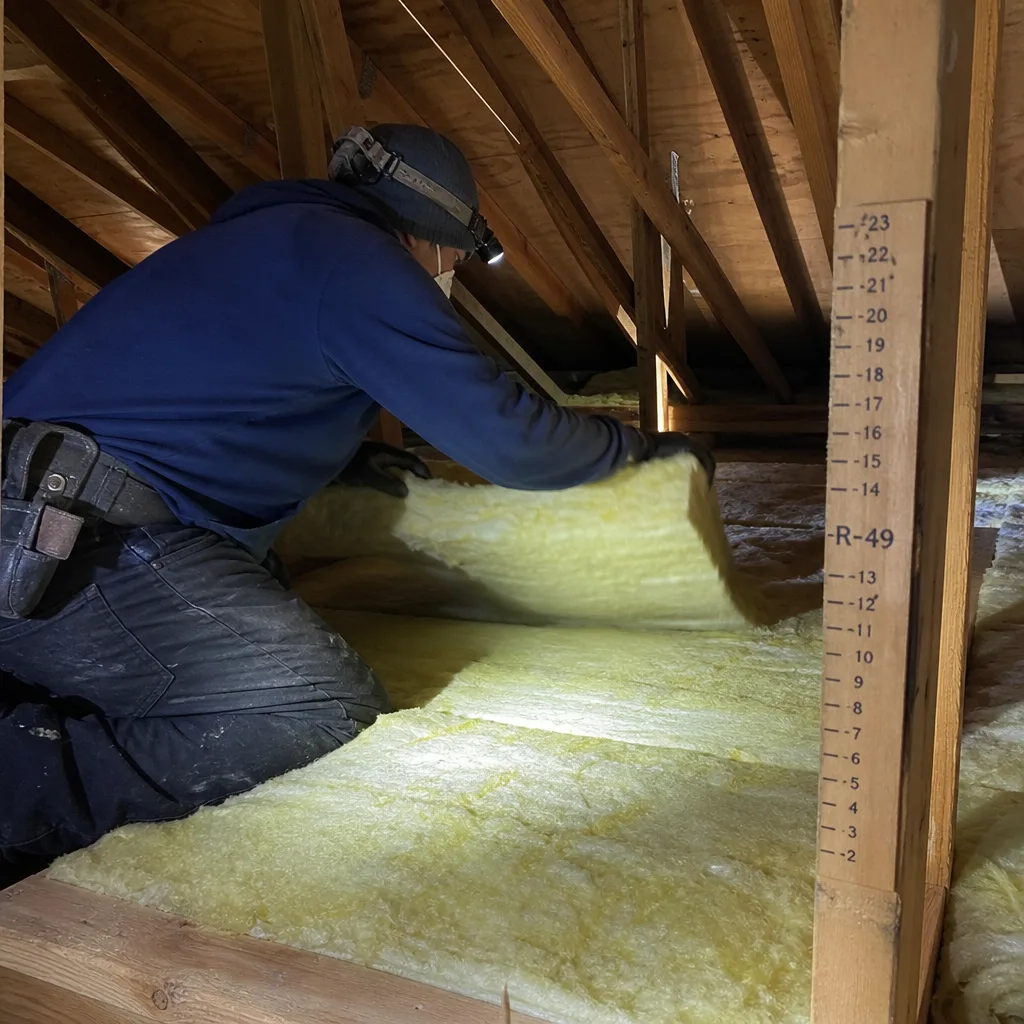
Spray foam becomes tack-free in minutes and reaches full structural cure over the following 24 to 48 hours. Those two milestones tell you when the foam is stable. They do not tell you when the air in the house is safe to breathe.
The A-side of a two-component polyurethane system contains isocyanates, and the B-side contains polyol and blowing agents. Once mixed at the gun, they react fast, but residual isocyanate vapor and blowing-agent off-gassing continue for hours to days. That is why the smell lingers in a closed house long after the surface feels dry. Ventilation rate is what drives the interval down. A house with open windows and box fans moving air clears far faster than a house that was closed up at the end of the workday.
In our experience, a rim-joist-only job in a crawl space that is already vented clears quickly, often inside 24 hours. An unvented attic in a tight Boulder City house with no mechanical purge is the slow case. Icynene and Demilec systems differ slightly in their blowing agent and cure timing, and we read the manufacturer’s technical data sheet for the specific product before we quote a re-occupancy window. No two systems are interchangeable on this point.
Re-Occupancy: Who Should Stay Out, and For How Long
OSHA’s minimum for two-component spray foam is 24 hours with ventilation, and that is a floor, not a finish line. Certain people should stay away longer, and here is what a responsible contractor should hand you in writing before anyone sets up the rig.
- Residents with asthma or reactive airways: keep out until the ambient air has been tested or the contractor documents a clear ventilation period, usually 48 to 72 hours for an attic job.
- Children and pregnant women: same window. Do not shorten it because the attic smells fine from the hallway.
- Pets: keep them out of the affected zone and out of the air path until the same period clears.
- Anyone re-entering early: a short walk-through to check on the work is not the same as sleeping in the house. Ask before you re-occupy, and get the answer in writing.
A written re-occupancy statement names the product, the ventilation method, the earliest re-entry time, and who to call if anyone develops symptoms. Under The Haven Standard, we put that in the written scope before the job, not after. That is Clause One: have it in writing.
Why Boulder City Summer Heat Changes the Cure Clock
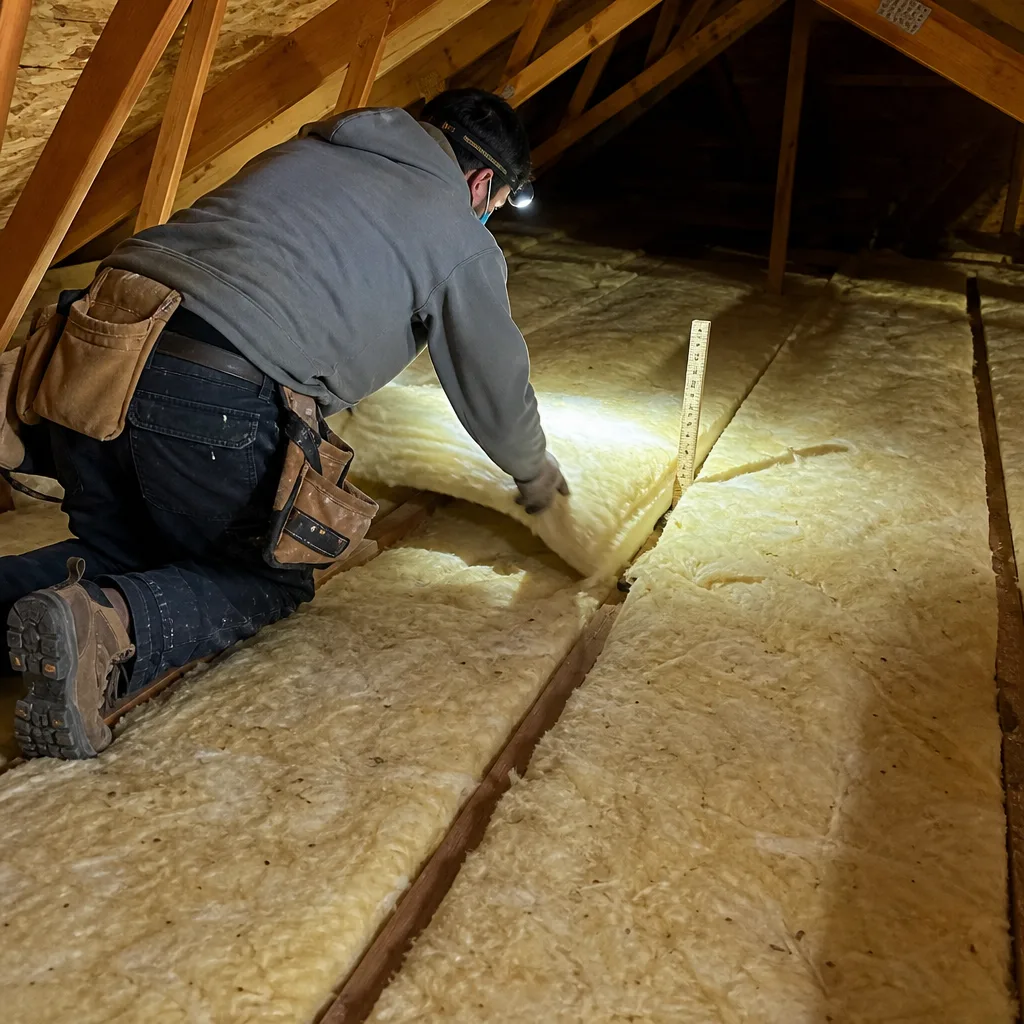
An attic in Boulder City routinely hits 150°F or higher in July and August. That heat does two things. It accelerates the initial reaction, so the foam tacks off faster and hits a working cure sooner. It also creates a risk if the assembly gets closed too quickly.
Heat builds on the exothermic side of the reaction, and the foam in a hot attic is already running warm. If a contractor foams a bay and immediately covers it or closes the house without allowing heat to dissipate, the surface can cure while the core is still reacting. That is where you get shrinkage, voids, or a soft spot that shows up as a draft in December. It is also why a responsible crew on a Boulder City summer job keeps the attic vented during the work and doesn’t recommend closing the assembly on the same visit.
Winter is a different story. Foam is temperature-sensitive and most manufacturers require substrate temperatures above a set threshold, often around 40°F to 60°F depending on product. If a crew sprays foam on a cold morning and the attic never warms, you get poor adhesion and slow cure. The material data sheet for the specific Owens Corning or Icynene product spells out the range. Ask to see it.
How fast can the house run cool again?
Once the attic is properly sealed, homeowners in Boulder City typically notice the difference the first time they run the AC, often within a day of the crew leaving. That is a comfort signal, not a cure signal. Don’t confuse the two.
Scheduling the Blower-Door Test: Before or After Cure?
The blower-door test belongs after full cure and before you sign off. Not the same day as the spray. Not two weeks later. In between.
A blower-door test is a pressurization reading that shows, in a single number, how much air your building envelope is losing. It is measured in CFM50, cubic feet per minute at 50 pascals of pressure. You cannot get a meaningful reading on foam that is still off-gassing or on an assembly that isn’t fully cure-stable, and you cannot verify air sealing if the test happens before the crew has finished every penetration.
The test result document should contain four things:
- The pre-work reading (before any spray), taken with the same equipment and conditions.
- The post-work reading (after full cure and after all air sealing is complete).
- The date, weather, and outdoor temperature, because CFM50 shifts with conditions.
- The equipment used, so a third party can reproduce the test.
We publish those before-and-after blower-door numbers on every applicable job. It is how homeowners verify what they paid for.
What a Realistic Job Day Looks Like, Hour by Hour
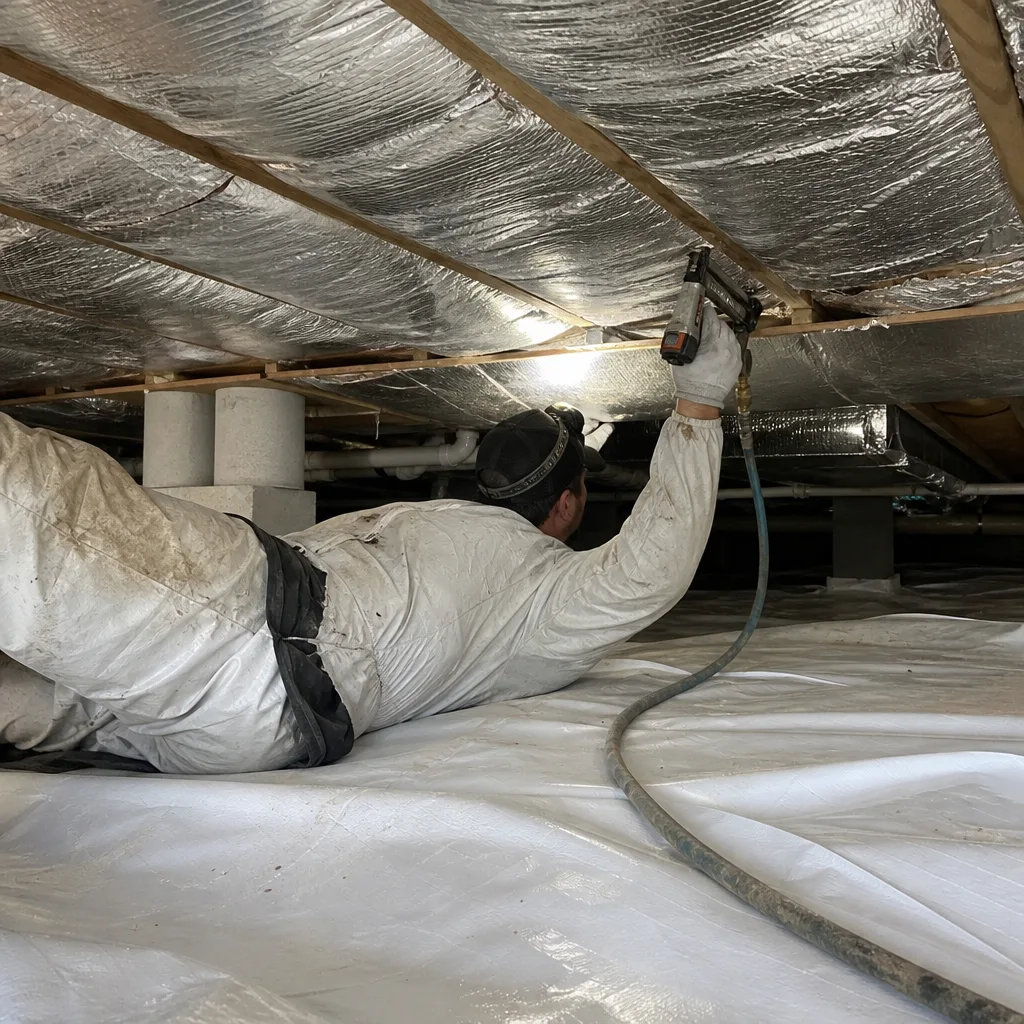
Here is the sequence for a typical unvented attic conversion in a Boulder City home. Other zones compress or expand these steps, but the order does not change.
- Arrival and setup, 30 to 45 minutes. Crew masks the space, lays drop cloths, and stages the rig. You get a text when they’re on the way.
- Air sealing, 2 to 4 hours. Top plates, can lights, wiring penetrations, and the attic hatch get sealed before any foam goes down. Seal first, then insulate. Always.
- Spray pass, 6 to 10 hours. Foam goes in, passes are checked for thickness with a gauge, and the last bay comes out as clean as the first.
- Ventilation setup, 15 minutes. Fans go in, windows get opened, and the re-occupancy clock starts.
- Documented Photo Record, end of day. Photos of each zone, the blower-door paperwork, and the written record go in your file.
Days two and three are ventilation and inspection. The blower-door test comes after full cure, usually on a second visit. Total calendar time for most Boulder City jobs runs three to five days from start to sign-off.
What Should Be in Writing Before Anyone Sprays
This is the part that separates a clean job from a headache. Under The Haven Standard, no work starts without a Written Price. Here is what should be on that sheet.
- A flat price for the scope, not an hourly estimate that can float.
- The written scope of work: which zones, what thickness, what air-sealing measures, what ventilation method.
- The written warranty, including the 365-Day Done Right Promise if you are working with us. If it’s not done right, we make it right.
- The product name and manufacturer, so you can check the technical data sheet yourself.
- The earliest re-entry time and who should stay out longer.
- The scheduled blower-door test date and what the report will include.
If a contractor wants to start before that paperwork exists, that is a signal. Every job we run starts with a written price and ends with a documented record. That has been the shape of the work since 2016.
Common Mistakes to Avoid
- Treating the spray time as the whole job. Booking a return-to-work date around the spray day and forgetting the off-gassing and test window puts families back in a hot attic zone too early.
- Skipping air sealing to save a day. Foam over an unsealed attic floor traps air leaks behind it and keeps the blower-door number high. Seal first, then insulate, or you pay twice.
- Closing the assembly the same day in a Boulder City summer. A 150°F attic traps heat in the reaction. Letting the space cool and cure before finishing the job prevents shrinkage and voids.
- Not asking who does not re-enter. A resident with asthma who walks into an attic-adjacent room on the spray day is a call you don’t want to get. The re-entry plan belongs in writing.
- Skipping the blower-door test entirely. A spray foam job without a before-and-after CFM50 reading is a job you cannot verify. Ask for the numbers or ask why they aren’t there. We’ll read a competing estimate with you for free if you’re not sure what you’re comparing.
- Assuming all products off-gas the same. Icynene and Demilec systems behave differently. Ask which system goes in your walls and what its data sheet says about cure and re-entry.
When to Call a Professional
Call a professional before you touch a two-part foam rig yourself, before you close up any spray foam job in a house where someone has asthma, and before you accept a spray-time-only quote that skips the re-entry and blower-door steps. Call us if the numbers on a competing estimate don’t add up, or if a contractor wants to start without a written price and a written warranty in hand. Our technicians have up to 10 years of experience and calls are answered by a live person, 24/7. Envelope Insulation Boulder City offers free estimates in Boulder City, and a Free Second Opinion on any written estimate you already have. Call (844) 320-7926.
Frequently Asked Questions
Most Boulder City homes run two to ten hours of spray time depending on the zone, with a total job window of three to five calendar days once you add cure, off-gassing, and the blower-door test. Rim joists are the short version, unvented attics are the long version, and wall injection adds one to two hours per 500 sq ft. Call (844) 320-7926 for an exact quote, and estimates are free.
Not in most cases. OSHA’s minimum for two-component spray foam is 24 hours with ventilation, and a tightly closed Boulder City attic in summer can push isocyanate clearance to 48 to 72 hours without mechanical purging. Plan on at least one night out, and confirm the re-entry time in writing before the crew leaves. Call (844) 320-7926 to talk through your specific home.
Most spray foam jobs in Boulder City run between roughly $1,800 and $6,500 depending on the zone, square footage, and whether air sealing is included. An unvented attic conversion of 1,500 square feet typically sits in the $3,200 to $5,500 range, and rim joist-only work is often under $2,500. Call (844) 320-7926 and we’ll give you a flat written price before any work starts.
Yes, especially in attic and rim joist locations. Boulder City summers push attic temperatures above 150°F, and a properly sealed envelope cuts the cooling load in a way that shows up on the next power bill. The blower-door number before and after the job is where you see it. Call (844) 320-7926 for a free home energy audit and a written price.
Responsible contractors should provide a written re-occupancy plan, and on larger jobs we recommend an air test before the household re-enters. At minimum you should get the earliest re-entry time, the ventilation method, and the person to call if anyone has symptoms. Call (844) 320-7926 with any questions about the process.
A blower-door test report should include a before-and-after CFM50 reading, the date and outdoor conditions, and the equipment used so a third party can reproduce the result. We publish the numbers on every applicable Boulder City job. Call (844) 320-7926 and we’ll walk through what your report will look like.
The Bottom Line
The spray is the fastest part of the job. The off-gassing window and the blower-door test determine when your house is actually usable again, and those are the two steps most quotes leave out. Plan for two to ten hours of spray time, 24 to 72 hours of re-entry delay with the long end in Boulder City summer attics, and a scheduled blower-door test after full cure. Get the re-occupancy plan, the written scope, and the written warranty before anyone sets up a rig. Then ask for the before-and-after CFM50 numbers. That is the record. Everything else is a claim.
To schedule a free estimate, call (844) 320-7926, or start with our Spray Foam Insulation in Boulder City page to see what a typical job covers.
Written by the team at Envelope Insulation Boulder City.