
Last updated November 17, 2026
Insulation Warning Signs: A Boulder City Homeowner’s Reference Guide
A utility bill that climbs $40 to $60 per month with no change in how you heat or cool your home is consistent with an attic insulation loss of roughly 20% to 25% of its effective R-value. That’s the uncomfortable part: a decline that size produces no visible sign from inside the living space. No draft you can point to, no stain on the ceiling, nothing to photograph. The house simply starts spending more energy to hold the same temperature, and the equipment absorbs the difference until it can’t. This guide pairs each observable symptom with the measurement that confirms or rules out insulation as the cause, so you’re deciding on evidence instead of a hunch. We’ve walked Boulder City attics where the only clue was the power bill, and others where the drywall told the story before the meter did.
Quick Answer
The main insulation warning signs in a Boulder City home are a climbing utility bill with no behavioral change, rooms that won’t hold temperature evenly, longer HVAC runtimes, condensation on walls or ductwork, dust streaks on ceiling drywall near light fixtures, and sagging or displaced material in the crawlspace. Each symptom has a confirming measurement, usually a blower-door test or an infrared scan, and the reading tells you whether insulation is the cause or whether you’re looking at an air-sealing problem, a duct problem, or equipment on its way out.
Table of Contents
- Why Your Utility Bill Climbed Without a Behavior Change
- Uneven Room Temperatures: When It’s the Envelope, Not the Thermostat
- HVAC Runtime: The Symptom Homeowners Never Notice
- Condensation on Walls, Ducts, and Window Frames
- Dust Streaks on Ceiling Drywall: A Boulder City Signature
- What a Thermal Bypass Looks Like on an Infrared Scan
- Crawlspace Warning Signs Specific to Boulder City Soil
- The Decision Matrix: Symptom, Measurement, Threshold
Why Your Utility Bill Climbed Without a Behavior Change
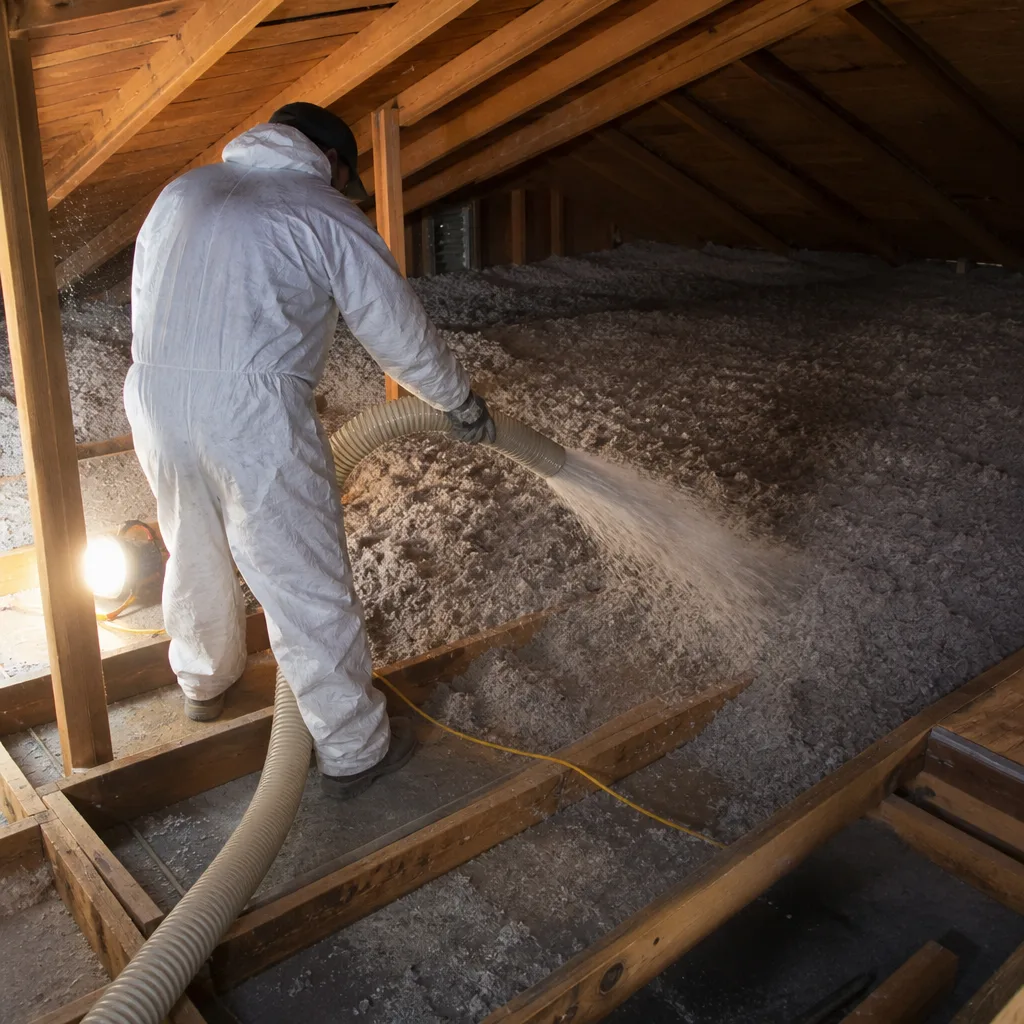
Insulation doesn’t fail all at once. It compacts, it settles, it gets displaced by a contractor who came through to run a wire and never put the batts back, it gets wet and loses R-value, or it was never installed to the depth the label promised. In a Boulder City attic, the combination of summer attic temperatures that push past 140°F and the desert’s daily swing between scorching afternoons and cool nights works on insulation over years, not overnight.
The honest diagnostic step is a blower-door test, a pressurization reading that shows, in one number, how many cubic feet per minute your building envelope loses at a standardized pressure (CFM50). That number separates the two causes homeowners constantly confuse: air leaking through gaps, and heat conducting through thin insulation. They look identical on a bill.
What we’ve seen on power bills in Boulder City tracks closely with what the blower door finds. A monthly increase in the $40 to $60 range in a home that’s being run the same way it always was usually points to lost effective R-value in the attic. In our experience, homes that read above roughly 3,500 CFM50 on a house of typical size are losing conditioned air fast enough that adding insulation before sealing it would be money spent on a problem air movement will undo. That’s why we seal first, then insulate, in that order, on every applicable job. The before-and-after blower-door reading is published so you can see the change you paid for as a single figure.
Uneven Room Temperatures: When It’s the Envelope, Not the Thermostat
If the back bedroom runs hot in July while the living room is fine, the first instinct is to blame the air conditioner or the ducts. Sometimes that’s right. But a persistent 5°F to 8°F gap between rooms that doesn’t change when the HVAC is serviced is an envelope symptom, and it’s one of the more reliable ones we see across Boulder City.
Uneven temperatures usually come from one of three things:
- Air leakage at the attic floor. Gaps around top plates, recessed can lights, and plumbing penetrations let hot attic air get pulled into the living space in summer and cold air in winter, unevenly by room.
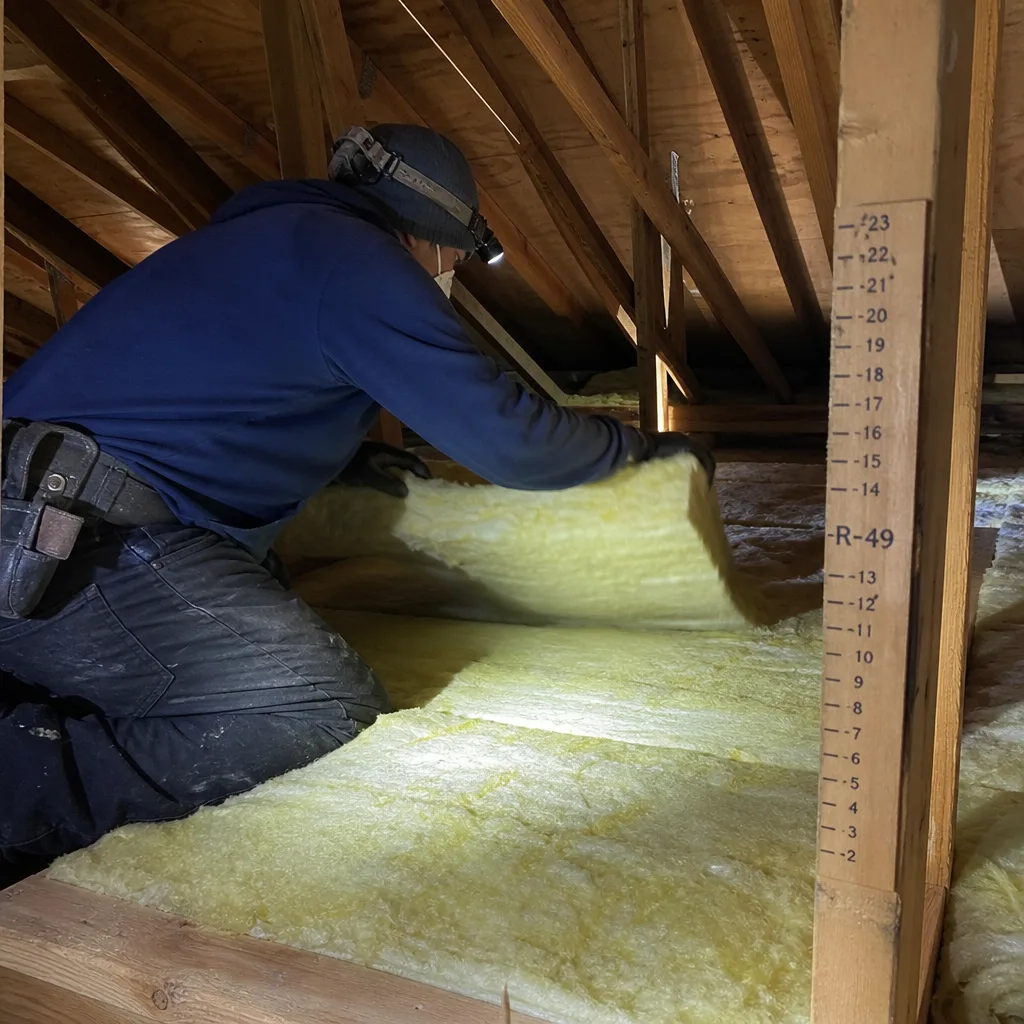
- Compressed insulation over one section. A common path, where a prior plumber or electrician laid boards over the batts and never replaced them, leaves a strip of attic with half its intended R-value.
- Duct leakage in unconditioned space. Ducts running through a hot attic lose cooling before it reaches the far rooms.
The confirming measurement is an infrared scan of the interior ceiling planes during a temperature differential, paired with the blower door. Infrared shows the cold or hot planes; the blower door tells you whether the cause is moving air or thin material. At one Boulder City home near the historic district, the scan showed a cold strip running the length of a hallway that the homeowner had blamed on a weak register for two years. It was a compression path from an old wiring run. The register was fine. Attic insulation in Boulder City addresses the material side, but the diagnosis has to come first.
HVAC Runtime: The Symptom Homeowners Never Notice
Most people track their bill but not how long the equipment runs. An air conditioner that used to cycle off after 15 minutes and now runs 25 to 30 minutes per cycle is working harder to move the same heat, and insulation loss is one of the leading causes.
- Check the thermostat’s runtime history. Most smart thermostats log daily runtime; compare this month against the same month a year ago.
- Note the outside temperature on the days you compare. Runtime only tells you something when the weather is roughly matched.
- Look for a rise without a weather explanation. A 20% to 30% jump in runtime on comparable days is the threshold where we schedule a blower-door test.
- Rule out equipment before the envelope. A dirty coil or a failing capacitor will also increase runtime, and a qualified HVAC technician should check the system first.
A longer runtime makes sense once you understand what’s happening: the house is losing heat faster than before, so the equipment cycles on more often to replace it. The equipment isn’t broken. It’s compensating. That compensation is exactly why most Boulder City homeowners don’t call until the air conditioner fails, by which point it has been carrying the envelope’s shortfall for years. The compressor pays for insulation that’s no longer doing its job.
Condensation on Walls, Ducts, and Window Frames
Condensation is water vapor turning to liquid on a surface cold enough to pull it out of the air. In a Boulder City home, that’s usually an interior wall on the north side in winter, ductwork in a humid crawlspace, or window frames where the glass meets a cold wall.
The key distinction: condensation on the inside of your windows on a cold morning is normal and comes from indoor humidity. Condensation on the wall surface near a duct, on a duct itself, or on the crawlspace joists is telling you about a thermal bridge or a moisture problem, and it can point to insulation that’s missing, wet, or displaced.
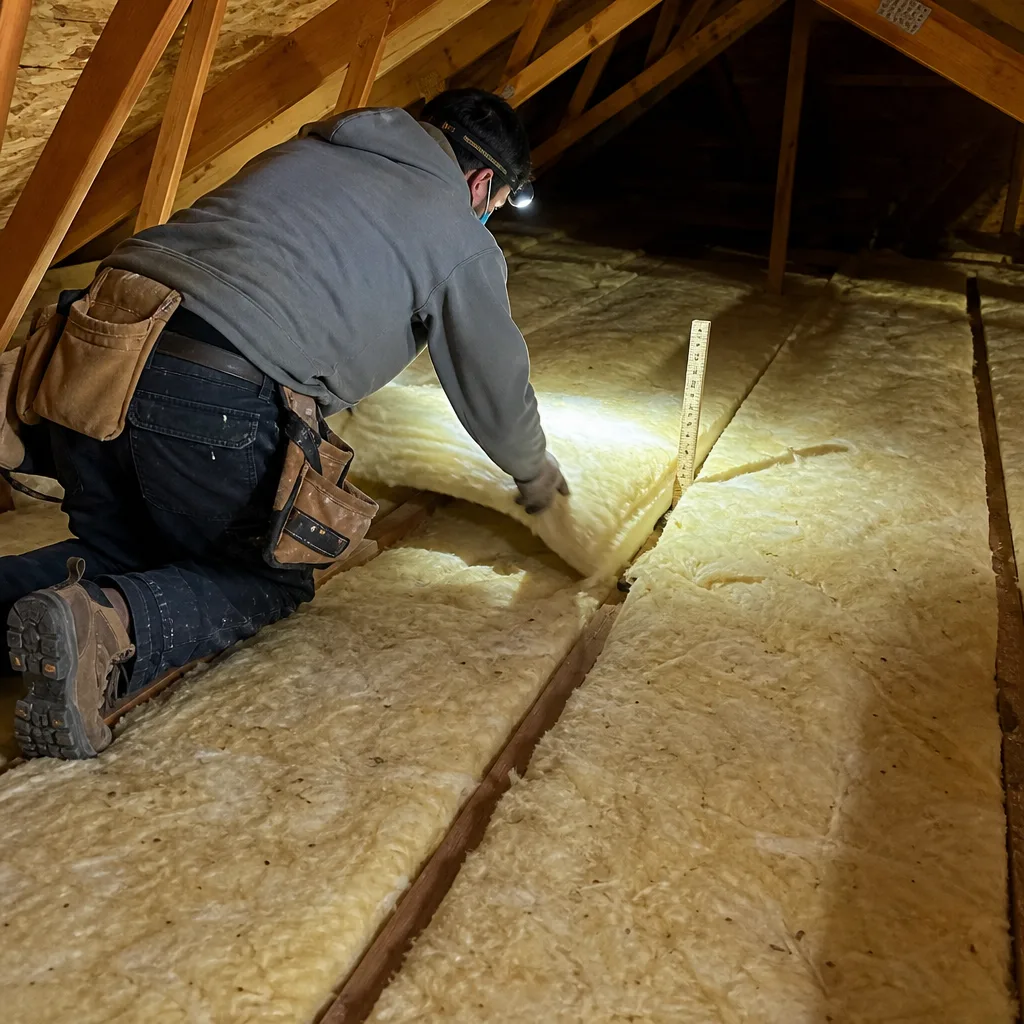
- Wet fiberglass batts in the crawlspace or on a wall lose most of their insulating value and stay wet, which is a moisture problem, not just an insulation problem.
- Condensation on supply ducts running through a humid crawlspace is common in Boulder City and is a crawlspace moisture symptom before it’s an insulation one.
- Wall-surface condensation in a single spot often marks a spot where insulation is missing behind the drywall, letting the interior surface run cold.
The confirming measurements are an infrared scan of the wall surface (cold spots show as a distinct temperature drop) and a moisture meter reading of the insulation itself. If the reading shows wet material, remove and replace before adding anything new. Crawl space encapsulation and vapor barrier in Boulder City is often the right first step when the condensation is coming from below.
Dust Streaks on Ceiling Drywall: A Boulder City Signature
If you see faint gray or brown streaks radiating from a ceiling light fixture, a recessed can, or a smoke detector in a Boulder City home, that’s not a dirty air filter. It’s air transport through a gap in the attic floor. The streaks are the visible footprint of the stack effect: warm air rising through the penetration, carrying fine dust particles with it, and depositing them where the air slows down at the ceiling surface.
It’s a signature sign in Boulder City specifically because of how many homes here have recessed can lights in the main living areas and an attic floor that was never air-sealed around them. The streaks show up in the living room, but the problem lives in the attic.
The confirming step is an air-sealing inspection of the attic floor from above, followed by a blower-door reading before any new insulation goes in. If the streaks are present, the attic floor has unfiltered paths into the living space, and blowing new insulation over those gaps seals nothing. It hides the problem. We won’t do that, and under The Haven Standard we write the scope, the price, and the warranty before anyone lifts a tool, so you know the air sealing is in the job rather than an add-on someone brings up later.
What a Thermal Bypass Looks Like on an Infrared Scan
A thermal bypass is the trade term for a path where heat flow is carried by moving air rather than conducted through material, and the attic hatch is the most common one in any Boulder City home. On an infrared scan taken from below during a cold morning or a hot afternoon, an unsealed hatch cover reads as a distinct temperature anomaly: bright in summer, dark in winter, often rectangular, and noticeably out of balance with the surrounding ceiling plane.
A properly air-sealed hatch cover looks different. The thermal signature flattens out. The temperature line across the cover is close to the line across the adjacent drywall, because the moving air has been stopped. It’s not that the hatch is colder or warmer; it’s that the cover is no longer a short circuit between the attic and the room.
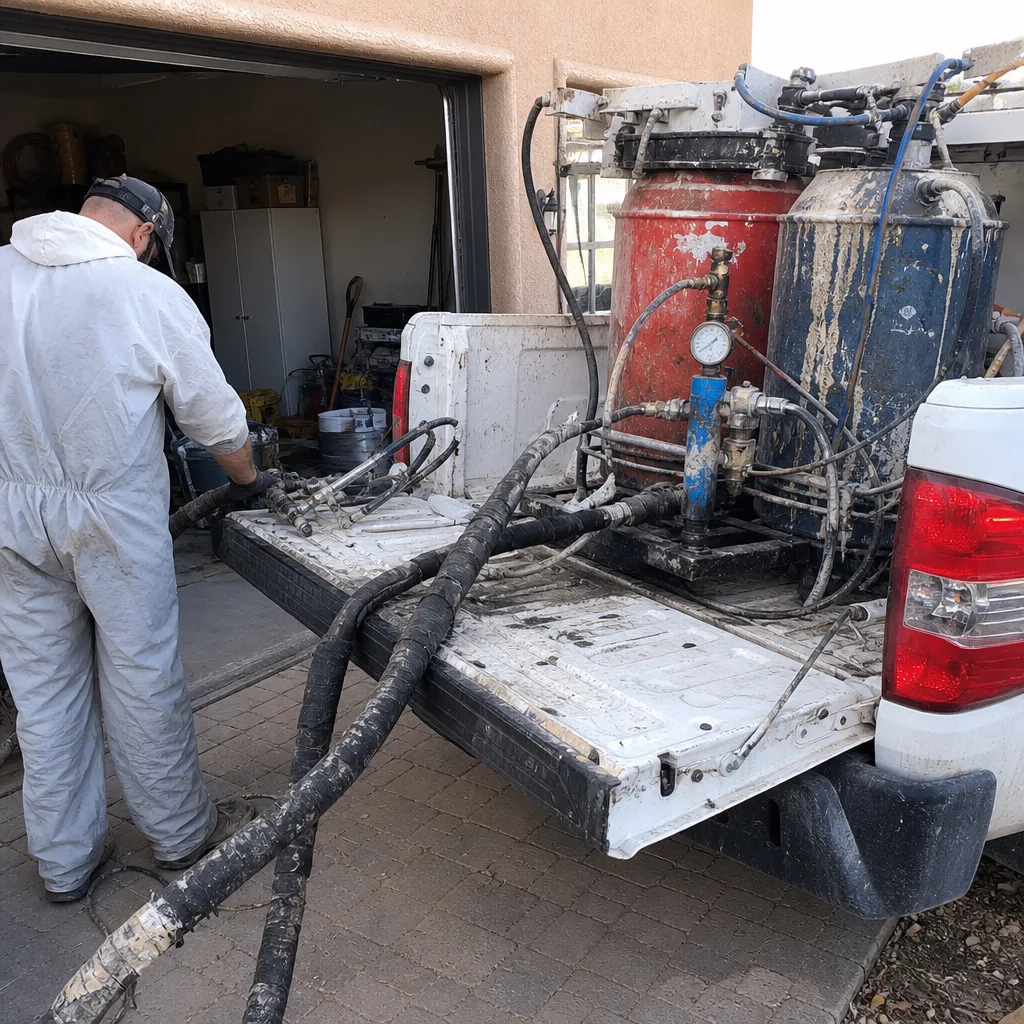
That scan is a free inspection most contractors skip, because a hatch cover is a small dollar item and the diagnostic takes time. We think that’s backwards. A homeowner can’t make a decision they can’t see. This is also where spray foam insulation in Boulder City earns its place: on irregular penetrations where batts or blown material can’t close the gap, spray foam is the material that stops the air transport.
Crawlspace Warning Signs Specific to Boulder City Soil
Boulder City sits on caliche-heavy desert soil with high mineral content, and that shows up in the crawlspace in ways that don’t look like insulation problems at first glance. Three warning signs are worth knowing:
Efflorescence on foundation walls
White, chalky mineral deposits on the inside face of a foundation wall are efflorescence, minerals left behind when moisture moves through the concrete and evaporates at the surface. It doesn’t mean the concrete is failing. It means moisture is moving, and that moisture is getting into the crawlspace insulation.
Vapor barrier displacement
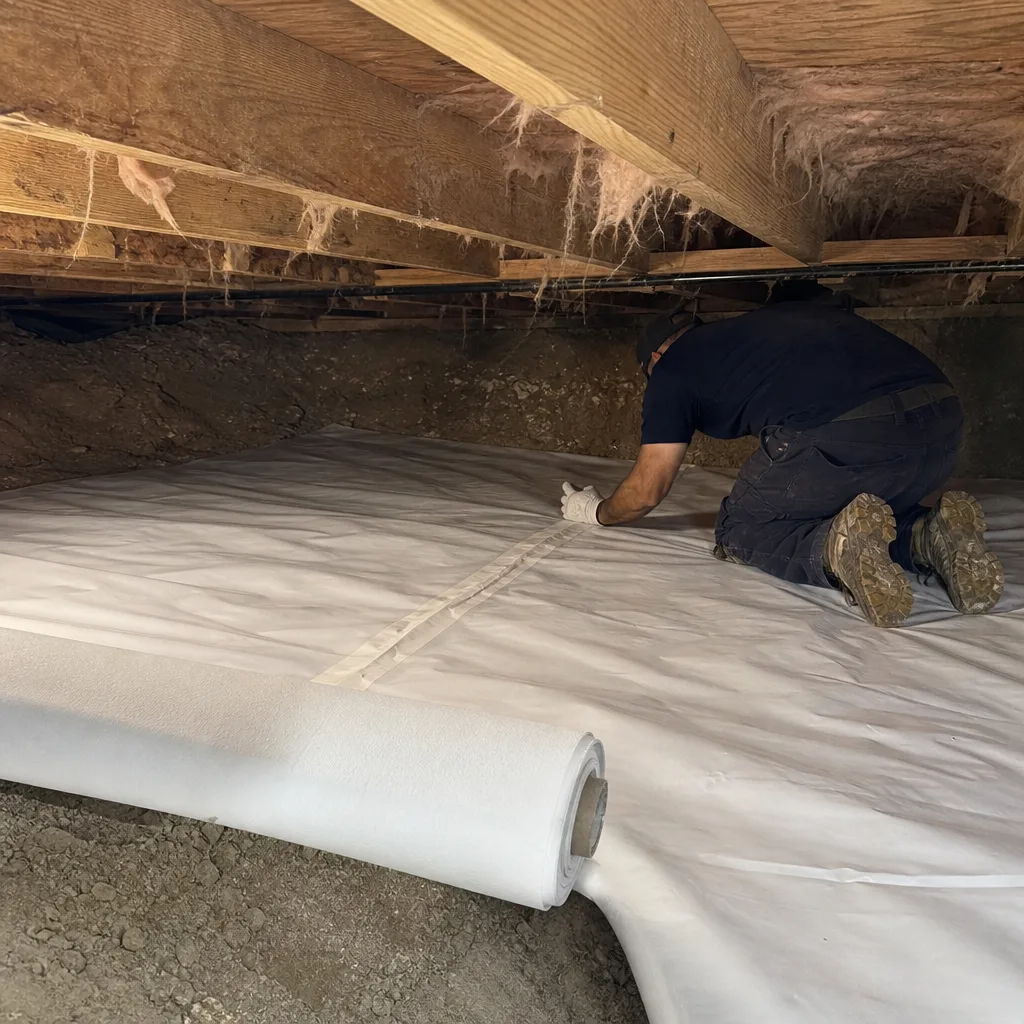
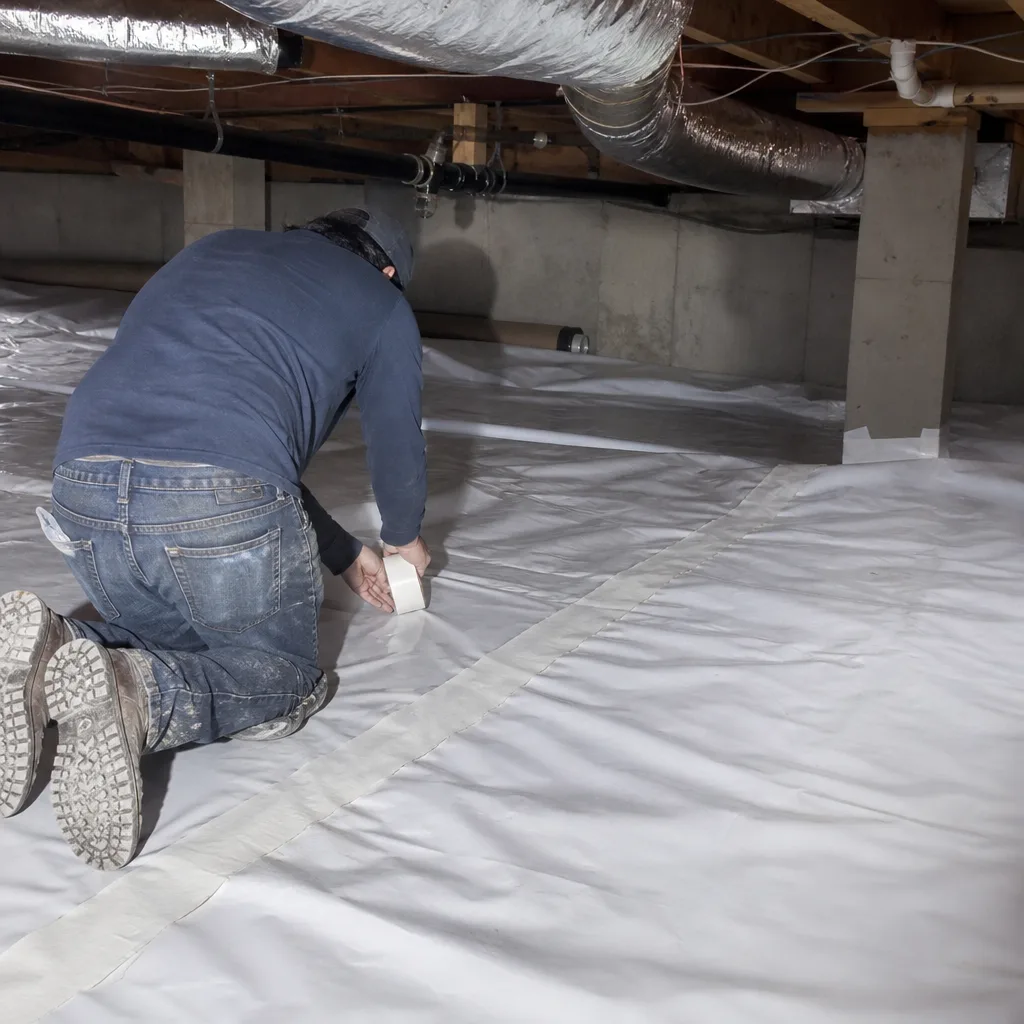
A ground vapor barrier is supposed to stay put over the soil. If it’s bunched, torn, or pulled back from the edges, ground moisture is entering the crawlspace and finding its way into the insulation above.
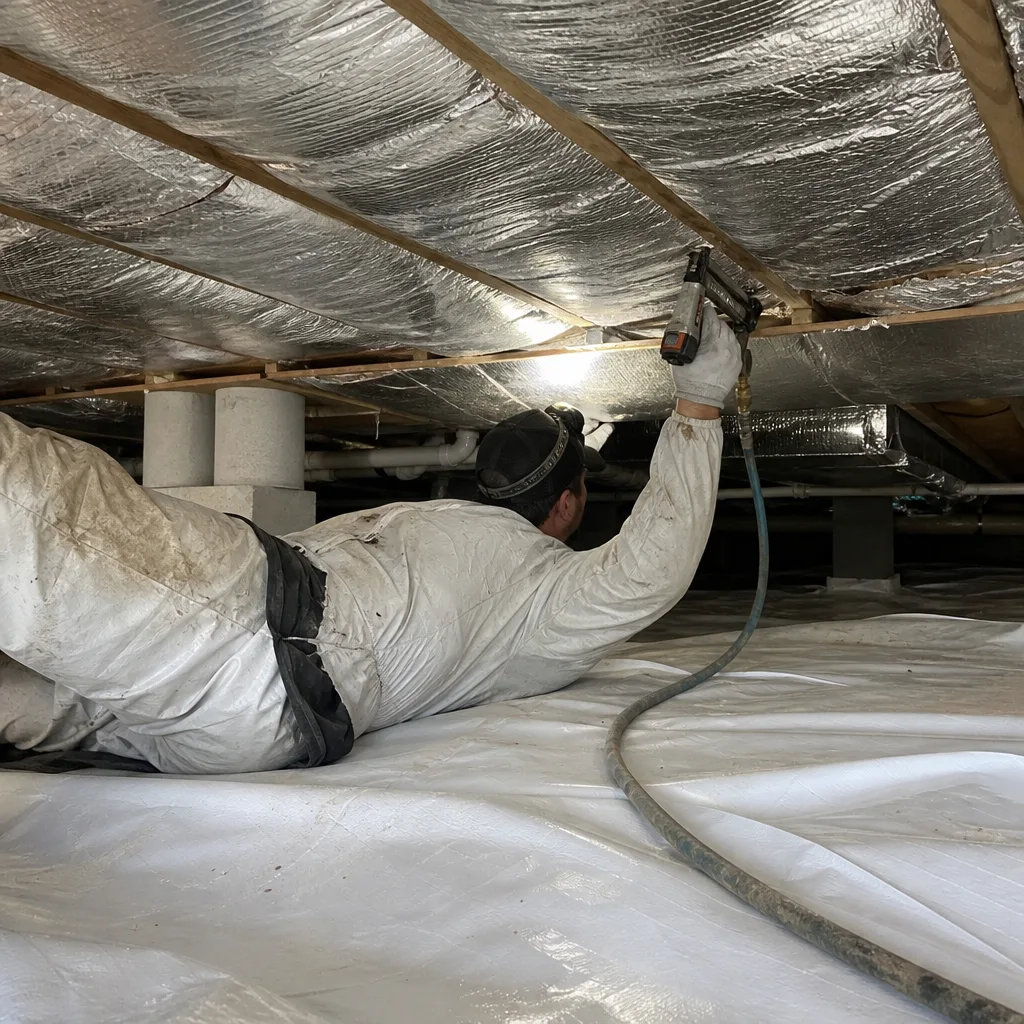
Fiberglass batts sagging between joists
Batts that have sagged away from the subfloor leave a gap where air moves freely. That gap is the insulation failing in a way you can see once you know to look. If the batts are also wet or dirty, replacement is usually the correct call over re-hanging the same material.
The confirming measurement is a moisture reading on the wood framing and insulation, paired with a humidity reading of the crawlspace air. If the readings stay above the safe threshold, encapsulation is the work that fixes it. A crawlspace problem left alone eventually shows up as a first-floor comfort complaint and a higher humid-season power bill.
The Decision Matrix: Symptom, Measurement, Threshold
Here’s how we walk through a diagnosis. Find your symptom, look at the measurement that confirms it, then compare your reading against the threshold. Below the threshold, you monitor. Above it, we remediate.
- Bill rose $40 to $60/month, no behavior change. First step: blower-door test. Threshold: about 3,500 CFM50 on a typical house. Above it, air sealing is the first work, insulation second.
- Uneven room temperatures of 5°F to 8°F. First step: infrared scan of the ceiling planes plus the blower door. Threshold: the scan shows a distinct plane on one room. Above it, air seal and correct the compressed section.
- HVAC runtime up 20% to 30% on similar weather. First step: rule out equipment with an HVAC technician, then blower door. Threshold: runtime is up with a clean equipment bill. We test the envelope.
- Dust streaks on ceiling drywall near a can light. First step: attic-floor air-sealing inspection + blower door. Threshold: any visible streak. Seal before insulating.
- Condensation on a wall or duct. First step: infrared + moisture meter. Threshold: surface stays cold while the room isn’t. Insulation gap or duct issue; moisture reading of the material decides whether to replace.
- Efflorescence, barrier displacement, or sagging batts in the crawlspace. First step: moisture and humidity readings. Threshold: readings stay high. Encapsulation or removal-and-replace is the work.
The order matters more than the list. Our Envelope Insulation Boulder City home page goes deeper on the full service line, but the operating rule is consistent: measurement first, written price second, work third, documented record last.
Common Mistakes to Avoid
- Blowing new insulation over an unsealed attic floor. New material hides the air leaks and leaves the real loss in place. The blower-door number barely moves, and you paid for material that heat walks right past.
- Using utility bills as the only test. A bill shows you the symptom; it doesn’t tell you whether you need air sealing, insulation, or a duct fix. Without a blower door or infrared scan, you’re guessing at the prescription.
- Ignoring crawlspace moisture because the living space feels fine. In Boulder City, efflorescence and a displaced vapor barrier usually read as a first-floor comfort problem long before anyone looks under the house.
- Reading the R-value on the label as the R-value you have. Settled, compressed, or wet insulation is delivering less than the number printed on the bag, and a bill that’s climbed without a lifestyle change is the usual signal.
- Patching condensation with a dehumidifier and calling it fixed. The dehumidifier treats where the water shows up. It doesn’t stop the cold surface that’s pulling the water out of the air.
- Skipping the free second opinion on a written estimate. Bring a competing quote and we’ll read it with you. A line you can’t find on the page is worth asking about before you sign anything.
- Treating your HVAC equipment as the cause before the envelope. A bigger air conditioner installed to fix an uneven room is a costly way to compensate for an insulation problem that’s still there.
When to Call a Professional
Call when you’ve noticed a bill rise of $40 to $60 a month with no behavior change, when rooms run 5°F to 8°F apart, when HVAC runtime has climbed 20% to 30% on matched weather, when dust streaks appear near a can light, or when the crawlspace shows efflorescence or sagging batts. Those are the scenarios where the diagnosis needs a blower door and an infrared scan rather than a guess. Don’t let a contractor blow insulation into a Boulder City attic without those readings first; the order of the work is the whole job. Envelope Insulation Boulder City offers free estimates in Boulder City. Call (844) 320-7926 and we’ll schedule the walkthrough. A live person answers, 24/7, and no work starts without a written price.
Frequently Asked Questions
The earliest reliable sign is a utility bill that climbs $40 to $60 a month with no change in how you run the house, followed by uneven room temperatures and longer HVAC runtime. None of these show up inside the living space as visible damage, which is why the bill and the runtime log are the measurements worth watching. Call (844) 320-7926 to schedule a free estimate and a blower-door test to confirm whether insulation is the cause.
Most attic insulation jobs on a typical Boulder City home land somewhere in the low-to-mid four figures once air sealing is included, with crawlspace encapsulation running higher depending on square footage and moisture readings. We don’t quote blind. The written price comes after the blower-door and infrared readings, and it’s delivered before any work starts. For an exact figure, call (844) 320-7926; the estimate is free.
No, and that’s the risk of diagnosing from symptoms alone. Air leakage and thin or compressed insulation produce nearly identical bills, uneven rooms, and runtime increases. The blower-door test and the infrared scan separate them, and the blower-door reading decides whether air sealing comes before insulation or the insulation was the whole problem. Call (844) 320-7926 to book the diagnostic.
Dust streaks near a ceiling light fixture or recessed can mark a gap through the attic floor where warm air is rising and carrying dust with it, then depositing it where the air slows at the ceiling surface. That’s an air-sealing problem in the attic, not dirty air returns, and it means any new insulation would go over an unsealed gap. Call (844) 320-7926 for the free inspection.
It depends on the material’s condition. Dry, settled insulation can often be topped up after air sealing, while wet, compressed, or rodent-damaged insulation is usually cheaper to remove and replace than to work around. The moisture meter and a visual inspection decide which you’re in. For a written price on either path, call (844) 320-7926.
We schedule as quickly as possible, and the call line is answered by a live person 24/7, so start there. The first visit is a free estimate and a walkthrough with the blower door and an infrared scan, and you’ll leave it with a written price and the readings that justify it. Call (844) 320-7926 and we’ll find you a slot.
The Bottom Line
Insulation failure in a Boulder City home is thermal and mechanical before it’s visible. The bill, the runtime, the temperature gap between rooms, and the dust streaks are the early warnings; the confirming measurement is a blower-door reading and an infrared scan, and the order of the work (seal first, insulate second) is what makes the reading move. If you’re seeing any symptom in this guide, the next step is a measurement, not a new air conditioner. Our technicians have up to 10 years of experience, and we’ve sealed and insulated 9,000+ homes since 2016, each with a written price before work started and a documented record when the crew left.
Call (844) 320-7926 for a free estimate, and we’ll show you what the readings say before you decide anything.
Written by the team at Envelope Insulation Boulder City.