
Last updated November 17, 2026
Seasonal Insulation Care for Boulder City: Year-Round Homeowner’s Guide
Boulder City recorded 23 days above 105°F in 2023 and 14 nights below freezing over the same year. That’s a 90-degree swing pressing on your attic insulation, crawlspace vapor barrier, and duct insulation in opposite directions within twelve months. Most homeowners treat insulation as a one-time install and never look at it again. In Boulder City, that assumption costs money in both seasons: cooling dollars bleed through attic gaps in July, and heated air leaks out through unsealed rim joists in January. This guide breaks the year into four inspection quarters, each targeting the envelope zone under the most stress, so you know what to check and when.
Quick Answer
Insulation in Boulder City needs a quarterly inspection tied to the two seasonal extremes, not a single annual check. In broad terms: inspect the crawlspace after winter freeze-thaw cycles (Q1), audit attic depth and ventilation before cooling season (Q2), check duct insulation during peak summer load (Q3), and re-inspect radiant barriers and blown depth after thermal cycling (Q4). Each quarter targets a different failure mode, and the low average humidity of 21% RH changes how you spec a vapor barrier compared to wetter parts of Nevada.
Table of Contents
- Why Boulder City’s Climate Breaks the Annual-Inspection Habit
- Q1 (January – March): Crawlspace Inspection After Freeze-Thaw
- Q2 (April – June): The Pre-Cooling-Season Attic Audit
- Q3 (July – September): Duct Insulation During Peak Load
- Q4 (October – December): Post-Summer Radiant Barrier and Blown Depth
- Why 21% RH Changes the Vapor Barrier Calculation
- Common Mistakes to Avoid
- When to Call a Professional
Why Boulder City’s Climate Breaks the Annual-Inspection Habit
Most of the country can get away with one attic inspection a year because their seasonal swing is modest. Boulder City doesn’t allow that. The desert basin sits at roughly 2,500 feet, and that elevation produces cool winter nights even when daytime highs crawl into the 60s. Summer afternoons routinely pass 105°F. The result is a building envelope that expands, contracts, dries, and rehydrates on a cycle most of the country never sees.
What that means in practice: a single inspection in, say, October tells you almost nothing about what the attic will look like in July. The failure modes are different. Summer stresses the duct insulation and radiant barrier through sustained heat. Winter stresses the crawlspace through condensation and freeze-thaw at the rim joist. A homeowner in Boulder City who only checks insulation once a year will catch one set of problems and miss the other entirely. The schedule below fixes that by rotating the inspection target every quarter.
If you’re new to how the building envelope fits together, our Envelope Insulation Boulder City home page explains the anatomy: attic, walls, crawlspace, and how air sealing ties them all together before any insulation goes in.
Q1 (January – March): Crawlspace Inspection After Freeze-Thaw
Boulder City’s overnight lows dip below freezing maybe a dozen times a winter. That’s enough freeze-thaw cycling to stress the rim joist, the crawlspace vents, and the vapor barrier itself. Q1 is when you look for the evidence.
What to check
- Walk the crawlspace with a flashlight. Look at the vapor barrier for standing water, beads of condensation, or dark damp patches.
- Inspect the rim joist, the wood band that sits between the foundation and the floor above. Look for staining, soft wood, or daylight gaps.
- Check for condensation on the underside of the vapor barrier, especially where it meets the foundation wall.
- Feel for cold air moving past the rim joist on a windy day. Any steady draft signals an air-sealing failure.
- Check that the vapor barrier overlaps are taped and not curling. Freeze-thaw lifting is common.
Condensation on the vapor barrier in winter is a diagnostic signal. It usually means one of two things: warm interior air is reaching the cold underside of the barrier through an unsealed rim joist or a top-plate gap above, or ground moisture is migrating up through an under-spec barrier. In our experience, the first is far more common. Air sealing the rim joist and top plate is the fix, and it happens before any new insulation goes in. That sequence matters: blowing insulation over an unsealed attic or crawlspace floor traps the leak, it doesn’t fix it.
If you find active condensation or soft wood, that’s a scope for Crawl Space Encapsulation & Vapor Barrier in Boulder City. It’s not a do-it-yourself patch, and delaying it into spring usually means more damage.
Q2 (April – June): The Pre-Cooling-Season Attic Audit
By April, Boulder City starts its climb toward the 105°F-plus afternoons. Q2 is when you measure what’s actually in the attic and check that nothing is actively fighting your cooling system before the load hits.
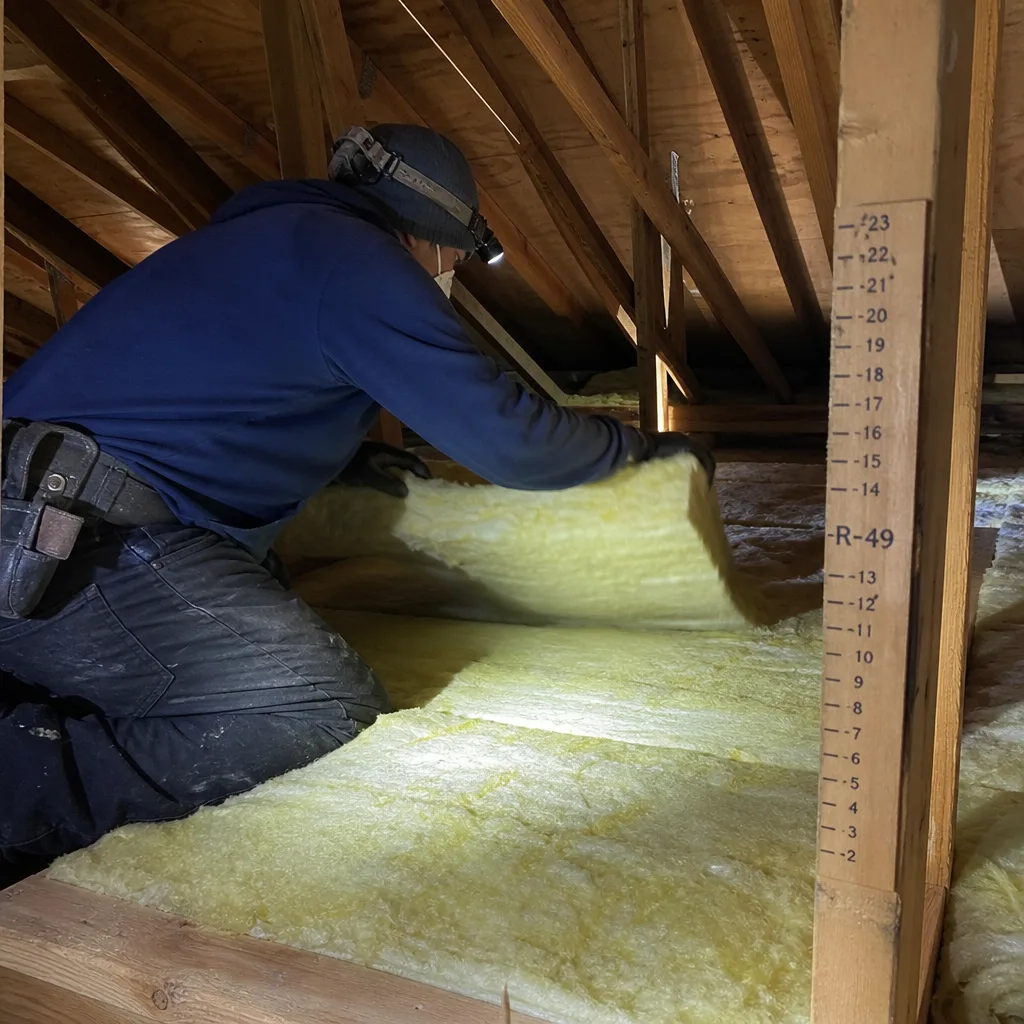
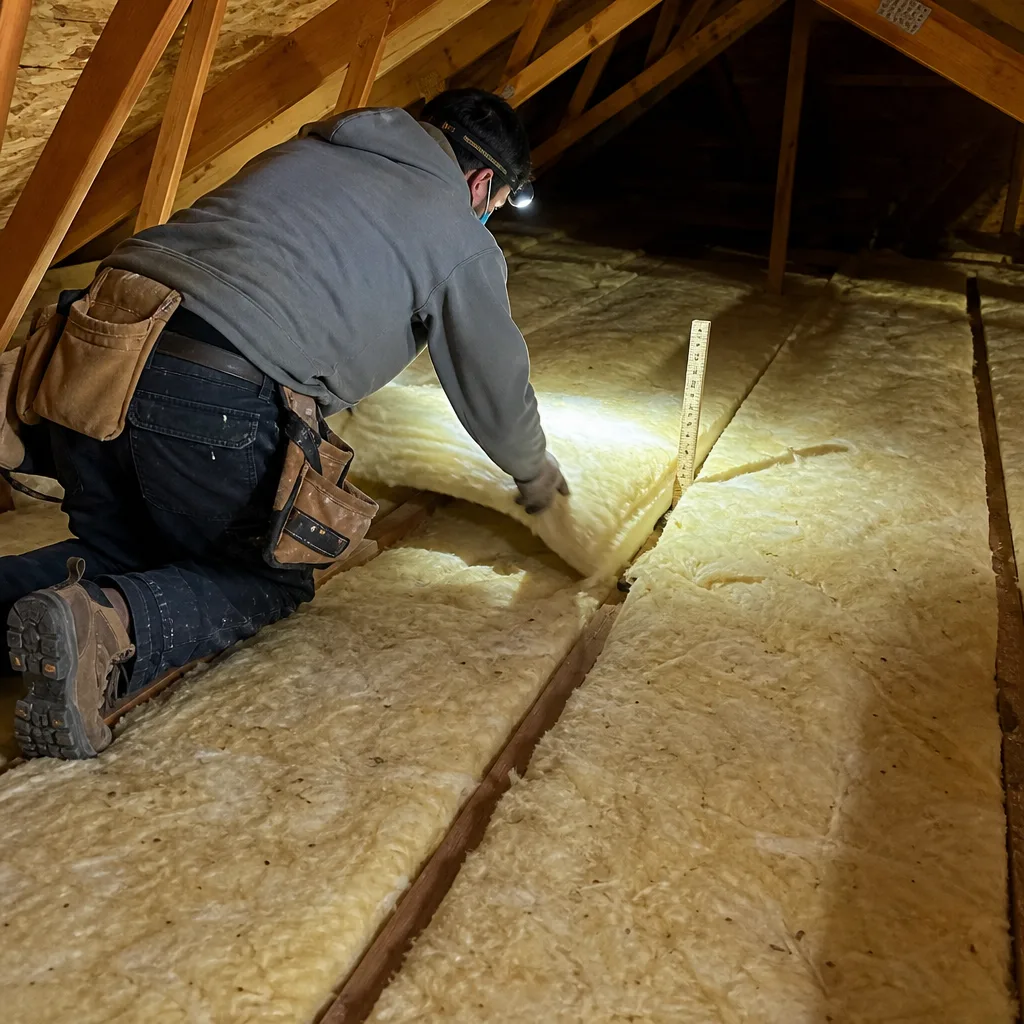
Measure depth at five representative points
Don’t eyeball the attic from the hatch. Take a ruler, and measure the insulation depth at five spots: near the hatch, over the center of the living space, at the far corners, along the eaves, and one spot over a known hot ceiling. Write the numbers down. Owens Corning and Johns Manville both publish R-value-per-inch tables, so inches translate straight into an R-value. If you’re seeing 8 inches of blown fiberglass where recommendations call for 14+, you’ve got a shortfall.
Check for ventilators that pull air the wrong way
Powered attic ventilators are common in Boulder City’s older construction. Here’s the catch: a powered ventilator with an under-sealed attic floor creates negative pressure in the attic, which pulls conditioned air from your living space up through every can light, top plate gap, and wire penetration. You end up cooling the attic with the air you paid to condition inside. The diagnostics are simple:
- Stand in the attic on a hot afternoon. If you can feel the ventilator drawing a strong draft at the hatch, it’s probably pulling conditioned air.
- Check whether the ventilator runs on a thermostat. If it runs whenever the sun hits the roof, it’s doing more work than it should.
- Look at the air-sealing: top plates, can lights, and wire holes should be sealed. If they’re open, the ventilator has an easy path.
For a deeper look at the pre-season audit and what a proper install looks like, see our page on Attic Insulation in Boulder City.
Q3 (July – September): Duct Insulation During Peak Load
In July and August, Boulder City’s cooling equipment runs harder than any other time of year, and that’s when duct insulation failures show up. The main symptom to watch for is duct sweating, condensation forming on the outside of the duct in a conditioned crawlspace or a cooled attic. Sweating isn’t just a nuisance; it’s a signal that the duct insulation has separated, been compressed, or has a gap at a joint. The duct surface has dropped below the dewpoint of the surrounding air because the insulation is no longer insulating.
Where to look
- Along the top of every duct run, where mastic or tape can fail first.
- At elbows, where insulation is most likely to compress.
- At the plenum transition, where duct meets air handler.
- Where ducts pass through framing, especially at headers.
Compressed duct insulation is a common finding in Boulder City attics. Someone stepped on it during the original install, or it got squashed against the roof deck, and the R-value drops by half in that spot. Spray foam insulation is often the right fix for duct chases and plenum transitions because it seals and insulates in one pass. If you’re weighing that route, our Spray Foam Insulation in Boulder City page walks through the spec.
Q4 (October – December): Post-Summer Radiant Barrier and Blown Depth
After a full summer of heating and cooling cycles, radiant barriers and blown insulation both need a look. The two failure modes are different but they happen in the same walk-through.
Radiant barrier inspection
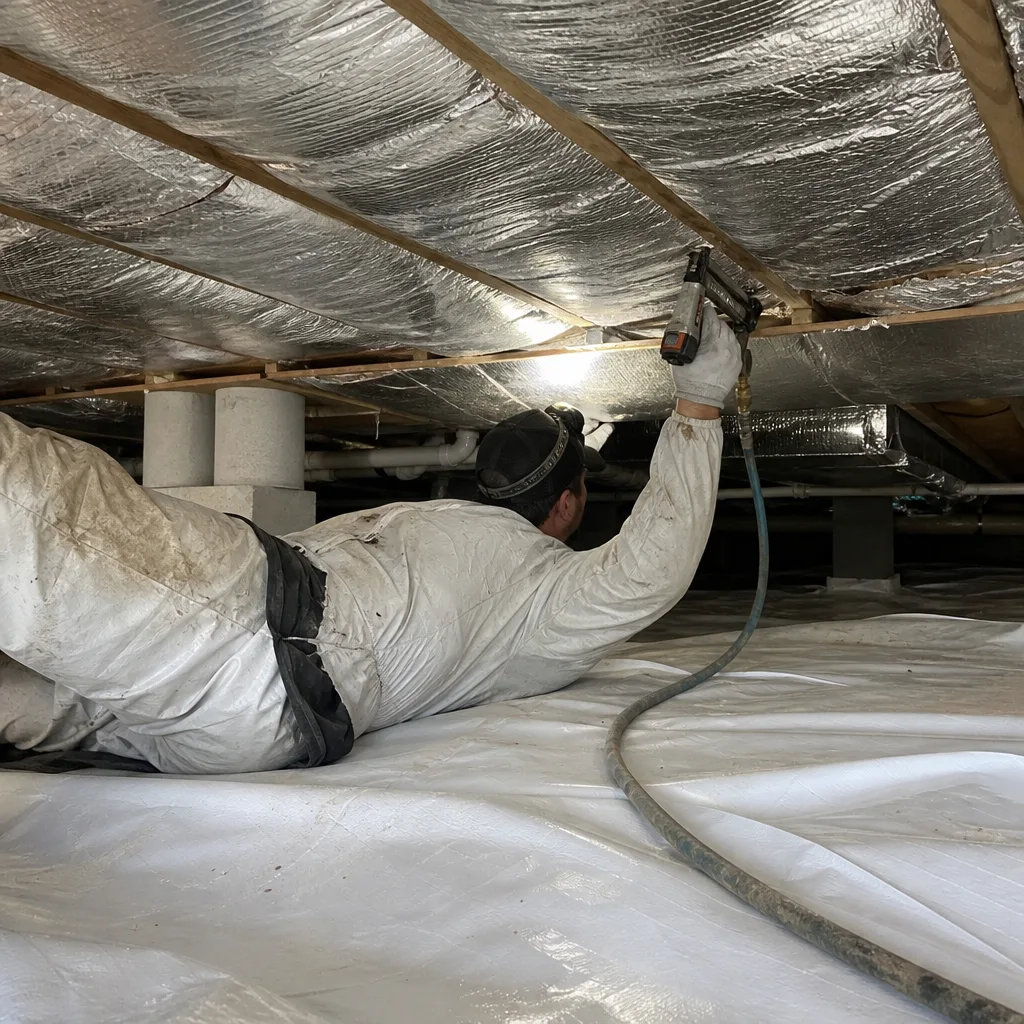
- Look at the barrier where it’s stapled to the rafters. Any fastener that has pulled out should be re-secured before wind and thermal cycling work it loose further.
- Check the seams. Tape and staples hold the panels together; thermal expansion can open a seam by a quarter inch or more.
- Look for tears, especially near the attic hatch and any point where someone has been up on the joists.
- Check the shiny side orientation. In Boulder City, it should face the attic interior, not the roof deck.
Blown insulation depth after thermal cycling
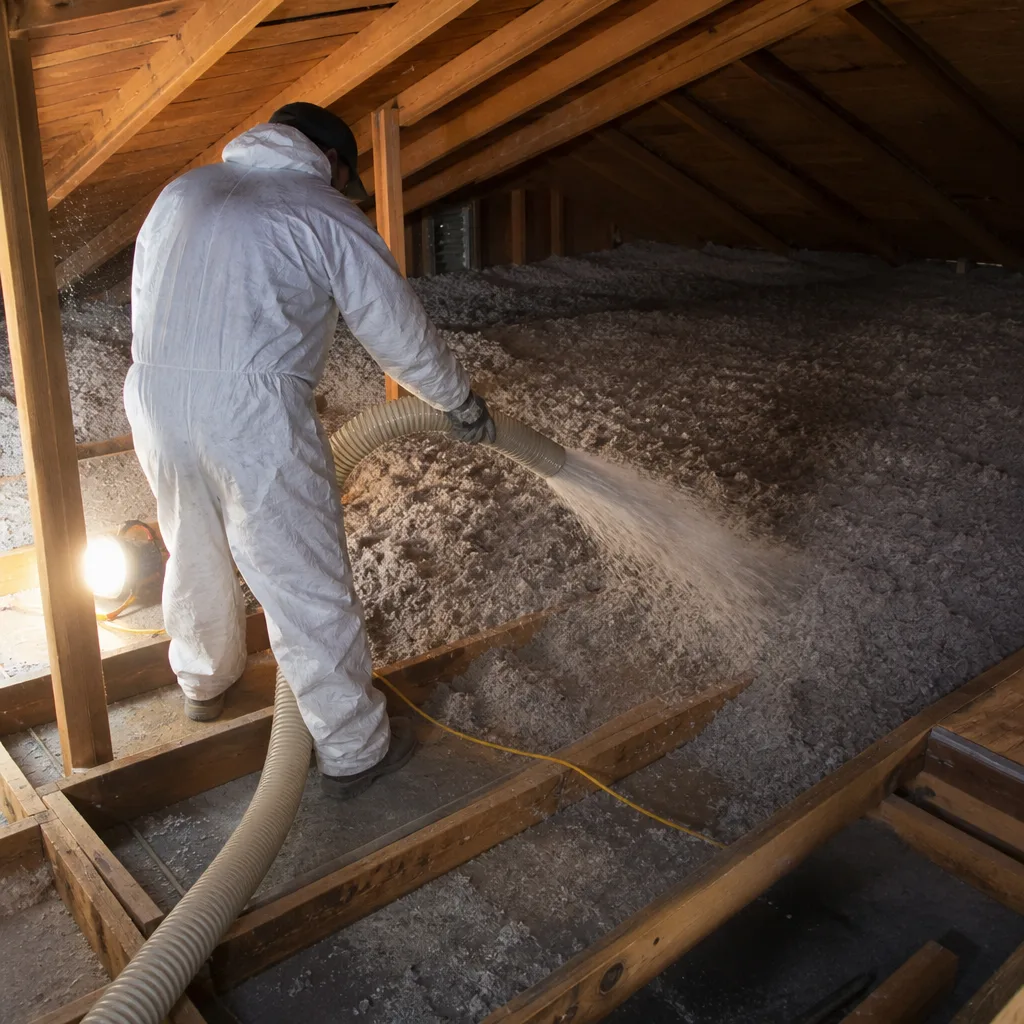
Loose-fill insulation shifts over a season. The heating and cooling cycles pull it slightly toward cooler zones, which means coverage that was even in April can be eight or ten inches thinner at the eaves by October. Re-measure at the same five points you checked in Q2, and compare. If GreenFiber or a comparable blown fiberglass product has shifted, a top-up to restore depth is cheaper than a full re-blow.
This is also the right time to schedule a full envelope audit if you haven’t had one in twelve months. Under The Haven Standard, every job starts with a written price and closes with a documented record, so you’ll know exactly what was found and exactly what was done.
Why 21% RH Changes the Vapor Barrier Calculation
Most of the country talks about vapor barriers under the assumption of humid interior air. Boulder City’s average relative humidity of 21% flips the calculation in ways most generalist insulation guides don’t address.
In a wet climate, the vapor barrier is placed on the warm interior side of the wall to stop moisture from pushing into the cavity. In Boulder City’s dry climate, the moisture load on the crawlspace is actually more likely to travel in reverse during cooling season: the ground beneath the slab holds residual moisture, and the conditioned air above is dry. The vapor barrier in a Boulder City crawlspace is spec’s primary job is stopping ground moisture from migrating up into the insulation, not stopping interior moisture from migrating down.
What that means for the spec: a thicker barrier (usually 10-mil or heavier, vs. the 6-mil common in wetter states) is the correct call in Boulder City, and the seams need to be sealed with a compatible mastic rather than tape alone. Get this wrong and you’ll see condensation on the underside of the barrier in winter even though the home feels dry. For the full spec and installation sequence, see our Crawl Space Encapsulation & Vapor Barrier in Boulder City page.
Common Mistakes to Avoid
- Blowing new insulation over an unsealed attic floor. This is the single most common mistake we see in Boulder City. It traps the air leaks in place and hides them under fresh product. Air sealing comes first, always.
- Trusting the hatch-side look. The half of the attic visible from the hatch is usually the better-covered half. The problem spots are at the eaves and the far corners, which require actually climbing in.
- Skipping the quarterly crawlspace check in winter. Condensation on the vapor barrier is an early warning sign. By the time you see it in June, the rim joist may already have damage.
- Installing a powered attic ventilator before air sealing. A ventilator on an unsealed attic pulls conditioned air out of the living space and drives up your cooling bill in a Boulder City summer.
- Using 6-mil vapor barrier in a dry climate. The 21% RH means a heavier mil and mastic-sealed seams are correct here; a light barrier that works in wet zones will fail under Boulder City’s conditions.
- Letting radiant barrier fasteners loosen over the summer. Wind and thermal cycling work staples out of the rafters. Re-securing takes fifteen minutes; a torn barrier can lose most of its reflective value.
- Compressing blown insulation to make a walkway. Every compressed square loses R-value. Build a raised walkway or cross-batt instead of stepping on the loose-fill.
When to Call a Professional
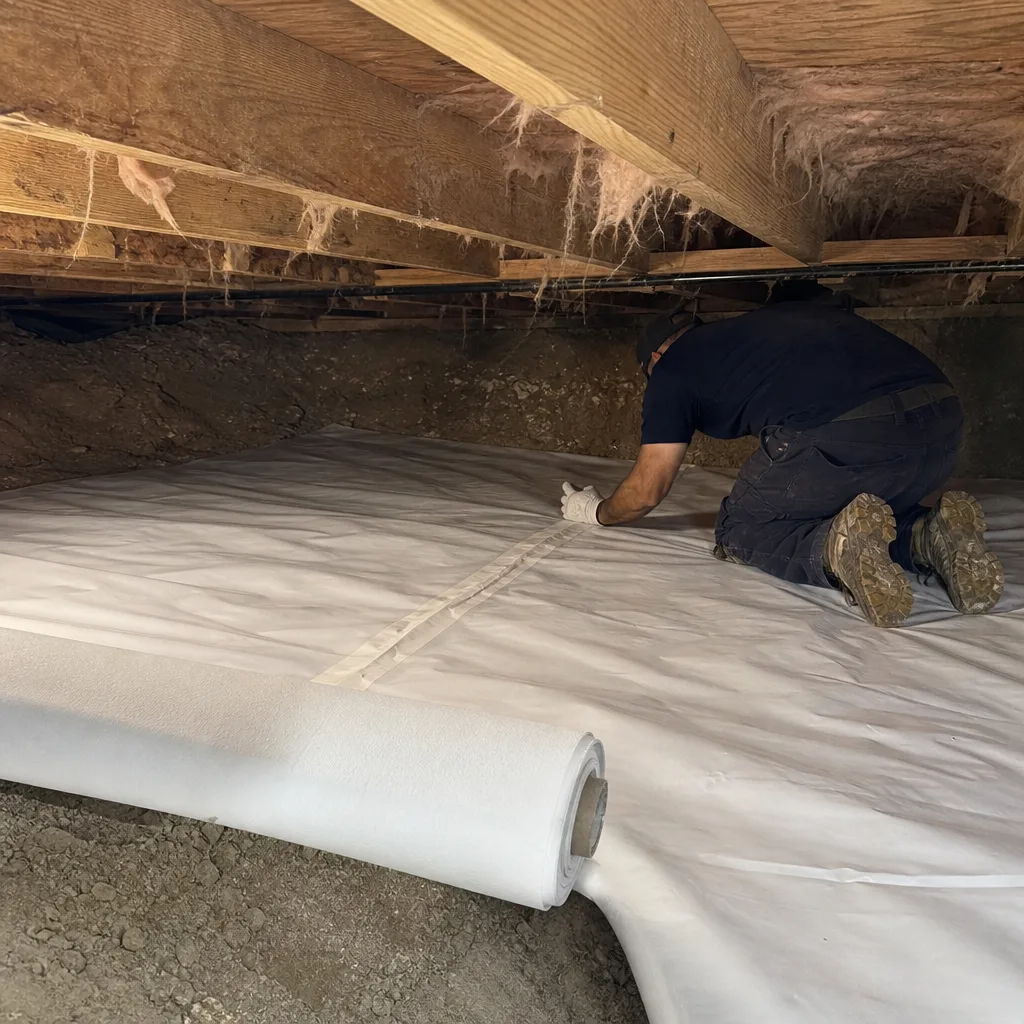
Some inspection tasks are homeowner-friendly: measuring depth with a ruler, checking for loose radiant barrier staples, watching for duct sweating. But a handful of scenarios need a trained eye, and fast: active condensation on the vapor barrier or rim joist, soft wood or daylight gaps in a crawlspace, powered attic ventilators that run constantly, and any visible duct insulation separation at the plenum or a joint. Bolting on more insulation without diagnosing the air-sealing problem will make some of these worse, not better.
Envelope Insulation Boulder City offers free estimates in Boulder City – call (844) 320-7926. Every job starts with a Written Price Before Any Work Starts, the 365-Day Done Right Promise covers the work, and we publish before-and-after blower-door readings on every applicable job so you can see the performance change in a single number. A live person answers the phone, day or night.
Frequently Asked Questions
Quarterly, with a different focus each quarter tied to the seasonal stress. Q1 (Jan – March) targets the crawlspace after freeze-thaw; Q2 (April – June) is the pre-cooling attic audit; Q3 (July – Sept) checks duct insulation under peak load; Q4 (Oct – Dec) re-checks radiant barriers and blown depth after thermal cycling. A full annual blower-door test catches anything the quarterly walks might miss. Call (844) 320-7926 for a free estimate on a full envelope inspection.
It usually means warm interior air is reaching the cold underside of the barrier through an unsealed rim joist or top-plate gap, or, less commonly, ground moisture is pushing up through an under-spec barrier. In either case, air sealing before any new insulation is the fix. Call (844) 320-7926 to schedule a crawlspace inspection – estimates are free, and we include a Documented Photo Record of what we find.
It depends on the air sealing. On a well-sealed attic floor, a powered ventilator can help move hot air out. On an unsealed floor, it creates negative pressure that pulls conditioned air out of your living space, which raises cooling cost in a Boulder City summer. Get the air sealing done first, then evaluate whether the ventilator still earns its keep. Call (844) 320-7926 for a second opinion on any written estimate.
Because Boulder City’s average 21% RH flips the moisture direction. In dry climates, the vapor barrier’s primary job is stopping ground moisture from migrating up, not stopping interior moisture from migrating down. That calls for a heavier product (10-mil or higher) with mastic-sealed seams, not tape. Call (844) 320-7926 for a written price on a crawlspace encapsulation spec built for Boulder City’s climate.
Look for duct sweating in a conditioned crawlspace or cooled attic during July and August. Condensation on the duct’s outer surface means the insulation has separated, been compressed, or has a gap, and the duct surface has dropped below the surrounding air’s dewpoint. Peak summer is when Boulder City’s ducts see the most load, so Q3 is the right window to check. Call (844) 320-7926 for a free estimate on duct insulation repair.
Only after air sealing has been addressed. Blowing new insulation over an unsealed attic floor traps the air leaks underneath and hides them. Air sealing of top plates, can lights, and penetrations comes first, in that order. We won’t install over an unsealed floor. Call (844) 320-7926 for a free written estimate with air sealing and insulation priced as a sequenced scope.
The Bottom Line
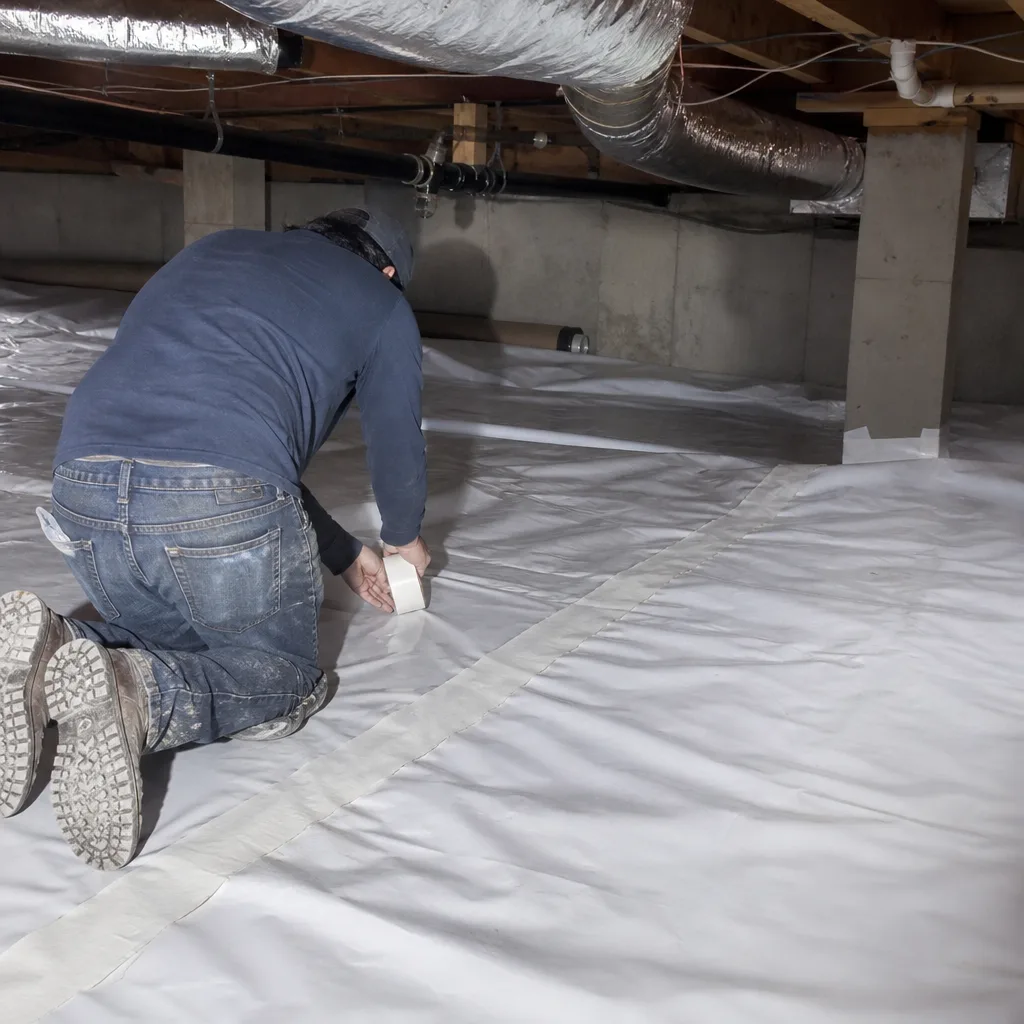
Boulder City’s 90-degree annual swing – 23 days above 105°F against 14 nights below freezing – means insulation needs a quarterly inspection rotation, not a set-and-forget install. Q1 goes to the crawlspace after freeze-thaw. Q2 handles the pre-cooling attic audit and ventilator check. Q3 tracks duct insulation under peak load. Q4 re-checks radiant barriers and blown depth after a full summer of thermal cycling. And in every quarter, the 21% average humidity governs the vapor barrier spec. Air sealing before insulation, always. If you’re ready for a documented inspection with a written price, Envelope Insulation Boulder City can schedule one. Call (844) 320-7926 for a free estimate.
Written by the team at Envelope Insulation Boulder City.