
Last updated November 17, 2026
Blown-In Insulation Maintenance Schedule: What to Do and When
Here’s the number that surprises most homeowners: a properly air-sealed attic insulated with blown-in cellulose in Boulder City can go 15 to 20 years before it needs any corrective work. The same material, blown to the same R-value target over an attic floor that was never sealed, can show measurable settling and moisture problems inside of five years. Same insulation, same house type, radically different maintenance burden – and the difference was decided before the blower ever started. What follows is the maintenance schedule for blown-in insulation, split into the two tracks that actually exist, with the specific checkpoints and pass/fail numbers you can use to know which track your home is on.
Quick Answer
Blown-in insulation needs a depth and moisture check every one to three years, a professional blower-door retest at roughly the five-year mark, and corrective re-blowing or air sealing whenever settled depth drops more than 20% below the installed target or ACH50 leakage creeps back up. Attics that were air-sealed before insulation went in can follow the long track – inspections at Years 1, 3, 7, and 15. Attics that skipped sealing need the short track and more frequent checks.
Table of Contents
- Why There Are Two Maintenance Tracks, Not One
- The Three Measurable Checkpoints: Depth, Blower Door, Moisture
- How Nevada’s Low Humidity Rewrites the Schedule
- What You Can Check Yourself vs. What Needs a Blower Door
- The Year-by-Year Schedule: Year 1, 3, 7, and 15
- What Triggers Corrective Action, and What It Looks Like
- Boulder City Factors: Heat, Dust, and Older Attics
Why There Are Two Maintenance Tracks, Not One
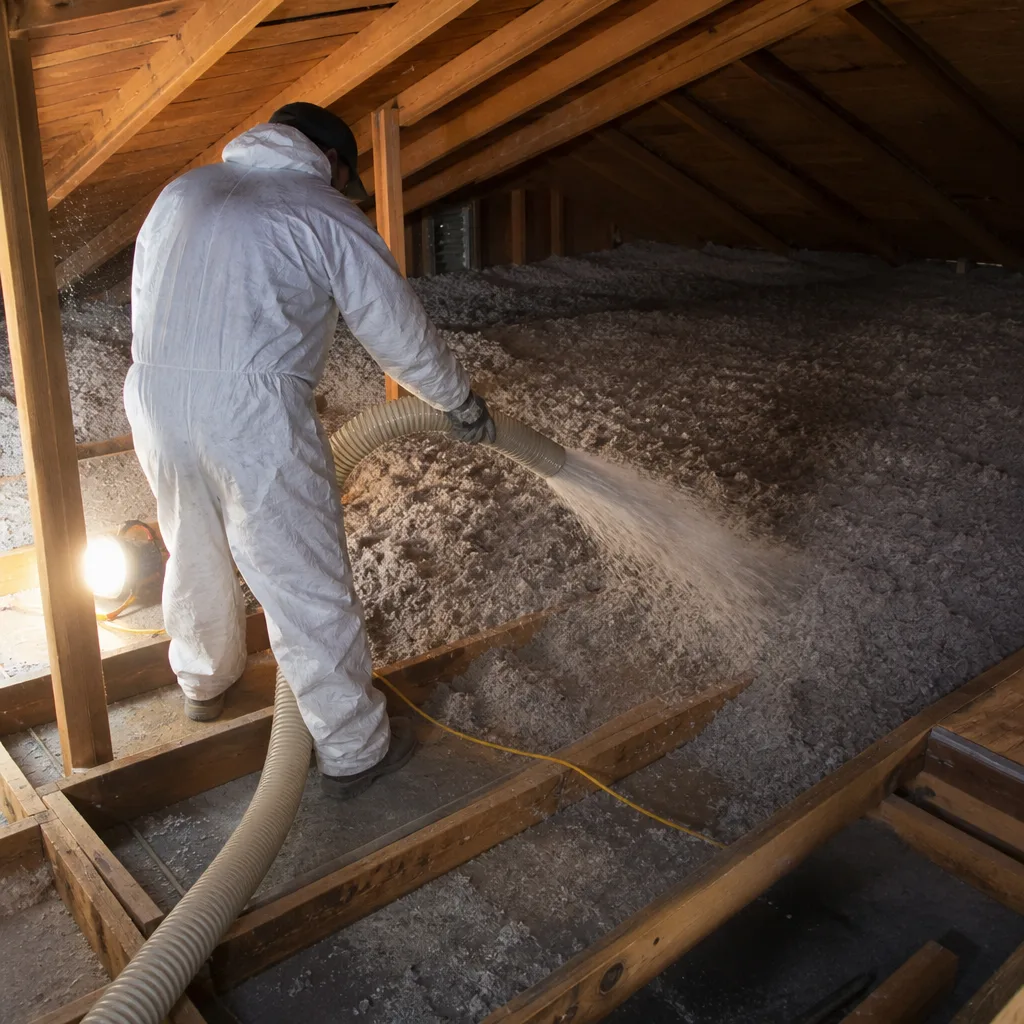
Blown-in insulation is a pile of loose fibers – cellulose, fiberglass, or mineral wool – that slows heat movement through the attic floor. It does not stop air. Air moves through the gaps around can lights, top plates where wall framing meets the ceiling joists, plumbing penetrations, and the recessed ceiling fixtures that dot nearly every Boulder City attic built before 2010. When those gaps are open, the insulation on top of them is a filter, not a barrier: conditioned air from the house pushes up through it year-round, carrying house dust and moisture with it.
That airflow is the whole reason the maintenance schedules diverge. On the sealed track, the material sits still. It settles at a slow, predictable rate from gravity alone. On the unsealed track, the same material is being disturbed from beneath, the attic takes on moisture during the winter months when warm interior air hits a cool roof deck, and settled fiber gets compressed by the stack effect. In our experience across Boulder City, an unsealed attic loses depth where the leaks are worst – the corners, the soffit edges, the zones around the can lights – while the middle of the floor looks fine. A homeowner who checks only one spot walks away thinking the job is intact.
If you don’t know which track your home is on, that’s the first thing to establish. A written attic record showing the pre-installation blower-door reading settles it in about ten minutes. So does a visual inspection for air-sealing foam at the penetrations, which is how our team verifies the sealed-first-then-insulated sequence on any home we look at. When we’re called to assess an attic, we can usually tell within one look whether the envelope work preceded the insulation or the insulation was simply blown over whatever was there.
The Three Measurable Checkpoints: Depth, Blower Door, Moisture
Maintenance without measurements is guessing. Three numbers tell you where the attic stands, and each has a pass/fail threshold you can act on.
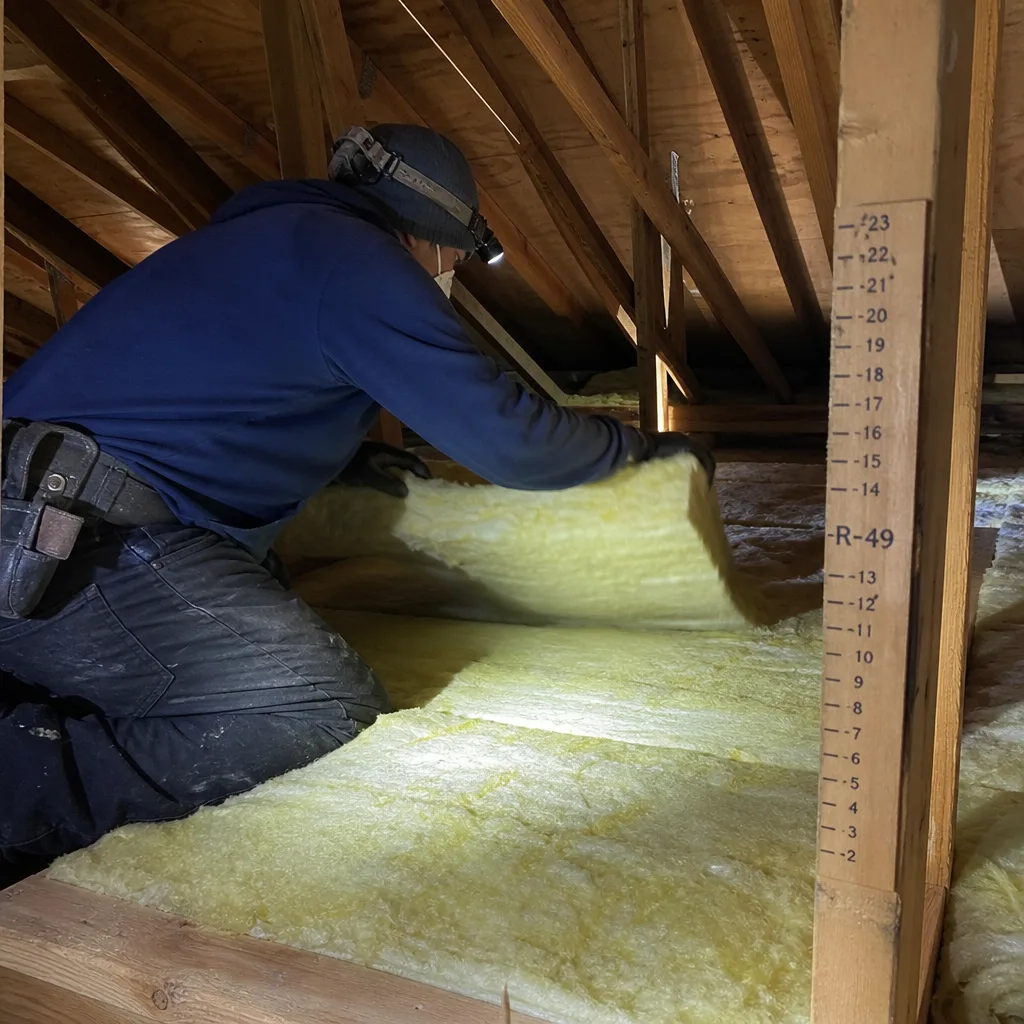
1. R-value depth with a ruler at multiple sample points
Insulation depth translates directly to R-value, and the depth is easy to measure with an ordinary tape or ruler. What matters is where you measure. Check at least six spots: two near the house exterior wall, two at the soffit edges, one near the attic hatch, and one at the center of the floor. Pass: depth within 10% of the installed target at every point. Warning: any point 10 – 20% below target. Fail: any point more than 20% below target, or visible voids near can lights where fiber has been blown away.
2. Blower-door ACH50 retesting
A blower-door test – a pressurization reading that shows, in one number, how much air your building envelope is losing – is the only reliable measure of whether air sealing is still doing its job. The result is reported as ACH50 (air changes per hour at 50 pascals of pressure). Pass: reading within about 15% of the post-sealing baseline. Warning: a rise of 15 – 30%. Fail: a rise above 30%, which usually means a penetration has opened up or the original sealing work needs to be revisited.
3. Moisture meter readings at the eave baffles
Eave baffles are the vent channels that keep insulation from blocking airflow at the roof edge. On the unsealed track, they’re where moisture accumulates first. Pass: wood moisture content under 15% at the eave. Warning: 15 – 20%. Fail: above 20%, or any visible staining, mold, or darkened sheathing in the outer bays. On the sealed track, this check is done at every inspection but is usually a formality in Boulder City’s dry climate.
How Nevada’s Low Humidity Rewrites the Schedule
Most of the maintenance guides homeowners find online were written for humid climates – the Southeast, the Pacific Northwest, the Northeast. Those guides treat mold and wood rot as the dominant failure mode, and their schedules are built around it. Boulder City runs completely dry by comparison, and that changes the math.
Mold risk is lower here. The attic rarely holds enough sustained humidity for mold to establish, unless a roof leak or an exhaust fan vented into the attic is adding moisture at a specific spot. Thermal bridging is higher. Every beam and rafter in the attic acts as a thermal bridge – a path where heat moves quickly through the framing and past the insulation – and in a Boulder City attic that reaches well over 140°F on a summer afternoon, those bridges run hotter and longer than a comparable attic in a temperate climate. Dust intrusion is higher too, because attics in this part of Nevada see a lot of airborne fine dust from the surrounding desert, and every unsealed penetration pulls it into the insulation over years.
The practical result: maintenance attention for a Boulder City attic should weight depth and leakage checks more heavily than moisture checks, and homeowners should never skip the blower-door retest because “the climate is dry.” On homes here, the failure that costs the most energy is usually a slow climb in ACH50, not a wet attic. If you have active moisture in the attic in Boulder City, it’s almost always coming from a specific source – a bath exhaust, a dryer vent, a roof leak – and it’s worth tracking that source down quickly.
What You Can Check Yourself vs. What Needs a Blower Door
Homeowners can handle roughly half of the inspection list without any special tooling. The other half requires equipment and is the reason to schedule a professional visit at the intervals below.
What you can check on your own
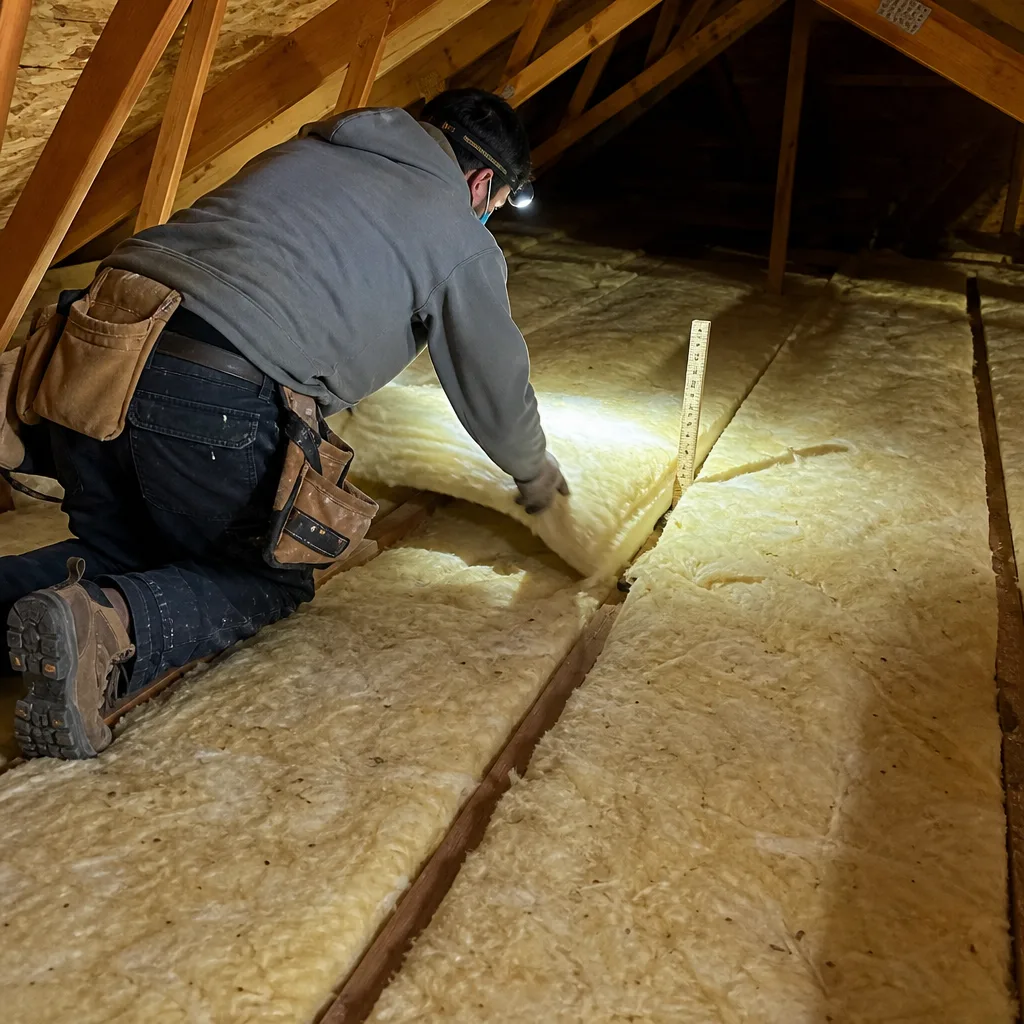
- Depth at multiple points. Bring a ruler, a notepad, and a flashlight. Photograph the ruler next to the fiber at each point so you can compare next time.
- Visible voids and displacement. Look for spots where the fiber has been pushed away from a can light, an HVAC pipe, or a chimney chase. Any dark gap means air is moving through.
- Batt displacement at the attic hatch. The ceiling hatch is the most common failure point in every Boulder City attic we look at. If the batt or cover panel has slipped off, insulation performance at that spot is close to zero.
- Dust trails and staining. Fine gray or dark streaks on the roof sheathing in specific spots indicate air leakage patterns you can trace back to penetrations.
- Pest activity. Rodent droppings, torn insulation, and tunneled runs indicate an access problem that will keep eroding the insulation until it’s addressed.
What requires a professional blower-door retest
Confirming the envelope is still performing as installed requires a blower-door measurement. There’s no reliable way to estimate ACH50 from looking at the attic – a visually intact floor can be leaking twice as much as it did on completion, and a floor that looks a bit disturbed can still be sealing perfectly. The blower door doesn’t replace the visual check. It confirms the visual check. If you want to establish your baseline number, or compare a fresh reading against the documented before-and-after from a prior job, that’s the appointment to schedule. You can also read more about attic insulation and the air-sealing sequence that determines how that baseline holds up.
The Year-by-Year Schedule: Year 1, 3, 7, and 15
The following schedule is the one we recommend to Boulder City homeowners, and the one our team follows on its own post-job checks. It assumes a properly air-sealed attic on the long track. If your attic was not sealed before the insulation went in, compress these intervals by roughly a third.
Year 1 – Baseline verification
- Visual inspection of depth at six points, voids, and the attic hatch cover.
- Confirm the air-sealing foam at can lights, top plates, and penetrations is intact.
- Review the documented photo record and blower-door reading from installation against a fresh inspection. Any deviation from the baseline in the first twelve months should be investigated, not banked.
Year 3 – First reassessment
- Repeat the six-point depth check. Compare to Year 1 numbers.
- Blower-door retest. Compare ACH50 against the post-installation baseline.
- Eave-baffle moisture check (low priority in Boulder City, but worth a moment).
- Check attic access, roof vents, and any plumbing work done since Year 1. Any tradesman who went into the attic can displace insulation without telling you.
Year 7 – Mid-cycle milestone
- Full checkpoint set: depth, ACH50, moisture, and visual.
- Re-level any settled zones where depth has dropped more than 15%. Topping off is a much smaller line item than a full re-blow.
- Check for pest intrusion, especially around the eaves and the gable vents, since a single rodent tunnel will erode insulation locally over years.
Year 15 – Wall-to-wall review
- Full checkpoint set with the Year 1 baseline side-by-side to compare the trajectory.
- Plan a top-off if aggregate depth has dropped more than 20%, or schedule an envelope review for the whole home if you’re looking at re-insulation or additional envelope work.
- Re-inspect the attic for any new penetrations from HVAC work, electrical additions, or a re-roof. Re-roofs are the most common source of new leakage we see on Boulder City homes that were intact before.
What Triggers Corrective Action, and What It Looks Like
The written record from the original installation is your trigger sheet. Any of the following conditions moves you from “monitor” to “correct”:
- One sample point more than 20% below target depth, or more than three points in the warning band at the same visit.
- ACH50 elevated by 30% or more above the post-installation baseline.
- Wood moisture content above 20% at any eave location, with visible staining.
- Visible degradation from pests, rodent tunneling, or a plumbing leak that has wet the fiber.
- Significant change to the attic – a re-roof, an HVAC replacement, a solar install, or an electrical panel addition – without a follow-up inspection.
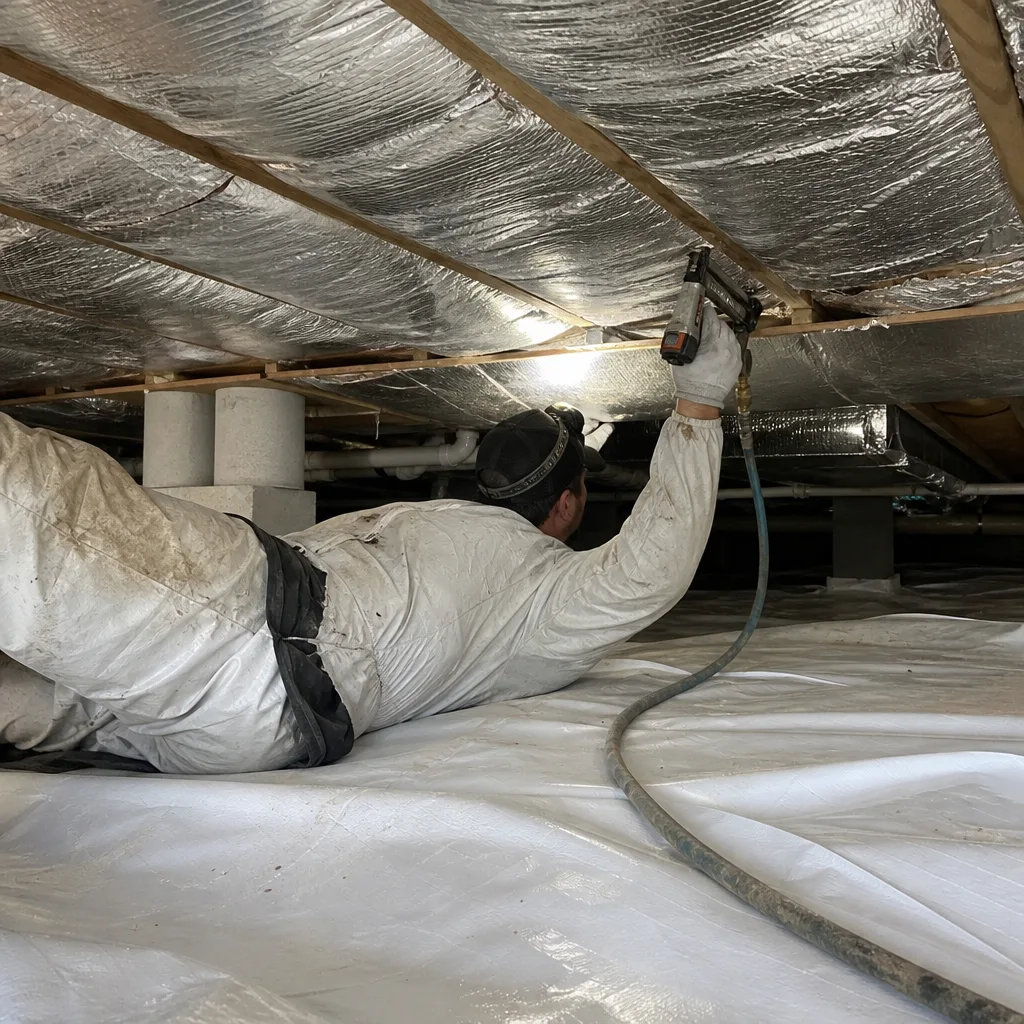
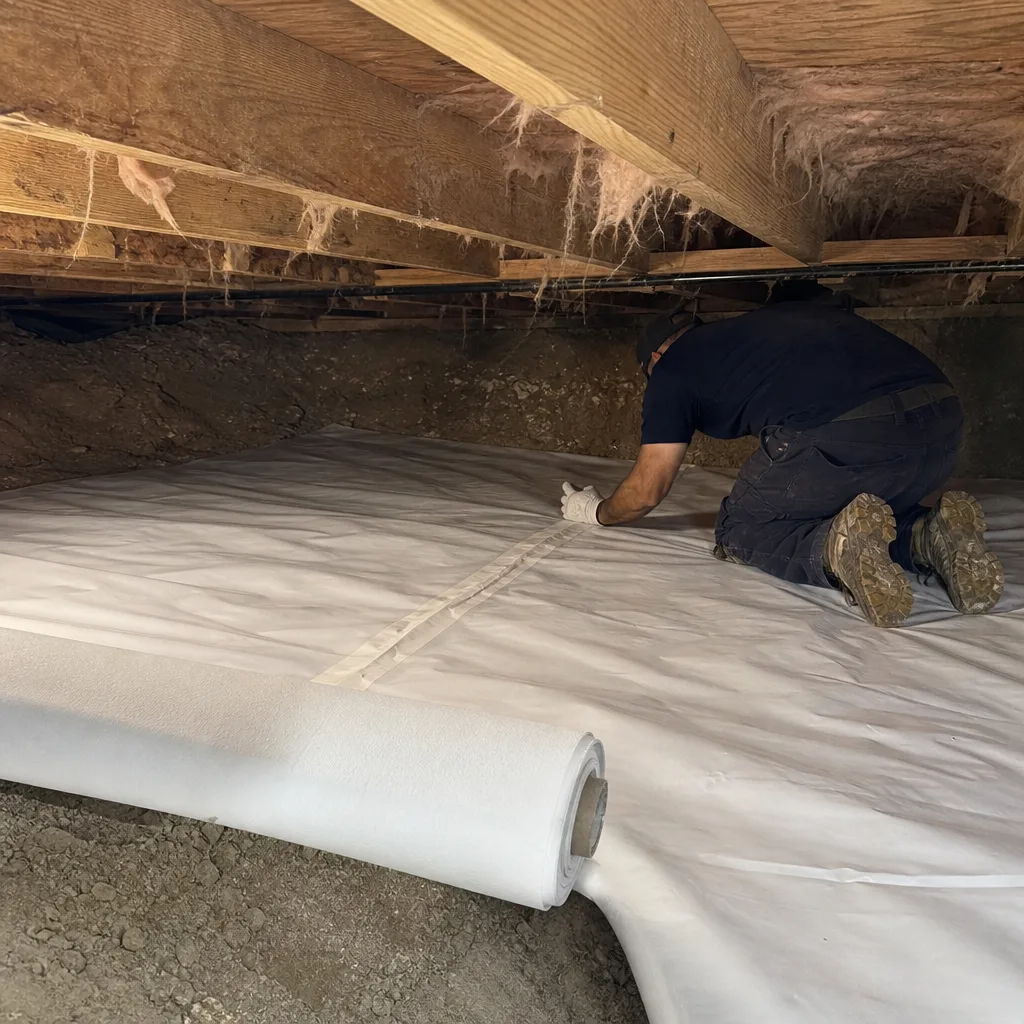
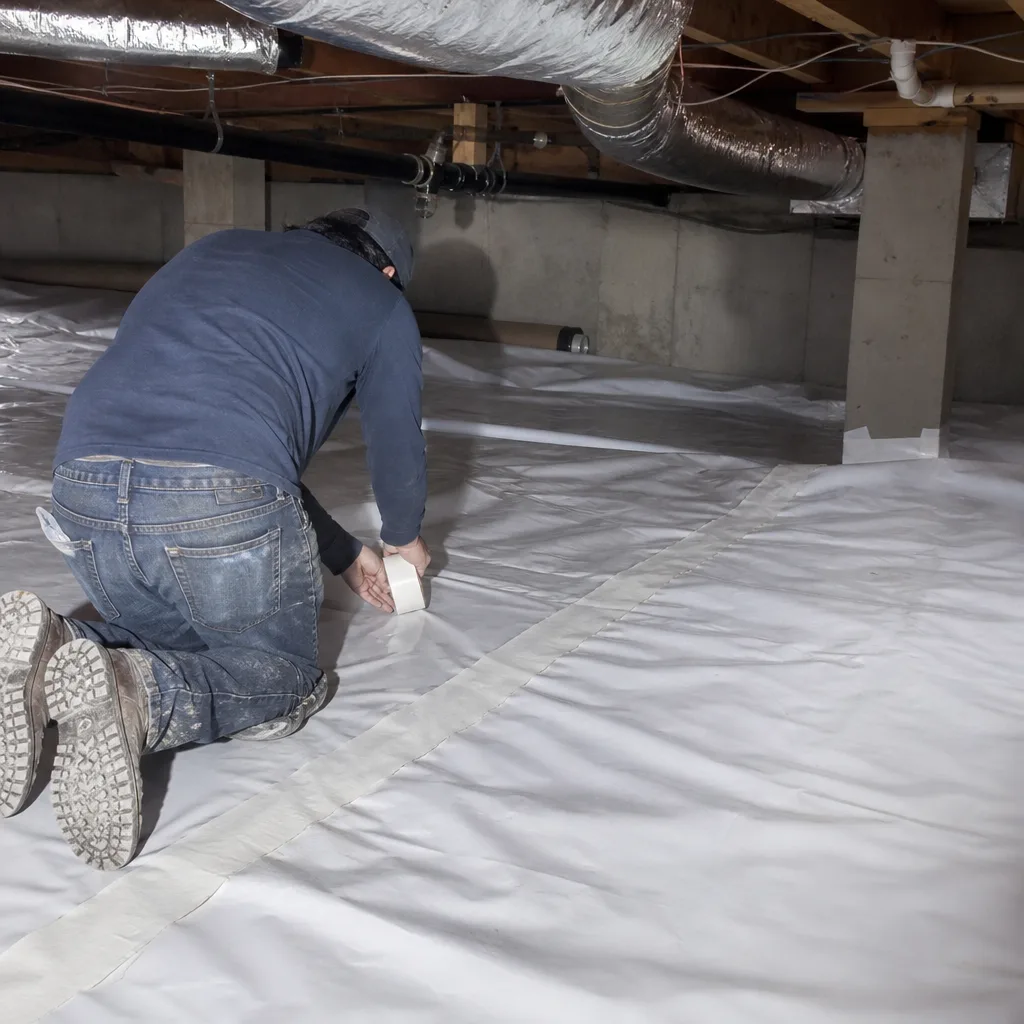
Corrective action is usually one of three things. If depth has settled but the envelope is intact, a top-off is the answer. If ACH50 has climbed, air sealing the newly opened penetrations comes first, and topping off the insulation is the follow-on step. If the material has been contaminated, wet, or riddled with pest tunnels, crawl space encapsulation and vapor barrier work is often scheduled in the same visit as insulation removal, since the two problems share a source – air and moisture movement across the building envelope. What should never happen is new insulation going on top of a floor that hasn’t been resealed. That’s the sequence Envelope Insulation treats as a hard prerequisite: in that order, sealed first, then insulated.
Boulder City Factors: Heat, Dust, and Older Attics
Boulder City has its own specific pressures on attic insulation. The summer heat load pushes attic temperatures into the high 130s and low 140s during July and August, which is a more aggressive environment than most of the country. A top-off is worth planning before summer in Boulder City, not after, because the impact on cooling bills is concentrated in that three-month window.
The housing stock matters too. Many Boulder City homes in the older neighborhoods were built with less attic insulation than modern code calls for, and some were insulated with materials that have long passed their useful life. If you’re in a 1950s or 1960s Boulder City home and don’t have a documented installation record, treat the schedule as if you’re on the short track by default until a blower-door test establishes otherwise. Materials sourced from Rockwool and CertainTeed, both of which we install regularly, perform well in this climate, but the material choice doesn’t change the schedule – air sealing does.
Dust and fine particulates from the surrounding desert are a factor in every Boulder City attic. Every unsealed penetration acts as a slow dust pump into the fiber, which reduces R-value over years and can mask moisture patterns. Homes with sealed attics see less of this. Homes without sealing see a visible accumulation in the outer bays after five to seven years.
Common Mistakes to Avoid
- Checking depth at just one spot. The center of the floor is almost always the healthiest-looking area. The corners and soffit edges are where the real numbers live.
- Skipping the blower-door retest because the attic “looks fine.” A visually intact floor can be leaking twice its installation baseline. There’s no way to see ACH50.
- Top off the insulation without resealing first. New insulation over an unsealed floor simply resets the clock on the same failure. Air sealing comes first, always.
- Ignoring the attic access hatch. A slipped cover panel in Boulder City can waste more conditioned air than any single unsealed can light in the house.
- Assuming the insulation is intact after a re-roof or HVAC replacement. Tradespeople displace fiber and rarely restore the depth. A post-job inspection should follow any attic work by another trade.
- Waiting past Year 7 for the first comprehensive check. Most corrective action on the short track is expensive by Year 7 and manageable by Year 3.
- Not keeping the installation record. Without the written depth target and post-installation ACH50 baseline, you can’t tell whether the current numbers represent real loss or normal settling. The whole schedule depends on that baseline.
When to Call a Professional
Call a professional when you don’t have a documented baseline, when the visual inspection shows voids or pest activity, when ACH50 has climbed above the warning band, or when any moisture reading at the eave exceeds 20%. Also call if you’ve moved into a Boulder City home within the last couple of years and can’t find any written record of the original installation – the schedule depends on having a baseline, and a fresh blower-door test and depth check is how you build one. Finally, call if you’re about to reseal, top off, or add any envelope work on a building with an active question about spray foam vs. blown-in, since the material choice affects the schedule math. Envelope Insulation Boulder City offers free estimates in Boulder City – call (844) 320-7926. Every written estimate comes with a flat written price, a written scope, and a free second-opinion review of any competing quote you’re holding.
Frequently Asked Questions
Every one to three years on the sealed track, and every twelve to eighteen months on the unsealed track. The first inspection should happen twelve months after installation, when you compare current depth and ACH50 against the documented baseline. After Year 1, the schedule above (Years 3, 7, 15) is the practical cadence. Call (844) 320-7926 if you want to schedule a check and you don’t know which track your home is on – the answer usually comes from the installation record.
Rarely, and only when it has been contaminated, saturated, or tunneled through by pests. Settled fiber can be topped off. Compressed fiber can be re-fluffed or replaced locally. In our experience, most attic insulation in Boulder City that gets “replaced” is actually insulation that was never properly sealed underneath – replacing it without sealing the floor simply repeats the problem and resets the maintenance clock on the same starting point. Call us for an inspection if you’ve been told you need replacement; a documented assessment will tell you whether a top-off is the real answer.
You can deprioritize it, but don’t skip it. Boulder City’s low humidity means mold risk is far lower than in the Southeast, but any moisture in your attic is coming from a specific source – a bath exhaust, a dryer vent, a roof leak, a plumbing chase – and that source should be found regardless of climate. The moisture meter reading at the eave baffles is the fastest way to catch it. Call (844) 320-7926 if your attic has visible staining, musty smell, or any vent or plumbing changes since installation.
Yes, if the old material is dry, uncontaminated, and the air barrier is intact or can be resealed first. Top-offs are routine and much cheaper than a full removal. The one rule: if the floor under the existing insulation wasn’t sealed, air sealing comes before the top-off, not after. Call for a free estimate if you want a flat written price and a scope describing exactly what gets sealed and what gets re-blown.
Depth measurements at multiple sample points, a visual for voids and pest activity, a blower-door ACH50 retest when equipment is available, and moisture readings at the eave baffles. It should produce a written document comparing the current numbers against the installation baseline, plus a photo record. On jobs we complete, we publish before-and-after blower-door numbers – the homeowner walks away with the specific CFM50 figure before and after, plus a Documented Photo Record on the visit. Call (844) 320-7926 for a free inspection estimate.
A blower-door test and depth measurement to establish the baseline, done on the assumption of the short track until the numbers say otherwise. Without a documented baseline, you can’t tell whether current numbers represent real loss or normal settling. Older Boulder City homes frequently have insulation installed under a code target that is well below current R-value recommendations, so the first inspection often reveals both a leakage problem and a depth shortfall. Call (844) 320-7926 to schedule a baseline assessment; the estimate is free and the scope is written.
The Bottom Line
Blown-in insulation has two maintenance schedules because it has two failure modes. On a properly air-sealed attic, the material sits still and the schedule is a slow, top-off-based rhythm at Years 1, 3, 7, and 15. On an unsealed attic, the same material is being disturbed from beneath by air leakage, and the schedule compresses to Years 1, 2, 4, and 11, with more frequent fault detection. The three numbers that matter – depth at multiple sample points, blower-door ACH50, and eave moisture – are checkable, comparable, and actionable. Keep the baseline. Keep the record. Schedule the checks. The attic tells you what it needs if you measure it correctly.
If you’re in Boulder City and want to establish your baseline – or want a free second opinion on a written estimate from another contractor – call (844) 320-7926. Under Haven Standard Clause 1, you get a flat written price, a written scope, and a written warranty before any work begins.
Contact
Envelope Insulation Boulder City offers free estimates in Boulder City and surrounding neighborhoods. Call (844) 320-7926 for your free inspection and written price. Under the Haven Standard, a live person answers 24/7. We’ll bring the blower door, take the depth measurements, and give you back the numbers you actually paid for.
Written by the team at Envelope Insulation Boulder City.