
Last updated November 17, 2026
How Long Does Attic Insulation Take? Timelines and What to Expect
Two attic insulation bids for the same Boulder City house can land four hours apart and both be honest. That gap almost always comes down to one step: air sealing. A contractor who skips it can be out of your driveway before lunch. A crew that seals the attic floor first, then insulates, is there most of the day. Since air sealing is what determines whether the insulation you pay for actually performs, comparing timelines across bids without comparing scope tells you almost nothing. This guide breaks down the real time each phase takes, the factors that stretch a job, and what you should have in hand when the crew leaves.
Quick Answer
A full attic insulation job on a typical single-family home usually takes 4 to 8 hours on site, and most Boulder City homes fall in the 5-to-6 hour range when air sealing is included. Jobs without air sealing run 2 to 3 hours. Figure on the whole day for scheduling purposes, and add a few business days before the crew arrives for the written price and scope to be produced.
Table of Contents
- The Real Time Breakdown, Phase by Phase
- What Gets Cut When a Bid Comes In Low
- Attic Size, Access, and Obstructions: Your Time Multipliers
- Why Boulder City Heat Sets the Schedule
- What You Should Receive at Job End
- Red Flags in Timeline Promises
- Common Mistakes to Avoid
- When to Call a Professional
The Real Time Breakdown, Phase by Phase
Here’s where the hours actually go on a whole-attic job with air sealing included. We’re giving you the ranges we see working in Boulder City homes, from small single-story ranchers to larger two-story builds.
- Pre-job blower-door test (45 to 90 minutes). A blower-door test is a pressurization reading that shows, in one number, how much air your building envelope is losing. The technician sets up the door fan, takes a baseline CFM50 reading, and often uses a smoke pencil or thermal camera to find the leaks before anyone touches insulation.
- Air sealing (2 to 6 hours). This is the variable phase, and it’s the one that matters most. Sealing top plates, can lights, plumbing and electrical penetrations, and the attic hatch each take time. A simple attic with few penetrations seals in two hours. An attic full of recessed lights and HVAC chases can run five or six.
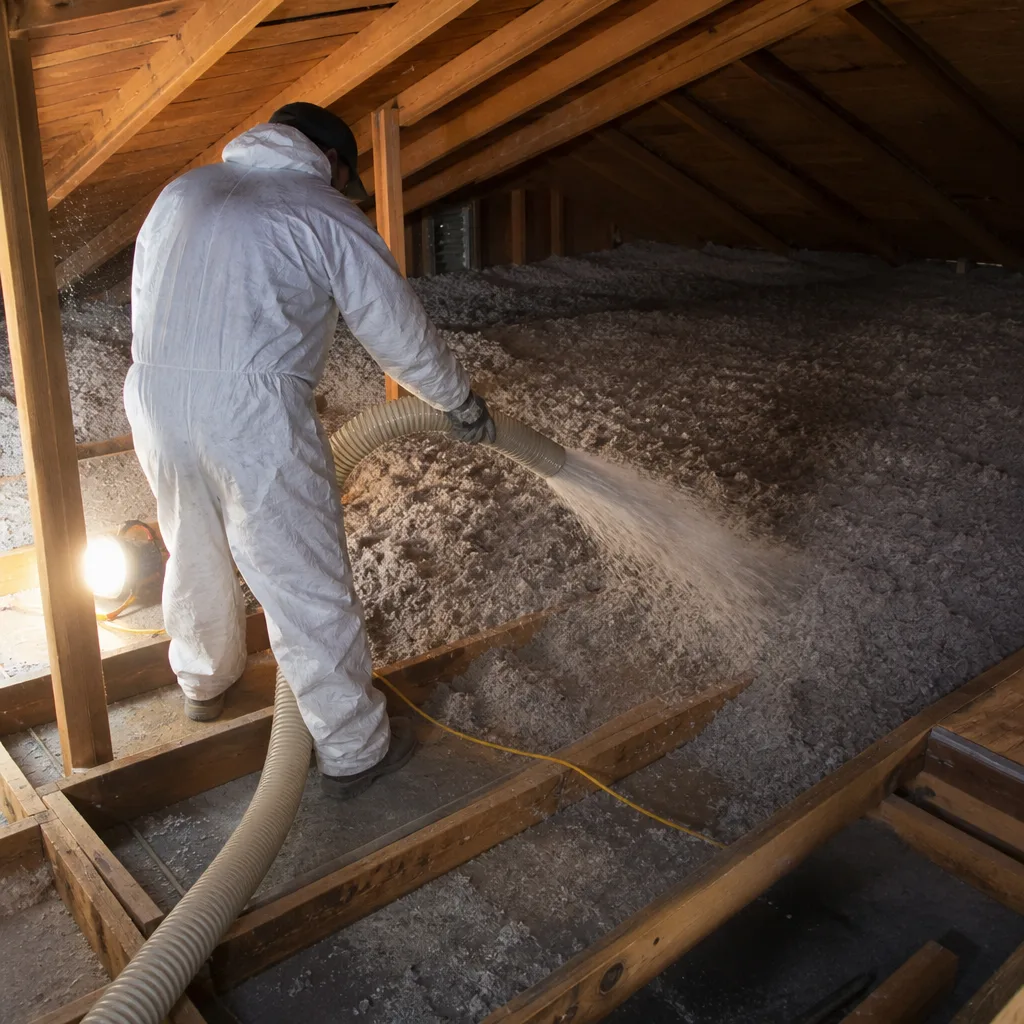
- Insulation installation (1 to 3 hours). Blowing loose-fill fiberglass or cellulose goes fast once the attic is prepped. A typical Boulder City attic takes an hour and a half to three hours depending on target R-value and how many obstructions the crew has to work around.
- Post-job blower-door test (45 to 90 minutes). Same gear, same procedure, new number. This is the reading you should keep. If the pre-job number was 4,200 CFM50 and the post-job number reads 2,100, you can see exactly what you paid for.
Add a half hour to an hour for setup, cleanup, and the walkthrough. That’s your day. Any bid promising a whole-attic air-seal-and-insulate in under four hours is telling you something useful about what it plans to skip.
What Gets Cut When a Bid Comes In Low
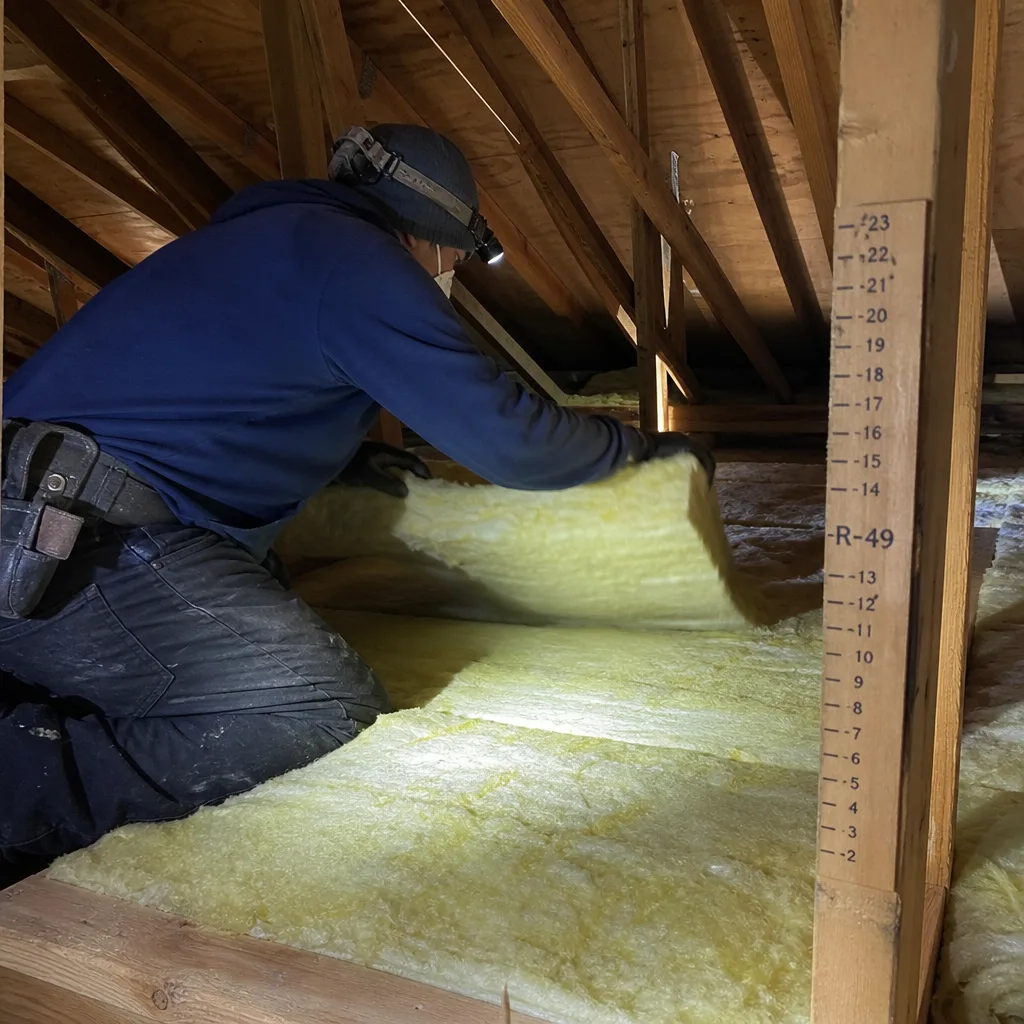
A short timeline and a low price usually describe the same job, and it’s a job with phases missing. Here’s what tends to disappear when a bid comes in noticeably faster and cheaper than the rest.
- Both blower-door tests. Skipping the pre-test means nobody measures the starting point. Skipping the post-test means nobody can prove the result. A crew that doesn’t test can still insulate, but it can’t verify that the work changed anything.
- Air sealing of can lights and top plates. These are narrow, fussy surfaces. They’re the first thing dropped when a crew is trying to finish by noon, and they’re the places where air leaks most. In Boulder City attics, can lights through the ceiling plane are a frequent culprit.
- Baffling at the eaves. Roof vents need to breathe. Blowing insulation against the roof deck without vent baffles blocks airflow and can cause moisture problems. Proper baffling takes time.
- Obstruction clearing. Ducts, trusses, and HVAC equipment complicate insulation depth. A crew moving quickly may blow around obstructions rather than working them properly, leaving thin spots that show up in your energy bill.
- Documentation. The photo record and material spec sheet take time to compile. They’re also the first things to go when a contractor is running behind.
None of this means the fastest bid is dishonest. It means you should ask, in writing, whether the price includes a pre-job blower-door test, a post-job blower-door test, and confirmed air sealing of every penetration. If it doesn’t, the timeline comparison is apples to oranges. Under The Haven Standard, we treat air sealing as a hard prerequisite: we never blow insulation over an unsealed attic floor.
Attic Size, Access, and Obstructions: Your Time Multipliers
A few physical factors will push your job longer no matter who does the work. Here are rough multipliers you can apply to your own attic before you call.
Attic Square Footage
Most of the time in a job scales with square footage, but not linearly. A 1,000-square-foot attic might take 4 hours. At 2,000 square feet, expect closer to 6. The air sealing and insulation phases grow, but the blower-door setup is a fixed cost either way.
Access Point Count
One attic hatch with a clear path is a gift. Two hatches, a tight scuttle, or an access point that requires the crew to lay down boards to protect the ceiling below each add 30 to 60 minutes. Older Boulder City homes sometimes have access through a closet ceiling rather than a hallway, which changes the angle and equipment the crew can haul up.
Obstruction Density
Every duct run, truss, recessed light, and HVAC box is a place the crew has to work around. A clean, open attic insulates fast. An attic with knee walls, ductwork snaking through the middle, and a dozen can lights can double the air-sealing phase. In our experience, duct-heavy attics in the Historic District of Boulder City run toward the upper end of every time range because of how much sealing and clearance work the ducts require.
Existing Insulation
If there’s old, compressed, or contaminated insulation in the way, removal adds significant time. Insulation removal is its own job with its own crew and equipment. If your bid includes removal, ask whether that time is included in the on-site estimate or handled on a separate day.
Why Boulder City Heat Sets the Schedule
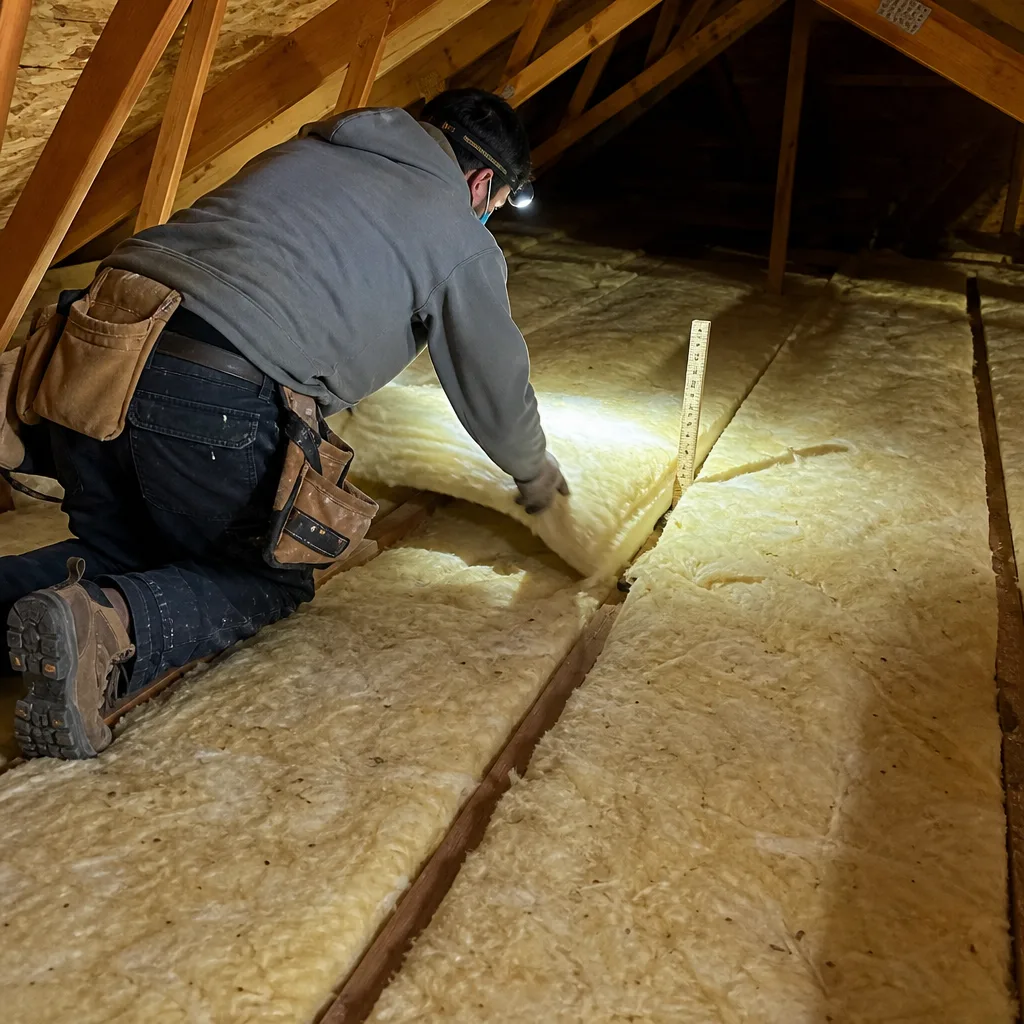
Boulder City summer dates regularly push past 105°F, and attic temperatures run considerably hotter. Attics hit 130°F or more by mid-afternoon. Crews working in that heat need to be done with the heavy work before it peaks, which is why most summer jobs in Boulder City start early and target the morning window. That scheduling reality affects what a “one-day job” means here.
On a five-to-six-hour Boulder City job, a crew starting at 7 a.m. wraps by 1 p.m., ahead of the afternoon peak. If your job runs longer, the crew may split it across two mornings rather than push through the heat. That’s not a red flag; it’s a sign the crew is managing the conditions. Trailers and equipment still run in the afternoon, but the heavy attic work is scheduled early.
Our own crews bring water and cooling breaks into the schedule. A crew that tells you honestly the job may run into day two in August is often the crew that plans to finish compliant with the heat, not just fast.
What You Should Receive at Job End
The timeline doesn’t stop when the last bag of insulation is blown. The documented closeout takes roughly 30 to 60 minutes per job to compile, and it’s how you verify the work.
- A written blower-door report showing the pre-job and post-job CFM50 numbers side by side. This is the performance change you paid for, in one figure.
- A material specification sheet showing the specific product installed and the R-value achieved. Envelope Insulation Boulder City works with materials from Owens Corning, Johns Manville, and Knauf among others, and the sheet should name yours.
- A dated photo record of the attic before, during, and after the work. This is standard on every Envelope Insulation Boulder City job, not something you have to ask for.
- The written warranty and scope of work you received before the job started, confirmed and dated. The 365-Day Done Right Promise sits on top of that: if it’s not done right, we make it right.
If a contractor can’t tell you what documentation you’ll get when they arrive, the timeline comparison was never the point. You can see how we handle the full scope on our Envelope Insulation Boulder City home page, and the process is detailed on our Attic Insulation in Boulder City page.
Red Flags in Timeline Promises
Timeline promises are usually honest, until they’re not. Here’s what to watch for when you’re comparing bids in Boulder City.
- A whole-attic job quoted under four hours. That timeline almost always means air sealing isn’t in the price. Ask explicitly, in writing.
- No blower-door test in the quote. If there’s no mention of a pre- or post-job test, the contractor can’t verify the improvement. Twenty minutes of measurement is the cheapest evidence in the trade.
- “We’ll start tomorrow” with no written price. Legitimate crews often book a week or two out. A contractor promising next-day work before providing a written scope may be skipping the step where the scope gets defined.
- No mention of R-value in the bid. R-value is the thermal resistance of the insulation being installed, and it’s a spec, not a preference. A bid without a target R-value is a bid that can be filled with whatever product is on hand.
- Empty attic and no photo record on completion. If you can’t see what the crew did, you’re trusting a verbal report, not evidence.
None of these standards are exotic. They’re just the parts of the job that take time and get dropped from the timeline when a contractor is rushing. If you’ve been quoted a suspiciously fast timeline, bring us the estimate. Our free second opinion on any written estimate is exactly for this conversation.
Common Mistakes to Avoid
- Comparing bids without comparing scope. Two prices for “attic insulation” can describe completely different jobs. Ask every bidder the same questions: blower-door tests included? Air sealing included? R-value target? If the answers don’t match, the prices don’t either.
- Assuming the fastest timeline is the winner. The crew that finishes by lunch may have skipped the sealing that determines whether the insulation works. A six-hour job that raises your home’s performance beats a three-hour job that leaves the leaks in place.
- Letting the attic breathe wrong. Blocking roof vents with insulation without baffles causes problems later. In Boulder City’s dry climate, poor attic ventilation still matters because heat buildup is significant. Ask whether baffles are in the scope.
- Skipping the pre-test. Without a baseline reading, you have no way to know whether the job made a difference. Insist on the pre-job number before any work begins.
- Scheduling a summer job for midday. A crew that starts at 7 a.m. in July is doing you a favor. If a contractor proposes a 1 p.m. start in August, ask how that fits their heat plan.
- Not checking whether you’re comparing all-in pricing. Some bids exclude removal of old insulation, baffling, or the post-test. Under Haven Standard Clause 1, our price is flat, with a written scope and written warranty before anyone lifts a tool. Yours should be too.
- Tossing the documentation. Your blower-door report, spec sheet, and photo record are your proof if you have questions down the line. File them.
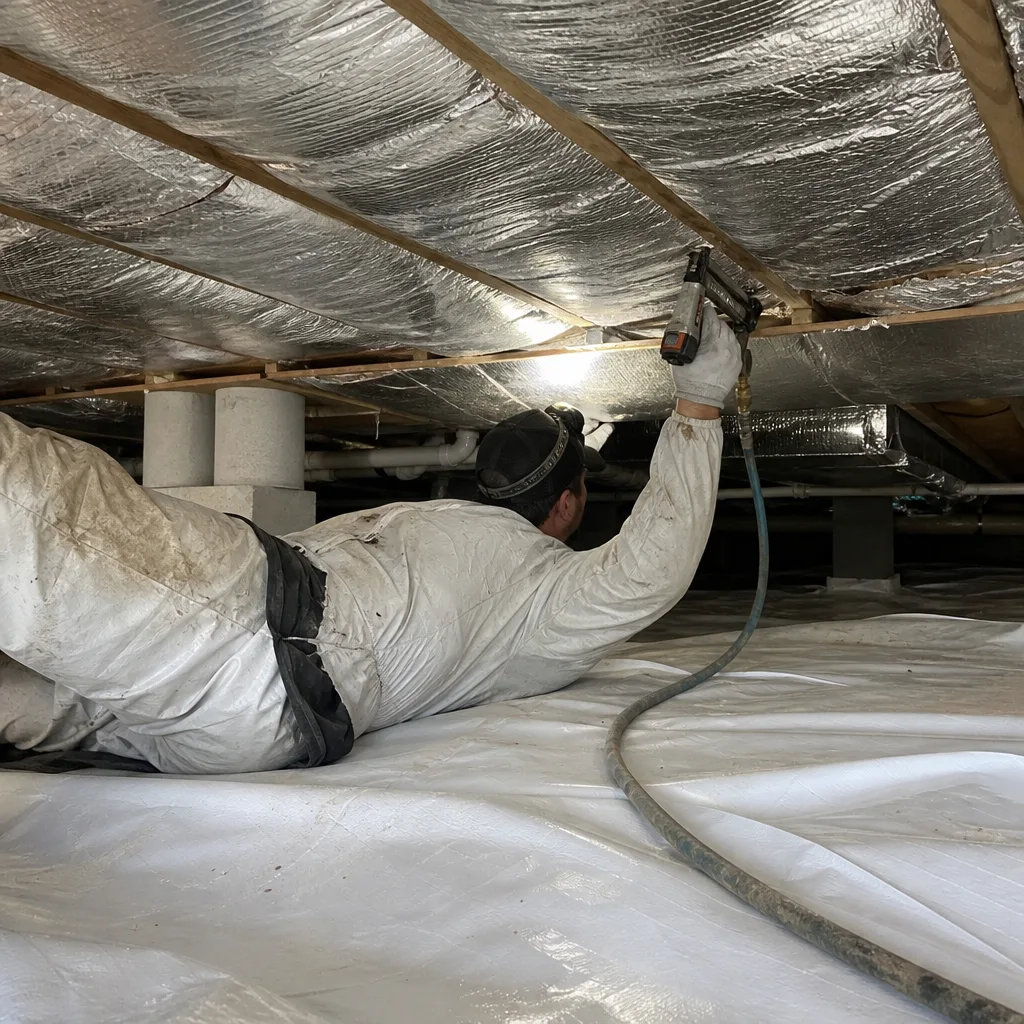
For the parts of the building envelope that sit below the attic floor, timing also matters. A crawl space encapsulation and vapor barrier in Boulder City usually runs on a separate schedule, and it’s worth asking whether both projects can share an inspection window. Wall cavities, too, can affect how a whole-home timeline plays out, which you can read more about on our Spray Foam Insulation in Boulder City page.
When to Call a Professional
Most attic insulation work isn’t a DIY project, and neither is the air sealing that precedes it. Sealing around can lights, top plates, and attic penetrations requires working in a hot, cramped space with an understanding of the building assembly. Insulation decisions also depend on baffling at the eaves, appropriate R-value for the climate, and confirming that the existing attic isn’t hiding a moisture or rodent problem. Those are the calls a trained technician makes in the first hour. In our 9,000-plus homes since 2016, we’ve seen what happens when insulation goes in before the air leaks are sealed, and it’s a job nobody wants to redo.
If your attic has worked-in ductwork, a history of ice damming or ceiling stains, or existing insulation that’s compressed or contaminated, those are signals to get an inspection before anyone blows material. Envelope Insulation Boulder City offers free estimates in Boulder City. For the worst-case discovery (call us when a contractor finds the problem mid-job), our Envelope Insulation Boulder City home page covers how we handle scope changes. Call (844) 320-7926 for a free estimate and written scope.
Frequently Asked Questions
Most Boulder City attic insulation jobs take 4 to 8 hours on site, with a typical job running 5 to 6 hours when air sealing is included. Jobs without air sealing run 2 to 3 hours. Call (844) 320-7926 for an exact range based on your attic.
The difference is almost always air sealing. A 3-hour bid typically excludes sealing around top plates, can lights, and penetrations, while an 8-hour bid includes it plus blower-door testing. Those are structurally different jobs, not competing prices. Call (844) 320-7926 and we’ll read your estimate with you at no charge.
Yes, if you want to know what changed. The pre-test establishes your starting leak rate, and the post-test confirms the improvement. Without both, you’re relying on a verbal report. The two tests together add about 90 to 150 minutes to the day. Call (844) 320-7926 for an estimate that includes both.
Yes, in most cases. A one-day job typically starts early morning in summer to beat the attic heat and wraps by early afternoon. Larger attics, attics with heavy ductwork, or jobs requiring insulation removal may extend to two days. Call (844) 320-7926 for an honest one-day-or-two estimate on your home.
Air sealing around penetrations, by a wide margin. A simple attic seals in two hours; an attic with a dozen recessed lights, duct chases, and a tight access point can take six. Attic size and obstruction density are the next biggest factors. Call (844) 320-7926 and we’ll tell you which category your attic falls into.
A written blower-door report showing before and after readings, a material spec sheet with the installed R-value, and a dated photo record of the work. Under The Haven Standard, all three are standard closeout documents on every Boulder City job. Call (844) 320-7926 for a free written scope.
The Bottom Line
A whole-attic insulation job with air sealing typically takes 4 to 8 hours on site in Boulder City, plus a short window before the job for the written scope and price. Timeline comparisons between bids are only meaningful when the scope matches, and the fastest bid is usually the one that dropped the air sealing. Ask every contractor for the same three things: a pre-job blower-door test, a post-job blower-door test, and confirmation that air sealing of penetrations is in the price. If you can’t get those answered in writing, you don’t have a comparable bid. Call (844) 320-7926 for a free estimate with a written scope before any work starts.
Written by the team at Envelope Insulation Boulder City.