
Last updated November 17, 2026
Radiant Barrier Installation Warning Signs Every Homeowner Should Know
Five years after installation, a radiant barrier in a dusty, poorly sealed attic may be performing at 30 – 40% of its original effectiveness, and the foil still looks silver. If your only inspection is a glance up the attic stairs with a flashlight, the failure is invisible. The actual warning sign is on the utility bill and the attic thermometer, not on the surface of the foil. This guide gives you a measurement-first way to catch a degrading barrier in Boulder City before it becomes a full replacement: what to measure, what numbers warrant investigation, when cleaning or re-taping is enough, and when the problem was never the foil to begin with.
Quick Answer
The main warning signs of a failing radiant barrier installation are performance-based, not visual: attic air temperature at 3 PM on a 100°F day climbing above the baseline it held at installation, summer cooling bills drifting up 10 – 15% year over year with no rate increase to explain it, foil sagging more than two inches between fastener points, dust thick enough to turn the surface gray-tan, and seam tape gaps over half an inch. Visual inspection alone almost always misses a barrier that has stopped working.
Table of Contents
- The First Warning Sign Is Temperature, Not Sight
- How to Measure Your Attic Temperature Correctly
- Physical Warning Signs That Require Attic Entry
- The Desert Moisture Sign That Points to Air Sealing
- The Structural Interaction Sign: Roof Deck Moisture
- Decision Tree: Clean, Re-Tape, Replace a Section, or Fix the Envelope
- Why Boulder City Attics Age Barriers Faster
- When the Answer Is a Professional Air Sealing Job
The First Warning Sign Is Temperature, Not Sight
A radiant barrier works by reflecting radiant heat before it radiates down onto your ductwork and ceiling. When it degrades, that reflected load comes back. The clearest single proof is the attic air temperature at the hottest part of the day. At installation, a properly functioning barrier in a Boulder City attic typically holds the 3 PM attic air temperature within a predictable margin above outdoor air. When that margin widens, the foil has stopped doing its job.
Here’s the number that matters: on a 100°F day, a healthy barrier and vented attic usually holds attic air in the 110 – 125°F range at 3 PM. If you’re seeing 135 – 145°F where you used to see 120°F, that’s a 15 – 20 degree drift. That is a real signature of radiant load getting through. It’s not a reason to panic, but it’s a reason to investigate.
- A drift of 5 – 10°F over 3 – 5 years: monitor, and check dust and seam condition.
- A drift of 10 – 20°F: dust accumulation, seam failure, or sagging is likely. Get into the attic.
- A drift of 20°F or more: serious. The barrier, the air sealing, or both are failing.
One important caveat. Attic temperature also rises when attic ventilation is blocked, when insulation has settled, or when a whole-home system has changed. The barrier isn’t always the culprit. That’s exactly why the second signal (the utility bill) and the physical inspection have to be read together. We cover envelope-wide issues on our Attic Insulation in Boulder City page because the two systems live in the same place.
How to Measure Your Attic Temperature Correctly
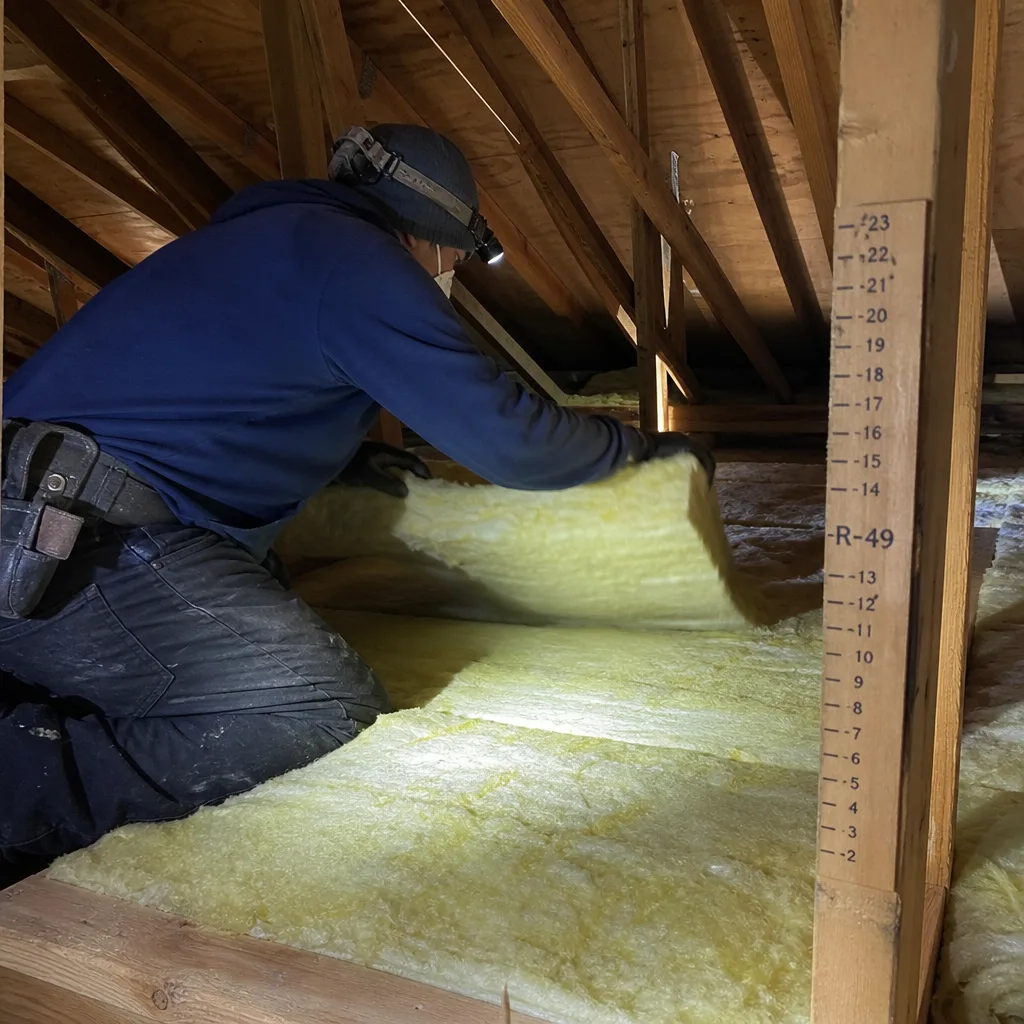
You can’t eyeball this. A baseline captured at installation, plus a repeatable measurement method, is what gives you a number you can actually compare. If your installer didn’t record a baseline, you can still establish one today and compare going forward, or compare against a neighbor’s similarly sized vented attic as a rough reference.
- Place the sensor at the same reference point every time. Mid-attic, four feet below the ridge, not touching ductwork or a truss. Mark the spot so it can be re-found next season.
- Use a remote-sensing thermometer with data logging. A $30 – $60 indoor/outdoor unit with a probe works. Log the high for seven consecutive days.
- Measure at the same time each day. 3 PM local time is the standard peak. Do it in July and August in Boulder City – that’s the peak test window.
- Record outdoor temperature at the same moment. You want the differential, not the raw number. A 100°F outdoor day is your comparable test day.
- Write it down. A note on your phone is enough. Comparing this July’s number to last July’s number is the whole exercise.
If you don’t have a baseline, take the seven-day reading and store it. Next year’s reading against this year’s is your evidence. It’s a low-effort habit that turns “it feels hotter up there” into a documented trend.
Physical Warning Signs That Require Attic Entry
These are the signs that require you to be up in the attic, and they don’t fix themselves. If you’re comfortable with a flashlight and a respirator (attics in Boulder City can hit 130°F by noon in summer, so early morning only), look for these. If you’re not, a professional inspection is the right call.
- Foil sagging more than two inches between fastener points. This is fastener pull-through or foil creep. Once the foil sags, it loses the flat reflective plane that makes it work. A wrinkled, drooping sheet reflects less radiant heat than a taut one.
- Dust thick enough to change the surface color. Silver turning gray-tan is not cosmetic. A layer around 0.02 inches of settled dust can cut reflectivity by more than half. In older Boulder City attics with nearby dirt lots and desert dust, this is one of the most common failures we see.
- Tape failure at seams creating gaps larger than half an inch. Seam tape lifts and dries out with heat cycling. A half-inch gap through which radiant heat passes direct to the insulation below is a meaningful loss on a 100°F day.
- Staple pull-outs, torn foil, or sheets that have shifted off their intended coverage area. Sometimes rodent activity or a hot-water heater replacement has moved things around.
Any one of these is a sign that requires inspection. Three or more together is a sign that the barrier’s remaining value is low enough to warrant a replacement conversation, not a cleaning.
The Desert Moisture Sign That Points to Air Sealing
There’s a moisture warning sign that confuses almost every Boulder City homeowner, and it’s important to get right: condensation staining on the underside of the foil. You’ll see dark rings, water spotting, or rust-colored tidelines on the shiny side of the foil facing the attic. It looks like the barrier is failing.
In almost every case we investigate, it’s not a barrier defect. It’s an air sealing problem in the building envelope below. Here’s why. Warm, moist interior air rises through gaps in the ceiling plane – around can lights, top plates, bath fans, and ceiling penetrations – and meets the cooler foil surface. It condenses there. That only happens when conditioned air is escaping from the house into the attic, which means the vapor barrier has failed, not the foil. The foil is doing what it should – reflecting, and quietly catching the evidence.
The fix is not replacement. The fix is air sealing the attic floor first, and then repairing any foil that’s actually compromised. We’ve written about this on our Spray Foam Insulation in Boulder City page because spray foam at penetrations is one of the cleanest ways to close those gaps. If a contractor tells you to replace a barrier when you have condensation staining with no dust or sagging, get a second opinion. In our experience, that diagnosis is wrong at the envelope level, and the barrier replacement won’t stop the staining.
The Structural Interaction Sign: Roof Deck Moisture
This one shows up during a re-roof or a roof inspection, not in your daily life. If the sheathing above the radiant barrier is damp, stained, or has soft spots, you have to rule out the possibility that the foil has become a vapor trap. It happens in specific conditions, and it doesn’t happen in others. Getting this right protects you from spending $3,000 – $6,000 on a re-roof only to see the same staining recurrence.
Conditions that can create a vapor trap:
- Foil installed on the underside of the roof deck with no air space between the foil and the deck, in a humid climate or a home with high interior humidity.
- A foil product installed on both the attic floor and the roof deck at the same time, sealing off the attic from whole-house vapor movement.
- Foil facing the wrong way – reflective face turned toward the attic floor instead of up – combined with dripping condensate from a poorly ducted bath fan.
Conditions that do not create a trap:
- Foil installed on the attic floor across joists with the reflective face up, which is the standard installation.
- Foil installed on the roof deck with a proper air space between foil and decking in a vented attic. That’s the design intention and it works.
- Any installation in a Boulder City attic – the low desert humidity averages around 20 – 30%, and vapor drive is nothing like the humid Southeast where most of the catastrophic deck-moisture stories come from.
Boulder City is genuinely low-risk for this. The desert air just doesn’t carry enough moisture to trap. But if your home is in the older downtown blocks and has a sealed or poorly vented attic from a prior remodel, roof deck moisture is worth flagging on the next inspection.
Decision Tree: Clean, Re-Tape, Replace a Section, or Fix the Envelope
This is where most homeowners stall out. You have warning signs, but you don’t know what they mean. Here’s the way to think about it, in order from lowest-cost fix to highest.
- Dust only, no seams, no sagging, temperature drift under 10°F. This is a cleaning job. A soft-brush cleaning of the foil surface restores reflectivity. Typical costs in the Boulder City market run $200 – $450 for a standard attic. Re-tape any lifted seams at the same time.
- Seam gaps over half an inch but the sheets are flat, dust is moderate, drift 10 – 15°F. Re-tape the seams with an appropriate foil tape and clean. This pairs well with an attic air sealing job since you’ll already have boots on the floor. Budget $350 – $700 depending on attic size.
- Foil sagging more than two inches in an isolated area, one or two sections. Replace just those sections. A section replacement in Boulder City is typically $400 – $900 depending on coverage area and access, without going to a full re-install.
- Foil torn or missing on more than a third of the coverage area, dust is heavy, drift is 20°F or more. Full replacement is on the table. Cost depends on square footage and access but usually falls in the $1,500 – $3,500 range for a typical 1,200 square-foot attic.
- Condensation staining, no dust, no sagging, no seam failure. Stop. This isn’t a barrier problem. This is air sealing or a bath fan ducting problem. Get a professional attic inspection and a written diagnosis before you spend a dollar on the foil.
One recurring pattern we see: homeowners replace a radiant barrier to fix rising cooling bills, and the bills come in the same the following summer. In those cases the barrier was fine and the air sealing was the problem. Before any replacement, we recommend a blower-door test – a pressurization reading that shows, in one number, how much air your building envelope is losing. That single number will tell you whether the barrier is the leak or the envelope is. We publish before-and-after blower-door numbers on jobs that include air sealing so homeowners can see the change they paid for. If you want the full envelope handled together, our Envelope Insulation Boulder City home page lays out the service line.
Why Boulder City Attics Age Barriers Faster
Not all radiant barriers degrade at the same rate, and the local conditions matter. The same foil product installed in a humid coastal attic and in a Boulder City attic will age differently. Here’s what accelerates aging specifically in Boulder City.
- Peak solar load. Summer attic air routinely hits 130 – 150°F in a vented attic on a July afternoon. That thermal cycling is what makes seam tape lift and dry out. Tape that survives five summers in a cooler climate may fail in three in Boulder City.
- Dust and fine particulate. Desert dust from nearby open land, unpaved roads, and construction traffic settles on the top of the foil. A layer thick enough to shift the surface color is common within four to six years on attics with any roof or driveway activity nearby.
- Fastener withdrawal from thermal cycling. Staples driven into OSB or older dimensional lumber can withdraw under repeated expansion and contraction. Sag between fastener points is more common here than in mild climates.
- Hot-side installation with no ongoing maintenance. Many older radiance jobs in Boulder City were installed without a service or inspection agreement, so no one ever looked at the foil between install day and the day the utility bill spiked.
If you’re in an older home – say a 1970s or 1980s build in the historic downtown district, or a newer 2015 – 2022 home in one of the more recent subdivisions – the barrier and the insulation around it are usually both aging at the same rate. We’ve seen plenty of Boulder City homes where the radiant barrier is holding up fine and the real issue is settled insulation or a leaky attic floor. That combined picture is exactly why a same-visit inspection matters. Our Crawl Space Encapsulation & Vapor Barrier in Boulder City service often runs together with attic work for the same reason: the envelope has to be solved as a whole.
When the Answer Is a Professional Air Sealing Job
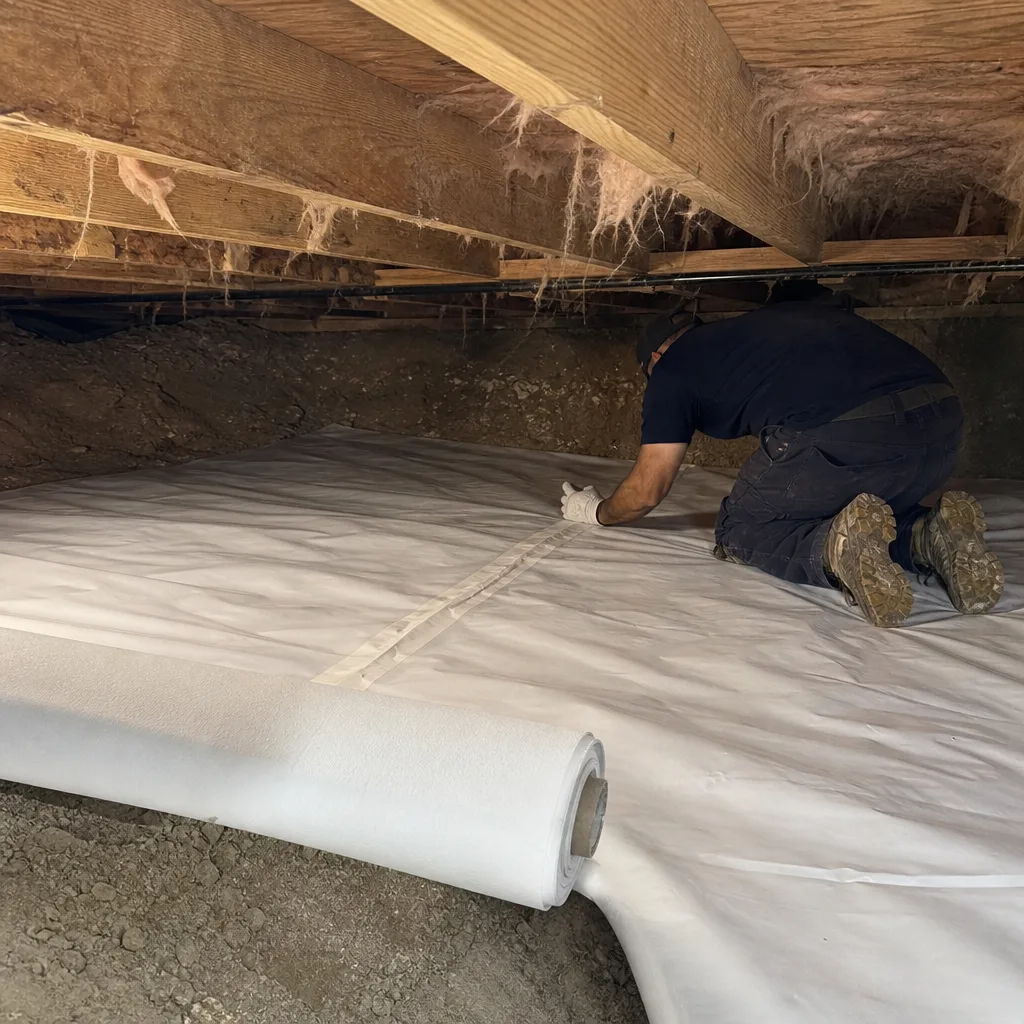
If you’ve done the temperature test and the visual inspection, and you’ve found condensation staining, elevated moisture on bath-fan ducting, or a temperature drift that cleaning and re-taping won’t fix, the real problem is very likely upstream of the radiant barrier. That’s not a job to solve with a roll of foil tape on a Saturday. It’s a job for someone who seals top plates, can lights, and penetrations first, then re-evaluates whether the barrier even needs to be replaced.
At Envelope Insulation Boulder City we handle radiant barrier installation and repair, but we won’t blow insulation over an unsealed attic floor or install a barrier on top of a leak. Air sealing comes first, in that order. Every Boulder City job begins with a written price before any work starts – Haven Standard Clause 1 – and closes with a Documented Photo Record so you can see exactly what was found. Our technicians have up to 10 years of experience and are background-checked. If a barrier sign has you wondering whether it’s the foil or the envelope, call us at (844) 320-7926 for a free estimate. If you already have a written estimate from another contractor, we’ll read it with you under our Free Second Opinion offer.
Common Mistakes to Avoid
- Treating visual appearance as the whole inspection. Foil can look perfectly silver and be performing at 40% of its original reflectance. If you didn’t measure the attic temperature, you didn’t inspect the barrier.
- Replacing the barrier to fix a bill climb without a blower-door test. We’ve seen this pattern repeatedly in Boulder City. A new barrier on an envelope that leaks at 4,000 CFM50 doesn’t change the bill. Measure the leak first.
- Ignoring condensation staining on the underside of the foil. Many homeowners assume that’s a barrier defect. It’s usually an air sealing problem, and replacing the foil won’t fix it.
- Dusting the foil with the wrong tool. A stiff brush or a rough cloth leaves scratches that cut reflectivity permanently. Soft brush only, or leave it to the crew.
- Taping over dust. Foil tape won’t stick to a dusty surface, no matter the brand. The surface has to be cleaned before re-taping, or the tape will lift in one summer.
- Assuming a barrier installed in a sealed attic is fine. A sealed attic with a radiant barrier on the roof deck is a different setup from a vented attic with foil on the floor. The moisture rules are different, and the inspection is different.
- Not recording a baseline. Without a written number from July this year, next July’s reading has nothing to compare against. Write it down.
When to Call a Professional
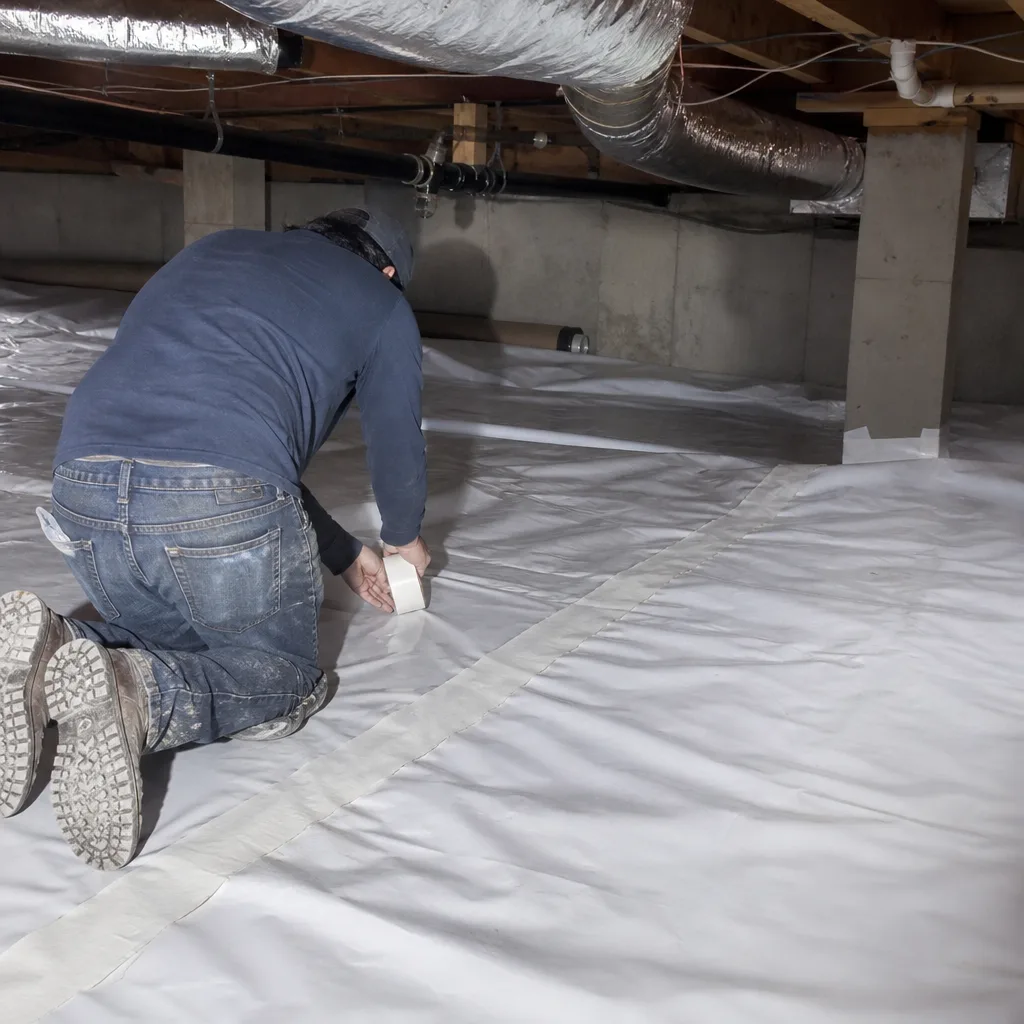
Call a professional if you find condensation staining you can’t explain, foil sagging across a whole section, three or more warning signs at once, or an attic temperature drift over 15°F from a documented baseline. Also call if you’ve had a bath fan removed or replaced, if you’re getting ready to re-roof, or if your home was built before 1990 and hasn’t had an attic inspection in the last five years. Those situations carry a real diagnostic question that a visual inspection won’t answer. If you’re in Boulder City, our team provides free estimates and a written price before any work starts – call (844) 320-7926. A live person answers, and you’ll get a Documented Photo Record of exactly what we found.
Frequently Asked Questions
Measure attic air temperature at 3 PM on a 100°F day and compare it to your installation baseline or last year’s reading. A drift of 15 – 20°F or more, combined with any physical sign like dust, sagging, or seam gaps, means the barrier has lost meaningful performance. Call (844) 320-7926 for a free Boulder City estimate if you want an inspection.
Yes, dust is one of the most common failure modes. A settled layer thick enough to shift the surface from silver to gray-tan can cut reflectivity by more than half, and in Boulder City’s dusty desert environment that can happen within four to six years. Cleaning is often a $200 – $450 fix, which is far cheaper than replacement.
You can, if the sheets are flat, dust is light, and the gaps are cleanly lifted. The catch is that foil tape won’t bond to a dusty surface, so the seam has to be cleaned first, and the surface has to stay dry during the process. For a full attic of seam failure in a Boulder City home, a professional job is usually more cost-effective than doing it hunched over joists in 130°F heat.
Condensation staining on the underside of the foil is almost always an air sealing problem, not a radiant barrier defect. Warm interior air is escaping through the ceiling plane, hitting the cooler foil surface, and condensing there. The fix is air sealing the attic floor, not replacing the barrier. Call (844) 320-7926 for a free estimate that includes a written diagnosis.
No, the opposite. Boulder City’s low desert humidity and average 20 – 30% relative humidity mean vapor drive is mild, and roof deck moisture traps are rare unless the attic was sealed or improperly vented during a remodel. If you do see deck moisture, it’s worth a same-visit inspection to rule out a bath-fan ducting issue.
Cleaning and re-taping typically runs $200 – $700 depending on attic size and seam count. Section replacement is usually $400 – $900, and full replacement on a 1,200 square-foot attic runs $1,500 – $3,500. Any quote for full replacement should come with a blower-door test result if air sealing is being discussed. Call (844) 320-7926 for a written price before any work starts.
The Bottom Line
A radiant barrier that’s failing doesn’t look failing. The warning signs that actually matter are all thermal and performance-based: attic air temperature at 3 PM drifting 15 – 20°F above baseline, cooling bills creeping up year over year, foil sagging more than two inches between fasteners, dust thick enough to turn the foil gray-tan, and seam tape gaps over half an inch. If you find condensation staining on the underside of the foil, that’s an air sealing problem, not a barrier defect. Fix the envelope first. Every Boulder City attic inspection we do starts with a written price and ends with a Documented Photo Record, and we back the work with our 365-Day Done Right Promise – if it’s not done right, we make it right. Call (844) 320-7926 for a free estimate.
Written by the team at Envelope Insulation Boulder City.